Historic Shift: German Tanks Return to Russia’s Doorstep After Eight Decades
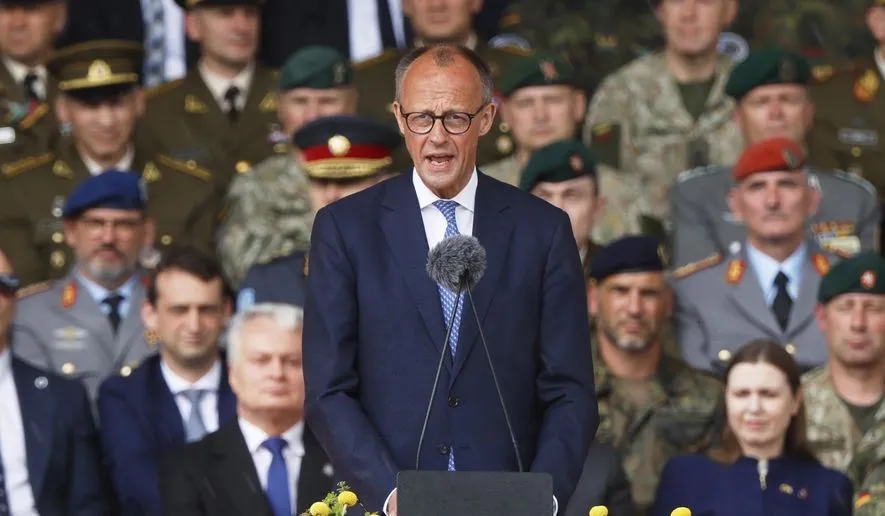
Germany’s Chancellor Friedrich Merz announced the nation’s first permanent overseas military deployment since World War II during a speech in Vilnius, Lithuania, on May 22, 2025.
The 45th Armored Brigade “Lietuva,” with 4,800 soldiers and 200 civilians, will station in Lithuania by 2027. This move responds to Russia’s ongoing aggression in Ukraine and tensions on NATO’s eastern flank.
Merz’s address highlights Germany’s commitment to deter Russian threats. Lithuania, bordering Russia’s Kaliningrad and Belarus, faces heightened risks. The brigade strengthens NATO’s presence, signaling to Moscow that any aggression will meet resistance.
Germany’s €10 billion investment in this deployment underscores its resolve to protect Baltic allies. This deployment shifts Germany’s historically cautious military stance. Since 1945, Germany avoided permanent overseas bases due to its wartime past.
Now, facing Russia’s 2022 invasion of Ukraine, Germany embraces a leadership role. Merz’s pledge of “you can rely on Germany” aims to reassure Lithuanians and NATO partners.
However, this move carries risks for Germany’s economy and security. Deploying 4,800 troops strains Germany’s military budget, already stretched by a €100 billion defense fund.
Businesses, particularly Rheinmetall, benefit from contracts like Lithuania’s 44 Leopard 2 tanks and a new artillery factory. Yet, escalating tensions could disrupt trade routes in the Baltic Sea, impacting German exports.
Moreover, stationing troops near Russia invites retaliation. Russia’s planned military exercises with Belarus this year raise fears of escalation. If Moscow perceives the brigade as a provocation, cyberattacks or hybrid warfare could target German infrastructure, costing businesses millions.
Lithuania’s role in securing the EU’s border against migration adds another layer of complexity. Merz also pushes for European defense cooperation. He supports NATO’s 3.5% GDP defense spending target by 2032, plus 1.5% for infrastructure.
This aligns with Lithuania’s 5–6% pledge but pressures German taxpayers. Increased spending may boost defense firms but risks public backlash amid economic uncertainty.
Furthermore, the deployment ties into Ukraine’s ongoing war. Merz backs a ceasefire and sanctions on Russia, balancing support for Kyiv with NATO unity. However, U.S.-Russia talks, potentially excluding Europe, complicate Germany’s position.
A misstep could weaken transatlantic ties, affecting German markets reliant on U.S. trade.
Ultimately, Germany’s brigade in Lithuania marks a strategic pivot. It bolsters NATO’s deterrence and European security but stretches resources and risks escalation.
For businesses, opportunities in defense contracts come with threats of economic disruption. As Merz prepares for the NATO summit in The Hague, Germany treads a delicate line, balancing strength with stability in a volatile region.
This article was produced by The Rio Times’ automated newsroom system. How we use AI · Report an error
Read More from The Rio Times