Moving to Guyana 2026: Visas, Costs, Oil-Boom Jobs and Daily Life in Georgetown
GUIDES · GUYANA
Key Facts
- —The country Guyana is South America’s only English-speaking country, with about 836,000 people. Offshore oil has made it one of the world’s fastest-growing economies.
- —Getting in Americans, Britons and Canadians need no visa to visit. The officer at the border sets the stay, which Washington puts at up to 90 days and London at 30. Any work needs a separate permit that the employer requests.
- —The jobs The oil sector hires foreigners mainly for specialist roles. A 2021 law requires companies to give qualified Guyanese first consideration.
- —What it costs Furnished flats aimed at foreigners in Greater Georgetown were listed from about US$1,500 a month in September 2026. Family houses ran US$4,000 and up.
- —Why it matters now The economy grew 33.3% in the first half of 2026, and demand for skilled staff still outruns supply.
- —The catch Housing is scarce and dear, crime is high by Western standards, and serious medical cases often need evacuation.
Moving to Guyana means joining an oil boom in a small English-speaking country. The jobs are real, but so are the permits, the rents and the risks.
Moving to Guyana has become a serious option for engineers, managers and service providers since oil began flowing offshore in December 2019. Most newcomers arrive with a job offer, because the work permit follows the employer, not the person.
This guide covers entry rules, work permits and the oil sector’s local content law. It also sets out housing and daily costs in Georgetown. It also explains safety, healthcare and everyday life, with links to our detailed guides on each.
Why people are moving to Guyana
Guyana lies on the north-east coast of South America, between Venezuela, Brazil and Suriname. It was a British colony until 1966, drives on the left and hosts the headquarters of CARICOM, the Caribbean Community.
ExxonMobil and its partners Chevron and CNOOC pumped about 900,000 barrels a day offshore in the first half of 2026. That is roughly one barrel for every resident, as our Guyana explainer sets out.
The finance ministry’s 2026 mid-year report put economic growth at 33.3% in the first half of the year, and 10.1% outside oil. Unemployment stood at 6.2%, and employers describe a shortage of skilled workers rather than of jobs.
That does not mean anyone can arrive and find work. The boom favours people with scarce skills and an employer willing to sponsor them.
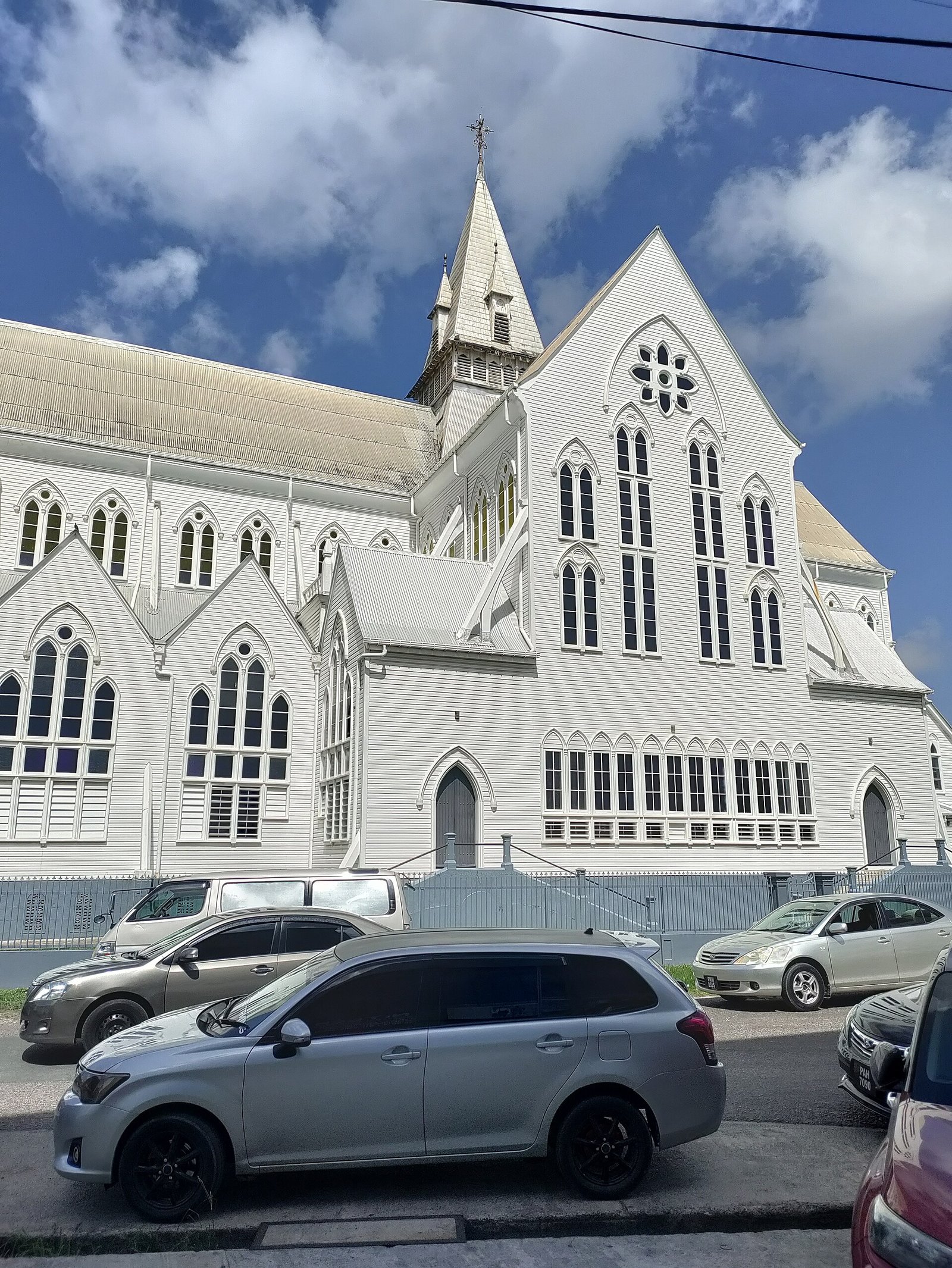
Visas and how long you can stay
Citizens of the United States, the United Kingdom and Canada do not need a visa to visit. Other nationalities should check the list of visa-exempt countries kept by Guyana’s foreign ministry before booking.
The length of stay is set by the immigration officer at the airport. The US State Department says no visa is needed for stays of 90 days or less. The UK Foreign Office says visitors are normally given 30 days and can apply for one-month extensions.
Your passport should be valid for at least six months after arrival. The US government also warns that sums above US$10,000 must be declared on entry and exit.
What this does not mean: visa-free entry never allows paid work. Guyana had no dedicated visa for remote workers or retirees on the Ministry of Home Affairs’ public pages as of September 2026.
Work permits: the employer applies
Work permits are handled by Immigration Support Services, part of the Ministry of Home Affairs in Georgetown. Since October 2025 a new, fully digital system at eservices.iss.gov.gy handles visa and extension applications. The ministry’s Brickdam office still accepts them in person.
The employer usually files the request and supplies its registration, tax records and the job description. The worker supplies a passport and proof of qualifications. A work permit approval letter then lets the worker enter or stay to take up the job.
Immigration law firm Fragomen reported in 2023 that permits are endorsed only if the sponsor is up to date with its taxes. After arrival you will also need a tax number and national insurance registration.
CARICOM nationals with a skills certificate have their own, simpler route under regional free-movement rules. It does not apply to people from outside the Caribbean bloc.
Oil-boom jobs and the Local Content Act
The Local Content Act 2021, Act No. 18 of 2021, shapes who gets hired. It requires oil companies and their contractors to give first consideration to Guyanese nationals with the relevant qualifications and experience.
Its First Schedule reserves minimum shares of 40 service areas for Guyanese companies, from 5% to 100%. A “Guyanese company” must be at least 51% Guyanese-owned, with Guyanese holding 75% of senior management and 90% of other posts.
| Service area (examples) | Minimum local share |
|---|---|
| Immigration support, work permit and visa applications, customs brokerage, local insurance, staff ground transport | 100% |
| Security services | 95% |
| Accommodation, office rental, catering, local legal and accounting services | 90% |
| Manpower and crewing | 50% |
| Medical services | 25% |
| ICT support; engineering and machining | 20%; 5% |
The penalties are real. Carrying out petroleum operations without the minimum local content carries a fine of GY$50 million (about US$239,000). A company that files a false local content report faces GY$10 million (about US$48,000).
The local workforce is growing fast. At a government ceremony in June 2026, ExxonMobil Guyana’s head, Alistair Routledge, said about 68% of the workforce supporting the sector was Guyanese by the end of 2025, including 1,800 people offshore. In June 2026 Natural Resources Minister Vickram Bharrat said qualified Guyanese should earn pay comparable to foreigners in the same jobs.
For a foreigner, the realistic openings are specialist, senior or hard-to-fill roles: subsea, drilling, process engineering, safety and project management. Services such as catering, security and staff transport must largely be bought from Guyanese firms, so jobs in them rarely go to foreigners.
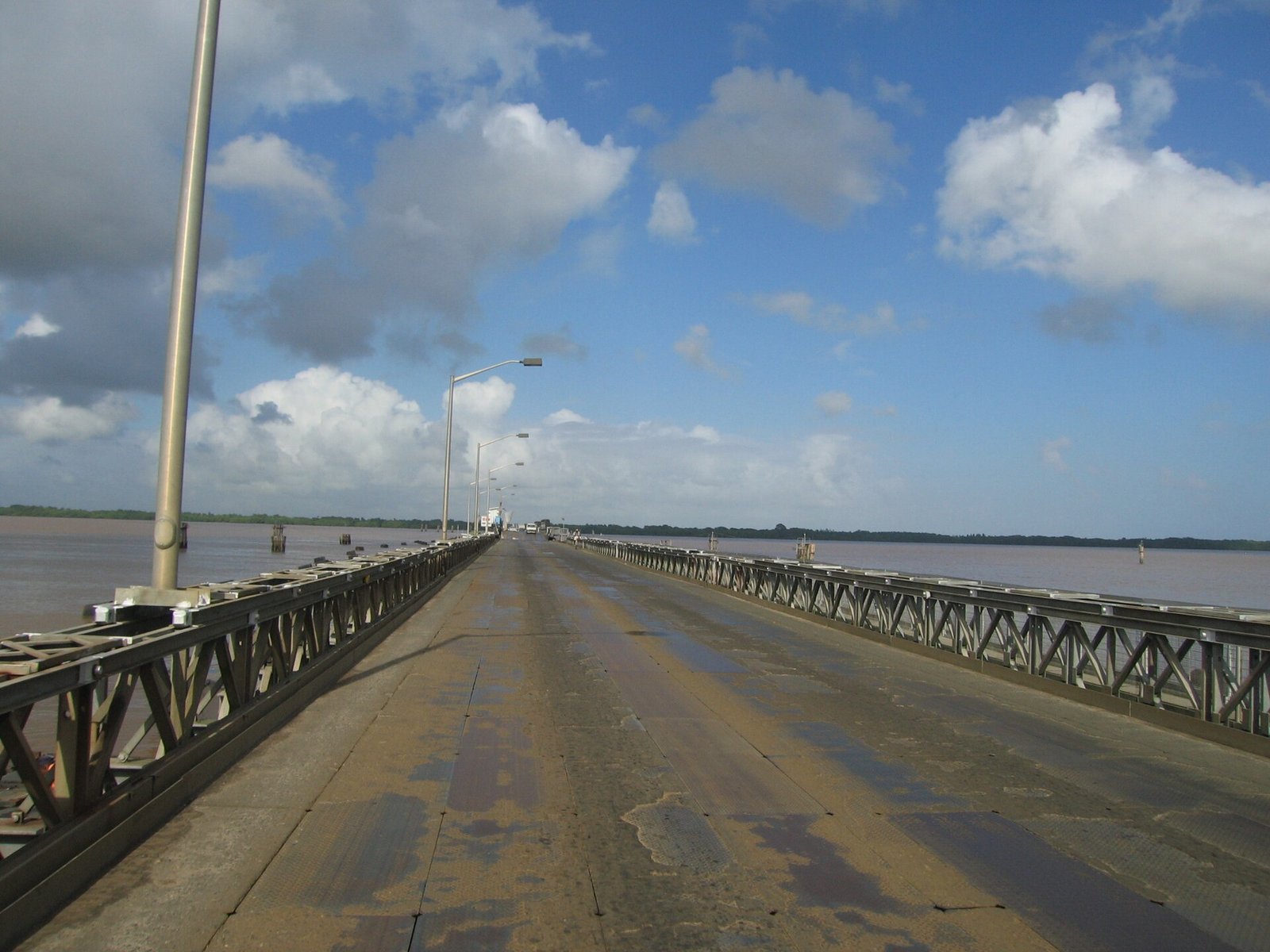
Where to live and what rent costs
Foreigners typically settle in Georgetown districts such as Bel Air, Prashad Nagar, Queenstown and Kingston. Many others live in gated developments in Providence and Eccles, on the East Bank of the Demerara River.
There is no official rent survey. The figures below are monthly asking rents from two agencies serving foreign tenants, viewed on 27 September 2026.
| Listing | Asking rent per month |
|---|---|
| 1-bedroom apartment, Providence, all bills included | US$1,500 |
| 2-bedroom furnished flat, Eccles | US$1,500 |
| 3-bedroom apartment, Farm, East Bank | US$1,600 |
| 2-bedroom apartment, gated community, Providence | US$2,000 |
| 2-bedroom apartment, Subryanville, Georgetown | US$2,800 |
| 4-bedroom house, Lamaha Gardens, Georgetown | US$4,000 |
| 6-bedroom house, D’Aguiar Park, Georgetown | US$12,000 |
These are furnished homes marketed to companies and foreign staff, so they sit at the top of the market. If an employer is sponsoring you, ask whether housing can be part of the package.
Before signing, ask about water pressure, drainage in heavy rain, security and who pays the power bill. Much of the coast lies below high-tide level behind sea defences, and flooding is a year-round risk.
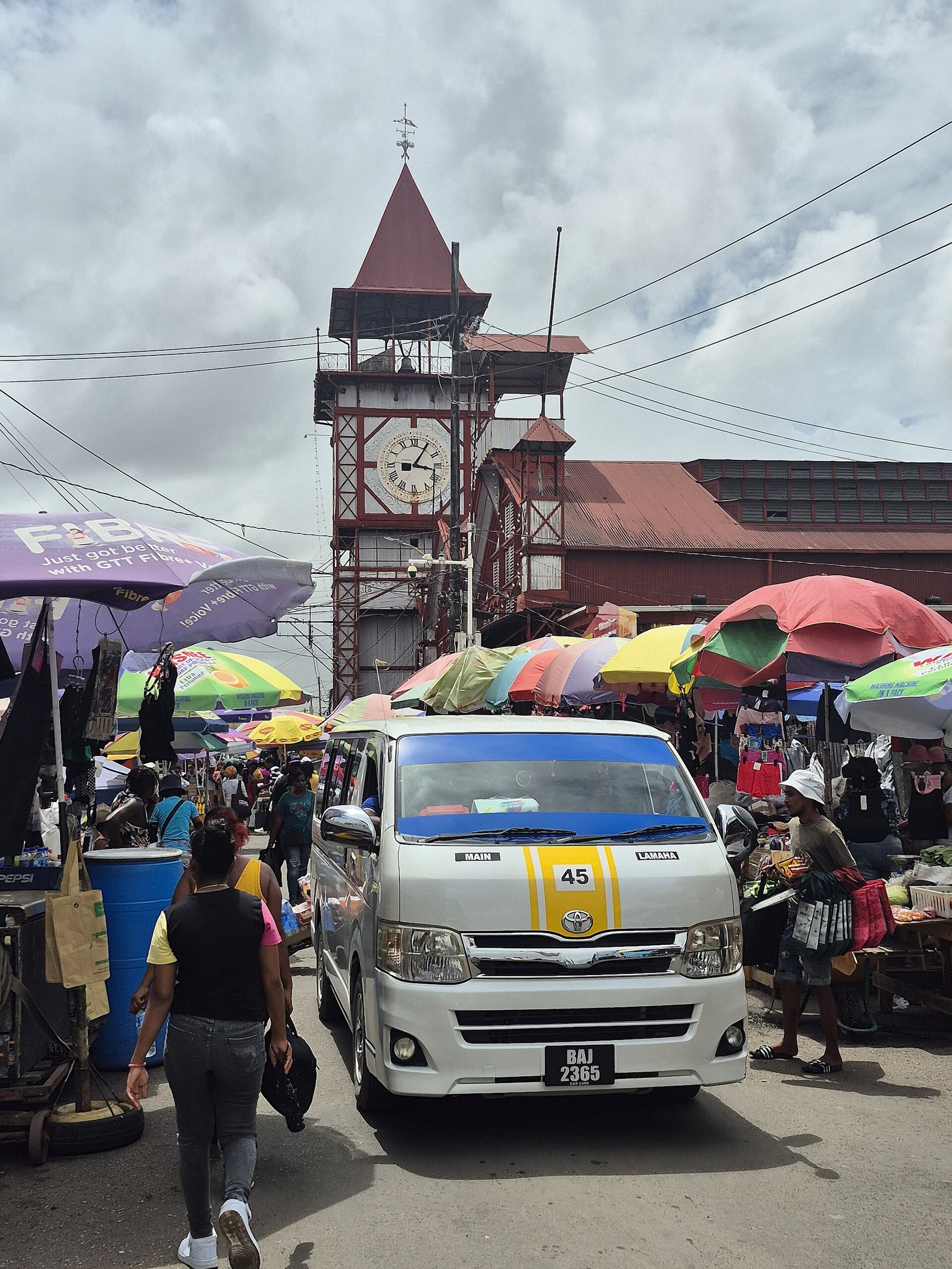
Money, prices and tax
The currency is the Guyana dollar, written GY$ or G$. The Bank of Guyana quoted it at GY$207.98 to buy and GY$210.45 to sell one US dollar on 25 September 2026. This guide converts at about GY$209.
Consumer prices rose 4.4% in the first half of 2026, and food prices 6.7%, according to the mid-year report. The government kept electricity tariffs stable and its excise tax on fuel at zero.
The power grid still relies heavily on imported fuel oil. A gas-to-energy plant at Wales is due to fire its first turbine around December 2026.
Income tax has two bands, 25% and 35%, above a tax-free allowance of GY$140,000 (about US$670) a month. Staying over 183 days a year can make you taxable on worldwide income, as our guide to taxes in Guyana explains.
Opening a local account usually needs a tax number, whose first certificate costs GY$1,000 (about US$4.80). Our bank account guide covers minimums and US dollar accounts.
Safety and healthcare
The US State Department rates Guyana at Level 3, “reconsider travel”, because of crime. Police recorded 130 murders in 2025, about 15.6 per 100,000 people, and 137 road deaths.
Standard advice is to avoid showing cash, limit walking at night and use trusted drivers. Our guide Is Guyana safe for expats? names the districts that official advisories single out.
Public healthcare is free, but capacity is thin. Private hospitals often want cash up front, and the UK government advises arranging evacuation for anything serious. Read our guide to healthcare in Guyana before choosing insurance.
Daily life in Georgetown
English is the official language, and most people also speak Creolese, an English-based creole. The capital mixes timber colonial buildings, canals and busy markets, and minibuses are the everyday transport.
Georgetown is small. New hotels and restaurants have opened with the boom, but choice, shopping and nightlife remain limited compared with larger Caribbean capitals. Weekends often mean the interior, from Kaieteur Falls to the Rupununi savannahs.
One political fact hangs over everything: Venezuela claims the Essequibo region, about two-thirds of Guyana’s territory. The International Court of Justice heard the case in May 2026 and has yet to rule. Daily life in Georgetown is not directly affected, but the dispute is worth following.
What this means for you
Secure the job first and let the employer start the work permit. Negotiate housing, transport and medical evacuation cover into the contract, because these are the costs that surprise newcomers.
If your skills are ones Guyanese companies can already supply, expect the local content law to work against you. Moving to Guyana makes most sense for specialists, managers and people setting up a genuinely local business.
Money and banking in a boom economy
Guyana runs on the Guyanese dollar, but the boom economy prices serious things — rent, cars, contractor quotes — in US dollars. Banking has modernized fast: the big local banks and Republic Bank offer app banking and USD accounts, and opening one as a work-permit holder is routine, though compliance paperwork mirrors the regional norm (passport, permit, proof of address, employer letter). Two quirks shape daily money life: foreign currency is periodically scarce at the official windows, so expats keep liquidity spread rather than concentrated; and card acceptance outside Georgetown’s hotels and supermarkets is patchy — cash remains load-bearing in the markets and the interior. Salary packages in the oil sector typically solve this with offshore splits; negotiate yours before arrival, not after.
Connected Coverage
Guyana Explained: The Oil Boom, the Politics, the Economy and What to Watch
Is Guyana Safe for Expats? Georgetown Crime, Oil-Boom Security and Daily Reality
Healthcare in Guyana for Expats: Hospitals, Insurance and the Evacuation Reality
Guyana Raises Its Tax-Free Allowance, Keeping Two Bands of 25% and 35%
Guyana Bank Accounts for Foreigners: US$5 Tax Number, US$10 Minimums, Dollar Approval Question
Guyana Local Content Push Targets Expat-Level Pay for Oil Workers
Sources: Entry rules come from the US and UK governments and Guyana’s Ministry of Home Affairs, labour rules from the Local Content Act and official reports, and rents from agency listings viewed on 27 September 2026.
- travel.state.gov
- gov.uk
- moha.gov.gy
- fragomen.com
- petroleum.gov.gy (Local Content Act 2021)
- dpi.gov.gy (local content)
- dpi.gov.gy (mid-year report)
- bankofguyana.org.gy
- guyanarealestateservices.com
- stabroeksolutions.com
What Is Not Known
The standard length of a visitor’s stay is not clear. Washington cites 90 days and London 30 days, and the officer decides at the border. Guyana publishes no single table for every nationality.
The Ministry of Home Affairs pages we checked publish no current schedule of work permit fees or processing times. Figures quoted by relocation websites could not be confirmed.
What ordinary Guyanese households pay in rent is not measured. The listings in this guide show the furnished, foreign-oriented end of the market only.
Changes to the local content schedule have been discussed by officials in 2026. No amendment to the First Schedule had been published in law by late September 2026.
When the International Court of Justice will rule on Venezuela’s claim to the Essequibo is not known. No date had been set as of late September 2026.
Frequently Asked Questions
Do I need a visa to move to Guyana?
Americans, Britons and Canadians do not need a visa to visit. To live and work there you need a work permit, which your employer requests from the Ministry of Home Affairs. Visa-free entry never allows paid work.
How long can I stay in Guyana as a visitor?
The immigration officer sets the period on arrival. The US government says no visa is needed for stays of 90 days or less, while the UK says visitors normally get 30 days with one-month extensions available.
Can foreigners get oil jobs in Guyana?
Yes, mainly in specialist or senior roles. The Local Content Act 2021 requires companies to give qualified Guyanese first consideration, and reserves many support services for Guyanese firms. ExxonMobil Guyana says about 68% of the workforce supporting the sector was Guyanese by the end of 2025.
How much is rent in Georgetown?
Furnished flats aimed at foreigners were listed from about US$1,500 a month in September 2026, with two-bedroom apartments in good areas at US$2,000 to US$2,800. Family houses started around US$4,000. There is no official rent survey.
Is Guyana safe for foreigners?
The US rates Guyana Level 3, reconsider travel, because of crime. Police recorded 130 murders in 2025, about 15.6 per 100,000 people. Standard advice is to limit walking at night, avoid showing cash and use trusted drivers.
What currency does Guyana use?
The Guyana dollar. The Bank of Guyana quoted about GY$208 to buy and GY$210 to sell one US dollar on 25 September 2026. Rents for foreigners are usually quoted in US dollars.
This article was produced by The Rio Times’ automated newsroom system. How we use AI · Report an error
Read More from The Rio Times