Guyana Health Spending: Mid-Year Report Puts First-Half 2026 Outlay at US$280 Million, Not US$50 Billion
GUYANA · ECONOMY & PUBLIC FINANCE
Key Facts
- —The claim A figure of “over US$50 billion invested in health in the first half of 2026” has circulated about Guyana. It is wrong by a factor of roughly 178.
- —The record The Finance Ministry’s Mid-Year Report 2026 states that G$58.6 billion (about US$280 million) was spent on health in the first half of the year.
- —The full-year frame Guyana’s entire 2026 health budget is G$161.1 billion (about US$770 million) — out of a total national budget of G$1.558 trillion (about US$7.4 billion).
- —The cause The error is a currency-unit mix-up: Guyana’s budget is denominated in Guyana dollars, which trade at about 209 to the US dollar (18 September 2026).
- —The real story Oil revenue is funding a genuine health build-out: six regional hospitals, a pediatric and maternity hospital, and a national ambulance authority.
The true figure is large by Guyanese standards and small by the claim’s — and the difference between the two is a lesson in reading Caribbean budgets carefully.
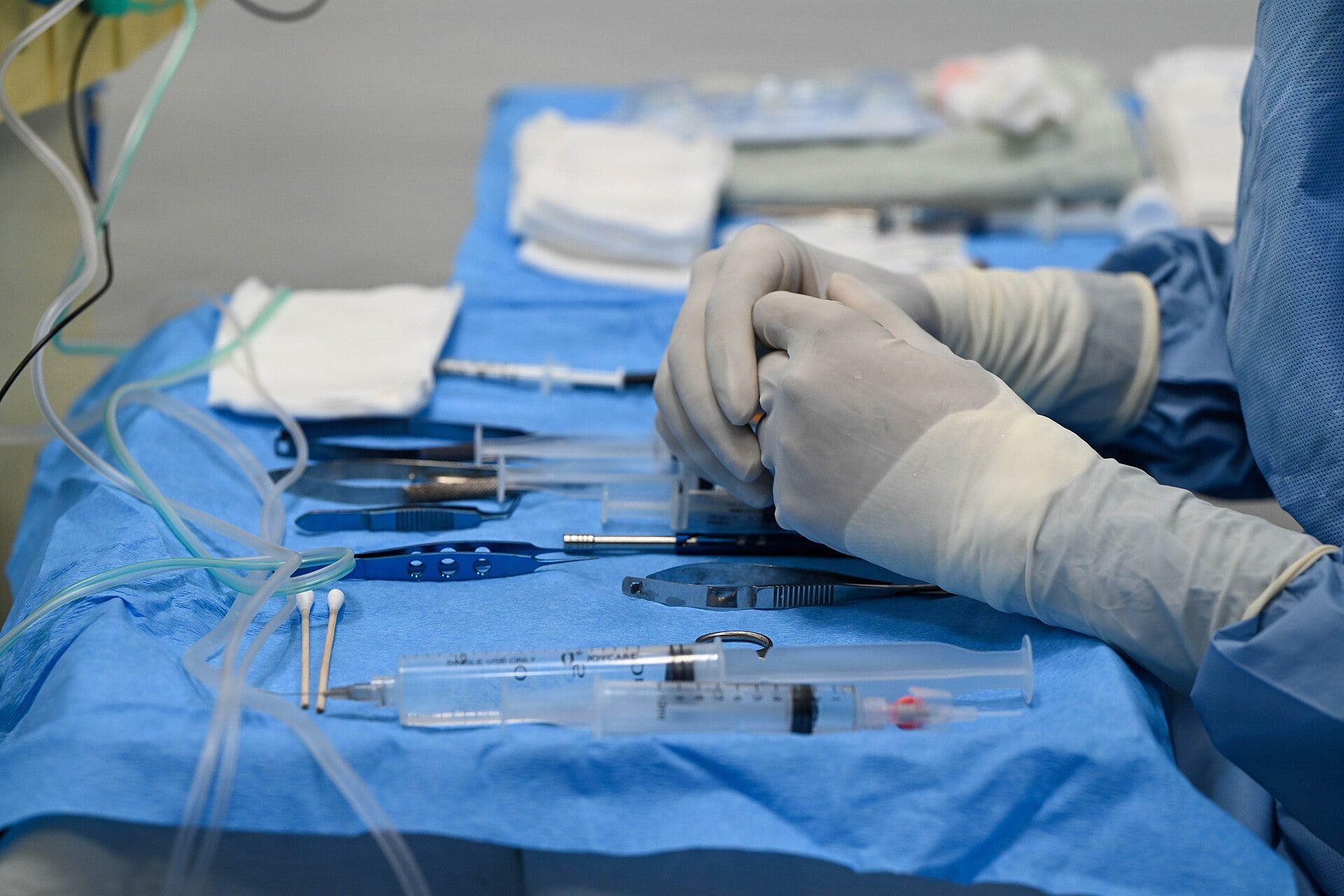
Guyana health spending in the first half of 2026 was G$58.6 billion (about US$280 million), according to the Ministry of Finance’s Mid-Year Report 2026, published in September. A circulating claim that the country “reported over US$50 billion” in health investment for the same period is not supported by any official document — and is impossible on its face.
What the Official Report Actually Says
The relevant sentence sits in section 3.148 of the Mid-Year Report 2026: “Government remains committed to delivering a world-class health sector and has since continued the expansion of health coverage nationwide, for which a total of $58.6 billion was expended in the first half of the year, of the $161.1 billion budget.” Those dollars are Guyana dollars. At about 209 Guyana dollars to the US dollar on 18 September 2026, the half-year outlay is roughly US$280 million, and the full-year health budget is about US$770 million.
The execution pace is also visible: G$58.6 billion spent against G$161.1 billion budgeted means 36 percent of the health allocation was used by mid-year. Construction-heavy budgets typically pay out late in the year, so the second half will show whether the building program is on schedule.
Why US$50 Billion Cannot Be Right
Scale is the fastest check. Guyana’s entire national budget for 2026 — every ministry, every road, every salary — is G$1.558 trillion (about US$7.4 billion), presented to the National Assembly on 26 January 2026. A US$50 billion health figure would equal roughly G$10.5 trillion (US$50 billion), nearly seven times the whole state budget. No such figure appears in the budget speech, in the Mid-Year Report, or in releases from the Department of Public Information. The Rio Times could not locate the claim in any Guyanese government document or established local outlet; where it first appeared is not known.
The likely mechanism is familiar to anyone who reads Caribbean budgets: a figure written as “$58.6 billion” in Guyana dollars loses its currency tag as it travels, and “over 50 billion dollars” hardens into “US$50 billion”. The same report’s other figures — 33.3 percent real GDP growth in the first half, unemployment at 6.2 percent — traveled accurately, as we documented in our coverage of the growth figures and the labor-market data. The health number did not survive the same journey.
What the Money Is Actually Building
The real numbers, laid out by Senior Minister with Responsibility for Finance Dr Ashni Singh in the budget and detailed by the Department of Public Information, describe a serious expansion. The largest single line is G$24 billion (about US$115 million) for a new Pediatric and Maternity Hospital and six regional hospitals at Moruca, West Demerara, New Amsterdam, Bartica, Kato and Lethem. Drugs and medical supplies account for G$34.9 billion (about US$167 million), with five new regional drug distribution centers planned at Mabaruma, Onderneeming, Williamsburg, Lethem and Bamia. A further G$12.6 billion (about US$60 million) goes to building, renovating and maintaining health facilities nationwide.
Smaller lines carry strategic weight. Georgetown Public Hospital receives G$1.5 billion (about US$7.2 million) for upgrades and two new polyclinics in Campbellville and Industry, plus G$3.1 billion (about US$15 million) for equipment including an MRI scanner, a CT scanner and a cardiac catheterization laboratory. A new Guyana Medical Emergency Authority (GEMA) gets G$3.7 billion (about US$18 million) to unify ambulance dispatch and telehealth. The electronic health records rollout is funded at G$764 million (about US$3.7 million), and two health-sciences training complexes at Suddie and New Amsterdam at G$1 billion (about US$4.8 million), feeding targets of 162 specialist doctors and 5,440 nurses and allied professionals. A National Neurological Rehabilitation Centre and a modern oncology center are budgeted together at G$1.1 billion (about US$5.3 million).
The Cycle Behind the Spending
Context matters more than any single line item. Guyana is in the investment phase of its oil cycle: the mid-year report projects 20.8 percent real GDP growth for 2026, with the non-oil economy growing around 10 percent, after 33.3 percent growth in the first half. Health at G$161.1 billion (about US$770 million) is just over 10 percent of the national budget — a structural choice to convert petroleum revenue into hospitals, supply chains and trained staff before the cycle turns. Whether that conversion succeeds will be measured in completed wards and stocked pharmacies, not in headline billions.
What is not yet known: how much of the remaining 64 percent of the health budget will actually be spent by December, whether the six regional hospitals open on schedule, and how the new emergency authority performs once running. The mid-year report documents intentions and half-year outlays, not outcomes.
What This Means for Expats and Investors
For foreigners living in or moving to Guyana, the corrected figure is still meaningful. A US$280 million half-year outlay in a country of under a million people is substantial: it is already producing new regional hospitals, wider drug distribution and telemedicine links to 50 more remote communities. Georgetown’s private and public care options are expanding in parallel, and the government openly frames the build-out as a bid to make Guyana a regional medical hub.
For investors and analysts, the episode is a reminder that Guyana reports in Guyana dollars, that its budget documents are public and checkable, and that extraordinary figures deserve a two-minute scale test against the national budget before they travel further. The calm reading of the mid-year report is this: real money, real projects, real execution risk — and no US$50 billion anywhere in the ledger.
Frequently Asked Questions
How much did Guyana spend on health in the first half of 2026?
G$58.6 billion (about US$280 million), according to section 3.148 of the Ministry of Finance’s Mid-Year Report 2026 — 36 percent of the G$161.1 billion (about US$770 million) full-year health budget.
Did Guyana report US$50 billion in health investment in 2026?
No. No Guyanese government document contains that figure. US$50 billion would be nearly seven times Guyana’s entire 2026 national budget of about G$1.558 trillion (about US$7.4 billion). The claim appears to stem from a Guyana-dollar figure losing its currency label.
What is Guyana’s 2026 health budget in US dollars?
G$161.1 billion, which is about US$770 million at roughly 209 Guyana dollars to the US dollar (18 September 2026).
What are the biggest health projects in Guyana’s 2026 budget?
G$24 billion (about US$115 million) for a pediatric and maternity hospital plus six regional hospitals, G$34.9 billion (about US$167 million) for drugs and supplies, and G$3.7 billion (about US$18 million) for the new Guyana Medical Emergency Authority.
Connected Coverage
More: Guyana news in English, every day from The Rio Times.
Sources
- finance.gov.gy — Mid-Year Report 2026, section 3.148 (September 2026)
- dpi.gov.gy — Budget 2026 health allocations (January 2026)
- xe.com — USD/GYD exchange rate (18 September 2026)
This article was produced by The Rio Times’ automated newsroom system. How we use AI · Report an error
Read More from The Rio Times