Healthcare in Guyana for Expats 2026: Hospitals, Insurance and the Evacuation Reality
GUIDES · GUYANA
Key Facts
- —What it is A free public system delivered across five levels in ten regions, topped by one national referral hospital in Georgetown, with a small fee-for-service private sector beside it.
- —Who it’s for Oil sector staff and contractors, returning diaspora, people posted to Georgetown, and anyone weighing a country whose economy is growing faster than any other on earth.
- —What it costs Public care is free, and the health minister says it is delivered regardless of immigration status. Private hospitals and doctors commonly want payment up front, in cash.
- —Why it matters Washington describes the quality of medical care as low and inconsistent. London says medical facilities are very limited even in Georgetown, and to arrange evacuation for anything serious or invasive.
- —The catch Radiotherapy exists at exactly one site in the country and brachytherapy nowhere, so patients travel. No operator publishes what an evacuation flight costs.
What oil money has actually built, what it has not built yet, and why the most important line in a policy for Guyana is the one about getting you out.
Healthcare in Guyana is being rebuilt in real time and from a low base. Six new regional hospitals opened in 2025, the national referral hospital installed the public system’s first scanner for complex imaging in 2026, and the health budget for the year is 161.1 billion Guyana dollars, about US$773 million. None of that changes what three Western governments still tell their own citizens to plan for.
How the system works
Healthcare in Guyana is organised from the top down. The health ministry in Georgetown sets policy and works through regional health authorities in each of the ten administrative regions, which deliver the care. Services run across five levels, from village health posts up to the national referral hospital, with patients transferred upward when a service is not available locally.
Public care is free, and the constitution treats health as a fundamental right. It is also free to foreigners in practice. The health minister stated the policy plainly: the government delivers healthcare to anyone who needs it at any of its facilities regardless of status, noting that Brazilians cross the border for surgery at Lethem. He added that the position might be revisited if the load became too heavy.
Alongside that sits the National Insurance Scheme, which pays a sickness benefit from the fourth day of incapacity for up to 26 weeks to contributors, and gives its pensioners free prescription drugs plus limited dental and optical care.
A newer scheme subsidises private care. The universal health voucher, launched in March 2025, gives every citizen a 10,000 dollar voucher, about US$48, for a defined panel of laboratory tests at more than 30 participating private providers, where it attracts discounts of 40 to 70 percent.
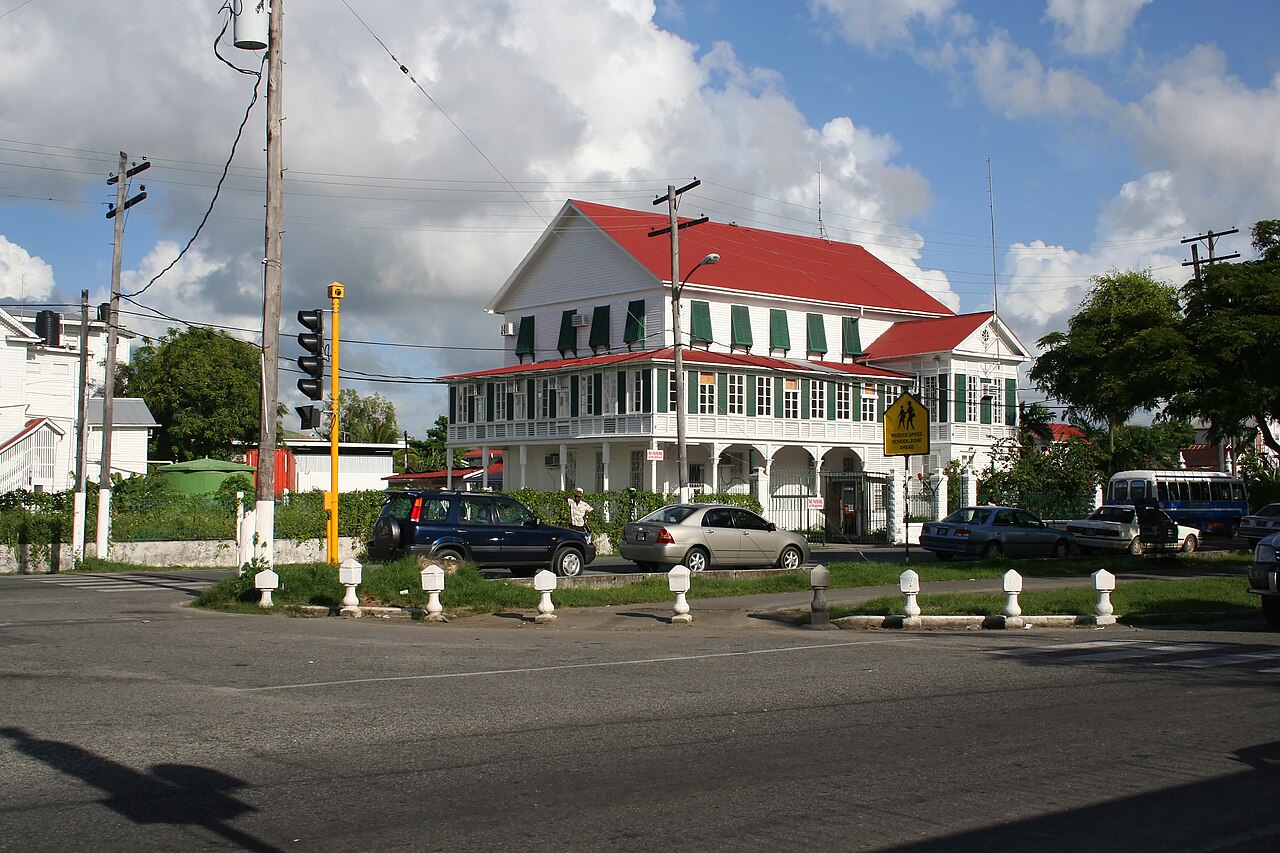
The national referral hospital
Georgetown Public Hospital Corporation, founded in 1838, is the level five referral hospital, the teaching hospital and the research centre. Its own published figures give 558 inpatient beds across 26 wards, 456 doctors and 879 nursing staff, more than 320,000 outpatient visits and 26,600 admissions a year, eleven operating theatres and eight critical care units.
One of those numbers is smaller than the rest and it matters: the accident and emergency department has 19 beds. For a national referral hospital serving a population approaching a million, that is the pinch point.
The government says it has put roughly 85.2 billion dollars, about US$409 million, into the hospital over five years. The 2026 additions are real and checkable. The public system’s first magnetic resonance scanner was installed there in June 2026, alongside a new computed tomography scanner and a catheterisation laboratory in an imaging suite worth around two billion dollars.
Staffing is the weakness the hospital itself concedes. Its chief executive said it is running at more than 60 percent of nursing capacity. Contract nurses have reported going three consecutive months, and in one case eight, without pay because payroll is still processed on paper.
Six new hospitals, and the ones still unbuilt
This is the part of the story that a guide written two years ago would miss. Six regional hospitals, each costing 6.6 billion dollars and covering 65,000 square feet, were commissioned through 2025: Diamond and Enmore in Region 4, Bath in Region 5, De Kinderen in Region 3, Lima on the Essequibo coast and No. 75 Village in Region 6.
Their first-year throughput, as given by the president, came to more than 145,000 outpatient visits, 18,500 admissions, roughly 3,700 operations, over a million laboratory tests and 13,680 computed tomography scans. Diamond carried the heaviest surgical load and Enmore the heaviest outpatient one.
The list of what is not open matters just as much. Regional hospitals at Moruca, West Demerara, New Amsterdam, Bartica, Kato and Lethem are still being built or designed, as is the 256-bed paediatric and maternal hospital at Goedverwagting. The maternal and paediatric hospital and the New Amsterdam complex are both delayed by arbitration proceedings at the International Chamber of Commerce.
A further 24 billion dollars was allocated in 2026 to push those forward, and 1.1 billion to build a national neurological rehabilitation centre and an oncology centre. The government is also training 162 additional doctors in specialisms including neurosurgery, urology and intensive care, which tells you where the gaps currently are.
What is available, and what is not
Cancer care shows the shape of healthcare in Guyana as a whole. The referral hospital runs oncology consultations, chemotherapy, targeted and hormonal therapy and palliative care. Radiotherapy exists at exactly one site in the country, the Cancer Institute of Guyana on the hospital campus, a partnership between the ministry and a private operator. Brachytherapy is not available at all, and patients travel to Suriname for it, with the ministry subsidising the cost.
Cardiac care has been built up around the Caribbean Heart Institute on the same campus, which the government describes as handling everything from electrocardiograms to open-heart surgery, backed by a three billion dollar investment and a second catheterisation laboratory. Paediatric cardiac surgery, however, is still largely mission-based: about 40 children were waiting in September 2026, with visiting teams from India scheduled for late September and December.
Kidney treatment is a genuine strength and a genuine bottleneck at once. The referral hospital is the only licensed transplant centre and performed 13 kidney transplants in 2025, more than any other Caribbean country. Every citizen needing haemodialysis receives an annual grant of 600,000 dollars, about US$2,880, and roughly 650 people were enrolled by the end of 2025. The chief executive said in December that demand for dialysis and transplant exceeds capacity.
Psychiatric provision is listed but thin: the State Department says psychological and psychiatric services are limited, and the hospital publicly flagged an upsurge in suicide attempt cases in early 2026.
Outside the hospitals, the disease map matters. Malaria is endemic in the interior rather than on the coast, concentrated in Regions 1, 7, 8 and 9 and driven by gold mining and cross-border labour movement. Dengue, chikungunya, Zika, yellow fever and leishmaniasis are all present, and tap water is not potable in many areas.
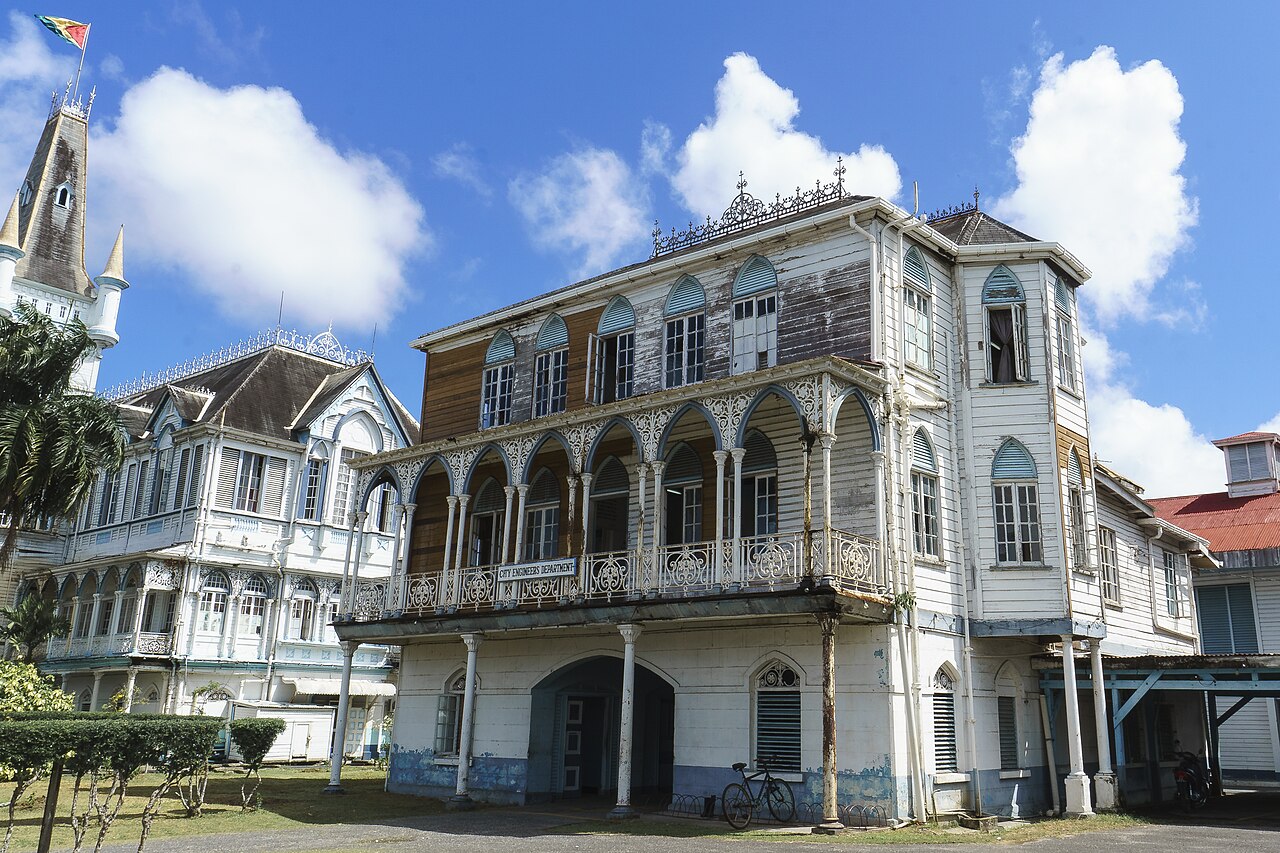
The private sector in Georgetown
Private healthcare in Guyana is small, concentrated in the capital and run on fee for service. Three names carry most of it, and all three are verifiable.
Woodlands Hospital on Carmichael Street, founded in 1969, describes itself as the country’s premier private multi-specialty tertiary hospital, with 55 beds, two theatres and more than 70 consultants. Dr Balwant Singh’s Hospital on East Street, established in 2004, is a 50-bed acute hospital with its own magnetic resonance and computed tomography scanners and a specialty list running from cardiac surgery to in-vitro fertilisation. St Joseph Mercy Hospital in Kingston is a Catholic non-profit. Davis Memorial, run by the Seventh-day Adventist church, is the fourth.
What none of them offers is international accreditation. No hospital in Guyana holds accreditation from the main international body; the only quality certifications identified are at laboratory level.
One warning about prices. Woodlands publishes a page that appears to list imaging and laboratory charges, but it gives no currency and the same site’s departments page carries unedited placeholder text. Those figures are almost certainly template defaults rather than Guyanese prices, and they should not be used. The only genuinely published price list found anywhere is a laboratory schedule at Dr Balwant Singh’s Hospital dating from 2017.
Insurance, and paying up front
Three insurers sell health cover locally: Assuria, GTM and Hand-in-Hand. Assuria also sells an international product with cover from US$250,000 to US$2 million and access to a worldwide provider network, quoted individually rather than from a rate card.
Its published policy terms are worth reading before the price. Waiting periods run three months for optical and dental, six months for maternity and six months for pre-existing conditions. Claims must be filed within 90 days of the visit with receipts and a cost breakdown. Dependants are unmarried children under 19, or under 25 in full-time tertiary education.
Premiums are the gap again. No Guyanese insurer publishes health premium rates online. The single published figure found in research was an accident medical expense rider, offering 100,000 dollars of cover, roughly US$480, for an annual premium of 5,000 dollars, about US$24. That is a rider, not a health plan.
The practical reason to arrange cover before arrival is blunt and comes from the State Department: hospitals and doctors often require payment up front or proof of insurance before treating or admitting a patient, and most require cash.
One more budgeting point specific to this country. There are two exchange rates. The official mid-rate has held at 208.50 dollars to the US dollar, while the finance ministry’s own mid-year report shows the market rate moving from 220.6 to 223.7 over the first half of 2026. That is a gap of about 7 percent between the rate in the statistics and the rate you actually transact at.
Evacuation, and what nobody will tell you it costs
There is an official route for what the country cannot treat. The health ministry provides financial assistance for treatment unavailable in the public sector. Requests go through the referral hospital on the recommendation of its doctors, who decide whether the patient needs a private institution at home or a hospital abroad.
Verified overseas destinations are narrower than the internet suggests. Suriname takes cancer patients for brachytherapy. India supplies visiting paediatric cardiac teams and trains Guyanese surgeons. The Trinidad, Barbados and Miami routes that appear in every expat forum could not be confirmed from any source, and are not stated here as fact.
Air ambulance operators advertising Guyana coverage do exist and fly out of Cheddi Jagan International Airport. What none of them publishes is a price, and neither does anyone else. The closest credible published figure is regional rather than national: an insurance trade journal noting that an ambulance flight from the Caribbean can easily cost US$15,000, with the United States usually the closest viable destination.
So the instruction is the same one three governments give. Washington tells travellers to buy medical evacuation insurance in advance. London says facilities are very limited even in Georgetown and to arrange evacuation for any serious or invasive treatment. Ottawa tells trekkers to carry cover including helicopter rescue. Get the named operator and the trigger conditions in writing before you need them.
Ground response is the weak link underneath all of it. The ambulance number is 913, the police 911, and the State Department warns those numbers may not always be operational and that first responders are generally unable to reach areas outside major cities. A medical emergency authority is being established in 2026 to unify the service, though the government’s own documents disagree about its budget by a factor of a thousand.
Connected Coverage
Guyana Raises Its Tax-Free Allowance, Keeping Two Bands
Guyana Bank Account Rules for Foreigners in 2026
Guyana’s Deportee Agreement With the United States Runs Two Years
Sources: Hospital capacity and services from the Georgetown Public Hospital Corporation’s own pages, policy and the voucher scheme from the Ministry of Health, budget lines from the Ministry of Finance, growth and oil output from the International Monetary Fund’s July 2026 mission statement, the list of private facilities from the British foreign office, and the warnings from the United States, British and Canadian advisories.
- Georgetown Public Hospital Corporation — about the hospital and its capacity
- Ministry of Health Guyana — medical treatment assistance for care unavailable locally
- Ministry of Health Guyana — the universal health voucher programme
- Ministry of Finance Guyana — Budget 2026 at a glance
- United States State Department — Guyana country information, health section
- Foreign, Commonwealth and Development Office — health advice for Guyana
- Foreign, Commonwealth and Development Office — list of medical facilities in Guyana
- Guyana Bureau of Statistics — preliminary report of the 2022 census
- International Monetary Fund — Guyana country page and 2026 Article IV mission
What Is Not Known
What medical evacuation from Guyana costs. No operator publishes a price and no independent source gives one. The ranges circulating online trace to marketing and automatically generated content. The only credible published figure is regional: an insurance trade journal noting that an ambulance flight from the Caribbean can easily cost US$15,000.
Where evacuated patients actually go. Suriname is confirmed for brachytherapy and India for visiting paediatric cardiac teams. The Trinidad, Barbados and Miami routes repeated throughout expat content could not be confirmed from any source, and are therefore not stated here.
What private treatment costs. No Guyanese hospital publishes a current price list. The one page that appears to is almost certainly unedited website template data, on a site whose other pages still carry placeholder text. The only genuine published schedule found dates from 2017.
What health insurance costs. No insurer in Guyana publishes premium rates. The single published figure located was an accident expense rider rather than a health plan. Quotes are issued individually.
How many people live in Guyana. The Bureau of Statistics gives 878,674 at the 2022 census and 956,044 at the end of 2024, the International Monetary Fund works with 1.024 million and the World Bank with 835,986 for 2025, a spread of roughly 23 percent. The final census report is still unpublished. Every per capita health figure inherits that uncertainty.
Frequently Asked Questions
Is healthcare free in Guyana?
Yes in the public system, and the constitution treats health as a fundamental right. The health minister has stated that the government delivers care at its facilities regardless of a patient’s immigration status, noting that Brazilians cross the border for surgery at Lethem, while adding that the policy might be revisited if demand grew too heavy.
What is the main hospital in Guyana?
Georgetown Public Hospital Corporation, founded in 1838, which is the national referral hospital, the teaching hospital and the research centre. Its own figures give 558 inpatient beds, 456 doctors, eleven operating theatres and eight critical care units, though its accident and emergency department has only 19 beds.
Are there private hospitals in Guyana?
Yes, concentrated in Georgetown: Woodlands Hospital, Dr Balwant Singh’s Hospital, St Joseph Mercy Hospital and Davis Memorial are the main ones. None holds international hospital accreditation, and only laboratory-level certifications could be verified.
Do I need medical evacuation insurance for Guyana?
Every major Western government says so. The British foreign office advises arranging an evacuation for any serious or invasive treatment, the State Department tells travellers to buy evacuation cover in advance, and Canada advises trekkers to include helicopter rescue. No operator publishes a price, so get the named operator and trigger conditions in writing from your insurer.
Can I get cancer treatment in Guyana?
Partly. Chemotherapy, targeted therapy and palliative care are provided at the national referral hospital, and radiotherapy at exactly one site in the country, the Cancer Institute of Guyana. Brachytherapy is not available at all, and patients travel to Suriname for it with the health ministry subsidising the cost.
Will I need malaria precautions in Guyana?
In the interior, yes. Malaria is endemic away from the coast, concentrated in Regions 1, 7, 8 and 9, and driven largely by gold mining and cross-border labour movement. The State Department recommends chemoprophylaxis for all travellers even on short stays, and notes that tap water is not potable in many areas.
This article was produced by The Rio Times’ automated newsroom system. How we use AI · Report an error
Read More from The Rio Times