Guinea Says IMF Backs US$425 Million Plan
Guinea says the IMF has backed a three-year programme, but the lender’s own announcement has not been seen and the details come from the government.

Economy: Guinea
Prime Minister Amadou Oury Bah spoke on 23 November 2026 of an “alignment of the planets” for Guinea after what he called tough negotiations with the International Monetary Fund (IMF), the Washington-based global lender. Guinea’s government says the IMF’s Executive Board, its governing body, approved that day a three-year programme of about US$425 million.
Guinea’s Ministry of Economy, Finance and Budget describes the programme as a lever for Simandou, the giant iron-ore mine and railway in the south-east of the country. For US readers it is a test of whether a poor country can turn a mining boom into stable public finances.
Key Facts
- Who. Guinea’s government and the IMF Executive Board, the lender’s governing body.
- What. About US$425 million over 2026–2029, equal to 310.59 million Special Drawing Rights, the IMF’s unit of account.
- Where/When. Guinea; approval announced Monday 23 November 2026.
- As of. 24 November 2026, 07:30 GMT.
Guinea says the IMF has backed a three-year programme, but the lender’s own announcement has not been seen and the details come from the government.
The deal followed a staff-level agreement announced by the IMF in August 2026, after a mission to Conakry, the capital, on 16–29 June led by Izabela Karpowicz, the IMF mission chief. That agreement described a 41-month Extended Credit Facility (ECF), a concessional loan window for low-income countries, of 310.59 million SDR, equal to 145% of Guinea’s quota, its membership share in the fund.
The same IMF statement expected Board approval in September 2026, so the decision of 23 November came about two months later than the fund itself planned. No official reason for the gap has been published.
This is not Guinea’s first such arrangement. The IMF Board approved a three-year ECF for Guinea in December 2017 for 120.49 million SDR, or 56.25% of quota, and reviewed it through 2020.
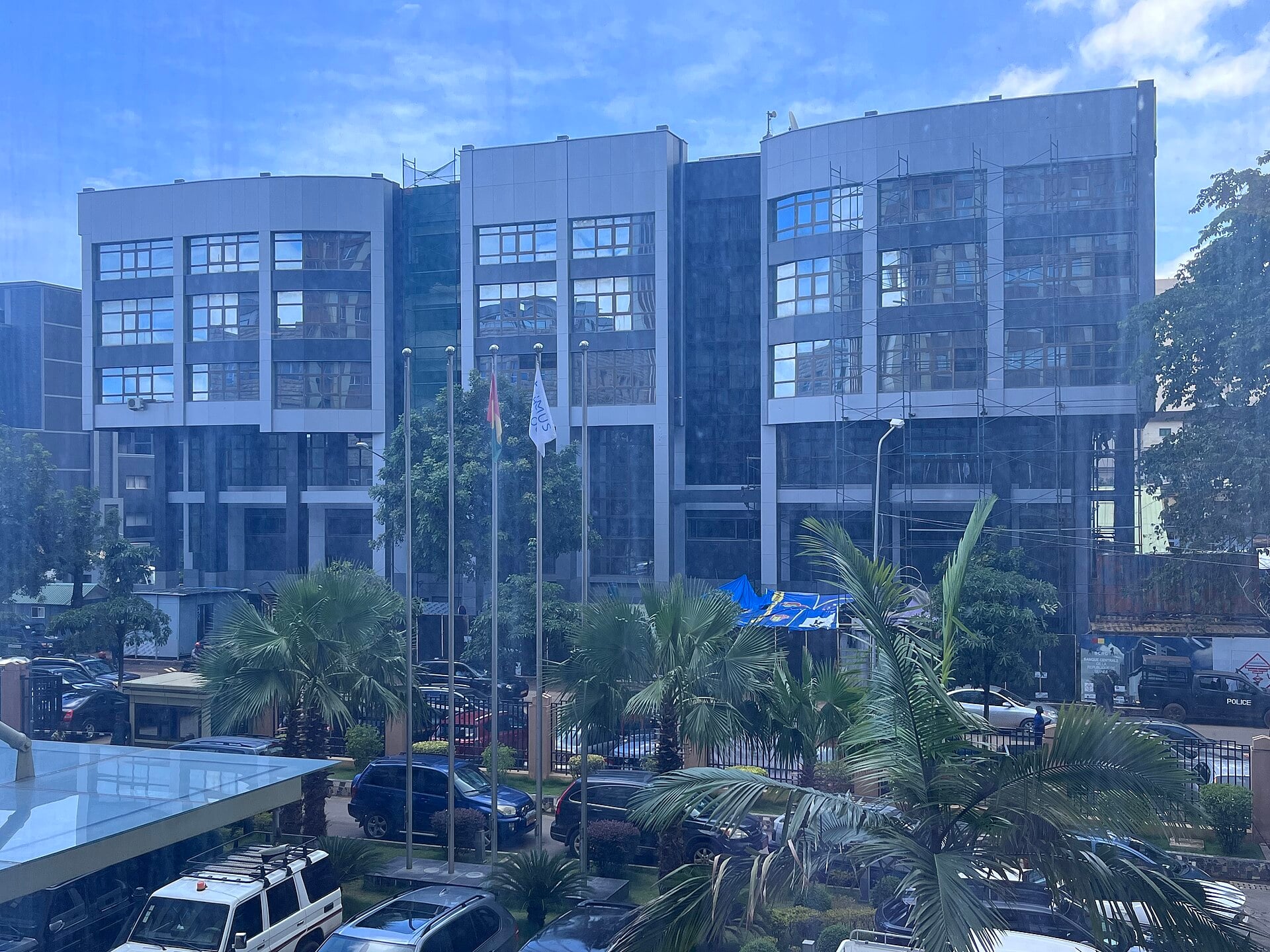
The ministry says the programme will reform public-finance management, improve budget transparency and raise domestic revenue over 2026–2029. It calls the money a lever for the Simandou 2040 development programme, the government’s long-term plan tied to the expected Simandou revenue.
The programme details above come from Guinea’s Ministry of Economy, Finance and Budget, because no IMF press release on the Board decision was found on 24 November. The ministry names both an ECF and an Extended Fund Facility (EFF), a non-concessional IMF loan window, whereas the IMF’s August statement described an ECF only, running 41 months.
In August the IMF listed four priorities: mobilising mining revenue, managing liquidity and preparing for shocks, rebuilding reserves with a more flexible exchange rate, and stronger governance and transparency. Governance covers central-bank rules, a framework for gold operations, and integrity and anti-corruption measures.
Talks also covered a rules-based fiscal framework for resource wealth, and possibly a sovereign wealth fund, a state investment pot for mining income. Karpowicz said in August that Guinea “is at an important economic juncture as the Simandou iron ore project enters production”.
In the same statement Karpowicz called Guinea’s economy resilient despite repeated shocks, but said that inflationary pressures have “increased recently” and that “fiscal and external buffers remain below desired levels”. The statement added that “risks to the outlook are tilted to the downside”.
Prime Minister Amadou Oury Bah said on 23 November that the IMF’s signature is “extremely important for any open country that wants to advance its economy”, in his French words translated here. He called the agreement a confidence signal for investors that should let Guinea raise financing on better terms.
Bah added that Guinea needs the IMF’s eye “not simply to obtain additional financing, but to benefit from the technical skill, expertise and instruments” that help it steer its economy better. He called approval a big step but said the hardest test is implementation over the next three years, with stronger operational capacity and better management of public resources.
Yaya Keita, a Guinean economist, was quoted in August as calling the staff agreement an asset for Guinea. The strongest criticism came at the same time from Ibrahima Balaya Diallo of the Forum civil guinéen, a Guinean civil-society group, who said “we need explanations” and warned of social tension.
Diallo pointed to conditions such as ending subsidies as a likely source of that tension. The ministry’s summary does not mention such conditions, and the programme documents have not been seen.
For US readers with exposure to iron ore, mining or African government debt, the programme matters because it is the investor signal Bah describes. Its size is large against Guinea’s quota, yet the IMF itself warned in August of low buffers, higher inflation and downside risks.
The government has not published the disbursement dates, and the IMF has not been seen to publish them either. The size of the first payment and the date of the first review are also unknown.
Frequently Asked Questions
What did the IMF approve for Guinea?
Guinea’s government says the IMF Executive Board approved a three-year programme backed by two IMF loan windows. The IMF’s own announcement of the decision has not been seen.
Why does Simandou matter to the programme?
Guinea’s ministry calls the programme a lever for its Simandou development plan, and the IMF links the timing to the mine entering production. Investors read an IMF programme as a sign that public finances are being managed.
What do critics of the programme say?
Ibrahima Balaya Diallo of the Forum civil guinéen says the public needs explanations and warns that IMF debt can create social tension. He points to possible conditions such as ending subsidies.
Sources
Published Tuesday 24 November 2026 · Source: Guinea Ministry of Economy, Finance and Budget statement of 23 November 2026; statement by Prime Minister Amadou Oury Bah of 23 November 2026; IMF statement on the staff-level agreement of August 2026; IMF press releases on the 2017 Extended Credit Facility; IMF Guinea country page
Connected Coverage
Guinea explained · Guinea Sees Simandou Revenue at US$2.5B · Simandou railway and Kindia tunnel · Guinea and the IMF staff agreement
This article was produced by The Rio Times’ automated AI newsroom. Editorial responsibility: Matthias Camenzind, Publisher and Editor-in-Chief. The Rio Times also runs Ask Rio Times, which answers from 100,000+ of our own articles, the daily Latin America Power Map, and prediction-market odds on elections and markets.. How we use AI · Report an error