Guinea-Bissau’s Struggle Against Increased Narcotics and Political Crisis
Domingos Simões Pereira, President of Guinea-Bissau’s Parliament, today highlighted a concerning issue: the rise in narcotics entering the country.
He also pointed out the weakening of democratic institutions. This situation mainly benefits select individuals over the democratic process.
Pereira’s response came after the Interior Minister of Guinea-Bissau denied an increase in drug trafficking.
This denial contradicts former Prime Minister Nuno Nabiam‘s statement about a surge in drugs.
Nabiam, despite his controversial leadership, had noted suspicious activities, like a plane at Osvaldo Vieira International Airport suspected of carrying narcotics.
Speaking in Brussels, Pereira criticized the government’s lax approach to aircraft oversight.
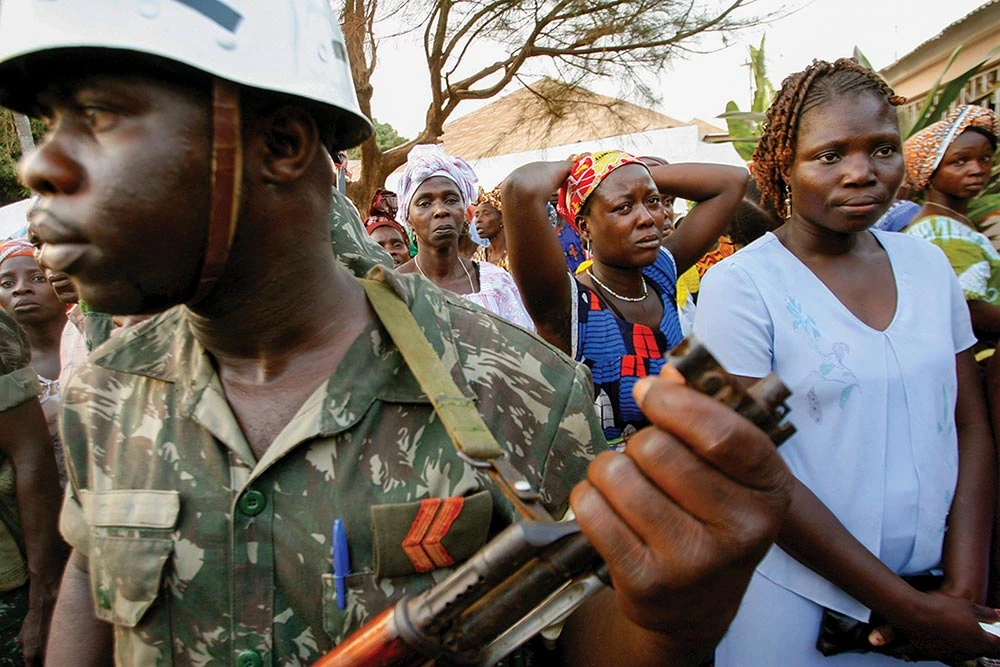
He noted an uptick in unregulated flights, raising suspicions about their activities.
This lack of control, he argued, fuels public speculation, especially given the unexplained wealth of certain individuals and mysterious non-commercial flights.
The parliamentary president stressed the dire state of Guinea-Bissau’s democratic institutions.
He emphasized that they are being compromised to favor a single powerful figure. Pereira pointed out the need for balance among state organs to prevent past extremes of instability.
Pereira’s remarks follow President Umaro Sissoco Embaló’s dissolution of the parliament, a move that contradicted constitutional guidelines.
Embaló accused the National People’s Assembly of failing to effectively scrutinize the government.
Political Turmoil in Guinea-Bissau
This political crisis intensified with the dismissal of Prime Minister Geraldo Martins.
Martins had refused to form a government based on the president’s initiative, leading to his replacement by Rui Duarte de Barros.
This turmoil began amid military confrontations in late November and early December.
The ongoing dispute between Embaló and Pereira, rooted in the 2019 presidential elections, reflects deep political divisions.
Their rivalry has persisted since they both competed in the election’s second round.
The African Party for the Independence of Guinea and Cape Verde (PAIGC), led by Pereira, won the June legislative elections with an absolute majority, showcasing the party’s strong public support.
In summary, Pereira’s concerns highlight crucial issues in Guinea-Bissau: increased drug trafficking and the erosion of democratic institutions.
These problems are interconnected, posing significant challenges to the country’s stability and governance.
This article was produced by The Rio Times’ automated newsroom system. How we use AI · Report an error · Editorial responsibility: Matthias Camenzind, Editor-in-Chief
Part of our ongoing coverage
Africa: The New Scramble — the great-power contest over the continent.