
Key Facts
- Arrests: 1,314 people were arrested across France on Saturday, 24 October, in a provisional Interior Ministry count.
- Injured: 53 police and gendarmes were hurt, and police responded to 75 fires and 24 looted shops.
- Turnout: The ministry counted 410,000 marchers, including 110,000 in Paris, while organisers claimed about 800,000.
- Next dates: Yellow Vest groups, a protest movement born in 2018, plan rallies on Saturday, 31 October.
- Strike: The CGT, a major French trade union, has called a general strike for Thursday, 5 November.
- Prediction markets: Kalshi, a US exchange regulated by the CFTC, prices a 19% chance of a French state of emergency before 1 January 2027 (as of 25 October, 2:22 p.m. ET).
This story is part of our coverage of the why France is in crisis. Dates, times and how to follow it are in our guide.
France arrested 1,314 people at cost-of-living protests on Saturday, 24 October, the Interior Ministry said on Sunday morning. That is about half the roughly 2,600 arrests counted for 17 October, and our guide to why France is in crisis explains how the unrest began.
For US readers, the figures matter because France is the eurozone’s second-largest economy and a NATO ally. Paris is five hours ahead of New York until 1 November, then six.
Provisional Toll of the Weekend
The ministry’s provisional tally recorded 53 injured police and gendarmes (France’s paramilitary police), 75 fires and 24 looted shops. It said the rest of Saturday night was calm after the clashes subsided, and that several investigations have been opened.
Protesters were hurt too: reports describe a 20-year-old in Toulouse who was gravely injured in the hand, and a second serious injury in Clermont-Ferrand. No full national count of injured protesters has been published.
How Big Were the Marches
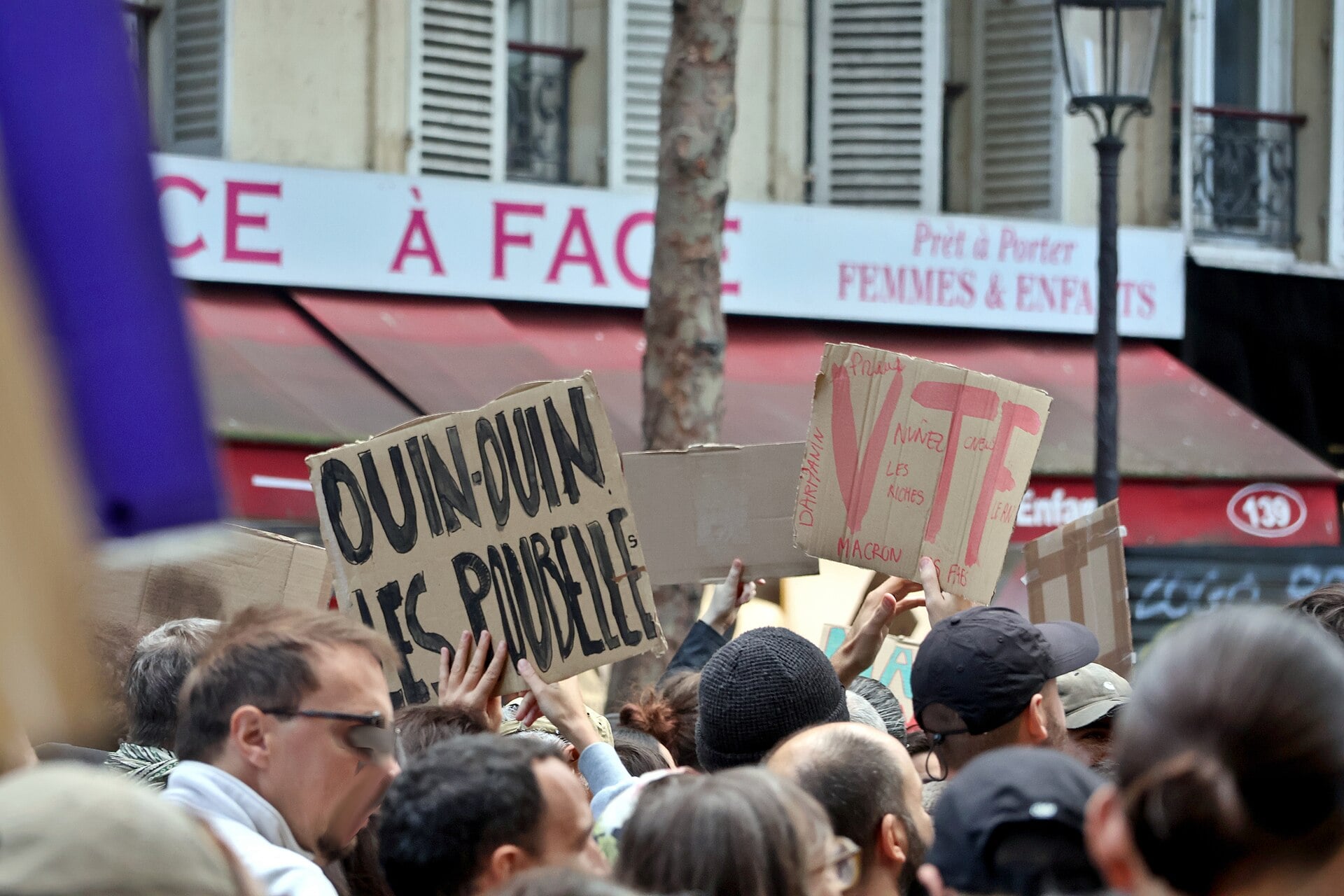
The Interior Ministry counted 410,000 people at demonstrations across the country on 24 October, including 110,000 in Paris. Organisers claimed about 800,000 nationwide and 250,000 in Paris.
A week earlier, on 17 October, the ministry had counted about 550,000 marchers at 441 events, against 289 events this time. Organisers claimed around 800,000 on both days.
The protests are about the cost of living and fuel prices. Students, workers, Yellow Vest activists and other groups have joined the marches.
What Comes Next
Yellow Vest groups, a street movement that began in 2018 over fuel taxes and living costs, have announced rallies for Saturday, 31 October. They had framed 24 and 31 October as stages before a wider push on 5 November.
On 21 October, after a meeting with French Prime Minister Sébastien Lecornu, Sophie Binet, head of the CGT union, called for a general strike on Thursday, 5 November. The CFDT, France’s largest union, also backed 5 November as a day of mobilisation, though the seven unions at the meeting reacted differently.
The next presidential election is due in April and May, after President Emmanuel Macron reaches his two-term limit. That puts pressure on every party to be seen responding to the street.
What Prediction Markets Say
- Kalshi, a US exchange regulated by the Commodity Futures Trading Commission (CFTC): “Will France declare a state of emergency?”
- Before 1 January 2027: 19%. Before 1 November 2026: 6%.
- Volume: 82,503 contracts traded, as of 25 October 2026, 2:22 p.m. ET (7:22 p.m. Paris).
These prices are real-money bets, not polls. Why we show this: prediction markets turn real-money bets into a live probability that moves within minutes of the news, which is why investors, campaigns and newsrooms in the United States now follow them closely. We show them next to polls and official results, never instead of them.
What It Means for You
Travellers to France in the coming fortnight should expect disruption on 31 October and 5 November, including possible strike disruption and heavy police presence in city centres. Check airline and rail notices before booking, and avoid the main march routes in Paris, Lyon and other large cities.
Investors should note that a prolonged strike would weigh on French activity, while traders so far price a state of emergency as unlikely in the short term. The cost-of-living anger behind the marches has parallels in the United States.
What Is Not Known
The arrest figure is provisional and may change as investigations continue. The turnout total is disputed, and no official count of injured protesters has been released.
It is not yet clear how many of the other unions will join the 5 November strike or how many people will take part in the 31 October rallies.
Frequently Asked Questions
How many people were arrested in the latest French protests?
France’s Interior Ministry reported a provisional 1,314 arrests at 7:30 a.m. Paris time on Sunday, 25 October, for the Saturday demonstrations. The final count for 17 October was about 2,600.
What are the next planned protest dates in France?
Yellow Vest groups plan rallies on Saturday, 31 October. The CGT union has called a general strike for Thursday, 5 November.
Why are people protesting in France?
The marches are about the cost of living and fuel prices. Students, workers and Yellow Vest activists have joined them.
Will France declare a state of emergency?
Traders on Kalshi, a US exchange regulated by the CFTC, put the chance at 19% before 1 January 2027 and 6% before 1 November 2026, as of 25 October. These are bets, not official forecasts.
This article was produced by The Rio Times’ automated newsroom system. How we use AI · Report an error · Editorial responsibility: Matthias Camenzind, Editor-in-Chief
France in Turmoil
- Why France Is in Crisis, and How Macron Lost His Grip
- Why Is France Protesting? Riots, Curfews and the 2027 Race
- Is It Safe to Travel to France Right Now? Curfews, Strikes
- Who Will Win France’s 2027 Election? Polls and Odds