Flood Crisis in Rio Grande do Sul Threatens Brazil’s Economic Stability
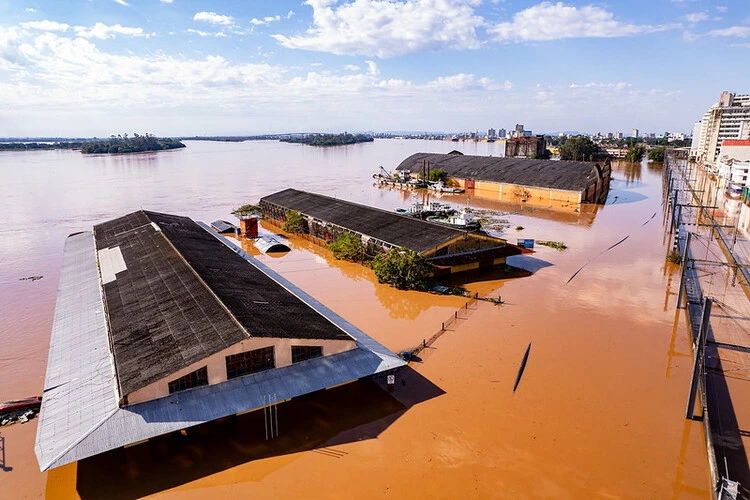
In Rio Grande do Sul, a state pivotal to Brazil’s economy, catastrophic floods are unraveling years of progress.
This region, responsible for 6.5% of the nation’s GDP, faced unexpected heavy rains. These rains have derailed forecasts and dampened economic hopes.
Originally projected to grow by 2.9% in 2024, the state’s economy now grapples with an environmental disaster that has put these aspirations on hold.
Before this calamity, Rio Grande do Sul was on a recovery path, bolstered by a robust agricultural sector known for its soybeans, corn, and rice.
Additionally, a resurgence in its industrial production was underway, particularly in the automotive, metallurgy, and food industries.
These sectors were poised to propel the state’s GDP upward, following two challenging years of poor harvests.
However, the recent floods have inflicted severe damage, impacting these critical sectors extensively.
This setback is more than a local issue; it ripples across Brazil, altering economic projections nationally.
Earlier optimism for a 2% growth in Brazil’s GDP now seems a distant reality, as revised figures hover closer to stagnation.
Moreover, sectors such as agriculture, which makes up a substantial portion of the state’s economic output, are scrambling to regain stability.
Industries like footwear and machinery are also struggling to find their footing.
The broader narrative underscores a harsh truth: natural disasters carry profound economic repercussions.
For Rio Grande do Sul, the journey toward recovery is just beginning, with the economic stability of an entire nation hanging in the balance.
As industries and agriculture strive to rebound, the true cost of these floods will become clearer. This marks a significant chapter in Brazil’s economic history.
More: Brazil news in English, every day from The Rio Times.
This article was drafted with automated assistance and reviewed before publication. How we use AI · Report an error · Editorial responsibility: Matthias Camenzind, Editor-in-Chief