Expanding Horizons: Organized Crime’s Foray into Legal Sectors in Brazil
Once limited to shadowy dealings, organized crime now operates across more than 20 legal industries.
A report from Sphere Brazil and the Brazilian Forum on Public Security sheds light on this troubling trend.
Not only does this infiltration impact sectors like mining and real estate, but it also spans public contracts and utility services.
The report reveals operations in gold, mercury, and diamond mining. It also details ventures in real estate and the trading of fuels and vehicles.
These groups manipulate public contracts, including those for urban transportation and sanitation, and delve into agricultural products like fertilizers and pesticides.
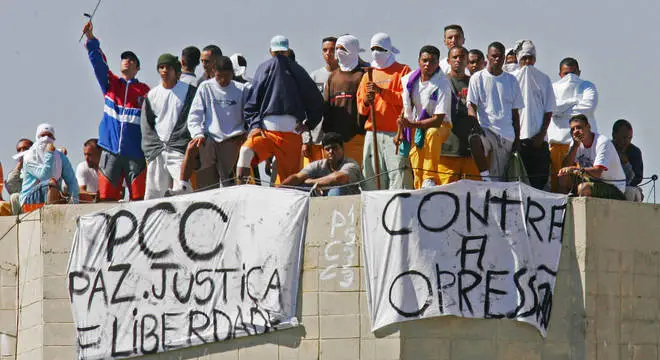
Data shows that 72 drug-trafficking factions in Brazil manage these activities.
Two dominant groups, the Red Command and the First Command of the Capital (PCC), extend their reach beyond national borders.
Originating in São Paulo’s prisons in 1993, the PCC commands operations in 23 states, controlling illegal mining in the north.
The Red Command, with roots in Rio’s prisons dating back to the late 1970s, asserts control over drug routes from Colombia in 20 states.
The study points to significant obstacles to curbing these activities. A key issue is the fragmentation of over 1,500 security institutions, making coordinated efforts challenging.
However, this fragmentation stymies effective responses to the pervasive influence of these networks.
Pierpaolo Bottini, a legal expert on the Sphere advisory board, highlights the need to disrupt the economic foundations of these groups.
He advocates for cutting supply chains, managing data better, and focusing on anti-money laundering measures.
Strategic Measures to Counteract Geopolitical Crime
The report proposes strategic measures to counteract the geopolitical spread of these crimes.
It calls for the adoption of a General Data Protection Law for public security. This law would address legal ambiguities hindering investigations.
An inter-ministerial committee involving several government departments would help harmonize national response strategies.
Recommendations extend to enhancing the Financial Activities Control Council by funneling resources from taxes and fines linked to virtual assets and betting.
In addition, the proposed legal reforms aim to streamline public security data and ensure equitable federal support.
This infiltration of legitimate sectors by organized crime not only disrupts economic stability but also poses a direct threat to societal safety and governance.
The call for systemic reform underscores the urgency of a coordinated, well-resourced response to reclaim these sectors from criminal influence.
More: Brazil news in English, every day from The Rio Times.
This article was drafted with automated assistance and reviewed before publication. How we use AI · Report an error
Read More from The Rio Times