Europe Intelligence Brief — Monday, September 21, 2026
Executive Summary
Europe Intelligence Brief for 21 September 2026: German voters turn Merz's party out of a state parliament and he digs in, Moscow stages unity under drone
Europe Intelligence Brief — Monday, 21 September 2026

Germany’s voters refused the calm they were offered. Two days after Berlin agreed to cut the tax on fuel, a coastal state in Germany’s north-east voted Chancellor Friedrich Merz’s party out of its parliament, a first in the party’s history.
The far-right Alternative for Germany came first in that state, Mecklenburg-Vorpommern, and the Left Party won the capital. More people voted in both places than last time, and they came out angry rather than apathetic.
Merz called the result “a disaster” and promised “backbone, steadfastness and patience”. His coalition partner, the Social Democrats, answered by asking for “a reality and fairness check” of his reforms.
Russia staged a loud unity, with the only anti-war party struck off the national list. Its election commission gave the ruling party a record majority in a vote whose observers were barred from polling stations, while Moscow absorbed the largest drone attack it has faced.
In France the fear moved to the pump, where diesel reached a record and the prime minister called crisis meetings. Brussels is stalled over two businessmen’s names as sanctions on backers of Russia’s war approach a midnight deadline on Tuesday.
What steadies the week is stubbornness in the institutions. Berlin’s government says “Ja, absolut”, yes, absolutely, it can still govern. A security pact between the United States, Denmark and Greenland, the Arctic island under Danish control that Trump had threatened to seize, heads for signature in New York. Poland keeps building sirens on its eastern border even as Moody’s cuts its credit rating.
Read this morning in English and in the original German, French, Romanian, Danish, Swedish and Russian, with translations from those languages the desk’s own. German results are preliminary official counts, Russian results are the election commission’s own figures, and every euro amount carries its US dollar value at the European Central Bank’s reference rate of 21 September, US$1.1490.
Germany Turns Out In Anger, And Merz Digs In
Germany woke on Monday humbled and wide awake. In Mecklenburg-Vorpommern, a largely rural Baltic state of about 1.3 million voters, Merz’s Christian Democratic Union, the CDU, won 4.89 per cent on Sunday, below the 5 per cent needed for seats.
The far-right Alternative for Germany, the AfD, took 38.22 per cent, up from 16.72 per cent in 2021, on the preliminary result of the state’s returning officer. The Social Democrats of the state premier, Manuela Schwesig, came second with 35.50 per cent.
The Left Party won 6.54 per cent and the Greens 5.67 per cent, so four parties share the new 71-seat parliament. The AfD holds 32 seats, the Social Democrats 29, and the Left and the Greens five each.
Turnout rose to 78.11 per cent, from 70.77 per cent in 2021, when the state voted on the same day as the national parliament. That is the figure that reads the mood: people came out to be heard.
The fuel-tax cut that preceded the vote is still a promise. The coalition agreed it with the states on Friday, it is meant to apply from 1 October, and both chambers of parliament must first pass it at express speed, ZDFheute reported.
Berlin, a city-state with its own parliament, turned left. The Left Party, Die Linke, won 25.65 per cent, more than double its 12.20 per cent of 2023, and the CDU, which governs the city with the Social Democrats, fell to 18.77 per cent.
The AfD rose to 16.26 per cent in the capital, the Greens took 14.29 per cent and the Social Democrats 12.11 per cent, a “historic low” in the words of the Berlin daily Tagesspiegel. Turnout climbed to 74.22 per cent from 62.90 per cent in 2023.
The seat count depends on who does the sums. The election website wahlrecht.de, citing the returning officer and its own calculation, allocates 158 seats, while the Tagesspiegel, citing Forschungsgruppe Wahlen, the polling institute for the public broadcaster ZDF, printed 162.
On both counts the Left, the Greens and the Social Democrats together would hold a majority. The Greens’ Berlin chairs have already offered to forge “a progressive alliance for Berlin” with the other two, the Tagesspiegel reported.
Elif Eralp, the Left’s lead candidate, could become the city’s first Left mayor and its first with a migrant background, the paper noted. “Let’s go out and let’s change Berlin,” she said, and Al Jazeera carried her line that “love and justice have triumphed over hatred”.
Her party wants to nationalise housing owned by corporate landlords and to cap rents, Reuters reported. The Social Democrats’ Berlin leader, Steffen Krach, answered plainly: “We have been voted out. We have no mandate to govern”.
Merz stepped before the cameras 13 minutes after the polls closed, the Austrian broadcaster ORF noted, and called the result in the north-east “a disaster”. He ruled out resigning and said that what is needed now “requires backbone, steadfastness and patience”.
He went further, calling his reforms “the antidote to the authoritarian poison that is penetrating ever deeper into our society”, in Reuters’ translation. He presented the reforms as the answer to the result rather than its cause.
On Monday he sounded more reflective. “This election is a deep turning point,” he said. The CDU had been “ground down” in a two-way race between the Social Democrats and the AfD, he added, and his government and he himself had contributed.
Asked whether the CDU was still a Volkspartei, a people’s party that reaches every group in society, he answered: “We still are in parts, but only in parts”. He said the feeling that “things are no longer fair in this country” is widely felt, and floated a change to the split between private and statutory health insurance. The chancellery said that evening that he had not questioned the health insurance system itself, the Tagesspiegel reported.
His party is uneasy but not in revolt. On Sunday evening seven of the eight CDU state premiers met without him at the Berlin office of the state of Rhineland-Palatinate, ORF reported, citing the German Press Agency, dpa.
Dennis Thering, the CDU leader in Hamburg, told dpa that Merz must call a confidence vote in the Bundestag, the national parliament, if his reform course needs one. Günter Krings, who leads the joint group of the CDU and the CSU, its Bavarian sister party, in the Bundestag, defended him in the daily Welt. Alternatives only make sense if someone can show why things would go better, he said, “and I don’t see that at the moment”.
The government insists it can still work. Asked on Monday whether it could still govern, the deputy government spokesman, Sebastian Hille, said “Ja, absolut”. The news site t-online reported that the party lacks a single successor behind whom it could rally.
The coalition partner is less patient. “We cannot ignore the result of three elections,” Lars Klingbeil, the Social Democrats’ co-leader and vice-chancellor, said in the Tagesspiegel’s liveblog. His co-leader, Bärbel Bas, called for “a reality and fairness check” of the reforms, the Tagesspiegel reported.
Schwesig herself turned on the chancellor. “The chancellor misjudges the situation,” she said in Berlin. In Reuters’ report she said many in her state “wish to see energy flowing through Nord Stream again”, the pipelines that brought Russian gas ashore on her coast.
The AfD reads the night as momentum. “We have displaced the CDU as the people’s party,” its co-leader Alice Weidel told ZDF television, and her co-leader Tino Chrupalla said the “blue wave”, named for the party’s colour, is “unstoppable”.
The AfD holds too few seats to govern alone, and every other party refuses to work with it, under the policy Germans call the Brandmauer, or firewall, Euronews reported. Its lead candidate, Leif-Erik Holm, still claims the right to lead government talks and expects Merz to leave office before the year ends.
Voters named the cost of living. “Here in Schwerin, with these wages, you can hardly afford anything anymore,” Carlotta Heick told Reuters in the state capital. An older man who gave no name said: “We need our money here, for our country, for children and pensioners”.
Moscow placed itself inside the result. Dmitry Peskov, the Kremlin’s spokesman, blamed Germany’s economic decline largely on its decision to stop buying cheap Russian gas. Some Germans, he said, are “looking for an alternative to the current authorities”, Reuters reported.
Marcel Fratzscher, president of the DIW economic institute in Berlin, forecast to Reuters that political paralysis and economic weakness would persist if the coalition parties keep to their red lines. What steadies the state is that the Greens say the next move belongs to Schwesig’s Social Democrats, and they have offered to govern with them and the Left.
Moscow Stages Unity Under Drone Fire
Russia’s mood is a loud unity, staged with its opposition barred. The three-day election for the State Duma, the lower house of parliament, closed on Sunday 20 September, the first since the full-scale invasion of Ukraine in February 2022.
The figures that follow are official, and they come from a vote that independent observers could not freely watch. Observers were barred from polling stations, removed, offered bribes and detained, reported Meduza, an independent Russian news site. A monitoring platform counted more than 900 complaints by 20.00 Moscow time, one in three about observers’ rights.
With 95.18 per cent of precincts counted, the Central Election Commission put United Russia, the ruling party, at 57.83 per cent of the national list vote. The Communists had 13.81 per cent, the nationalist Liberal Democratic Party 8.98 per cent and New People 7.96 per cent, while A Just Russia stood at 4.96 per cent, just short of the threshold. All the parties on offer are approved by the Kremlin and fully support Putin, RFE/RL noted.
Ella Pamfilova, who heads the commission, said the count gives United Russia 355 of the Duma’s 450 seats, well above the 301 needed to change the constitution. It is the largest faction in the party’s history, beyond the 343 seats it won in 2016.
Pamfilova called turnout of 59.32 per cent a record for an election of this kind, in the report of Interfax, a Russian news agency, carried by Meduza. Radio Free Europe/Radio Liberty, a US-funded broadcaster, noted that turnout was 51.7 per cent in 2021 and 60.2 per cent in 2011, the year fraud allegations brought large protests to Moscow.
The choice was narrow. Russia’s Supreme Court removed Yabloko, the only party running on an anti-war platform, from the national list in August. At least 86 veterans of the war are expected to take seats, The Moscow Times reported.
The official story is unity under pressure. “People felt that when we are pressed, we have always been used to answering,” said Vladimir Yakushev, secretary of United Russia’s general council. He told the site Daily Storm that the party had expected turnout of 52 to 53 per cent, Lenta.ru, a pro-government Russian news site, reported.
In Sakhalin, the regional election chief Viktoria Cherkasova said the vote showed that “people rallied around the country, statehood, sovereignty”. Pamfilova called it the hardest campaign of her long political life, and said 74 buildings housing election commissions were damaged or destroyed in ten regions.
The war was loudest in Moscow itself. The defence ministry said it shot down more than 1,900 drones, eight guided bombs, eight cruise missiles and four rockets overnight into Sunday, CNN reported, and Kyiv did not confirm the number. The mayor said about 450 drones were downed on the approach to the capital.
Meduza cites at least 1,951 drones and eight cruise missiles over 19 and 20 September. Drones reached the Moscow oil refinery, and three people died in the Moscow region, with 20 injured, three of them children, its governor Andrey Vorobiev said.
The mayor, Sergei Sobyanin, said the attack “was clearly planned with the aim of disrupting the elections”. Ukraine’s president, Volodymyr Zelensky, said the strikes had “a very significant impact in the Moscow region”, and did not mention the vote, CNN reported.
Inside the city, voters queued for hours on Sunday when the electronic voter roll failed, Meduza reported. The Moscow election commission called the breakdown a “minor glitch”.
Dissent survived in small gestures. Yabloko’s leader, Nikolai Rybakov, wrote “for peace” on his ballot in St Petersburg. The exiled opposition figure Dmitry Gudkov told Current Time, a Russian-language channel run by RFE/RL, that “they kicked out election observers”.
Before the vote an observer told The Moscow Times: “I can’t overthrow anyone, but I can show up and observe”. Anastasia, in St Petersburg, said of voting that “it doesn’t decide anything and has no impact”.
Brussels called the election a sham. “The veneer of democracy is all that remains in Russia,” wrote Kaja Kallas, the European Union’s foreign policy chief, who proposed measures against those facilitating the voting in occupied Ukrainian regions, RFE/RL reported.
The Kremlin also looked towards Washington. Donald Trump signed a law on Friday that lets the US president impose tariffs of up to 100 per cent on countries that buy Russian oil and gas. Peskov said it “doesn’t contribute to the resuscitation of our bilateral relations”, The Moscow Times reported.
Dmitry Medvedev, deputy head of Russia’s Security Council, said the answer should come in “the language of direct military deterrence”. What steadies the picture is diplomacy: Peskov said Russia was open to reopening three-way peace talks, and Zelensky and Trump agreed on Sunday to meet in New York this week, CNN reported.
Pamfilova said final results come no earlier than 25 September. Putin plans to meet the leaders of the parties entering the Duma, Lenta.ru reported, in a format still to be announced.
Key Facts
Paris Holds Its Nerve As The Fear Moves To The Pump
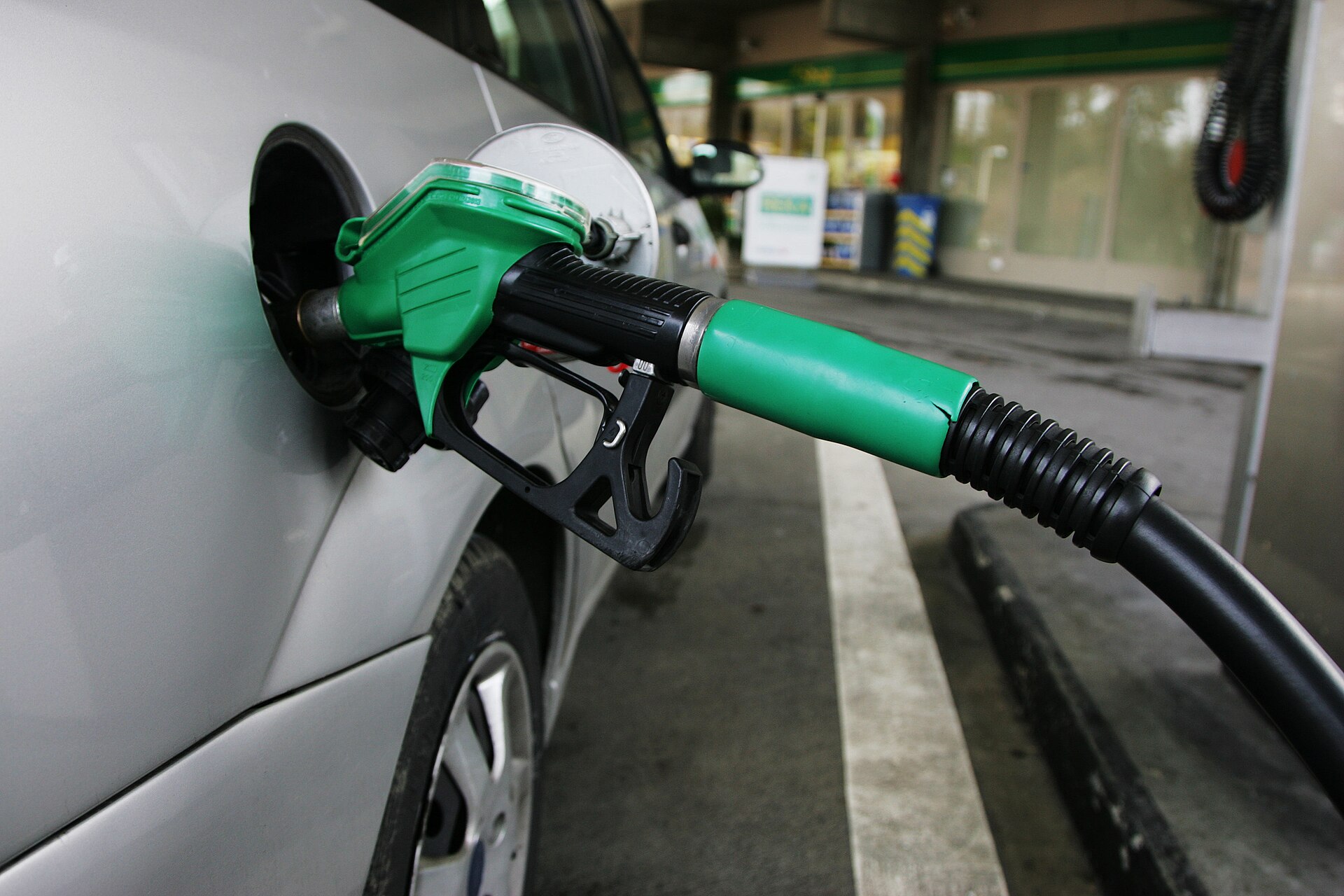
France is holding its nerve while the fear moves to the pump. Diesel averaged close to €2.41 a litre (about US$2.77) on Sunday 20 September, a new record, on an analysis of public data by Agence France-Presse, AFP.
The price feeds a grievance that already has a shape. Fishermen blockaded fuel depots on the Mediterranean last week, AFP reported. Several presidential candidates and politicians fear the return of movements like the gilets jaunes, the yellow vests who once rose against a fuel tax.
Prime Minister Sébastien Lecornu held two meetings on Monday, one on oil and gas supply and one on short- and medium-term help for households. A new scheme is to replace, on 1 October, the €100 aid (about US$114.90) for high-mileage drivers, which only a little under half of the three million people eligible claimed, AFP reported.
Ministers are keeping their tone deliberately level. “For the next two months, we have no worries” about supply, the economy minister, Roland Lescure, said, citing strategic stocks that are full.
The government spokeswoman, Maud Bregeon, said that “10 million barrels a day” are missing from the world market. On the television channel LCI she promised aid aimed at “French people who work, who have no other choice than to take their car”.
The limit is the budget. Public debt is set for a record next year and interest rates are rising, AFP noted, which leaves the government little room to promise calm the way Berlin has.
Emmanuel Macron looked west for supply and for allies. On Sunday he received Mark Carney, Canada’s prime minister, on Saint-Pierre-et-Miquelon, a French archipelago of 5,800 people off Newfoundland, in the first official visit there by a serving Canadian leader.
“We both believe that our countries are two great independent nations that want to stay that way,” Macron said, in AFP’s report. Carney answered that “history remembers those who defend their sovereignty”, and Donald Trump, who has repeatedly threatened to annex Canada, went unnamed.
The substance was energy. Macron thanked Carney for having “responded so quickly” and said Canada’s liquefied natural gas projects “are important for our Europe”, and the two leaders agreed to strengthen cooperation on energy security, Carney’s office said.
They also told their space agencies and defence ministries to build shared launch and ground-control infrastructure, and welcomed a new partnership between their countries’ chambers of commerce. Macron announced €19 million (about US$21.8 million) to renovate Saint-Pierre’s port, where one quay threatens to give way, AFP reported.
The islanders read the day through their own history. Wendy Sandeman was born in Newfoundland and has lived on the islands for 40 years. She wanted “to show my support for Mr Carney because of the problems Canadians are suffering because of the Americans”, La Presse, the Montreal daily, reported.
In Miquelon, a village of 600 relocating away from the rising sea, Macron promised to finish moving half its people by 2033. “It creates tension between those who are for and those who are against,” said Lise Leloche, 73, in AFP’s report.
Macron also welcomed the Greenland agreement, saying Danish sovereignty and international law were respected, “exactly what we asked for”, AFP reported, as carried in Danish by Ritzau, the Danish news agency. He speaks to the country on Thursday at 20.00 Paris time on TF1 and France 2, the country’s main private and public television channels.
What steadies France for now is supply, with strategic stocks full for two months in Lescure’s account. What could reverse it is a war in the Middle East that outlasts those stocks.
Brussels Stalls Over Two Names On A List
The European Union is testing its unity against a deadline. Its sanctions on people and entities accused of supporting Russia’s war expire at midnight on Tuesday 22 September unless all 27 member states agree to renew them, as they must every six months.
The list is long. Euronews puts it at more than 2,600 people and entities, and Reuters reported on 14 September that the designations target nearly 3,000 companies and individuals with asset freezes and travel bans.
The obstacle is two names. France has joined Slovakia in seeking the removal of Alisher Usmanov, a Russian-Uzbek metals billionaire who owns the business daily Kommersant. Slovakia also wants Mikhail Fridman, another Russian businessman, taken off the list, Reuters and Interfax-Ukraine, a Ukrainian news agency, reported.
Euronews understands that France and Uzbekistan agreed behind the scenes on Usmanov’s removal in exchange for Azerbaijan releasing two French prisoners, with a pardon from its president, Ilham Aliyev. France has not confirmed the swap and speaks only of a national security issue, Euronews reported.
Ambassadors met on Monday morning without a deal and were to meet again at 14.00 Central European time, Euronews reported. “The contours of a deal are emerging,” one diplomat said, and a second said that “multiple ideas are floating around”.
Accounts of the compromise differ. Diplomats told Euronews that Ireland, which holds the rotating presidency of the Council of the EU, proposed delisting both men in exchange for an unprecedented 36-month renewal.
Ukraine’s sanctions adviser, Vladyslav Vlasiuk, wrote on Monday of a 12-month extension in exchange for lifting sanctions on Usmanov, and added that “the situation has changed three times just today”, Interfax-Ukraine reported. “Delisting without a fundamental change in conduct sends exactly the wrong signal,” he said, in Euronews’s report.
The Union has lived through such standoffs before. Member states often argue over renewals until the last moment, in the past largely over demands from Hungary’s former leader, Viktor Orbán, and from Slovakia, Reuters noted.
In June the members agreed for the first time to renew the broader economic sanctions, such as those on energy, for a year at a time, Reuters reported. Usmanov, 73, denies the allegations behind his listing, Euronews reported, and his net worth was US$18.8 billion in early 2026 on the Bloomberg Billionaires Index, Reuters reported.
What steadies the file is habit, since six-month renewals have been the custom since 2014, Interfax-Ukraine noted. What is new is a precedent that would trade names for prisoners, and it has angered several member states, Euronews reported.
Bucharest’s Social Democrats Choose Brinkmanship
Romania’s politics have moved from stalemate to brinkmanship. On Monday the national bureau of the Social Democratic Party, the PSD, decided not to back the government of Siegfried Mureșan, its leader Sorin Grindeanu announced. Mureșan is the prime minister-designate proposed by President Nicușor Dan.
Antena 3 CNN, a Romanian news channel, reported, citing party sources, that the bureau’s decision is a recommendation to the party’s national council, which takes the final decision. Grindeanu said the PSD “cannot endorse by its vote the continuation of this economic model of disaster”, the broadcaster ProTV reported.
His target is the man Mureșan wants to follow. Mureșan “wants to be Mr Bolojan’s disciple”, Grindeanu said of Ilie Bolojan, leader of the National Liberal Party, whose government the PSD left in April and later voted against in a no-confidence motion.
Grindeanu asked where Mureșan would find “the roughly 30 billion lei missing from the budget” (about US$6.5 billion). He said his party and “more than 80%” of Romanians expect new cuts to come “under the false flag of reform”.
The arithmetic is unforgiving. Investiture needs at least 233 votes, and Mureșan is 47 short, ProTV calculated. He starts with 186, from the Liberals, the liberal Save Romania Union, the Hungarian minority’s party UDMR and the national minorities’ group.
Mureșan answered that the PSD faces “the test of truth”, Antena 3 reported. It must choose, he said, between a pro-European government and a “consolidated partnership” with AUR, the hard-right Alliance for the Union of Romanians. PSD deputy Marius Budăi replied on Facebook: “Better early elections than voting for a prime minister who tells us he will continue Bolojan’s government”.
The same morning, prosecutors turned to a leading anti-system politician. DIICOT, Romania’s agency for investigating organised crime, stopped Călin Georgescu in traffic and searched his home near Bucharest, Digi24, a Romanian news channel, reported. The fraud case involves a claimed loss of €1.1 million (about US$1.26 million).
Georgescu, who led the first round of Romania’s annulled presidential election in 2024, was questioned in an investigation into forming a criminal group and serious fraud. Prosecutors then detained him for 24 hours, and he declined to make statements to investigators, judicial sources told Digi24. Supporters outside the prosecutors’ building chanted “Freedom” and “Călin is innocent”, Digi24 reported.
What steadies Romania is that the process runs to a legal timetable. Mureșan has ten days from the decree’s publication in the official gazette to form a cabinet and seek a vote, ProTV noted.
What could unsettle it is that party sources told Antena 3 the PSD is ready for early elections “without hesitation”, if the president so decides. Grindeanu said that Bolojan, not Mureșan, had called him to ask for a meeting this week.
Nuuk Signs With Relief, And Keeps Its Guard Up
Greenland approaches its agreement with relief and caution. Its premier, Jens-Frederik Nielsen, and its foreign minister, Múte B. Egede, have arrived in New York, where Nielsen, Denmark’s Mette Frederiksen and Donald Trump are expected to sign the pact at the UN General Assembly this week, Sermitsiaq, a Greenlandic newspaper, reported.
The text has not yet been presented, Sermitsiaq reported. Trump says it gives the United States “permanent control over security and all other needs in Greenland”, with no expiry date. Denmark’s prime minister, Mette Frederiksen, says it recognises the kingdom’s sovereignty and the Greenlandic people’s right to self-determination, DR, the Danish public broadcaster, reported. Nielsen says it “recognises Greenland’s interests and our place in international cooperation”.
Nielsen wrote on his way that “it has been a hard time for many at home”, with “both worry and fear about what would happen to our country”. “We stand firm that our future is our own,” wrote Egede.
Not everyone is reassured. Near the Katuaq cultural centre in Nuuk, the capital, a sign reads: “It is suicide!! If we sign the agreement with the USA. Wake up Jens and Mette”, Sermitsiaq reported, citing DR.
Trump posted an image on Sunday captioned “His Hemisphere”, Sermitsiaq reported. The agreement must pass parliamentary procedures before it takes effect, the Danish prime minister’s office said, DR reported.
Danish analysts are cautious. “Let’s be honest: it is Donald Trump across the table – he can sometimes be very unpredictable,” said Hans Redder, political editor of the broadcaster TV 2. Its analysis concluded that “the devil is in the detail”.
Stockholm, meanwhile, waits on its own lines. Sweden voted on 13 September, and Prime Minister Ulf Kristersson of the centre-right Moderate Party has announced his resignation, the TT news agency reported.
Andreas Norlén, speaker of the Riksdag, Sweden’s parliament, gave the Social Democrat Magdalena Andersson the first attempt to form a government. She reports to the new speaker on Monday 28 September, who then sets when her task ends, TT reported, and that settles the two readings of her deadline this brief carried on Saturday.
The Centre Party will not even meet the Left Party, since “we cannot sit in government” with it, its leader Elisabeth Thand Ringqvist said. The Left’s Nooshi Dadgostar appealed to the others “to come to the negotiating table”, TT reported. The new Riksdag meets on 28 September to elect its speaker and opens formally on 29 September, the parliament announced.
Warsaw Keeps Organising, And London Chooses Pragmatism
Poland keeps organising even as the bill arrives. Late on Friday 18 September the rating agency Moody’s cut its rating from A2 to A3 on its scale, the lowest since 2002, Notes from Poland, an independent news site, reported. Moody’s cited “a sustained deterioration in Poland’s fiscal strength”.
Moody’s named the politics behind the money: “the continued standoff between the government and the president and the proximity of the November 2027 parliamentary elections”. It moved the outlook back to stable, forecasting strong growth and government debt settling around 70 to 75 per cent of economic output by the late 2020s.
The deficit reached 7.3 per cent of economic output in 2025, and the draft budget for 2027 puts it at 7.1 per cent, against an EU ceiling of 3 per cent. President Karol Nawrocki, aligned with the right-wing opposition, has vetoed a record number of bills and recently blocked a windfall tax on fuel companies.
The two camps answered in character. “We take this decision seriously, but calmly,” said the finance minister, Andrzej Domański, while Paweł Szefernaker, head of the president’s office, wrote: “They steal, they lie and they burden our homeland with debt”.
The organising goes on at the border. The eastern Lublin province had about 30 remotely operated sirens at the start of 2024 and has almost 350 now, the interior minister, Marcin Kierwiński, said on Saturday. He plans more than 1,000 by the end of the year.
“Jet-powered drones and missiles are increasingly flying near the Polish border,” he said, quoted by the news site OKO Press. More than 500 fire stations in the east trained over the weekend, and a preparedness campaign has reached 630,000 people, Notes from Poland reported.
Britain is choosing pragmatism over its prime minister’s old instincts. Andy Burnham, prime minister since July, once said he would refuse to meet Trump, and now holds his first meeting with him at the UN, the Associated Press reported. He addresses the General Assembly on Tuesday.
He plans to urge Trump to send interceptor missiles to Ukraine and to discuss reopening the Strait of Hormuz, the AP reported. “We won’t agree with the U.S. administration on everything,” the governing Labour Party’s chair, Bridget Phillipson, told Times Radio, but “maintaining that relationship is critical for our national interest”.
What This Means From Latin America
Read from São Paulo or Bogotá, Europe this week is a continent where German voters declined the relief they were promised. The desk’s reading travels well: relief promised just before a vote was taken as relief, not as a reason to forgive.
Europe is looking for energy away from the Gulf. Macron asked Canada for liquefied natural gas and thanked Carney for answering “so quickly”, a search that Latin American exporters of oil and gas can read as well as anyone.
Brent crude for November delivery settled at US$103.87 a barrel on Friday 18 September and was trading near US$100.84 at 13.48 UTC on Monday. It eased after Trump said he would “probably” be open to meeting Iran’s president, Reuters reported. The same barrel is income for the region’s crude exporters and a bill for its importers.
Washington’s new law lets the US president impose tariffs of up to 100 per cent on countries that buy Russian oil and gas, The Moscow Times reported, naming China and India. Every importer of Russian energy, in Latin America as elsewhere, now has a reason to read the text closely.
Middle powers are building ties of their own. Carney and Macron spoke of an “alliance for the future” between Canada and the European Union, in the words of Carney’s office, a model that Latin American governments courting Europe can study.
Brazil knows the cost of governing through high prices, with its Selic rate (its benchmark interest rate) at 13.75 per cent. German voters have now shown what that cost looks like at the ballot box.
What We Are Watching
- EU sanctions on Russian listings expire — Midnight on Tuesday 22 September, unless all 27 member states agree, on the timetable the Irish presidency’s spokesperson gave Reuters.
- CDU and CSU lawmakers face Merz — Tuesday 22 September, a session for which Merz cancelled his trip to the UN General Assembly, t-online reported.
- Britain’s prime minister at the UN — Tuesday 22 September, when Andy Burnham addresses the General Assembly and prepares for his first meeting with Trump.
- The Greenland agreement is signed — This week in New York, by Trump, Frederiksen and Nielsen, before it passes through the parliamentary procedures in Denmark and Greenland.
- Macron speaks to the French on television — Thursday 24 September at 20.00 Paris time, on TF1 and France 2.
- Russia’s official Duma results are published — 25 September at the earliest, on the word of the election commission’s head, Ella Pamfilova.
- The Left Party marches with the unions — 26 and 27 September, when its leader Ines Schwerdtner said it would protest with the trade unions, the Tagesspiegel’s liveblog reported.
- Sweden’s deadline for Magdalena Andersson — Monday 28 September, when she reports to the new speaker, whom the Riksdag elects that day and who then sets when her task ends.
- France replaces its fuel aid for commuters — 1 October, when a new scheme succeeds the €100 aid (about US$114.90) for high-mileage drivers.
- Mureșan’s window to seek a vote — Ten days from the decree’s publication in the official gazette, ProTV reported, with the final word on the PSD’s position resting with its national council.
The Bigger Picture
Europe’s governments spent last week promising calm, and German voters declined the offer. Berlin promised relief at the pump, and two days later Mecklenburg-Vorpommern voted the chancellor’s party out of its parliament.
The anger is specific rather than general. Voters named wages, pensions and the cost of living, and Schwesig climbed in the polls by criticising both the AfD and the chancellor’s reforms, Reuters reported.
Moscow answered the same week with a staged unity, and Brussels with a stalled list. Both still produce results, but one comes from a vote without free observation and the other from a bargain over two names.
What steadies the picture is that the machinery still turns. Berlin’s government says it can govern, the Greenland pact heads for signature and Poland builds sirens while it pays for them, and each of those can still change within the week.
Sources: German results from the returning officers’ preliminary counts as tabulated by wahlrecht.de for Mecklenburg-Vorpommern and for Berlin, because the returning officers’ own pages could not be read through this desk’s connection. Reactions from the Tagesspiegel liveblog, the Tagesspiegel on Berlin, ORF, ZDFheute, t-online and t-online on the dates ahead. They also draw on Euronews in German, Reuters via Cyprus Mail and Daily Maverick, and Al Jazeera. Russia from Meduza, Meduza’s account of the three days, The Moscow Times, The Moscow Times on the sanctions law, The Moscow Times on voters. It also draws on RFE/RL, Lenta.ru, Lenta.ru on the regions and CNN via KVIA; the Central Election Commission’s own site returned an error to this desk. France from AFP via Boursorama on fuel and on Saint-Pierre, La Presse and the Prime Minister of Canada. Sanctions from Euronews, Interfax-Ukraine and Reuters via WHBL; the Council of the EU’s press page refused this desk’s request. Romania from Știrile ProTV, Antena 3 CNN and Digi24. The north from DR, Sermitsiaq, TV 2, TT via TTELA and the Riksdag. Poland from Notes from Poland and Notes from Poland on sirens, and Britain from the Associated Press via News4Jax. Oil figures from the house markets check. Currency conversions use the European Central Bank’s reference rate of 21 September 2026, US$1.1490 to the euro. The Romanian figure uses the ECB reference rate of 5.2647 lei to the euro (4.5820 lei to the dollar) · 19–21 September 2026.
Frequently Asked Questions
What happened in the Berlin and Mecklenburg-Vorpommern state elections on 20 September 2026?
The far-right AfD came first in Mecklenburg-Vorpommern with 38.22 per cent, and Chancellor Merz’s CDU won 4.89 per cent, losing every seat. In Berlin the Left Party came first with 25.65 per cent, on the preliminary official results.
Is Friedrich Merz resigning after the state election defeats?
He ruled out resigning on Sunday, called the vote “a deep turning point” on Monday, and his deputy spokesman said the government could “absolutely” still govern. Hamburg’s CDU leader has suggested a confidence vote, and the CDU and CSU lawmakers meet him on Tuesday, t-online reported.
How far can the official results of Russia’s Duma election be trusted?
They are the election commission’s own figures, from a vote in which observers were barred from polling stations, Meduza reported, and the only anti-war party was removed from the national list. The commission gives United Russia 355 of 450 seats on turnout of 59.32 per cent, with final results due no earlier than 25 September.
Why could EU sanctions on Russian people and companies lapse on 22 September?
The listings need unanimous renewal every six months, and France and Slovakia want Alisher Usmanov removed, with Slovakia also seeking the delisting of Mikhail Fridman. Without agreement they expire at midnight on Tuesday 22 September, on the Irish presidency’s timetable reported by Reuters.
This article was produced by The Rio Times’ automated newsroom system. How we use AI · Report an error