Why Ethiopia and Eritrea Are Near War in 2026
Forces are massed along a border of more than 1,000 km, and no source can say who holds Badme, the town at the centre of the 1998 to 2000 war.

ETHIOPIA · ANALYSIS
Ethiopia is generally cited as the world’s most populous landlocked country, and Eritrea holds the Red Sea coast next door. This analysis explains the dispute, the fight over the town of Badme and what is still unconfirmed, building on the Africa Intelligence Brief.
Key Facts
- What is happening Ethiopia expelled 10 Eritrean diplomats and ordered its Asmara embassy closed on 1 October 2026, Eritrea severed diplomatic ties the same day, and artillery and drone clashes were reported near Badme in the week before 18 November, but no war has been declared.
- Why it matters Ethiopia’s demands for Red Sea access, including the Eritrean port of Assab, meet a renewed war with Tigrayan forces.
- The numbers Forces are massed along a border of more than 1,000 km (Reuters, 18 November 2026), and 10 Eritrean diplomats were expelled on 1 October 2026.
- Who is who Prime Minister Abiy Ahmed leads Ethiopia, Information Minister Yemane Gebremeskel speaks for Eritrea, and Tigrayan TPLF-allied fighters are the third party.
- What to watch Confirmation of who holds Badme, any army-to-army fighting, and the Security Council Report December 2026 forecast for a scheduled session.
- What it means for you The US State Department rates Ethiopia Level 3 (Reconsider Travel).
The risk of an Ethiopia-Eritrea war has risen because ties broke on 1 October 2026 and armies are reported to be massing along the border. For US readers it touches Red Sea shipping, Horn of Africa security and a diplomatic request now sitting with the State Department.
Why the Two Countries Are Close to War Again
Ethiopia and Eritrea have massed forces along a border of more than 1,000 km, Reuters reported on 18 November 2026. The report cites ACLED, a conflict-monitoring group, the International Crisis Group, a research body, and sources tied to Tigrayan factions.
The immediate trigger is a new round of fighting inside Ethiopia.
Ethiopia’s army, the ENDF, and pro-government militia pushed them out of Tigray, according to DW. ACLED says the ENDF drove the Tigrayan Defense Forces toward the Eritrean border, which is where Badme sits.
The Rio Times brief judges that deniability is the main tool on both sides. It also rates miscalculation as more likely than a declared war, a view that is analysis rather than sourced fact.
The 1998-2000 War and the Border Commission
Eritrea achieved de facto independence in 1991, held a referendum in April 1993 and became formally independent in May 1993. That left Ethiopia without a coastline of its own.
Badme was the epicentre of that war.
The Algiers Agreement ended the war, and both sides agreed to honour the rulings of a boundary commission, DW reports. That commission awarded Badme to Eritrea in 2002, though DW notes that Ethiopia has at times challenged the ruling.
Relations were restored in 2018, when Ethiopia’s Asmara embassy reopened as part of the rapprochement that won Abiy Ahmed the Nobel Peace Prize. The two armies then fought on the same side in the 2020-22 Tigray war, which the Pretoria Agreement ended when it was signed on 2 November 2022.
Eritrea has since shifted toward the TPLF, DW reports, after fighting it alongside Ethiopia. That shift is one of three drivers of today’s tension, with Ethiopia’s renewed war against Tigrayan forces and Prime Minister Abiy Ahmed’s Red Sea rhetoric.

Who Holds Badme Today
ACLED reports that the Eritrean Defence Forces retook control of Badme town around 15 November. On paper the answer is Eritrea, because the boundary commission awarded the town to it.
ACLED’s East Africa analysis says no army controlled Badme between about 12 October and 14 November, after the Eritrean Defence Forces pulled back in mid-October. On 12 and 13 November ACLED reported drone strikes and clashes around Badme but did not say who held the town. ACLED then reported that the Eritrean Defence Forces re-entered and retook control of Badme town around 15 November.
The Critical Threats Project (CTP), which tracks the conflict, could not tell on 10 November whether the fighting was on the Ethiopian or the Eritrean side. Frontlines, as relayed by Plaut, found no extensive Eritrean Defence Forces fortifications or presence around Badme on 12 November.
A DW analyst’s remarks imply that Eritrea holds the town, but DW does not say so. Treat that as an inference, not a finding.
What Is Reported About the Fighting
Shelling and armed clashes were reported near Badme in the week before 18 November, according to ACLED.
Reuters reports that on 12 November Ethiopian drones reportedly hit likely Eritrean positions near Badme, and Eritrean forces fired artillery back.
Magnus Taylor of the International Crisis Group did not confirm army-to-army clashes. Ethiopia has not commented on the drone strikes, and the CTP calls reports of strikes inside Eritrea unverified.
Assab and the October Break in Relations
Assab is an Eritrean port on the Red Sea. DW reports that Prime Minister Abiy Ahmed calls lack of sea access an existential threat and has not ruled out taking Assab by force, though he says he prefers peaceful means.
Asmara reads his calls for sea access as an implicit threat, Reuters reports. ACLED says Addis Ababa’s Assab claims in 2025 led both sides to mobilise and back rebel groups.
On 17 November Eritrea’s information minister accused Ethiopia’s army chief of laying claim to Eritrean territory (Dogali, Gundet, Adulis) and of trying to rally support for war, Anadolu reported. The chief, named only as Jula in that report, said the TPLF had launched new attacks in Amhara and Afar.
How Diplomatic Ties Broke
On 1 October, Ethiopia’s foreign ministry declared 10 Eritrean diplomats persona non grata, meaning unwelcome, with 48 hours to leave, according to Al Jazeera, The EastAfrican and Ahram. It said it would close its embassy in Asmara, citing Eritrea’s “direct and indirect acts of hostility and belligerence”, and gave no specifics.
Eritrea said it would sever all ties, and Information Minister Yemane Gebremeskel said expelling all diplomats effectively closed its embassy, Al Jazeera reported on 1 October. Eritrea’s foreign ministry rejected the claims and accused Addis Ababa of hostility over three years, according to Sahara Reporters.
Eritrea wrote to the African Union (AU) on 12 October asking it to restore Eritrea’s representation at the AU in Addis Ababa, allAfrica reported on 19 October. The AU Commission urged dialogue through diplomatic channels.
The Actors and What Each Wants
Six parties shape the crisis, and their stated positions differ sharply. Each line below gives the position as reported, not as established fact.
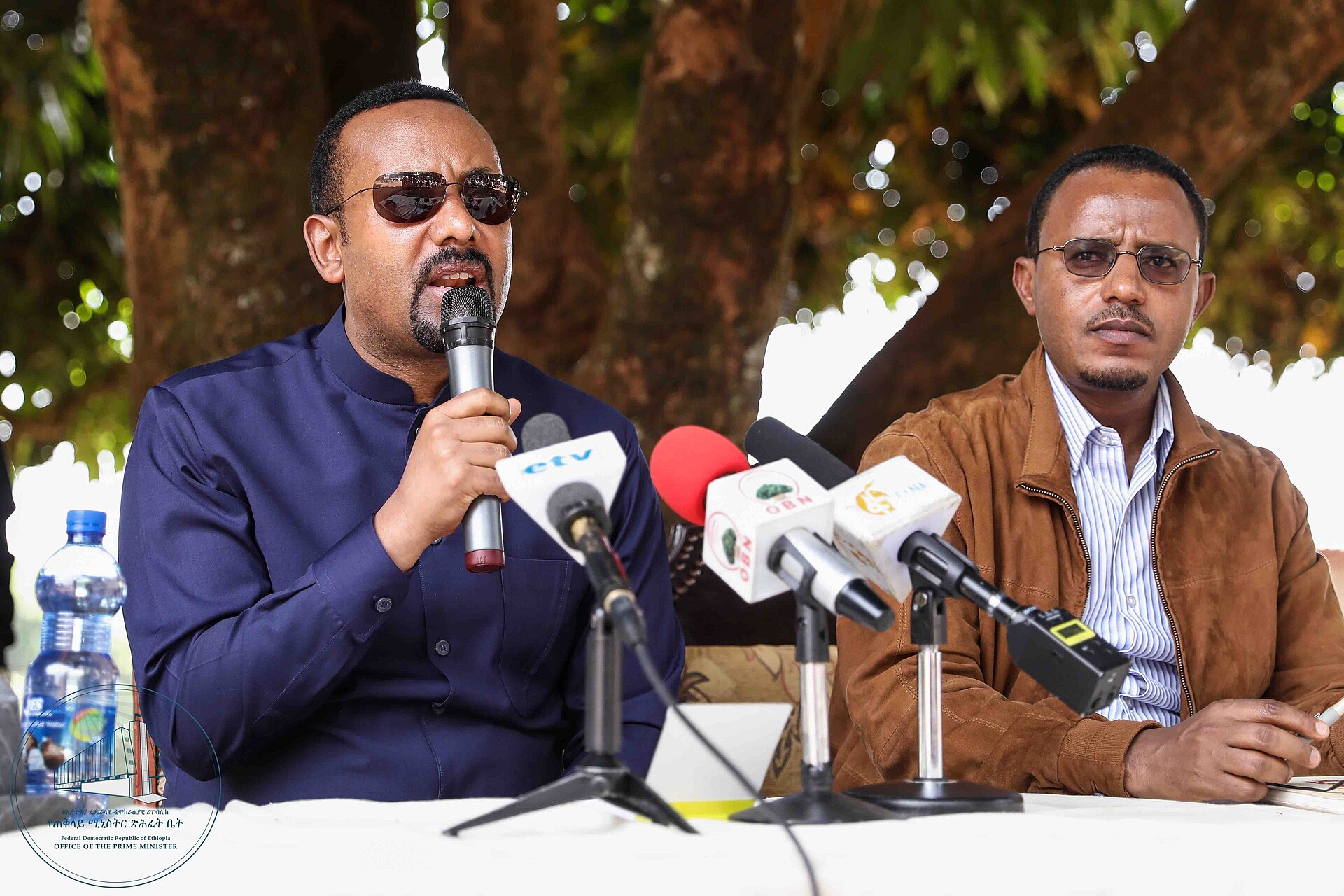
- Ethiopia’s government: led by Prime Minister Abiy Ahmed, sworn in for a new five-year term on 5 October 2026 (allAfrica). It says it will pursue sea access peacefully and accuses Eritrea of aiding Tigrayan rebels.
- Eritrea’s government: speaks through Information Minister Yemane Gebremeskel. It calls Ethiopian ruling-party statements propaganda (Reuters).
- The TPLF and allied fighters: Getachew Reda, a former TPLF spokesman, is now an adviser to Abiy, DW reports.
- The Tigray Peace Force: a pro-government Tigrayan group.
- Egypt and Sudan: Ethiopia accuses both of backing the rebels, and both deny it. Eritrea is reportedly backing the Alliance for Survival, a rebel coalition, which it denies (Reuters).
- The AU and the UN: the AU urged restraint and dialogue. UN Secretary-General António Guterres called for an immediate cessation of hostilities and cited the Pretoria Agreement.
The US, the UK and Canada urged restraint.
The Economic and Business Stakes
Ports, Trade and Ethiopia’s Economy
An Egypt-Eritrea maritime transport agreement signed in Asmara on 16 May 2026 puts Massawa and Assab back in Red Sea logistics, according to capmad, though the impact depends on implementation and no change in port operations has been confirmed. That raises the commercial value of the very ports Ethiopia is eyeing.
Ethiopia’s annual consumer inflation was 14.9% in September 2026, according to Trading Economics, citing the national statistics service. The National Bank of Ethiopia, led by Governor Eyob Tekalign Tolina, held its policy rate at 16% on 3 November, according to a secondary report.
Red Sea Shipping and What It Means for the Americas
The Africa Center counts 12 Houthi attacks or attempts in the southern Red Sea since July 2026.
Xeneta, which tracks freight rates, reported on 11 November that the Houthis have reportedly stopped attacks, which is unconfirmed. Xeneta’s November Ocean Outlook expects global spot rates to fall about 30% in 2027 and long-term contract rates about 5%, both against a Q3 2026 baseline.
The Rio Times brief links Red Sea tension to energy and shipping costs in Brazil and Argentina, but it does not tie that to Ethiopia or Eritrea. No source reviewed shows a freight or fuel effect from this border dispute.
If an effect appeared, it would run through wider Red Sea shipping risk. That is the brief’s framing and this analysis’ inference, not reported fact.
In Washington, five Democratic members of the Senate Foreign Relations Committee wrote to Secretary of State Marco Rubio on 10 November, according to the Critical Threats Project. They urged more US mediation and asked that Assab not be offered to Ethiopia in any deal.
Three Scenarios
These are scenarios, not forecasts. Each shows what would hold the situation steady and what would tip it.
Scenario One: The Dispute Stays Contained
Fighting stays inside Tigray and along the border, and diplomacy slows escalation. Stabilisers would be the AU’s call for dialogue, the UN’s reference to the Pretoria Agreement and Abiy’s stated preference for peaceful means.
The federal army said in September that nearly 300 fighters surrendered at the Tekeze corridor, AFP reported. If more follow, the pressure to push the war toward Eritrea could ease.
Scenario Two: A Prolonged, Deniable Conflict
Drones, artillery and rebel proxies continue, and both capitals deny direct involvement. This matches the Rio Times brief’s judgement that deniability is the main tool.
It is also the hardest scenario to measure. Most claims rest on anonymous diplomatic sources and conflict trackers.
Scenario Three: Open War
Confirmed army-to-army fighting, or an Ethiopian move on Assab, would tip the dispute into open war. Eritrea has already accused Ethiopia’s army chief of trying to rally support for war.
Each side has accused the other of seeking a pretext, which raises the risk of a misread signal. Neither accusation has been verified.
What It Means for You
For US travellers, the State Department rates Ethiopia Level 3 (Reconsider Travel).
Anyone with staff, suppliers or family in northern Ethiopia should check current advice before any plan.
For investors and shippers, the sources show no confirmed freight or fuel effect from this dispute. The practical signals to follow are Red Sea shipping risk and Ethiopian inflation, which stood at 14.9% in September 2026.
For Latin American importers, the link to freight and fuel costs is an inference from the Rio Times brief. It would depend on a wider Red Sea crisis, not on this border dispute alone.
What Is Not Known
Much of the reporting rests on anonymous diplomatic sources and trackers, and the research found no casualty figures. The points below remain unconfirmed as of 21 November 2026.
- Who holds Badme on the ground.
- Whether Ethiopian and Eritrean regular armies have directly fought.
- Whether Ethiopian drones struck inside Eritrea.
- Whether the diplomatic break has been reversed since mid-November.
- Whether the Houthis have actually stopped Red Sea attacks, and any freight effect from this dispute.
What to Watch
The research found no scheduled UN Security Council session, AU Peace and Security Council meeting or talks. The Security Council Report December 2026 forecast and AU communiqués are the first places to check.
- Any independent confirmation of who holds Badme, or of army-to-army fighting.
- The AU’s response to Eritrea’s 12 October request on its representation in Addis Ababa.
- Further surrenders of TPLF fighters after the September reports.
- Any State Department reply to the 10 November Senate letter on Assab.
- Ethiopia’s official October inflation release, after The Rio Times reported a 14.6% figure on 4 November, citing the Ethiopian Statistics Service.
Related reading: Why Ethiopia's Tigray Region Is at War Again in 2026; Ethiopia’s Neighbors Explained, Ports, Eritrea, Somalia; Ethiopia Red Sea Access Push Risks a Wider Horn Crisis; more from Ethiopia.
Frequently Asked Questions
Why are Ethiopia and Eritrea close to war again?
Three drivers stand out: Ethiopia’s renewed war with Tigrayan forces, Eritrea’s shift toward the TPLF, and Prime Minister Abiy Ahmed’s Red Sea and Assab rhetoric. Diplomatic ties broke on 1 October 2026.
Who controls Badme?
ACLED reported that the Eritrean Defence Forces retook control of Badme town around 15 November. The boundary commission awarded it to Eritrea in 2002, and ACLED said neither army held it on 13 November. Treat control as unconfirmed.
What happened in the 1998-2000 war?
It was a border war with Badme at its centre. The Algiers Agreement ended it, and both sides agreed to honour a boundary commission’s rulings.
What is Assab and why does Ethiopia want it?
Assab is an Eritrean port on the Red Sea. DW reports that Abiy calls lack of sea access an existential threat and has not ruled out taking Assab by force, though he says he prefers peaceful means. Eritrea accuses Ethiopia of territorial ambitions.
When did Ethiopia and Eritrea cut diplomatic ties?
On 1 October 2026 Ethiopia declared 10 Eritrean diplomats persona non grata and said it would close its embassy in Asmara, and Eritrea severed all ties in response.
Will this dispute raise shipping or fuel costs in the US or Latin America?
No source reviewed links this border dispute to freight or fuel costs. Any effect would be indirect and is analysis, not reported fact.
What does the US government advise travellers to Ethiopia?
The State Department rates Ethiopia Level 3 (Reconsider Travel).
Sources: riotimesonline.com, allafrica.com, martinplaut.com, addisstandard.com, intellinews.com, theeastafrican.co.ke. Retrieved 21 November 2026.
This article was produced by The Rio Times’ automated AI newsroom. Editorial responsibility: Matthias Camenzind, Publisher and Editor-in-Chief. The Rio Times also runs Ask Rio Times, which answers from 100,000+ of our own articles, the daily Latin America Power Map, and prediction-market odds on elections and markets.. How we use AI · Report an error
Part of our ongoing coverage
Africa: The New Scramble — the great-power contest over the continent.
Horn of Africa and the Red Sea
- Horn of Africa 2026: Why It Matters and Who Backs Whom
- Ethiopia’s Neighbors Explained, Ports, Eritrea, Somalia
- Eritrea Explained 2026, a Red Sea Country Guide
- Somalia Explained: Al-Shabaab, Somaliland, the Ports and the Fight Over a 2026 Vote