
Key Facts
- What. Local elections for 23 prefects (provincial governors), more than 220 mayors, councillors and parish boards.
- When. Sunday, Nov. 29, 2026, voting 7 a.m. to 5 p.m. ET (our conversion from local time, UTC-5).
- Why moved. The electoral authority advanced the vote from Feb. 14, 2027, citing El Niño flood risk.
- Voters. 13,827,643 registered voters, about 50.5% of them in three provinces: Guayas, Pichincha and Manabí.
- Prediction markets. Polymarket (a betting market), 12:22 p.m. ET, Nov. 21: Quito mayor, Pabel Muñoz 51.5%, Harold Burbano 33.0%.
This story is part of our coverage of the Ecuador local elections 2026. Dates, times and how to follow it are in our guide.
Latest: Ecuador’s Election Poll Ban Starts Tonight
What Happens on Sunday
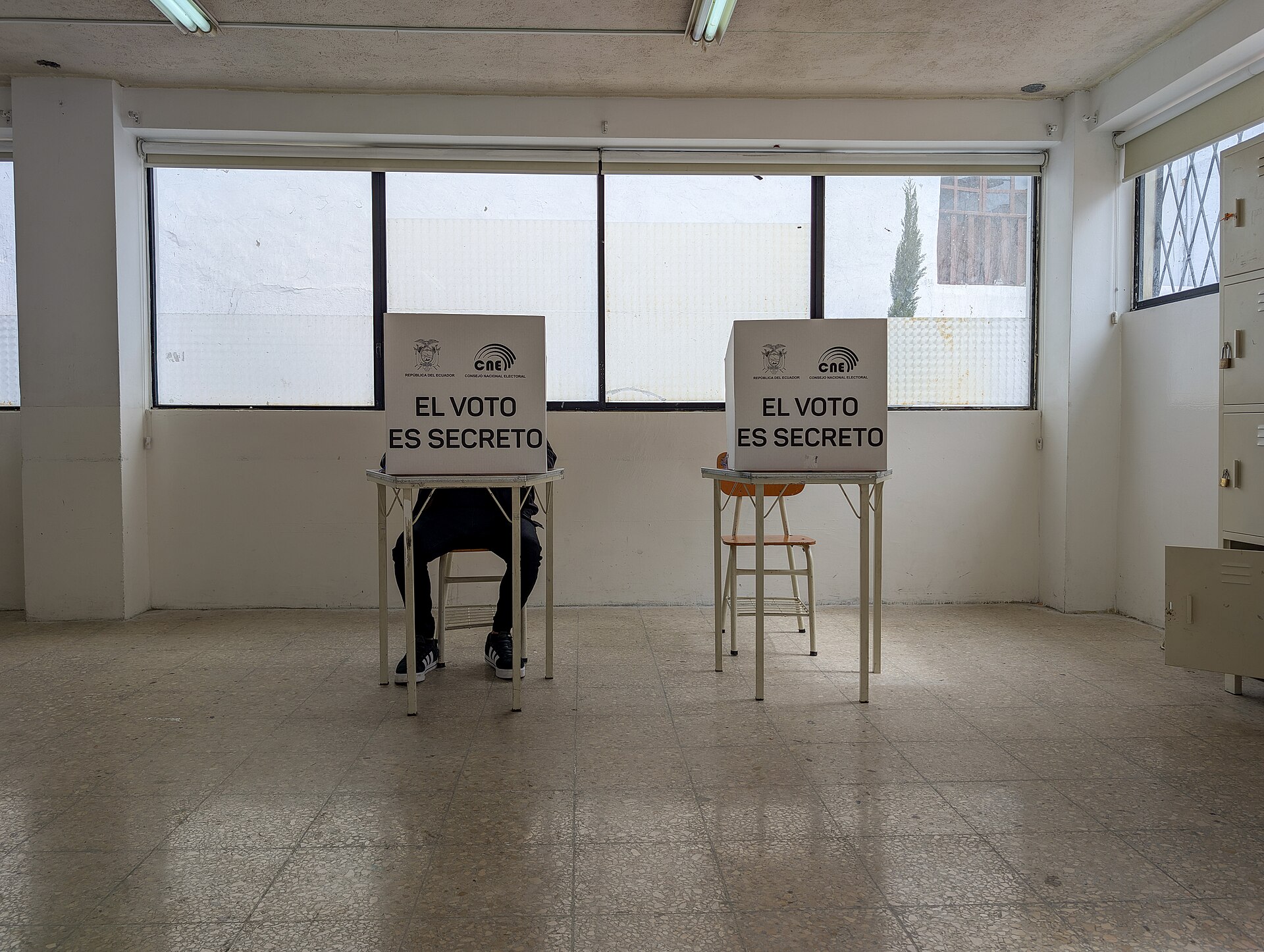
Ecuador votes on Sunday, Nov. 29, 2026, in local elections that the national electoral council (CNE) moved up from Feb. 14, 2027, citing flood risk from El Niño. Voting runs from 7 a.m. to 5 p.m. ET, our conversion from local time, because mainland Ecuador shares the UTC-5 offset with US Eastern Standard Time.
Our Ecuador local elections 2026 hub carries every update. Campaigning runs from Nov. 12 to Nov. 26, and electoral silence covers Nov. 27 to Nov. 29.
A single source says the alcohol ban runs from noon on Nov. 27 to noon on Nov. 30.
What Is at Stake
Voters will choose roughly 5,700 officials, including 23 provincial prefects with their vice-prefects, more than 220 mayors and about 1,360 urban and rural councillors. They will also fill 4,131 rural parish board seats and seven seats on the CPCCS, the citizen participation and social control council.
There are 13,827,643 registered voters, of whom 496,308 live in the three overseas districts. Guayas has 3,251,668, Pichincha 2,408,780 and Manabí 1,321,583, together about 50.5% of the roll.
The main contest pits ADN (Acción Democrática Nacional), the party of President Daniel Noboa, against the Revolución Ciudadana (RC) movement of former president Rafael Correa. An electoral court suspended RC in March 2026, so its candidates run under allied labels.
Quito and Manabí in Focus
In Quito, Mayor Pabel Muñoz seeks re-election with a coalition of Unidad Popular, the Partido Socialista Ecuatoriano and the movement Todos. The electoral court (TCE) unanimously rejected an appeal over alleged gender-based political violence, which lets him run.
His main rival is Harold Burbano, Noboa's former labour minister, who is the ADN candidate in a field of ten. The CNE's debate draw placed Muñoz and Burbano in the same group as fellow mayoral candidates César Díaz, Carla Larrea and Wilson Merino.
Polymarket, a prediction market that is not a poll, gave Muñoz 51.5% and Burbano 33.0% as of Nov. 21, as detailed below. We found no new poll from a named institute.
In Manabí, the provincial electoral board rejected the prefect registration of Luisa González, the RC presidential candidate in 2025, on Aug. 21, when she was running under the Indigenous movement Pachakutik, and the TCE upheld that on Sept. 12. RC leader Gabriela Rivadeneira said on Sept. 13 that RC would urge null votes there, and Noboa denies his government is behind the challenge.
Logistics Under Flood Watch
The CNE began distributing 41,023 electoral packages on Nov. 16, starting with Morona Santiago, Napo, Pastaza, Sucumbíos and Orellana. Delivery inside Ecuador is scheduled to finish on Nov. 28, according to the calendar as reported.
The CNE counted 21 voting venues in Guayas and Los Ríos with flooding problems around 14 and 15 November, 20 of them in Guayas. A report on 18 November put the number still flooded at seven.
What It Means for US Readers
Voting hours of 7 a.m. to 5 p.m. ET on Sunday, Nov. 29, fall within a normal US daytime. Official results will be published by the CNE at cne.gob.ec.
What Prediction Markets Say
Polymarket, a platform where users trade real money on outcomes, priced Quito mayor Pabel Muñoz at 51.5% and Harold Burbano at 33.0%, with about US$14,700 traded, as of 12:22 p.m. ET on Saturday, Nov. 21. These prices are bets, not polls, and the market is thin.
Why we show this: prediction markets turn real-money bets into a live probability that moves within minutes of the news, which is why investors, campaigns and newsrooms in the United States now follow them closely. We show them next to polls and official results, never instead of them.
What Is Not Known
We found no new development dated within the last 24 hours, and we could not open the CNE site directly, so dates come from press reports of its calendar. The time when official results will be published is unconfirmed.
The CNE reports 4,399 officially enabled polling sites nationwide, according to CNE president José Cabrera. It also set up about 2,500 contingency venues, to be used if main sites are hit by El Niño floods or landslides.
Ecuadorians abroad vote at 93 venues, which are counted separately. Another outlet cites 4,408 sites, a figure we could not reconcile with the CNE’s.
We could not confirm a Quito poll from a named institute with a date, and a thin market can swing on small trades. Harold Burbano is ADN's Quito candidate, although ADN reshuffled some candidacies around registration day.
The date of the vote for prisoners without a final sentence and of home voting, both held days earlier, is also unconfirmed. It is unknown how many null votes Manabí will record or whether any court would act under Article 147 of the electoral code, the rule on null votes.
We also did not confirm voting hours in the Galápagos Islands, whether silence ends at 5 p.m. on voting day, or the alcohol-ban dates beyond one source. We found no source for a state of emergency tied to this vote, and the candidate shooting was not covered in this research.
Frequently Asked Questions
When do Ecuador's local elections take place?
Voting is on Sunday, Nov. 29, 2026, from 7 a.m. to 5 p.m. ET by our conversion from local time. The CNE moved the date up from Feb. 14, 2027, citing flood risk from El Niño.
What offices are being decided?
Voters will choose 23 prefects, more than 220 mayors, councillors and rural parish board members. They will also pick seven members of the CPCCS, the citizen participation and social control council.
Where can US readers follow the results?
The CNE publishes results at cne.gob.ec, and the time of publication is unconfirmed.
This article was produced by The Rio Times’ automated AI newsroom. Editorial responsibility: Matthias Camenzind, Publisher and Editor-in-Chief. The Rio Times also runs Ask Rio Times, which answers from 100,000+ of our own articles, the daily Latin America Power Map, and prediction-market odds on elections and markets.. How we use AI · Report an error