Ecuador Power Cuts Hit Industry Over 9 October Holiday

ECUADOR · ENERGY
Key Facts
- —The country Ecuador, an Andean nation of about 18 million people that uses the US dollar, gets most of its electricity from hydroelectric dams.
- —What happened On the night of Friday 9 October, the Ministry of Environment and Energy ordered a temporary power cut for large industrial users.
- —Why The ministry cited low water at the main dams, higher factory demand over the holiday and rough seas hampering fuel for floating power plants.
- —The numbers The Mazar reservoir stood at 2,128.35 metres on Friday morning, its lowest level of 2026 and 13.35 metres above its safe minimum.
- —The US angle Ecuador ships shrimp, bananas and other perishable food to the United States, and exporters warn that factory and port cuts put deliveries at risk.
- —Still open The ministry gave no end date, and a separate three-day weekly cut for large industry starts on Monday 12 October.
Ecuador power cuts hit large factories again on Friday night, 9 October, as the government switched off its biggest industrial users to protect homes. The Ministry of Environment and Energy cited low water at its main hydroelectric plants and a jump in those factories’ demand over the holiday.
The move matters beyond Ecuador because the dollarised country ships shrimp, bananas and other perishable food to the United States. Exporters warn that longer cuts to factories, cold stores and ports could delay those deliveries.
What the Energy Ministry Ordered
The ministry, led by Juan Carlos Blum, ordered a “temporary disconnection” for industries in the top high-voltage band, AV1, and some medium-voltage factories. Its statement, dated Quito, 9 October, said the step would “prioritise supply to Ecuadorian homes” and keep the national grid stable, as Primicias reported.
The statement named no companies, gave no hours and set no date for reconnection, Expreso noted. The ministry said it is constantly monitoring the grid and will restore power “as soon as technical conditions allow”.
These Ecuador power cuts came on top of a wider plan announced on Thursday 8 October. From Monday 12 October, large industrial users must disconnect three days a week, up from two, according to Primicias and El Mercurio in Cuenca.
That plan covers 185 AV1 companies, such as cement makers and heavy manufacturers. Only 47 of them can produce all their own power, and about 8,900 medium-voltage companies are also covered.
Industrial rationing began in September as the dry season set in early. It started with one day a week and was raised to two days before the move to three, El Mercurio reported.
Why Ecuador’s Dams Are Running Low
Ecuador power cuts follow the water level in its dams. Hydropower covers about 80% of demand in wet months, says Cenace, the state grid operator.
That share drops in the dry season, which in the Amazon basin usually runs from October to March but began in September this year.
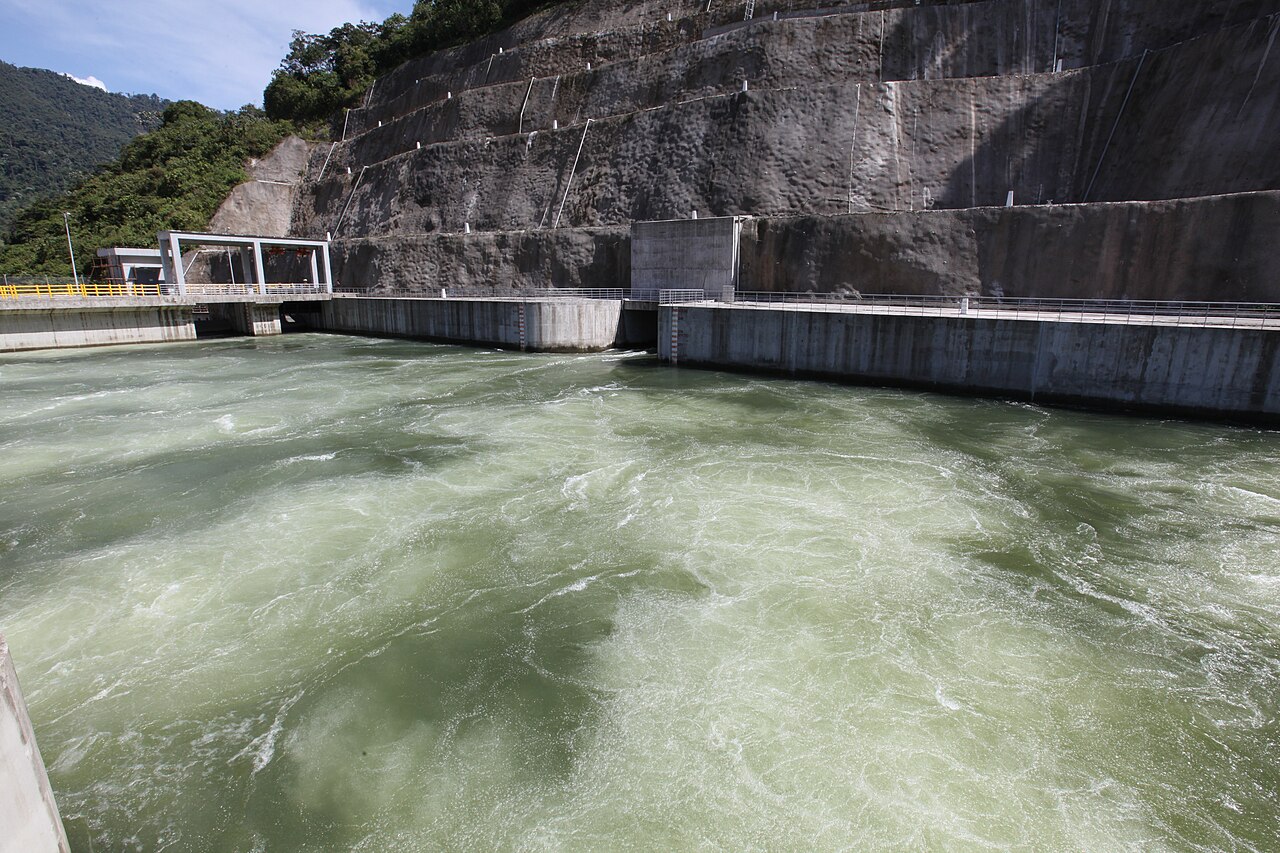
The key gauge is Mazar, a reservoir in the southern Andes that feeds the Paute complex of three plants with 1,757 megawatts of capacity. Mazar stood at 2,128.35 metres above sea level at 6:00 a.m. on Friday, Expreso reported.
The figure comes from Celec Sur, the southern unit of the state power company. It is the lowest level of 2026 and 13.35 metres above the 2,115-metre minimum for safe operation.
The reservoir has dropped 24.65 metres since its late-July peak of 2,153 metres. Mazar’s own turbines were stopped from 5:00 a.m. on Friday to let it recover.
Coca Codo Sinclair, a 1,500-megawatt plant in the Amazon foothills, averaged 660.9 megawatts through Thursday evening because of sediment in the Coca River. Thermal plants help fill the gap, including power barges, which are floating plants that burn fuel.
The ministry said rough seas made it hard to deliver fuel to those barges.
Business Groups Push Back
Fedexpor, the federation of Ecuadorian exporters, warned that Ecuador power cuts of up to 72 hours put exports, ports and logistics at risk. It said about 75% of export cargo by volume is perishable and asked for cuts scheduled by how critical each operation is.
Rodrigo Gómez de la Torre, president of the Ecuadorian Business Committee, an umbrella group of trade associations, addressed Blum directly. “This crisis belongs to all of us, and we all have to pitch in,” he wrote, according to Expreso.
José Antonio Camposano, executive president of the National Aquaculture Chamber, which represents shrimp farmers, called the situation “very serious for sectors such as shrimp farming”. He asked the government for more transparency about the crisis.
The Guayaquil Chamber of Industries, the port city’s manufacturers’ group, said high- and medium-voltage users account for 37% of private electricity use. “Halting their activities on three of the five working days is not the solution,” it said.
The Chamber of Industries and Production, another manufacturers’ group, struck a softer tone. It offered to help companies comply with the measures and called for joint work on ways to keep plants running.
What It Means for You
For households, the government’s priority is to keep the lights on. President Daniel Noboa, a conservative businessman in office since 2023, pledged on 5 October that no Ecuadorian family would face a power cut.
For US importers of Ecuadorian shrimp, bananas and other fresh food, the risk sits with exporters, packing plants and cold stores. Earlier rationing had already reached two Guayaquil container ports, which the government says have their own generators.
The cuts target industrial users, so residents and visitors should not see Ecuador power cuts at home while the pledge holds. The level of the Mazar reservoir is the figure to watch for whether that can last.
What Is Not Known
The ministry has not said which companies the Friday-night Ecuador power cuts hit, for how many hours, or when they will be reconnected. It has also not said how long the three-day weekly cuts that begin on Monday will stay in place.
It is not known how quickly rain will refill Mazar, or how long the Ecuador power cuts for industry will last. Whether the household pledge survives a further fall in the reservoir is the main open question.
More: Ecuador news in English, every day from The Rio Times.
Frequently Asked Questions
Why is Ecuador cutting power to factories?
Ecuador gets most of its electricity from hydroelectric dams, and its main reservoirs are low in an early dry season. The government is cutting power to large industry so homes can keep their supply.
Are households in Ecuador affected by the power cuts?
Not for now. President Daniel Noboa pledged on 5 October that no family would lose power, and the ministry says households have priority.
How long will the Ecuador power cuts for industry last?
The ministry gave no end date for the holiday cut ordered on Friday 9 October. A separate plan makes large industrial users disconnect three days a week from Monday 12 October.
Why should US buyers care?
Ecuador exports shrimp, bananas and other perishable food to the United States. Exporters say longer cuts to factories, cold stores and ports could delay shipments or damage cargo.
Sources: Ministry of Environment and Energy, official statement (Quito, 9 October 2026, as published by Primicias), 9 October 2026; Primicias (Ministry of Environment and Energy statement), 9 October 2026; Expreso, 9 October 2026; Expreso (Celec Sur reservoir data), 9 October 2026; Expreso, 9 October 2026; Primicias, 8 October 2026; El Mercurio, 8 October 2026; Expreso (Guayaquil Chamber of Industries), 9 October 2026; Expreso (Noboa household pledge), 5 October 2026.
This article was produced by The Rio Times’ automated newsroom system. How we use AI · Report an error · Editorial responsibility: Matthias Camenzind, Editor-in-Chief