Cummins Peru Eyes First Battery Storage Project by 2026
Peru · Business
Key Facts
—First BESS project Cummins expects to close its first battery energy storage project in Peru in Q4 2026, with a second possible in Q1 2027.
—Investment amount The project value was not disclosed in available reporting.
—Energy segment growth Cummins Peru’s energy segment already accounts for about 15% of sales and is projected to grow more than 23% this year.
—Infrastructure investment Cummins Peru will invest more than US$1.5 million in 2026 in its Trujillo headquarters, Cusco operations, and service infrastructure.
—Mining client base Cummins already supplies engines and services to major Peruvian mines including Antamina, Las Bambas, Antapaccay, and the Tía María project.
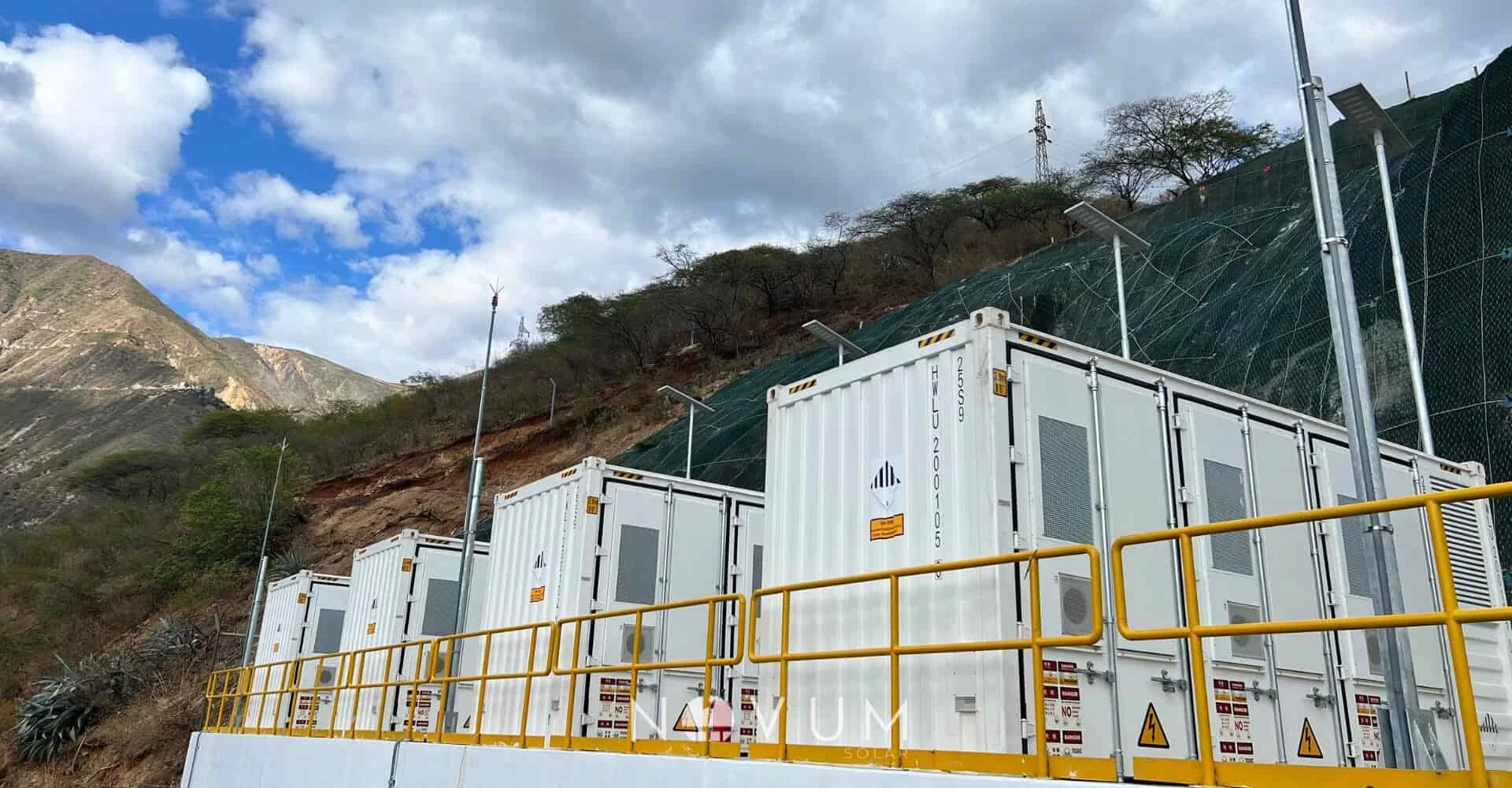
Cummins Peru batteries are at the center of a strategic pivot by the US power giant, which expects to close its first battery energy storage system project in the Andean nation by the fourth quarter of 2026, as it reduces dependence on its traditional mining-engine business and chases demand from data centers and artificial intelligence.
A Battery Storage Milestone in Peru
Cummins Inc., the US-based engine and power solutions manufacturer, is expanding its battery energy storage system (BESS) business in Peru. The company confirmed it expects to complete at least one BESS project in the fourth quarter of 2026.
A battery energy storage system is essentially a large-scale rechargeable battery installation that captures electricity from the grid or from on-site generation and releases it when needed. For a country like Peru, where remote mining operations and growing urban data centers both demand rock-solid power reliability, these systems can smooth out voltage fluctuations, provide backup during outages, and help integrate intermittent renewable sources such as solar and wind into the national grid.
The significance of this milestone goes beyond a single company. It signals that global industrial players see Peru not just as a source of raw minerals, but as a viable market for advanced energy infrastructure.
A successful first project could encourage other multinationals to test similar technologies in the Andean region, potentially accelerating the country’s broader energy modernization.
Why Cummins Is Pivoting Beyond Mining
For decades, Cummins has been a backbone supplier to Peru’s mining sector, providing high-horsepower engines and overhaul services to some of the world’s largest copper and zinc operations. Its clients include the Antamina copper-zinc mine, the Las Bambas copper mine, the Antapaccay copper mine, and the Tía María copper project.
Mining has long been the engine of Peru’s economy, but it is also a deeply cyclical industry. Commodity prices swing with global demand, and mine development timelines can stretch across decades, creating feast-or-famine cycles for equipment suppliers.
By building a parallel business in battery storage, Cummins is hedging against those downturns.
The new demand drivers are structural rather than cyclical. Data centers, which house the servers powering cloud computing and artificial intelligence, consume enormous amounts of electricity and cannot tolerate even a split-second interruption.
Battery storage offers them a cleaner, faster-responding alternative to diesel generators. Peru’s digital economy is still young, but as connectivity improves and businesses digitize, the need for reliable backup power is expected to grow steadily.
Infrastructure Investment Across Peru
Separate from the battery project, Cummins Peru is investing more than US$1.5 million in 2026 to upgrade its physical footprint. The funds target its headquarters in Trujillo, a major city on Peru’s northern coast, as well as its operations in Cusco, the gateway to the country’s southern mining corridor.
Trujillo is Peru’s third-largest city and a growing hub for agro-industry and light manufacturing, while Cusco sits near major mining projects and is a logistical nerve center for the southern highlands. Strengthening service infrastructure in both locations suggests Cummins is positioning itself to support clients well beyond the traditional mining heartlands, including agricultural processors and regional transport fleets that also depend on reliable power and engine support.
The Broader Energy Transition Context
Cummins’ Peru strategy mirrors a global push by the company into cleaner-power technologies. Through its new-energy business lines, including the Accelera brand, Cummins is developing zero-emissions solutions and battery systems worldwide.
This shift is not happening in a vacuum. Governments and corporations across Latin America are setting decarbonization targets, and international lenders are increasingly tying financing to environmental performance.
For a company with Cummins’ scale and legacy in combustion engines, building a credible battery-storage track record in a mining-heavy market like Peru serves as a powerful proof point for investors and clients watching whether old-line industrial firms can adapt.
What Comes Next
Cummins has not named the client for its first BESS project, nor has it specified the storage capacity in megawatt-hours. The company is keeping commercial details under wraps while negotiations for the second project continue.
Several open questions will shape how this story unfolds. Will the first project serve a mining operation looking to cut diesel consumption and stabilize its power supply, or will it land in the data-center sector that Cummins has publicly identified as a growth target?
Can Peru’s regulatory framework, which has historically moved slowly on energy innovation, keep pace with the technical demands of utility-scale battery installations? And perhaps most importantly, will the projected 23% growth in the energy segment prove sustainable beyond this year, or is it a one-time surge driven by a handful of early-adopter clients?
Cummins’ Legacy in Peru
Cummins has operated in Peru for decades, building a reputation as a critical equipment and service provider to the extractive industries. Its engine overhaul workshop in the country handles major rebuilds of high-horsepower engines used in mine haul trucks and other heavy equipment.
That deep institutional knowledge of Peru’s geography, logistics, and client relationships gives the company an advantage that a newcomer to the market would struggle to replicate. The same mines that already trust Cummins with their diesel engines are natural candidates to become early adopters of its battery systems, especially if those systems can demonstrate clear savings on fuel and maintenance over time.
More: Latin America news in English, every day from The Rio Times.
Frequently Asked Questions
When will Cummins close its first battery project in Peru?
Cummins expects to close its first battery energy storage system (BESS) project in Peru during the fourth quarter of 2026, with a second project possibly following in the first quarter of 2027.
What is driving Cummins’ pivot to batteries in Peru?
Cummins is responding to growing demand from data centers, artificial intelligence infrastructure, and backup-power solutions, while also seeking to reduce its dependence on the cyclical mining sector.
How much is Cummins investing in its Peru operations?
Cummins Peru is investing more than US$1.5 million in 2026 in its Trujillo headquarters and Cusco operations, following more than US$3 million invested in 2025, for a total of roughly US$4 million across 2025-2026.
Connected Coverage
Sources: Cummins Inc..
This article was produced by The Rio Times’ automated newsroom system. How we use AI · Report an error · Editorial responsibility: Matthias Camenzind, Editor-in-Chief