Covid-19 Exacerbates Violations Against Yanomami Indians, Study Says
RIO DE JANEIRO, BRAZIL – Historic rights violations that were threatening indigenous peoples have become a matter of public health during the Covid-19 pandemic. The problems faced by the Yanomami, such as deforestation and the action of miners in their territory, as well as obstacles in accessing quality health care services, outweigh the risks of Covid-19 infection and leave these indigenous people more vulnerable at this time.
The data are part of a study by the Socio-Environmental Institute (ISA) in partnership with the Federal University of Minas Gerais (UFMG), revised by the Oswaldo Cruz Foundation (Fiocruz), on the impact of the pandemic on the Yanomami. The overlapping of violations caused by mining and the advent of Covid-19, with its high rate of transmission, may cause a humanitarian crisis, according to the study.
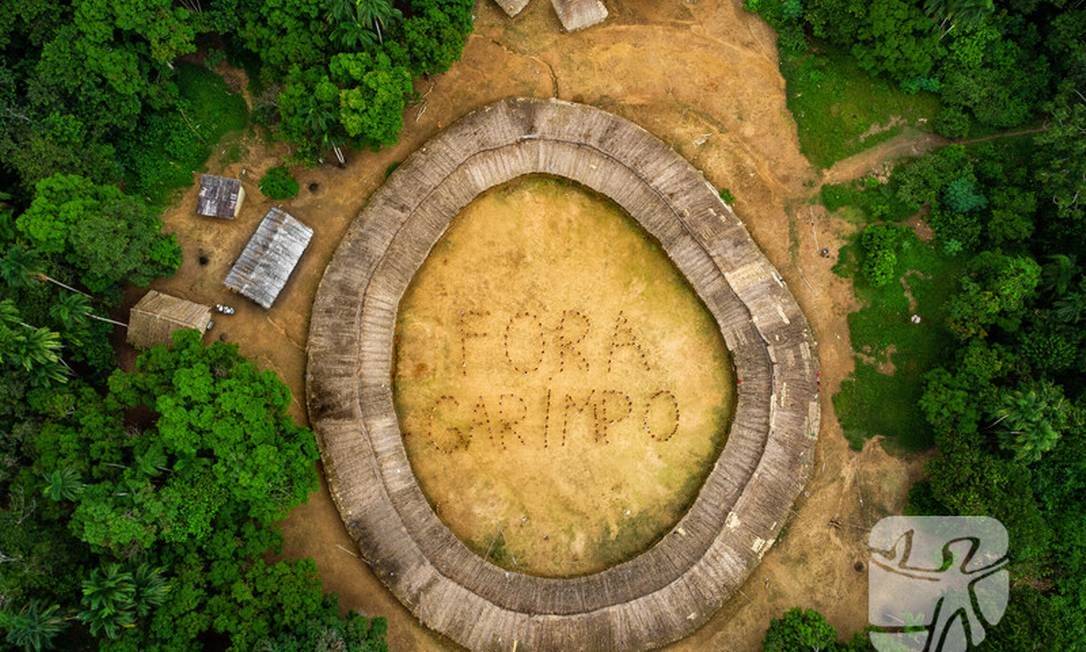
The greatest risk to the Yanomami during the pandemic has been the invasion of their lands by over 20,000 miners who come and go from indigenous territories uncontrolled, according to the study. They are considered the main vector for disease transmission, including Covid-19, to the more than 27,000 indigenous living within the territory. The Yanomami Indigenous Territory was ratified in 1992, and mining activity there is illegal.

If nothing is done to contain the transmission of Covid-19, some 5,600 Yanomami could be infected, considering only the villages near the mining areas. This represents 40 percent of the population living in these areas. Even considering the study’s less serious scenarios of contagion in these areas, between 15 and 19 percent of these indigenous people would still be infected by Covid-19.
Mortality
The study found that the mortality rate among Yanomami is twice that for non-indigenous people, given this population’s greater vulnerability. The situation of the Yanomami is aggravated by factors such as collective housing, a history of high mortality from respiratory infections, and poor local health care infrastructures. As a result, it is estimated that between 207 and 896 Yanomami may die as a result of Covid-19, or 6.45 percent of this population.
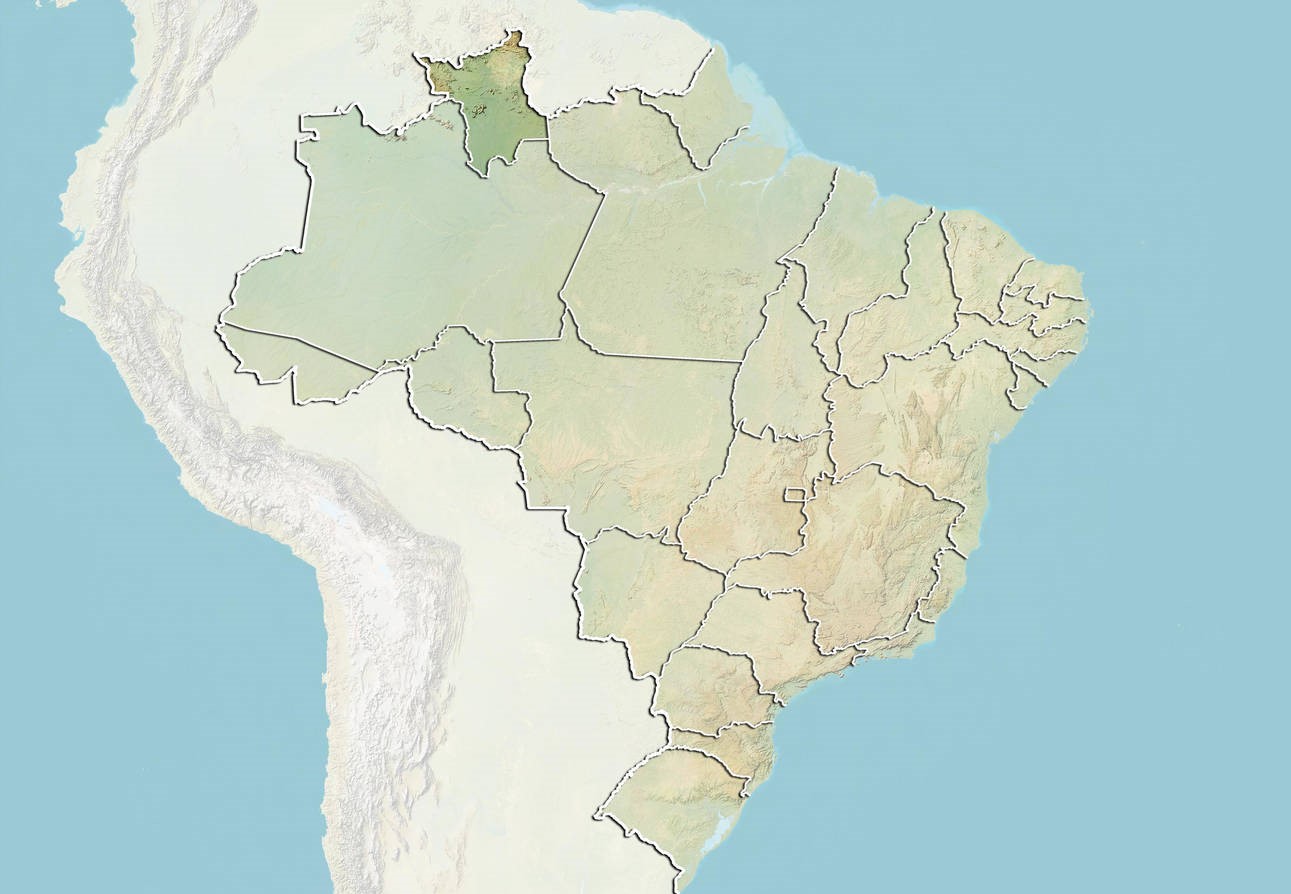
With 9.6 million hectares and 27,398 indians scattered in some 331 communities, the Yanomami indigenous land (TIY) – the largest in the country – is divided between the states of Amazonas and Roraima. Half the population in this territory – a total of 13,889 indians – live in communities less than five kilometers from a mining area, the sample used in the study.
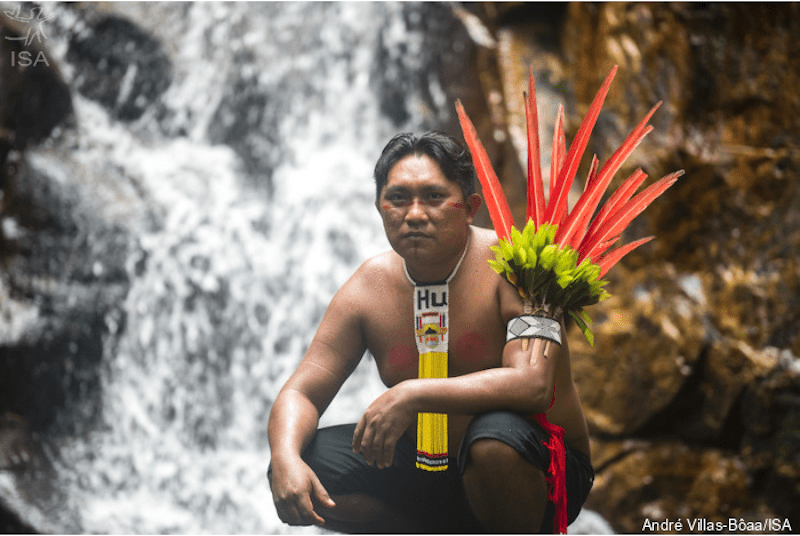
“Nowadays, the life of the Yanomami people is at risk; this is a very big loss, because there are 20,000 miners in Yanomami land. We are at great risk, it’s Yanomami life, it’s health, it’s forest life, destruction, pollution, mercury contamination of the river, that’s what we are experiencing,” said Dario Vitório Kopenawa Yanomami, vice president of the Yanomami Hutukara association.
According to Hutukara data, three Yanomami died from Covid-19 by Thursday, June 4th, and the disease is suspected to have caused three more deaths. To date, 55 Indians have been confirmed for Covid-19 and 32 more are suspected of having the disease. Official figures from the Ministry of Health point to the deaths of three Yanomami, 59 confirmed cases and 18 suspected cases.
Indigenous health
The 37 local bases – equivalent to health posts for indigenous peoples – that serve the Yanomami have the worst scores among the 172 bases studied throughout Brazil by ISA, out of a total of 361 in the country. This result reflects the lower availability of beds and ventilators and the greater limitations related to the transport of patients to other regions with better health care infrastructures.
Even if the most critically ill patients are transferred, the situation of the states in which TIYs are located is unfavorable. Based on data from the state health departments, the study showed that Roraima has 0.72 Intensive Care Units (ICU) for every 10,000 inhabitants, well below that established by the World Health Organization (W.H.O.), which recommends a minimum of three for every 10,000 inhabitants. On the other hand, Amazonas, with a rate of 1.24 beds per 10,000 inhabitants, is faced with health chaos in the capital city of Manaus.
In relation to mortality, the report shows that the Yanomami have a high prevalence of diseases that can aggravate coronavirus infection. Based on data from the Indigenous Health Care Information System (SIASI), in the past ten years (2010 to 2019), it was found that the number of deaths from acute respiratory infections increased six percent in the population between 0 and 14 years of age and 300 percent in the population over 50 years of age.
Way of life
Culturally, the implementation of social isolation measures is challenging. The Yanomami have shared houses, utensils that are passed around among several people and the difficulty in accessing items such as soap and hand sanitizer. If a highly contagious disease such as Covid-19 enters the community, transmission is difficult to prevent.
They have also found it difficult to conduct the funeral ritual with bodies within their territory, since the burial of Covid-19 victims follows the Ministry of Health’s protocol. Marcos Wesley, an advisor to the Rio Negro Program of the Socio-Environmental Institute, considers the protocol essential to prevent contamination, but he is concerned about its repercussions among the Yanomami.
Some Yanomami indians have already told health care professionals that they will not accept being moved to the city if they need a better facility for Covid-19 treatment. The reason for this is that they know that if they die in the city, their body will not be returned to the community to undergo the appropriate funeral ritual. One of the alternatives considered by local bodies is the construction of a crematorium in Boa Vista so that at least the ashes are returned to relatives.
“This is a major obstacle, because those who have to go to the city are exactly the more complex cases, the serious cases, which need better treatment. And if they are not removed, the potential for death is very great. There will be more deaths and consequently more contamination, because they will not have the proper facilities in the village to handle the dead in such a way that infection could be prevented”, he said. “The people responsible for the Yanomami health care district must be aware of this”.
Dario Kopenawa said the community is struggling with this issue. “We acknowledge the Ministry of Health’s protocol, we know the health care protocol, we know the W.H.O. protocol, we told the Yanomami about it. The Yanomami know that their bodies will not be returned [if they die from Covid-19], so it is difficult for the Yanomami to move for coronavirus treatment.”
He points out that the Yanomami have resorted to an ethnic custom to protect themselves from infection. “Most Yanomami have already gone to Wãimu – when we are displaced within the forest, we become more isolated, distant from the community, we stay there for weeks, a month. This is happening today in Yanomami land because they don’t want to be infected by coronavirus. This is a way to prevent infection, to protect oneself, it’s part of our culture”.
Fighting mining
The gold price hike and the socio-economic crisis resulting from the pandemic should boost mining activity in the territory, according to an assessment by the Socio-environmental Institute. The spread of illegal mining was detected by ISA’s radar monitoring system, the SIRAD. The results show some 2,000 hectares of forest in the Yanomami IT were destroyed by mining until March this year. In March alone, 114 hectares of forest were destroyed by mining.
For ISA, the solution is the immediate clearing of miners from Yanomami indigenous land. “Mining is illegal on indigenous land. What is done, but fails to solve this issue, despite being necessary, are missions that go there to destroy some machines, arrest some miners; but after a month or less they are all back. An effective action is to restrain mining entrepreneurs, who are not inside the indigenous lands, the ones who sustain mining”, said Marcos Wesley.
He mentioned Operation Xawara, of the Federal Police (PF), which took place in July 2012, as an example. According to reports from the PF at the time, during the investigations, five criminal groups were identified who were working to preserve illegal mining, comprised of aviators, entrepreneurs linked to the jewelry business and owners of rafts and engines for gold extraction.
“The Federal Police spent months on intelligence service. When they did that, that’s when the highest number of miners left Yanomami land, because they arrested entrepreneurs, seized planes, the miners were no longer supplied. They withstood as long as they could, after two weeks, a month, they began leaving the land because they couldn’t afford to stay there without equipment, without food, with nothing,” Wesley said.
The Agencia Brasil contacted the Ministry of Justice regarding the removal of miners and the Ministry of Health on the bases, but failed to get a timely reply.
More: Brazil news in English, every day from The Rio Times.
This article was produced by The Rio Times’ automated newsroom system. How we use AI · Report an error
Read More from The Rio Times