COMOROS · COUNTRY GUIDE
Key Facts
- The country Comoros is a three-island nation in the Indian Ocean with about 883,000 people (2025).
- Government A presidential republic led by Azali Assoumani, re-elected in January 2024.
- Economy The economy produced US$1.8 billion in 2025, and remittances equalled about 21% of it in 2023.
- Money The Comorian franc is tied to the euro; about 441 francs buy US$1 in October 2026.
- For Americans The State Department advises increased caution, and the United States has no embassy in Moroni.
Comoros explained in one read: a Muslim island nation off East Africa with 882,847 people and an economy of only US$1.8 billion.
For US readers, it is a poor country fed by money from relatives abroad, and no US embassy sits in its capital.

Comoros in Plain English
Comoros, officially the Union of the Comoros, is a group of volcanic islands in the Indian Ocean. They lie between Mozambique and Madagascar, and the constitution calls the country a sovereign, unitary and democratic republic.
This Comoros explained guide covers who lives there, who governs and how people earn a living. It also tells Americans what to know, and it sits under the Africa hub.
Every figure carries its year, and dollar values use the exchange rate of 28 October 2026. About 441 Comorian francs bought one US dollar at that rate.
- Ngazidja (Grande Comore): the largest island, home to the capital Moroni and the volcano Karthala.
- Ndzuwani (Anjouan): the most crowded island, with 772 people per square kilometre in 2017.
- Mwali (Mohéli): the smallest island, with 51,567 people in 2017.
- Mayotte (Maoré): the fourth island of the archipelago, which France governs as an overseas department.
- Comorian franc: the national currency, tied to the euro.
- Convention for the Renewal of the Comoros (CRC): the party of President Azali Assoumani.
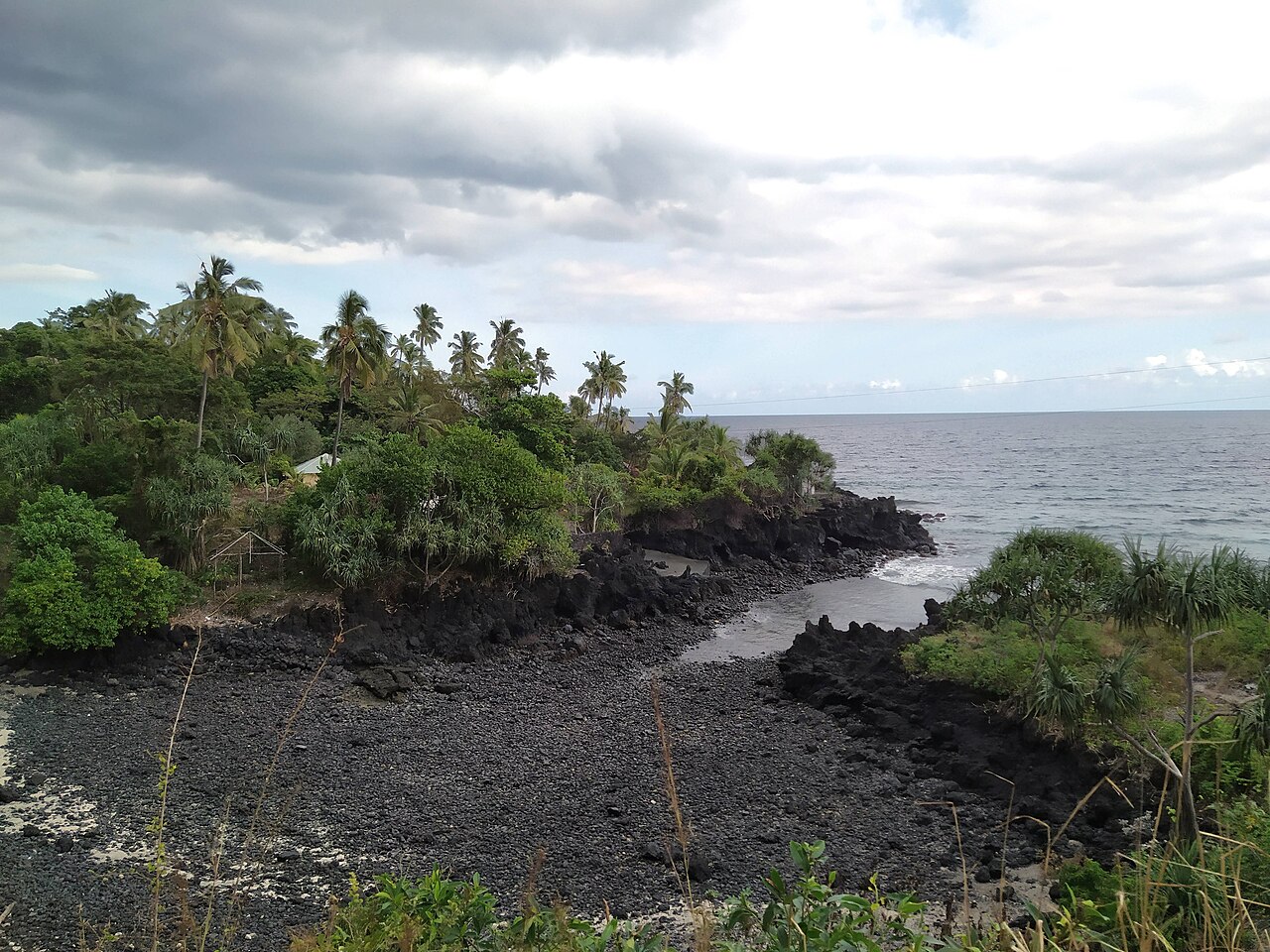
Four Islands and One Volcano
The three islands Comoros governs cover 1,861 square kilometres, according to the 2017 census. Ngazidja measures 1,147 square kilometres, Ndzuwani 424 and Mwali 290.
That makes Comoros smaller than the US state of Delaware. About 407 people live on each square kilometre on average, and Ndzuwani is by far the most crowded island.
Mount Karthala, an active volcano on Ngazidja, rises above the capital Moroni, according to the Smithsonian Institution’s volcano catalogue. Its last confirmed eruption ran from 12 to 15 January 2007.
The eruption of November and December 2005 contaminated the water tanks of about 118,000 people in 75 villages. A flank eruption in April 1977 destroyed three villages and forced about 4,000 people to flee.
Geothermal heat under Karthala is now a development project, as the Karthala geothermal story shows. Cyclone Kenneth in 2019 caused damage equal to 14% of yearly output.
Comoros explained by its geography means a country shaped by fire and sea. The 2018 constitution lists four islands as national territory: Mwali, Maoré, Ndzuwani and Ngazidja.
Who Lives in Comoros and How
The census taken from 16 December 2017 to 26 January 2018 counted 758,316 residents, and the statistics office INSEED ran the count. The World Bank puts the population at 882,847 in 2025.
Half of the people live on Ngazidja, 43.2% on Ndzuwani and 6.8% on Mwali. Only 31.1% lived in towns in 2017, and the World Bank estimates the urban share at 33.9% in 2025.
The country is young: in 2017 half of all residents were under 20 years old, and only 5.3% were 65 or older. A Comorian woman has 3.8 children on average, as of the World Bank’s 2024 figure.
The constitution names three official languages, Shikomor, French and Arabic. It also declares Islam the state religion, in the Sunni tradition and the Chafi’i school of law.
Life expectancy was 67.0 years in 2024, and 75.6% of adults could read and write in 2021, according to the World Bank. Poverty at US$4.20 a day fell from 25.9% in 2020 to 18% in 2024, and life remains hard for many families.
Comoros explained by its people means a young, Muslim and mostly rural society. Remittances from relatives abroad equalled about a fifth of national output in 2023.
How Comoros Is Governed
The president is elected by direct vote in two rounds for five years, and may serve one more term. The 2018 constitution also says the presidency rotates between the islands, and the three island governors are elected for five years too.
Parliament is the Assembly of the Union, whose members serve five-year terms. The Supreme Court is the highest court for ordinary, administrative and constitutional cases.
Azali Assoumani has led Comoros since April 2019, and earlier in 2002 to 2006 and 2016 to 2019, says Freedom House, a US democracy watchdog. He addressed the UN General Assembly on 24 September 2026, and his UN speech pressed France on Mayotte.
He won a 2018 constitutional referendum and a January 2024 election, and Freedom House says his five opponents alleged massive fraud. The World Bank says his party, the CRC, won a parliamentary majority in January 2025 and most town halls in February 2025.
Freedom House rated Comoros Partly Free in its 2025 report, with 42 points out of 100. The constitution sets a five-year presidential term, renewable once.
Mayotte and the Dispute With France
Comoros became independent from France in 1975, but Mayotte stayed under French rule. France counted 323,153 people on Mayotte on 1 January 2026, according to its national statistics institute INSEE.
The Comorian constitution makes the return of Mayotte a national priority. On 24 September 2026, President Assoumani told the UN that Comorians are at home there and sovereignty over the archipelago is not for sale.
- The Comorian view: the four islands form one country and Mayotte must come back.
- The French side: France governs Mayotte as an overseas department, and its statistics institute counts the island’s people in its own population.
- The practical result: a short sea crossing divides a poor country from a French region, as the migrant smuggling case on Mohéli shows.
Money, Work and Prices
The World Bank puts Comoros’s output at US$1.81 billion in 2025, or about US$2,056 per person. Its economy is driven largely by remittances, the money Comorians abroad send to relatives, and by domestic consumption.
Remittances reached US$305.6 million in 2023, or 20.8% of output, and rose 13.5% in the first four months of 2026. State-owned firms dominate key sectors, the World Bank says.
Cloves, ylang-ylang and vanilla are the main exports, the International Monetary Fund said in June 2025. Ylang-ylang is a flower whose oil goes into perfume.
The World Bank estimates growth at 3.2% in 2026 and inflation at 6.1%, driven by dearer fuel and food imports. Trade taxes supply about 60% of domestic revenue, and imports rose 26.4% in the first quarter of 2026.
Public debt stood at 27.2% of output in 2025. Even so, the IMF and World Bank rate Comoros at high risk of debt distress as of January 2026.
The IMF approved a four-year loan of SDR 32.04 million (about US$43 million) on 1 June 2023. It says monetary policy aims to preserve external stability through the euro peg.
The IMF debt story and the economy guide follow the numbers in more detail. Both sit in the Comoros coverage of this site.
Comoros explained by its money means remittances, cloves and a euro-linked franc. Few other sectors bring in much foreign currency.
Daily Life and Culture
Most Comorians, 68.9% in 2017, live in rural areas, and remittances equal about a fifth of national output. Islam is the state religion, and Moroni is the capital under Article 10 of the constitution.
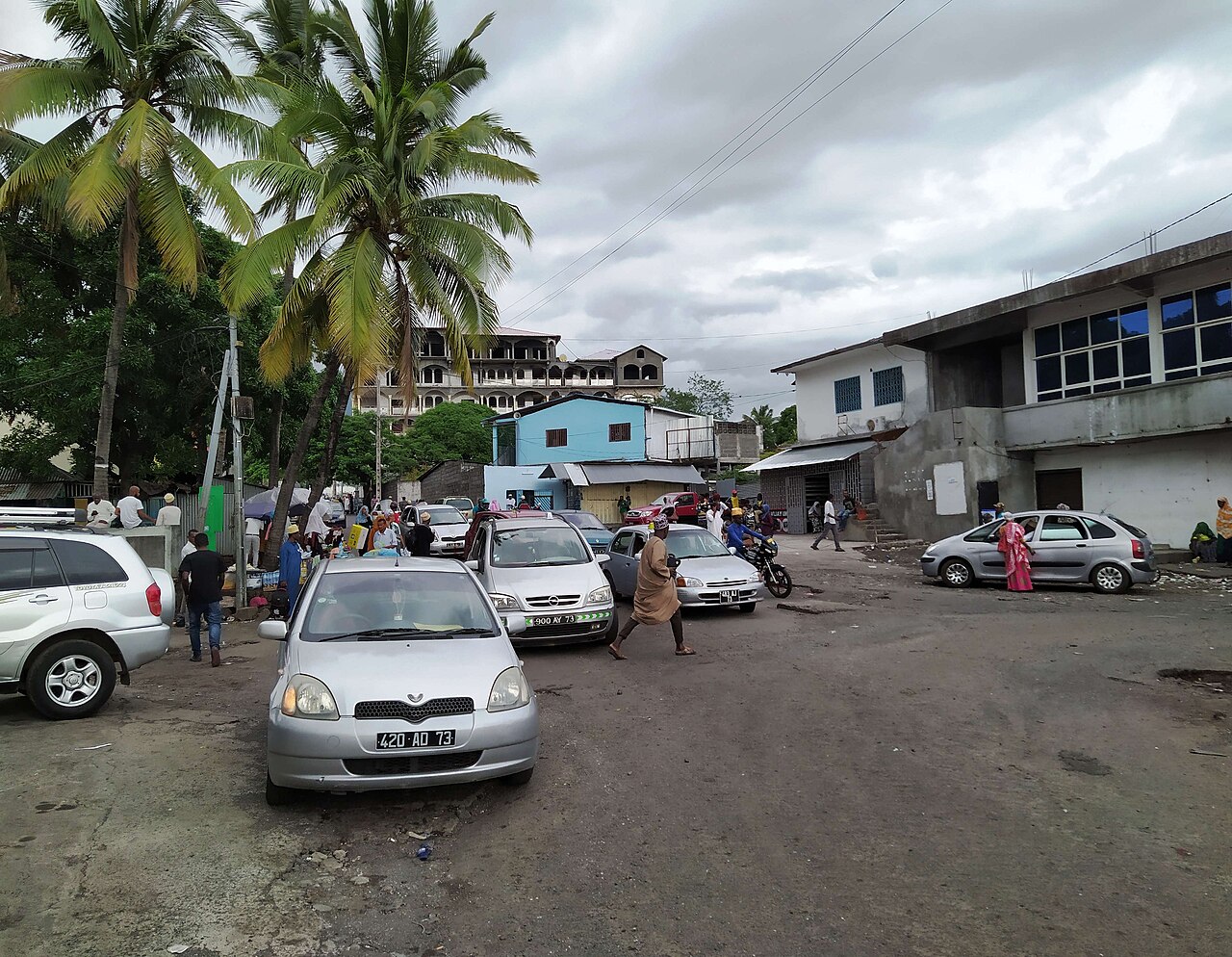
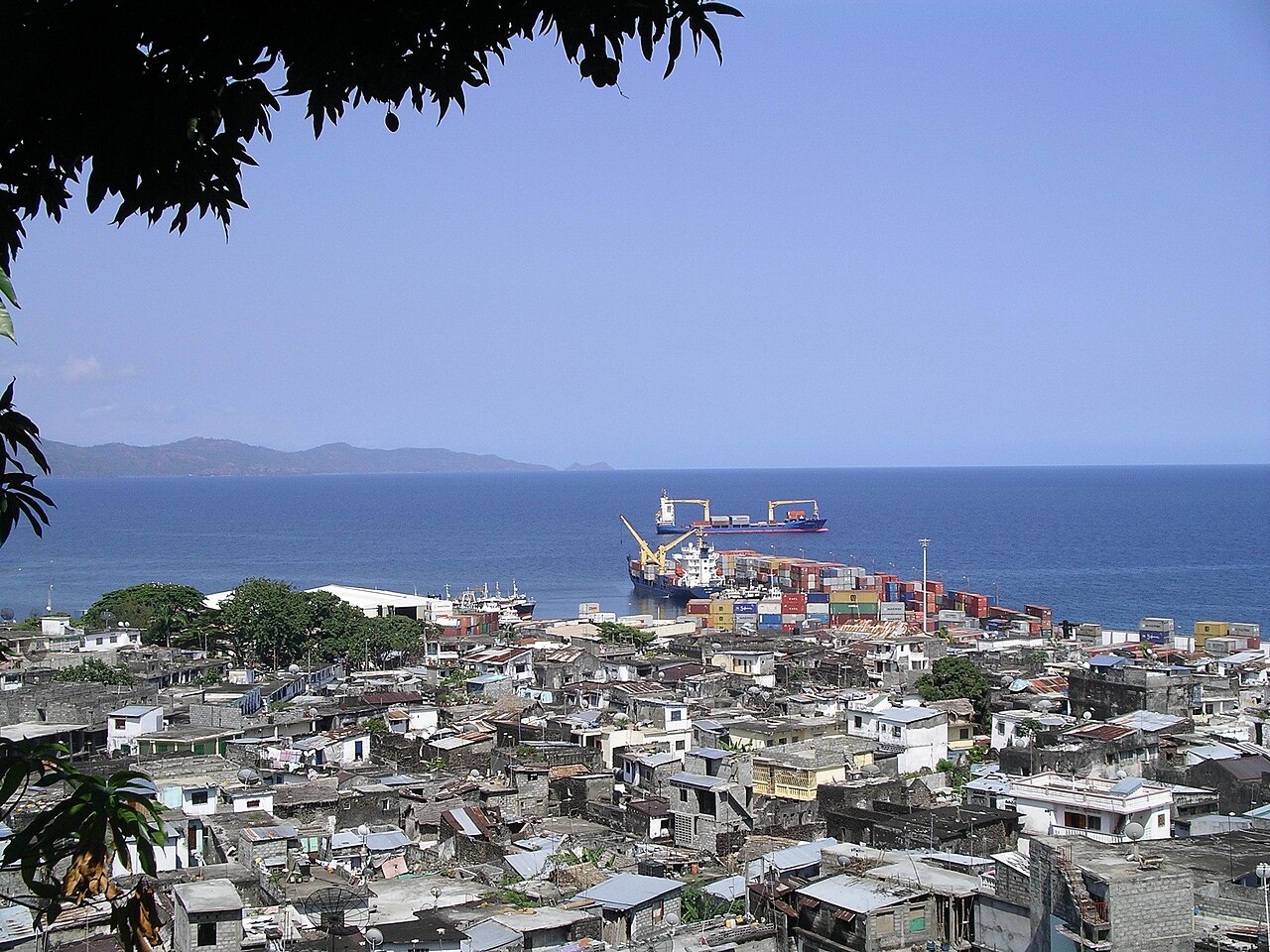
Moroni sits on the western coast of Ngazidja, below the slopes of Karthala. Its medina, or old town, is a maze of narrow paved alleys between stone houses.
What It Means for US Readers
The United States has had diplomatic relations with Comoros since 1977, according to the State Department. It has no full-time presence there, and the US ambassador in Madagascar also covers Comoros.
The State Department’s travel advice is to exercise increased caution because of crime and civil unrest. Protests are usually political and mostly take place in Moroni, and some have turned violent.
The US embassy in Antananarivo, Madagascar, cannot provide emergency consular services to Americans in Comoros. Travellers should plan their own medical and evacuation cover.
Comoros has no embassy in Washington, and its UN representative in New York also serves as ambassador to the United States. The Peace Corps, the US volunteer agency, set up a presence there again in 2015.
Americans who invest or lend should note the high debt risk, the euro-linked franc and a state-dominated economy.
What Is Not Known
The last census dates from 2017, so island-by-island population figures for 2026 are not published. The 2025 national population figure is a World Bank estimate.
Nobody can predict when Karthala will erupt next. The 2017 census remains the latest full count.
Frequently Asked Questions
What is Comoros?
Comoros is an island nation in the Indian Ocean between Mozambique and Madagascar. It has three main islands and 882,847 people as of 2025.
What is the capital of Comoros?
Moroni, on the island of Ngazidja. The constitution names it the capital and leaves its status to a law.
What language and religion do Comorians have?
The official languages are Shikomor, French and Arabic. Islam is the state religion, in the Sunni tradition.
Who leads Comoros?
Azali Assoumani is president and spoke for the country at the UN General Assembly on 24 September 2026. He was re-elected in January 2024.
Is Comoros safe for Americans?
The State Department advises increased caution because of crime and civil unrest. The US embassy in Madagascar cannot give emergency help in Comoros.
What does Comoros export?
Its main exports are cloves, ylang-ylang and vanilla, according to the IMF in June 2025. Remittances from abroad are a bigger source of income.
Sources: World Bank, Comoros country overview, 21 September 2026; World Bank data, Comoros, October 2026; INSEED, 2017 census results (Comoros statistics office), 2018; Constitution of Comoros (2018 text), 2018; UN General Assembly, Comoros national statement, 24 September 2026; IMF, press release on the fourth review (Comoros), 24 June 2025; IMF, Comoros Extended Credit Facility approval, 1 June 2023; US State Department, US relations with Comoros, undated page; US State Department, Comoros travel advisory, undated page; Smithsonian Global Volcanism Program, Karthala, October 2026; INSEE, Mayotte population on 1 January 2026, 7 July 2026; Freedom House, Freedom in the World 2025, Comoros, 2025.
Editorial responsibility: Matthias Camenzind, Editor-in-Chief · Editorial standards · Report an error
Brazil runoff date: Sunday, October 25, poll closing times and when results start · Brazil runoff polls: Flávio 51%, Lula 49% · Kalshi and Polymarket odds
Rotate for Best Experience
This report is optimized for landscape viewing. Rotate your phone for the full experience.
You've reached your free article limit
Subscribe to The Rio Times for unlimited access to our reporting from across Africa.
Keep reading for free
Your first article was on us. Register with your email address to read 6 free articles every month. You will also receive Africa Intelligence: African markets, politics and business, every weekday morning.