
COMOROS · ENERGY
Key Facts
- —The country The Comoros is a three-island Indian Ocean nation of fewer than one million people, between Mozambique and Madagascar, led by President Azali Assoumani.
- —What happened A Kenyan company said it is ready to support exploitation works at Karthala, the volcano on Grande Comore, Al-Watwan reported from the 11th African Rift Geothermal Conference in Moroni.
- —The conference About 20 countries were represented at the meeting of 19 to 24 October 2026, which Azali opened at the Palais du Peuple on Wednesday 21 October.
- —The prize Studies put the Karthala geothermal potential at about 45 megawatts, with rock temperatures up to 300 degrees Celsius at roughly 2,900 metres depth.
- —The plan The exploration project, launched 2 July 2026, covers 3 wells and a 15 km road, with a 15 MW plant to follow.
- —The money The United Nations Development Programme (UNDP) puts the project at more than 33.5 million units of account (about US$45 million), mostly from the African Development Bank.
- —Still open The name of the Kenyan company, the terms of its offer and the start date for drilling have not been made public.
A Kenyan company is ready to back Comoros geothermal works at Karthala, the volcano that towers over Grande Comore, according to Al-Watwan, the state daily. The report came from the 11th African Rift Geothermal Conference in Moroni, which brought about 20 countries to the capital.
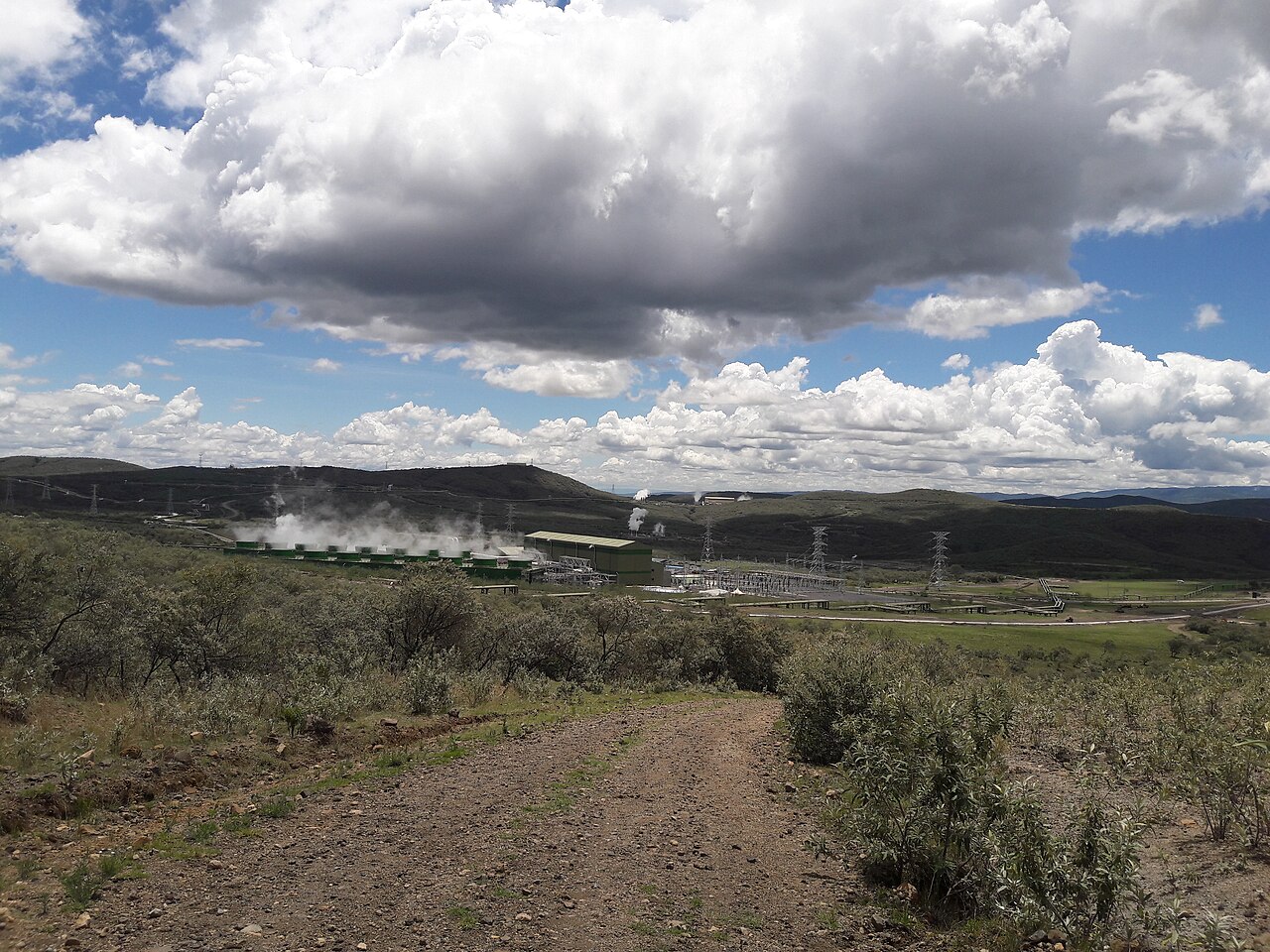
Comoros geothermal power is the island nation’s best hope of replacing some of the costly power it makes today. A partner from Kenya, the continent’s geothermal pioneer, would be a first sign that nearly two decades of talk could turn into steam.
What Al-Watwan Reported From the Moroni Conference
Al-Watwan, the Comorian state daily, headlined its conference report that a Kenyan company is ready to support the exploitation works at Karthala. Delegates from across Africa had gathered in Moroni for the 11th African Rift Geothermal Conference, known as ARGeo-C11.
The meeting ran from 19 to 24 October 2026, with a field trip to Mount Karthala on Saturday 24 October. The Comorian government hosted it through the Ministry of Energy, Water and Hydrocarbons and the Bureau Géologique des Comores, the national geological office.
A Volcano the Comoros Hopes Will Keep the Lights On
Comoros geothermal hopes rest on Karthala, which rises to 2,361 metres on Grande Comore, the largest island, with a crater four kilometres wide. The same underground heat that feeds its eruptions could drive turbines, which is why geologists have studied the mountain since 2008.
President Azali Assoumani opened the conference on Wednesday 21 October at the Palais du Peuple, Habari za Comores reported, with about 20 countries present. He called the volcano a major lever for energy sovereignty and sustainable development.
The Exploration Project and What It Will Drill
The Karthala Geothermal Exploration Project was launched in Moroni on 2 July 2026, backed by the African Development Bank, the African Union and the UNDP. It covers three exploration wells and a 15 km access road.
The UNDP puts the total at more than 33.5 million units of account (about US$45 million), the bank’s unit, mainly from the African Development Bank. A first 15 MW plant would follow, with room to grow toward the 45 MW the volcano is estimated to hold.
Fresh Survey Results Point to a First Well
On 21 October the consultancy STEAM, working under a UNDP-run programme, reported finishing new gravity and gas surveys at Karthala. Its data suggest reservoir temperatures of 275 to 315 degrees Celsius and a first well near La Soufrière, at least 3,000 metres deep.
Gas from the volcano’s vents is typically more than 90 percent carbon dioxide, and vent temperatures reached about 88 degrees Celsius. STEAM judged the project ready for the next phase while warning that it will still need close technical and financial support.
Why a Kenyan Partner Is a Natural Fit
Kenya has produced geothermal power from the Rift Valley for decades, which gives its companies rare drilling experience in Africa. Experts from KenGen, the Kenyan state power company, took part in the first Karthala studies in 2008, according to Comores Infos.
A Kenyan partner would bring Rift Valley know-how to Comoros geothermal work, which has yet to drill its first well. Rio Times covered a KenGen debt offer to Djibouti, a sign of how far Kenyan energy companies now reach.
What It Means for US Readers
The Comoros pays heavily for power, with the UNDP putting production costs near US$0.78 per kilowatt-hour. Only about half of the population has effective access to electricity, which makes cheap local power a stability issue as well as an energy one.
The Comoros geothermal push gives US investors, drillers and equipment makers a tender to watch once the wells are drilled. It also follows the 20 MW of new solar switched on in September, as the islands look for cheaper power.
What Is Not Known
The name of the Kenyan company and the form its support would take, whether drilling, finance or advice, have not been published. No contract, signing date or amount linked to the Comoros geothermal offer has been announced.
An African Union Commission mission visited Moroni from 17 to 19 August to prepare the financing agreement, aiming to sign before the conference. It is not yet clear whether the signing took place, and no drilling start date has been given.
A Long Road From Study to Power
Projections for first geothermal power at Karthala have come and gone before, among them 2019 and 2021, and neither was met. The latest talk points to the first megawatts in late 2029 or early 2030, according to Comores Infos.
The next steps for Comoros geothermal power are the financing signature, three wells, test results and then a plant. A dry well would leave the Comoros with a cost and no power, which is the risk every geothermal project carries.
More: Africa news in English, every day from The Rio Times.
Frequently Asked Questions
What did the Kenyan company offer in the Comoros?
Al-Watwan reported that a Kenyan company is ready to support the Comoros geothermal exploitation works at the Karthala volcano. The company’s name and the terms of the offer have not been published.
Where is Karthala and why does it matter?
Karthala is an active volcano on Grande Comore, the largest island of the Comoros. Studies estimate its heat could supply about 45 megawatts of electricity, in a country where only about half the population has effective access to power.
What is the African Rift Geothermal Conference?
It is a regional meeting of governments, scientists and energy firms along Africa’s rift valley, where volcanic heat is closest to the surface. The 11th edition on Comoros geothermal potential ran in Moroni from 19 to 24 October 2026.
When could Comoros geothermal power reach the grid?
Exploration wells have to be drilled and tested first, and a plant built afterwards. Comores Infos cites a projection of first megawatts in late 2029 or early 2030.
Who is paying for Comoros geothermal exploration?
The UNDP puts the cost at more than 33.5 million units of account (about US$45 million), mainly from the African Development Bank. The Comorian government leads the project, with support from the UNDP and the African Union.
Sources: Al-Watwan, 11th ARGeo conference, a Kenyan company ready to support exploitation works at Karthala, 24 October 2026; Habari za Comores, Le Karthala, une promesse d’énergie pour les Comores, 22 October 2026; UNDP, Lancement officiel du Projet d’Exploration Géothermique du Karthala, 8 July 2026; ThinkGeoEnergy, STEAM completes surveys at Karthala, 21 October 2026; Comores Infos, 2008-2026 le Karthala doit toujours sauver les Comores, 21 August 2026; ThinkGeoEnergy, Registration open for the 11th African Rift Geothermal Conference, 2026.
This article was produced by The Rio Times’ automated newsroom system. How we use AI · Report an error · Editorial responsibility: Matthias Camenzind, Editor-in-Chief