Colombia Rescues 8 ELN Hostages, Kills 5 Guerrillas in Raids
Key Facts
-
—
What happened. Colombian troops freed eight ELN hostages in Catatumbo and killed five more guerrillas in Bolívar. -
—
Where. The rescue hit Convención, Norte de Santander; the combat happened in Morales, southern Bolívar. -
—
Who died. Alias Niche, an 11-year ELN veteran accused of directing explosive-drone attacks, was among five killed. -
—
U.S. role. Colombian officials said the U.S. Southern Command supported the Catatumbo rescue operation. -
—
The catch. ELN (National Liberation Army) is believed to still hold other captives across the Catatumbo region. -
—
What comes next. President Abelardo De la Espriella has vowed to keep pursuing ELN commanders across both regions.
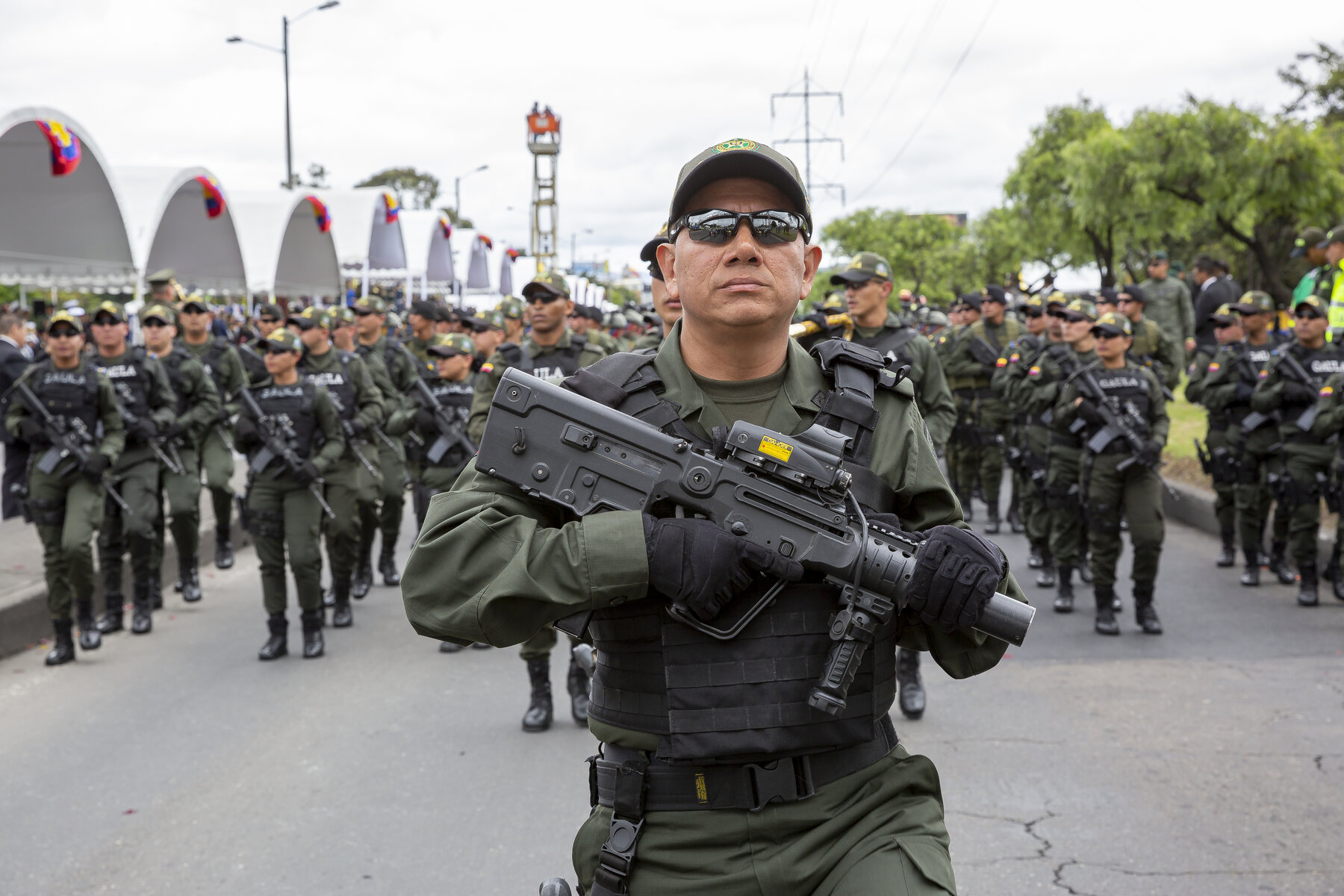
Eight Hostages Freed After Two Years
Colombian forces rescued eight people held by the ELN guerrilla group on Tuesday. The operation unfolded in rural Convención, a municipality in the Catatumbo region of Norte de Santander.
The captives had been held for nearly two years, according to Colombian officials. President Abelardo De la Espriella announced the rescue personally on social media.
GAULA police director Colonel Fabio Ojeda described it simply. He said troops “carried out an operation in the heart of Catatumbo” and freed all eight captives.
De la Espriella called it a precision, surgical operation. GAULA personnel were inserted directly at the site to carry out a rapid, forceful action, he said.
Washington’s Hand in the Operation
The rescue was not purely a Colombian effort. GAULA officials confirmed that the United States Southern Command took part in the interagency operation.
Colombian military sources told local media that a U.S.-supplied reconnaissance drone helped locate the hostages. It captured detailed imagery of the property where they were held.
That intelligence let commanders assess conditions on the ground before moving in. Officials called American support decisive in planning the final assault.
Major General José Bertulfo Soto Sánchez praised the troops involved. He said soldiers and police acted “with intelligence, precision and decisiveness” throughout the mission.
The rescue drew on Colombia’s Army, Air Force, National Police and the Attorney General’s Office. All four institutions coordinated intelligence before the raid began.
A Separate Strike in Southern Bolívar
Hours later, a second and unrelated clash unfolded far from Catatumbo. Colombian troops fought ELN fighters in Morales, a municipality in southern Bolívar department.
Five guerrillas were killed in the firefight, the army confirmed. One Colombian soldier was wounded and taken to a hospital in Bucaramanga for treatment.
Soldiers seized six rifles along with ammunition and other war material. The clash struck the ELN’s Darío Ramírez Castro front, a unit long active in the region.
De la Espriella announced the results on social media that same day. He called it a forceful blow against the ELN in southern Bolívar.
Who Was Alias Niche
Among the five dead was a guerrilla known as alias Niche. He had spent 11 years inside the ELN’s ranks, according to military officials.
Niche led a commission within the group’s Simón Bolívar company, part of the same Darío Ramírez Castro front. He held outstanding warrants for conspiracy, terrorism and recruiting minors.
His specialty was explosive drones, officials said. He allegedly planned and carried out attacks using drones rigged with explosives, plus snipers and prepared ambush zones.
Investigators have also linked him to a February attack on a military base in San Lucas. That assault affected 14 personnel and damaged one aircraft, according to officials.
De la Espriella framed the killing as a direct hit on ELN capability. He said the blow damages command, control and the group’s drone-attack capacity.
He added a blunter warning for the group’s remaining fighters. Those who kill soldiers and terrorize civilians, he said, should expect the state to hunt them down.
Two Wins, One Government Under Pressure
Both operations landed within roughly the same 24-hour window in mid-September. Officials in Bogotá were quick to present them as a single security success.
De la Espriella has governed for barely six weeks, having taken office on August 7. He has staked much of his early presidency on hard-line security results.
His administration has already ended peace talks with several armed groups it accuses of bad faith. That includes factions of the ELN and FARC dissident structures.
Government messaging has leaned heavily on body counts and captures since the inauguration. Officials have publicized a running tally of strikes against criminal and guerrilla structures.
Tuesday’s twin operations fit that pattern closely. A hostage rescue offered a human face to the security push, while the Bolívar raid removed a specialized combatant.
A Region Long Scarred by War
Catatumbo sits on Colombia’s border with Venezuela and has endured decades of guerrilla activity. Farmers there have long complained of being caught between the ELN and rival armed groups.
The region suffered a sharp escalation of violence last year, displacing thousands of residents. That crisis prompted the previous government to declare a state of internal emergency.
Southern Bolívar has its own long history with the ELN, dating back decades. The Darío Ramírez Castro front has operated there for years, moving between mining zones and river corridors.
Both regions remain difficult for state forces to hold permanently. Dense terrain and porous borders have long complicated sustained military pressure in each area.
Local communities in both zones have repeatedly asked for a stronger, more permanent state presence. Analysts say one-off strikes rarely translate into lasting territorial control without follow-up investment.
What the ELN Still Holds
Kidnapping remains one of the ELN’s oldest tactics for funding and pressure. Despite Tuesday’s rescue, the group is believed to still hold other captives in Catatumbo.
De la Espriella has said kidnapping “has no justification” and vowed to pursue captors relentlessly. His government has framed both Tuesday operations as proof that pledge is being kept.
Whether that pressure holds may depend on sustained intelligence-sharing with Washington. U.S. Southern Command’s involvement in Tuesday’s rescue suggests that cooperation is already deepening.
Colombia’s Congress and human rights groups are likely to seek more detail on both operations soon. Questions about civilian safety and the fate of remaining hostages are expected to follow.
For the eight families reunited this week, the operation ends an ordeal that stretched nearly two years. For the government, it is one data point in a much longer fight.
This article was produced by The Rio Times’ automated newsroom system. How we use AI · Report an error
Read More from The Rio Times