
Rio Times Economy · Colombia
Key Facts
•What. Colombia’s factory output rose 1.5% in September from a year earlier, after falling 3.7% in August.
•Sales. Real factory sales rose 0.6% from a year earlier, a smaller gain than output.
•The catch. Factory employment fell 1.4%, and 20 of 39 manufacturing activities still produced less.
•Wider index. A broader industrial index, adding mining and utilities, rose 1.9% in September.
•Year so far. From January to September, factory output is up just 0.5%.
•Prediction markets. Polymarket, an online prediction market, prices 54.5% for no change at Colombia’s December rate decision (13 November, 12:34 p.m. ET).
•Power Index. Colombia ranks 6th of 14 in The Rio Times Latin America Power Index, with 51.1 points (November 2026 edition).
Colombia’s factories made 1.5% more in September than a year earlier, the first rise after falls in July and August. The gain is real, but factory jobs fell and the recovery was uneven across sectors and regions.
What Changed
Colombia’s manufacturers raised real production, meaning output after removing price changes, by 1.5% in September 2026 compared with September 2025, the national statistics agency DANE said on Friday, 13 November. DANE’s monthly manufacturing survey, known as EMMET, also showed real sales up 0.6% and employment down 1.4%.
The rise follows falls of 2.3% in July and 3.7% in August, as first published. That is a swing of 5.2 percentage points from August’s reading.
Where the Growth Came From
Of the 39 manufacturing activities DANE tracks, 19 grew and added 4.1 percentage points to the national result, while 20 shrank and took away 2.6 points. The net gain of 1.5% therefore rests on a near-even split, not on a broad upswing.
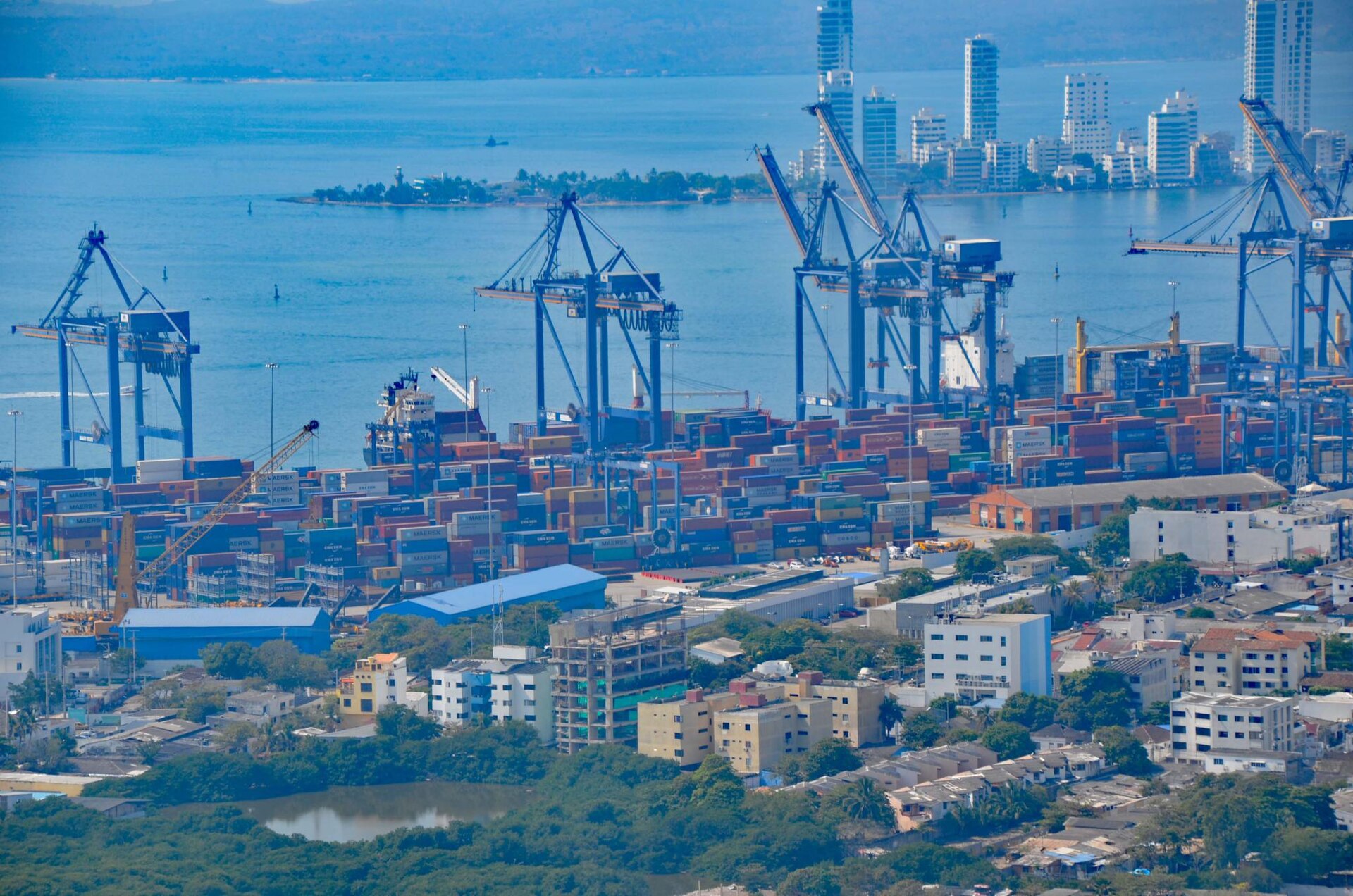
DANE’s wider industrial production index, which adds mining, electricity and gas, and water supply to manufacturing, rose 1.9% in the same month after a 1.2% fall in August as first published. Electricity and gas grew 5%, water supply 3.7%, manufacturing 1.5% and mining and quarrying 0.5%.
In that index, the strongest gains came in other transport equipment, a category outside cars and trucks (up 16.4%), metal products (13.6%), coal mining (12.9%) and beverages (11.9%). The sharpest falls hit textiles (down 18.9%), clothing (11.2%) and motor vehicles (7.3%).
An Uneven Recovery
Regional gaps were wide: output rose 13.8% in Bolívar department on the Caribbean coast, 7.3% in Cundinamarca, the department around Bogotá, and 6.9% in Atlántico, the department around Barranquilla, while Córdoba, a department in the north-west, fell 36.3%. Cundinamarca and Bolívar together added 2.0 percentage points, more than the whole 1.5% national gain, so the rest of the country combined subtracted 0.5 points.
Among Colombian cities, Cali grew 14.4%, Cartagena 11% and Barranquilla 7.2%, while Medellín fell 3.2% and Manizales 6.3%. Factory employment fell in Bogotá (3%), Cali (3.5%) and Barranquilla (5%), even where output rose.
Jobs are the weak point, with employment in the surveyed factories down 1.4% over the year and real sales, meaning sales after removing price changes, up only 0.6%. For January to September, output is up 0.5%, sales 0.2% and employment is down 1.0%, so one good month has not yet reversed a flat year.
Why It Matters
The gap between 1.5% more output and 1.4% fewer factory workers means employment has not yet followed the recovery in output. For readers outside Colombia, that makes September a first sign of recovery rather than proof of a turnaround.
The reading also sits against a flat year, since the 12 months to September show output up only 0.6%. A second month of growth in the October survey would separate a recovery from a one-month rebound.
What Prediction Markets Say
Polymarket, an online platform where users bet real money on outcomes, runs a market on the December decision of Colombia’s central bank, Banco de la República. At 12:34 p.m. ET on 13 November, traders priced no change at 54.5% and a 0.25-point rise at 34.6%, with US$41,716 traded in total.
These prices are bets, not polls, and one month of factory data cannot tell us which way the central bank will move. The market’s own resolution rules decide how it pays out.
Why we show this: prediction markets turn real-money bets into a live probability that moves within minutes of the news, which is why investors, campaigns and newsrooms in the United States now follow them closely. We show them next to polls and official results, never instead of them.
What to Watch Next
DANE is due to publish Colombia’s third-quarter GDP, the economy’s total output, on Tuesday, 17 November, according to the economic calendar. It will show whether industry’s September rebound is part of a wider upturn.
The next EMMET release, covering October, will show whether the rise holds. The central bank’s December decision is the other date traders are watching.
What Is Not Known
DANE’s release does not explain why output in Córdoba fell 36.3% or which activities drove that drop. It is also not yet known whether the August and September figures will be revised in later releases.
Sources: DANE (Colombia’s national statistics agency), monthly manufacturing survey EMMET and industrial production index, September 2026, both published on 13 November 2026; Polymarket market “Central Bank of Colombia decision in December”, read on 13 November 2026 at 12:34 p.m. ET. This is news, not investment advice.
Frequently Asked Questions
How much did Colombia’s manufacturing output grow in September 2026?
Real manufacturing production rose 1.5% from September 2025, DANE said on 13 November. That followed falls of 2.3% in July and 3.7% in August, as first published.
Did Colombian factories add jobs in September?
No. Employment in the surveyed factories fell 1.4% from a year earlier while real sales rose 0.6%.
What is DANE’s industrial production index?
It is a wider gauge that combines manufacturing, mining, electricity and gas, and water supply. It rose 1.9% in September 2026.
Which regions grew fastest in September?
Bolívar led with 13.8%, followed by Cundinamarca at 7.3% and Atlántico at 6.9%. Córdoba fell 36.3%.
In depth
This article was produced by The Rio Times’ automated AI newsroom. Editorial responsibility: Matthias Camenzind, Publisher and Editor-in-Chief. The Rio Times also runs Ask Rio Times, which answers from 100,000+ of our own articles, the daily Latin America Power Map, and prediction-market odds on elections and markets.. How we use AI · Report an error