Colombia Puts US$96 Million Into Its Electricity Rescue Fund to Keep Power Flowing in Chocó
COLOMBIA · ENERGY
Key Facts
- —What happened Colombia’s government moved 300 billion pesos, about US$96 million, into the Fondo Empresarial.
- —What the fund does The Fondo Empresarial is a state vehicle used to support utilities that run short of cash.
- —Who it helps here DISPAC, the electricity distributor serving Chocó province in western Colombia.
- —The stated purpose To shore up liquidity across the power sector rather than to fund new generation.
- —Who ordered it The government of President Abelardo De la Espriella, in office since 7 August 2026.
- —What is not published The government has not said how long the transfer is expected to last.
A transfer into a fund most Colombians have never heard of, to keep the lights on in the province that needs it most.
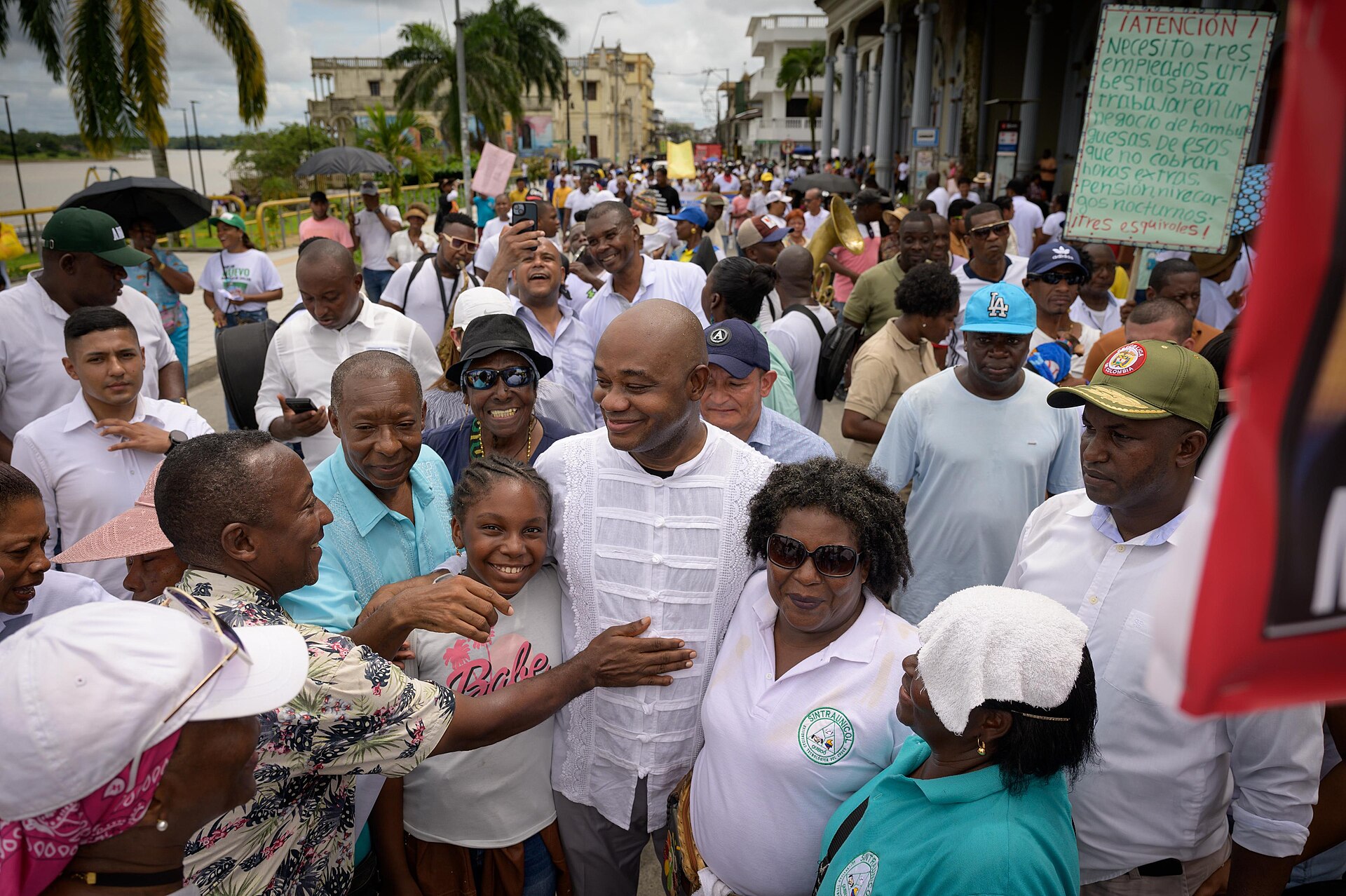
Colombia’s government has transferred 300 billion pesos to the Fondo Empresarial, a state fund used to rescue struggling utilities. At the rate of 17 September 2026 that is about US$96 million.
What the Government Did
The government transferred 300 billion Colombian pesos to the Fondo Empresarial. That is roughly US$96 million at the exchange rate of 17 September 2026.
The fund exists to support utilities that cannot meet their obligations. It is a liquidity tool, not a subsidy for consumers.
Why Chocó
DISPAC distributes electricity in Chocó, a province on Colombia’s Pacific coast. It is among the country’s poorest and least connected regions.
Distribution companies in such areas collect less per customer while paying the same wholesale prices. That gap is the structural problem the transfer addresses temporarily.
What Liquidity Support Actually Fixes
A liquidity injection lets a utility keep paying generators and keep buying power. It does not change the revenue arithmetic that created the shortfall.
Colombia has used the Fondo Empresarial for this purpose before. Repeated use is usually a sign that the underlying tariff or collection problem has not been solved.
Where This Sits in Colombian Energy Policy
Colombia’s power sector has been under strain from several directions at once, including gas supply and tariff disputes. Earlier this week a Colombian gas distributor described the country’s gas deficit as structural.
This transfer addresses the cash side of that strain. It leaves the supply side untouched.
What It Means for Residents
For households in Chocó, the immediate effect is that supply is less likely to be interrupted by a distributor running out of money. Bills are not affected by this decision.
For foreign residents elsewhere in Colombia, the relevance is indirect. A power sector that needs repeated state support is a sector where tariff changes remain possible.
A Note on the Figure
Some reports converted the 300 billion pesos at around US$75 million. At the rate published on 17 September 2026 the correct figure is closer to US$96 million.
We have used the dated market rate rather than the reported conversion. Readers comparing coverage will see both numbers in circulation.
What Is Not Yet Known
The government has not said how long the money is expected to cover, or whether further transfers are planned. Nor has it published DISPAC’s own shortfall.
It is also unclear how much of the 300 billion pesos reaches Chocó rather than other utilities. The announcement describes the sector broadly.
How Colombia’s Power Market Is Put Together
Generators produce the electricity and sell it into a wholesale market. Distribution companies buy there and deliver to households, recovering the cost through regulated tariffs.
When a distributor cannot collect enough to pay the wholesale bill, the shortfall moves up the chain. The Fondo Empresarial exists to stop that shortfall spreading.
This is why a problem in one province becomes a national question. The market settles centrally even though the customers are local.
What to Watch
Whether the energy regulator publishes a tariff decision for the affected areas. That is the step that would change the arithmetic rather than bridge it.
And whether a further transfer follows before the end of the year. A second injection within months would say more than the first.
More: Latin America news and analysis, every day from The Rio Times.
Frequently Asked Questions
How much did Colombia transfer?
300 billion pesos, about US$96 million at the rate of 17 September 2026.
What is the Fondo Empresarial?
A Colombian state fund used to provide liquidity to utilities in financial difficulty.
Who is DISPAC?
The electricity distribution company serving Chocó province on Colombia’s Pacific coast.
Does this lower electricity bills?
No. It supports the distributor’s cash position and does not change consumer tariffs.
Who approved it?
The government of President Abelardo De la Espriella, in office since 7 August 2026.
Why do the dollar figures differ between outlets?
Some converted at an older rate. We used the market rate published on 17 September 2026.
Sources: Colombian government announcement on the Fondo Empresarial transfer, 17 September 2026; exchange rate from open.er-api.com, 17 September 2026.
This article was produced by The Rio Times’ automated newsroom system. How we use AI · Report an error
In depth
Read More from The Rio Times