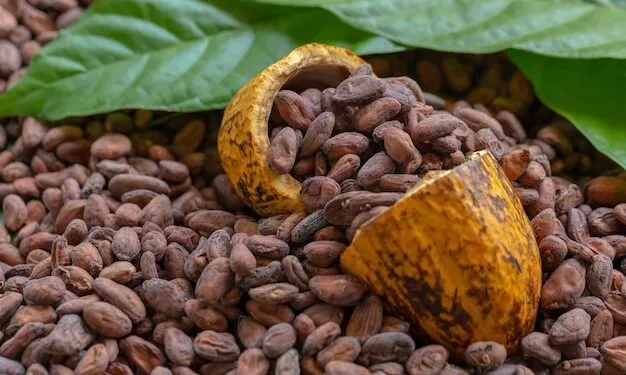
This week in London, the cocoa market witnessed a dramatic climb, with futures on the ICE escalating by 14%, approaching a breathtaking peak of nearly 10,000 pounds per metric ton.
This surge is fueled by a robust demand for cocoa that continues to defy the rising price trends.
London’s trading floors buzzed as cocoa prices surged 4.4%, closing at 9,835 pounds per ton, driven by a 9.7% jump on Thursday.
Free daily brief — no card needed
Get every Agri Business story in one morning email
We build you a personalized brief around the topics you follow — free for 7 days. Love it? Your first month after that is US$1.
Approaching the previous peak of 9,980 pounds per ton, these figures suggest the possibility of reaching new heights soon.
Across the Atlantic, the story was just as compelling. First-quarter North American cocoa processing exceeded last year’s figures by 3.6%, surpassing forecasts that predicted a 4% to 8% decline.
Cocoa’s Continued Meteoric Rise on Global Markets.
According to Czarnikow, a specialist in supply chain and trading services, this upward trend is expected to persist for another eighteen months.
This anticipation is based on the expectation of a fourth consecutive supply deficit next season.
However, the windfall from these soaring prices will not quickly reach the farmers in Ivory Coast and Ghana, who are responsible for producing 65% of the world’s cocoa.
Farmers may not fully benefit from the current market boom for another 18 months due to governmental trading policies. This discourages immediate reinvestment in crop production.
Meanwhile, in New York, cocoa prices also painted a bullish picture, marking a 3.9% increase to $11,461 per ton after a robust 9.6% gain on Thursday.
The prices even touched a record high of $11,722 per ton, echoing the global cocoa fever.
Cocoa’s price rise globally underscores strong demand and reveals the interconnected nature of markets. It underscores the lingering challenges faced by the primary producers in Africa.
The cocoa market saga continues to unfold, reflecting broader economic, environmental, and social dynamics in the global trading arena.
This article was produced by The Rio Times’ automated AI newsroom. Editorial responsibility: Matthias Camenzind, Publisher and Editor-in-Chief. The Rio Times also runs Ask Rio Times, which answers from 100,000+ of our own articles, the daily Latin America Power Map, and prediction-market odds on elections and markets.. How we use AI · Report an error