Chinese Firms Expand Influence in Iraq’s Energy Sector
Chinese companies have secured major contracts to develop oil and gas fields in Iraq, reflecting their growing involvement in the country’s energy sector.
This expansion spans multiple regions, solidifying China’s foothold in the Middle Eastern oil and gas market.
Zhongman Petroleum and Natural Gas Group Corporation (ZPEC) secured a $390 million contract for engineering services at Iraq’s Rumaila oilfield.
This four-and-a-half-year deal underscores the deepening ties between Chinese firms and Iraq’s energy industry.
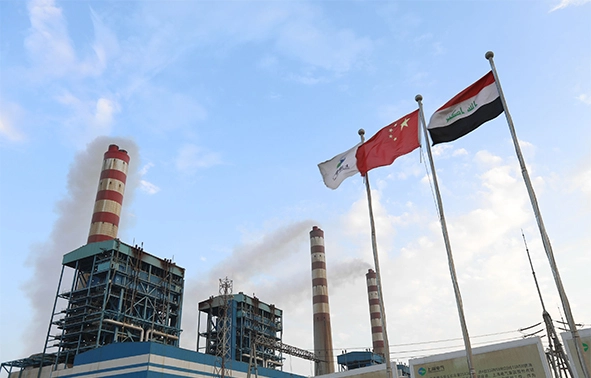
In southern Iraq, Chinese involvement is particularly significant with strategic projects like the Nasiriyah oil hub in DhiQar Province.
This hub will serve as a major storage and supply point for crude oil, boosting China’s influence over Iraq’s key southern oil assets.
This region’s importance is heightened by its proximity to major export terminals and its considerable oil reserves.
Chinese Investment Reshaping Iraq’s Energy Sector
Chinese firms are also focusing on gas, as evidenced by several contracts with Iraq to develop oil and gas fields in Diyala and Basra provinces.
These projects align with Iraq’s broader strategy to achieve gas production self-sufficiency within three years.
This shift marks a significant realignment in Iraq’s energy sector, with Chinese firms increasingly filling the void left by Western oil giants.
Chinese companies’ growing role in Iraq matters because it reflects broader geopolitical dynamics. China’s expanding influence in Middle Eastern energy markets could reshape global energy politics.
Iraq, seeking to diversify its energy partnerships and boost its economy, finds a willing partner in China.
This relationship, however, may affect regional stability and influence future energy market trends.
As Iraq continues to attract billions in investments to develop its oil and gas sector, Chinese companies stand poised to play a pivotal role.
Their involvement highlights the complex interplay of economics, politics, and strategic interests shaping the global energy landscape.
This article was produced by The Rio Times’ automated newsroom system. How we use AI · Report an error · Editorial responsibility: Matthias Camenzind, Editor-in-Chief