Brazil’s Credit Rating Boost Strengthens Real Amid Global Tensions
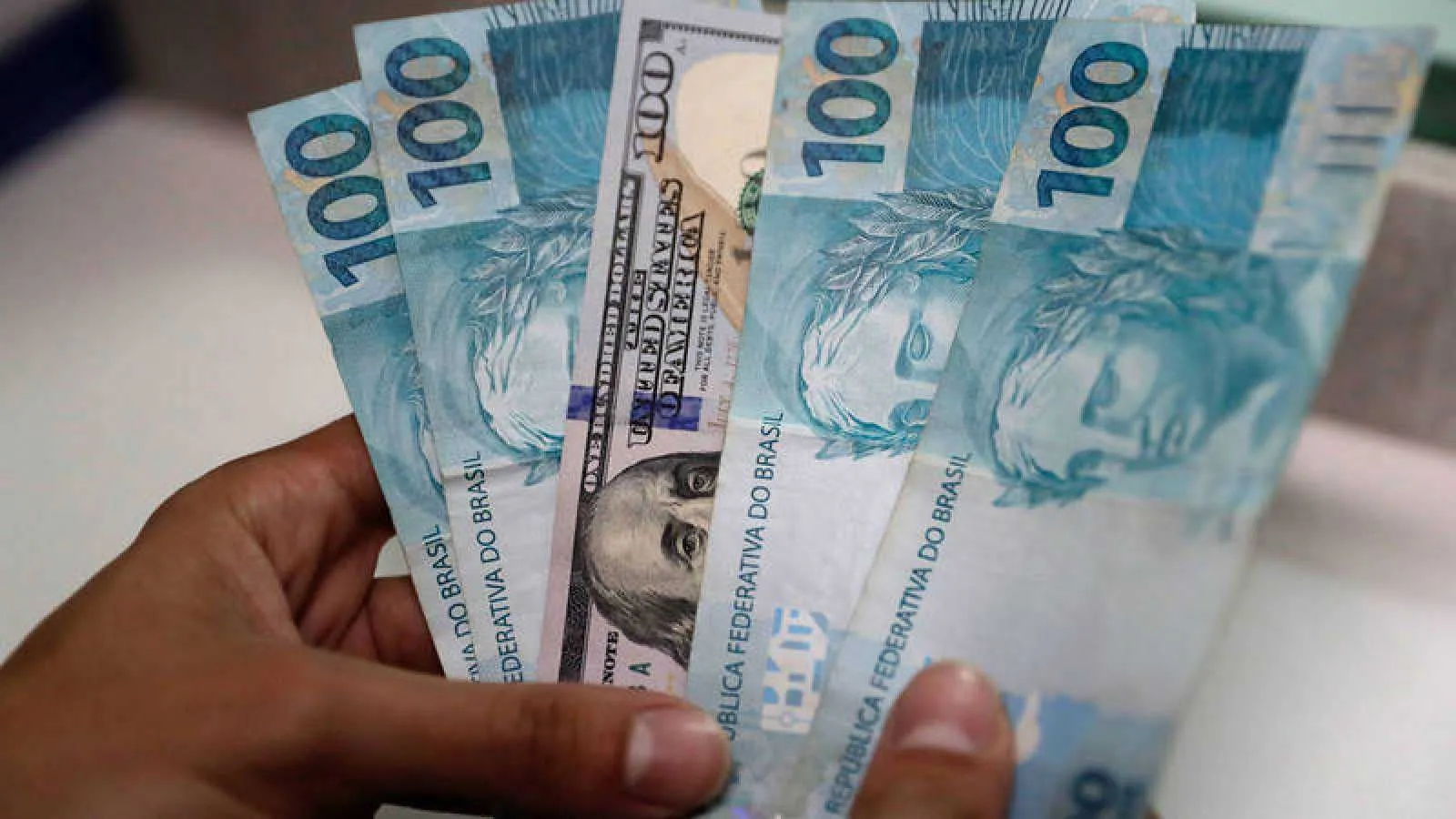
Brazil’s currency gained strength against the dollar on Wednesday, defying global trends. The real rise came after Moody’s unexpectedly upgraded Brazil’s credit rating.
This positive development occurred despite escalating tensions in the Middle East and strong U.S. employment data. The dollar closed at R$ 5.444, down 0.36% against the real.
This movement contrasted with the dollar‘s performance against other currencies worldwide. The real’s appreciation reflected the market’s optimistic response to Brazil’s improved credit outlook.
Moody’s announcement, made after markets closed on Tuesday, sparked a positive reaction across Brazilian financial markets.
The upgrade affected not only the exchange rate but also future interest rates and the stock market. Marcio Riauba from StoneX Banco de Câmbio noted the significant impact of this unexpected rating change.
However, external factors limited the real gains. Escalating tensions in the Middle East, following Iran’s missile attack on Israel, prompted investors to seek safe-haven assets like the dollar.
Geopolitical Tensions and Economic Developments
Iran claimed to have ended its offensive, but the U.S. and Israel promised retaliation. The prospect of widespread conflict in the region caused oil prices to surge.
It also led to declines in stock markets and currencies considered less secure. Thiago Avallone from Manchester Investments explained that such events typically strengthen the dollar against other currencies.
In the U.S., ADP employment data showed private sector job creation reached 143,000 in September, exceeding economists’ expectations. This robust employment figure provided additional support for the dollar in global markets.
Market professionals generally viewed Brazil’s credit rating upgrade as positive news. It raised expectations that Brazil could become more attractive for international investment flows.
Beto Saadia from Nomos highlighted that this action brings Brazil closer to regaining investment grade status. However, Saadia cautioned that other major rating agencies, Fitch and S&P, still maintain lower ratings for Brazil.
In addition, he suggested that significant capital inflows might require upgrades from at least two of the three major agencies.
Live Market IntelligenceBrazil — Live Market Board
Rio Times · Live Market Intelligence
Brazil — Live Market Board
+0.46%
183,827.59
+0.46%
65,071.30
+0.20%
11,055.91
-0.73%
2,782,561
-0.59%
2,558.92
-0.79%
60,220.45
+0.32%
| Instrument | Last | Change | YoY | Prev. | High | Low | Volume |
|---|---|---|---|---|---|---|---|
| IBOV | 183,827.59 | +0.46% | +21.85% | 182,991.13 | 168,310 | 167,142 | — |
| USD/BRL | 5.16 | +0.01% | -5.13% | 5.16 | 5.18 | 5.14 | — |
| SELIC | 14.00% | — | — | — | — | — | |
| PETR4 | 41.64 | -0.05% | +35.19% | 41.66 | 41.97 | 41.15 | 41,499,400 |
| VALE3 | 72.97 | +0.83% | +30.75% | 72.37 | 73.54 | 72.66 | 17,658,000 |
| ITUB4 | 38.60 | -1.03% | +4.57% | 39.00 | 39.34 | 38.39 | 29,487,800 |
| BBDC4 | 16.85 | +0.36% | +3.50% | 16.79 | 16.90 | 16.67 | 19,416,900 |
| BBAS3 | 19.37 | +0.47% | +0.73% | 19.28 | 19.44 | 19.16 | 11,069,200 |
| B3SA3 | 14.26 | -0.21% | +12.73% | 14.29 | 14.47 | 14.11 | 33,037,800 |
| ABEV3 | 14.89 | -0.80% | +21.91% | 15.01 | 15.07 | 14.81 | 16,453,100 |
| WEGE3 | 47.59 | +0.49% | +29.99% | 47.36 | 48.08 | 47.36 | 3,364,600 |
| PRIO3 | 59.14 | -0.19% | +50.67% | 59.25 | 59.81 | 58.74 | 3,325,600 |
| SUZB3 | 41.33 | +2.35% | -23.55% | 40.38 | 41.48 | 40.35 | 3,914,900 |
| RENT3 | 34.68 | -0.09% | +0.84% | 34.71 | 34.96 | 34.35 | 7,979,100 |
| AZZA3 | 15.89 | -2.63% | -53.76% | 16.32 | 16.42 | 15.82 | 1,330,300 |
| CSNA3 | 4.30 | +0.47% | -42.65% | 4.28 | 4.41 | 4.26 | 10,076,100 |
| GGBR4 | 24.69 | +2.19% | +51.38% | 24.16 | 24.85 | 24.18 | 7,047,600 |
| ENEV3 | 24.21 | -1.38% | +70.49% | 24.55 | 24.64 | 23.99 | 9,297,000 |
This article was produced by The Rio Times’ automated newsroom system. How we use AI · Report an error
LatAm Markets: Live Signals → — real-time movers, turnover leaders and FX across Latin America.
Read More from The Rio Times