Eleven Judges, One of Their Own Under Suspicion, and a Country Watching: Brazil Supreme Court Meets Tuesday
BRAZIL · JUDICIARY
Key Facts
- —The situation Brazil’s highest court is deciding whether to investigate one of its own eleven judges.
- —The judge Alexandre de Moraes, who led the prosecution of former president Jair Bolsonaro.
- —The allegation A bank that collapsed last year paid millions to a law firm owned by his wife.
- —The bank Banco Master failed in November owing about US$2.3bn to some 1.6 million ordinary savers.
- —What happens Tuesday The judges meet in emergency session. On paper they are ruling on the federal police chief.
- —The catch Any single judge can stop the whole thing by asking for more time to read the file.
Courts everywhere protect their own. Brazil is about to find out, in public, whether its highest one will.
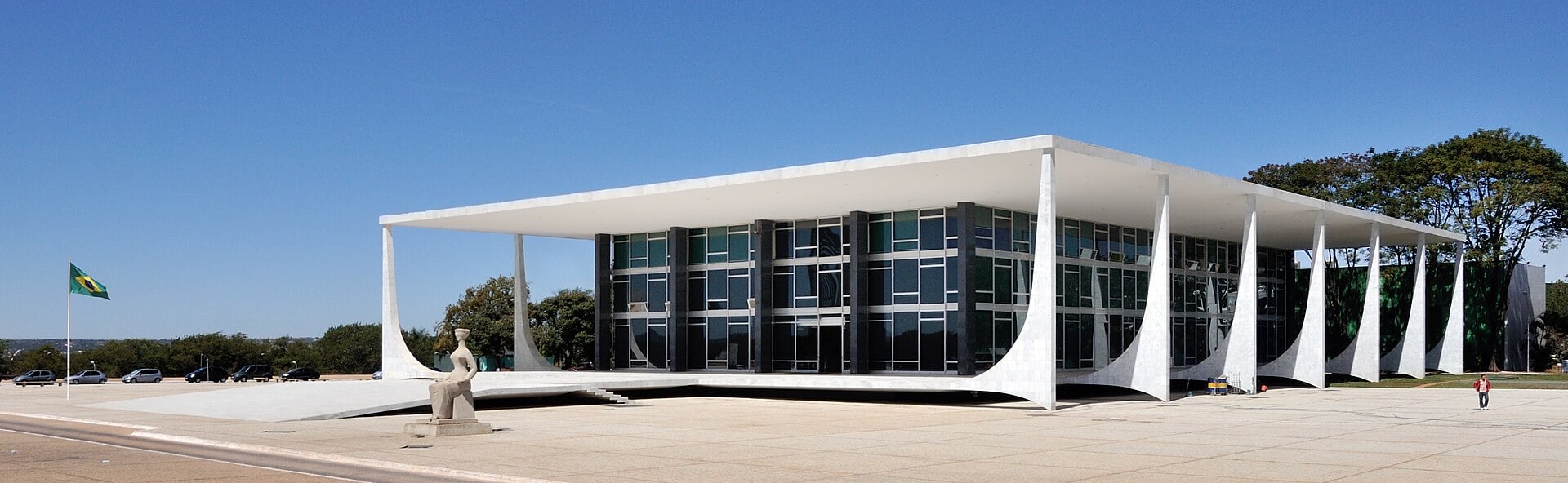
At ten o’clock on Tuesday morning, the eleven judges of the Brazil Supreme Court take their seats in Brasília. One of them is the reason the session was called.
The Brazil Supreme Court has spent a fortnight tearing at itself in public. Tuesday is the day it either stops or does not.
How a Failed Bank Reached the Bench
Banco Master was a mid-sized lender in São Paulo that sold savers high-yield deposits it could not cover. Regulators shut it down on 18 November 2025.
The hole is estimated at 12bn reais, about US$2.3bn, and roughly 1.6 million people had money in it. Its owner, Daniel Vorcaro, was arrested the day before, boarding a private jet to Malta.
Police took his phone. That is where this story really begins.
On 1 September a judge named André Mendonça unsealed a 218-page report drawn from that phone. It described a contract between the bank and the law firm of Viviane Barci de Moraes.
She is married to Alexandre de Moraes, the judge who led the prosecution of former president Jair Bolsonaro. He is the most powerful and most disliked figure on the court, depending on who you ask.
In most countries a judge’s spouse may practise law. What made this different was the sum, the timing, and who was paying.
The Week the Court Turned on Itself
What followed was not a legal process so much as a slow-motion collision. Mendonça ordered the removal of the head of Brazil’s federal police.
A second judge, Flávio Dino, reinstated the man the same week. A third, the chief justice Edson Fachin, suspended both decisions and called Tuesday’s emergency session.
Thirteen retired justices wrote to Fachin demanding an immediate investigation. They called it the most acute crisis in the court’s history, and they are the people best placed to know.
The prosecutor-general’s office has filed twice, in opposite directions. It first sought to void the police report, then asked for related bank records to be made public.
On Sunday a fourth judge, Cristiano Zanin, ordered the police to hand him the raw phone data by eleven that night. Evidence, he wrote, belongs to the whole court and not to any one member.
It arrived on Monday morning and his staff began reading. Nobody else on the bench has confirmed receiving it.
What Is Actually on the Order Paper
Here the drama and the paperwork diverge. Tuesday’s session is listed as Petition 16,662, which concerns the removal of the federal police director-general.
That sounds like an administrative squabble, and legally it is. But it is also the file inside which every step against Moraes was taken.
Strike down what was done in that petition and the investigation touching Moraes goes with it. That is why a procedural vote has become a national event.
Not everyone accepts the framing. Gilmar Mendes, the court’s longest-serving member, has objected that the matter has no defined procedural shape at all.
One more detail has escaped most accounts. Mendonça is no longer in charge of the case.
Fachin took it over on Saturday, reasoning that the session might raise the question of Moraes stepping aside. Under the court’s rules, that question belongs to its president.
The Single Word That Could End It
Brazilian judges have an instrument called a vista. One of them asks for more time to study a file, and the judgment stops where it is.
It can last weeks. In an election year, weeks are everything.
Brazilians go to the polls in early October. A case suspended now would not return until the votes are counted.
Mendonça is reported to want his vote recorded early, before anyone can reach for that lever. Allies of Moraes are expected to reach for it anyway.
No such request has yet been filed. It is the move everyone is watching for rather than one that has happened.
Why This Matters Beyond Brazil
Brazil is the largest economy in Latin America and its court is unusually powerful by any international standard. It has removed a president, jailed a former one, and regulated social media.
That power was tolerable while the court appeared united. A bench that investigates its own members in public is a different institution.
Investors noticed on Monday, when the São Paulo market fell about 1% with banks leading it down. A Brazil Supreme Court at war with itself has a price.
Whatever the eleven decide, the tearing is already visible. Tuesday determines only whether it is done quickly or slowly.
More: Brazil news in English, every day from The Rio Times.
Frequently Asked Questions
What is the Brazil Supreme Court deciding on Tuesday?
Formally, a case about the removal of the federal police chief. In practice, whether the investigation touching Justice Alexandre de Moraes survives, because every step in it was taken inside that case.
Why is a judge being investigated?
A police report drawn from the phone of a collapsed bank’s owner describes payments to a law firm owned by the judge’s wife. The judge has not been charged.
What was Banco Master?
A mid-sized São Paulo bank that sold savers high-yield deposits without the assets to cover them. Regulators shut it in November 2025, leaving a hole of about US$2.3bn affecting some 1.6 million people.
Could the session be postponed?
Yes. Any judge may request a vista, which suspends the judgment while that judge studies the file. With elections in early October, a suspension now would push a decision past the vote.
Who is in charge of the case?
Chief Justice Edson Fachin, who took it over on 12 September from Justice André Mendonça. Many accounts still name Mendonça and are out of date.
Sources: Supreme Federal Court press note of 9 September, ConJur, Migalhas, CNN Brasil, Poder360, Agência Pública and O Povo.
This article was produced by The Rio Times’ automated newsroom system. How we use AI · Report an error
Read More from The Rio Times
- Two Brazil Runoff Polls Put Different Men in Front. The Difference Is a Telephone.
- Argentina Says Britain Is Reinforcing the Falkland Islands. The Document Says Four Jets Out, Four Jets In, in 2027.
- The Dark Horse Forensic Report Clears the Bolsonaro Film. Its Author Never Looked at Where the Money Came From.