Brazil’s Supreme Court Crisis Deepens Before the October Election
BRAZIL · ANALYSIS
Key Facts
- —The moment: Two Supreme Court justices are formally trying to investigate each other, weeks before Brazil votes.
- —The number: The Senate held 109 impeachment requests against the Court’s ten sitting justices as of 1 September.
- —The walkout: Eleven of the Federal Police’s fifteen directors offered to quit after Mendonça removed its chief.
- —The elders: Thirteen retired justices, including three former chief justices, want the Court investigated in public.
- —The timing: Brazil votes on 4 October, with Jair Bolsonaro’s son Flávio now tied with President Lula.
- —The catch: Almost everything above is an allegation, a filing or a letter — not a verdict.
Runoff · Sunday, 25 October
Brazil Runoff 2026: Lula vs Flávio
Date, polls, debates, odds and how the runoff works, updated every day.
Read our Brazil election 2026 runoff guide →
Brazil election 2026 · Brazil election polls · Who will win: Brazil election odds · Brazil runoff date and results start · Brazil election results · Brazil election poll data (CSV) · All election stories
Prediction markets · who wins the runoff
Implied chance of winning Brazil’s presidency on 25 October, from traders’ prices.
Polymarket
Flávio Bolsonaro 82.5% · Lula 17.5% (US$195 million traded)
Kalshi (regulated in the US by the CFTC)
Flávio Bolsonaro 84% · Lula 18%
As of 24 October, 11:40 am ET (16:40 Lisbon), updated every 20 minutes. Prices are bets, not polls, and can move fast.
Why we show this: prediction markets turn real-money bets into a live probability that moves within minutes of the news, which is why investors, campaigns and newsrooms in the United States now follow them closely. We show them next to polls and official results, never instead of them.
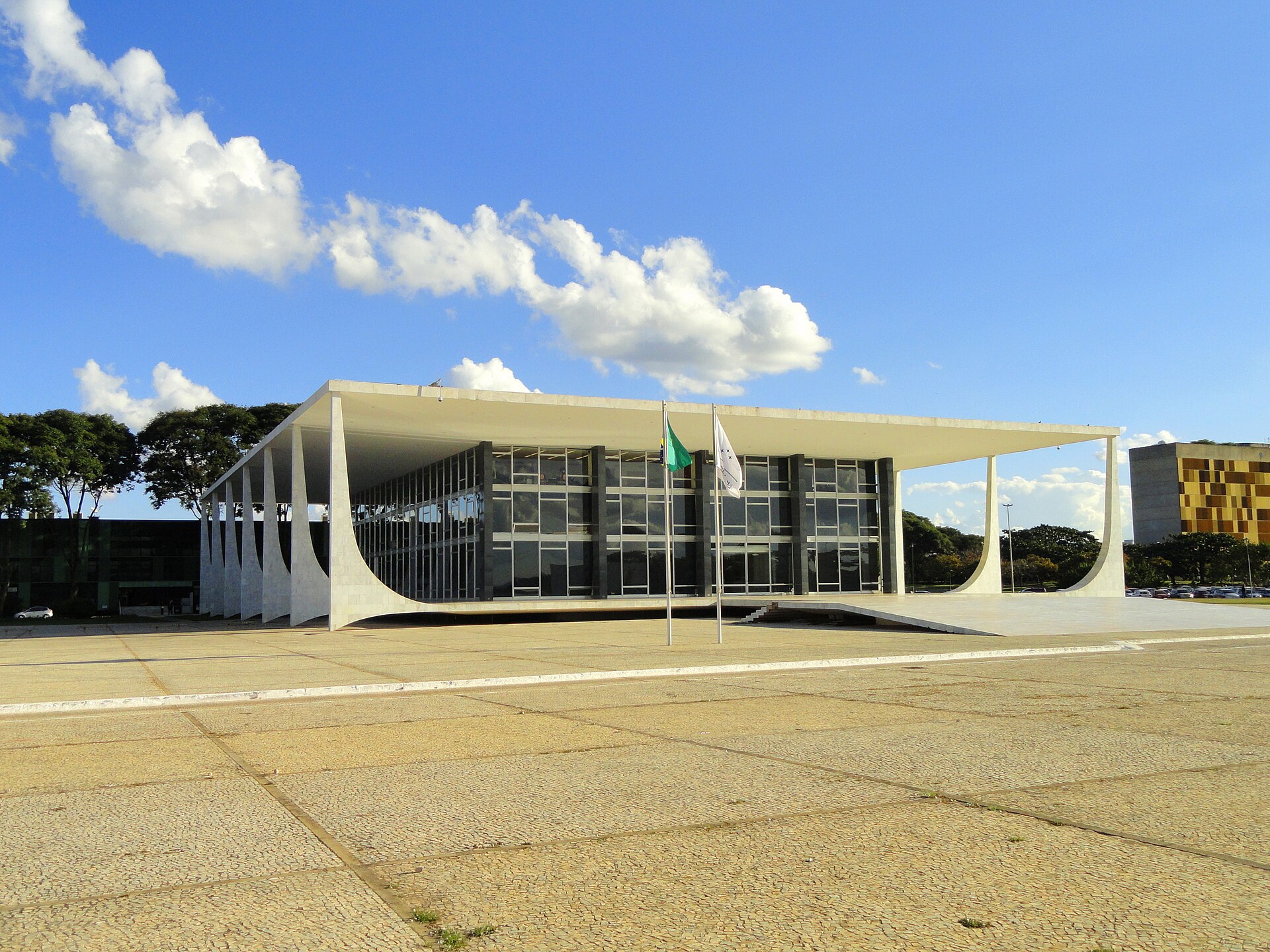
Brazil’s Supreme Court is investigating itself, its own police force is in open revolt, and its most senior alumni say the crisis is the worst in the Court’s modern history. It is happening five weeks before an election too close to call.
Two justices of Brazil’s Supreme Federal Court are each trying to get the other investigated. Alexandre de Moraes wants colleague André Mendonça, a Bolsonaro appointee, investigated, and Mendonça wants Moraes removed.
Mendonça made his move first. He removed the Federal Police’s top two officials, saying they had spied on him.
Eleven of the force’s fifteen directors then offered to resign in solidarity. They back the officials Mendonça removed.
Thirteen retired justices, including three former chief justices, have taken the unusual step of writing to the sitting Court. They want its response held in public, not behind closed doors.
None of this proves wrongdoing by anyone named in it. But the sheer volume of it, five weeks before Brazilians vote for a president, is itself the story.
How the Court Got Here
Start with Justice Alexandre de Moraes, the figure at the center of most of this. His authority expanded sharply after 2019, when he began overseeing a standing inquiry into threats against the Court itself.
He used that inquiry to order the removal of social media accounts. In 2024, he suspended Elon Musk’s platform X across all of Brazil.
Musk called it censorship. Moraes called it a defense of democracy against coordinated disinformation.
The stakes rose after 8 January 2023, when Bolsonaro supporters stormed government buildings in Brasília days after Lula’s inauguration. Moraes led the Court’s response, and dozens of defendants received long sentences.
In September 2025, the Court’s First Panel convicted Jair Bolsonaro of plotting a coup to overturn his 2022 election loss. He received 27 years, and the ruling was not unanimous.
Justice Luiz Fux dissented, arguing the Court lacked jurisdiction. He said the rule letting it try Bolsonaro was adopted only after the alleged offenses.
The following June, a separate panel convicted Eduardo Bolsonaro, one of the former president’s sons, of coercion. Judges found he pressured US officials to force Brazil’s courts to drop his father’s case.
A month later, Washington granted him a green card. It shields him from his Brazilian prison sentence while he stays in the US.
A third son, Rio city councilman Carlos Bolsonaro, faces a separate trial. Investigators allege an illegal spy network that surveilled justices, journalists and rivals during his father’s presidency.
Only Jair Bolsonaro himself was barred from voting and running this year. His sons remain free to do both.
The Case That Something Is Badly Wrong
Start with what critics call unchecked power. One justice suspended a foreign platform used by millions, fined it daily, and blocked accounts without a jury or a public trial.
The Trump administration treated this as serious enough to act on. It sanctioned Moraes personally in 2025 under the Global Magnitsky Act.
That law is usually reserved for authoritarian officials. Washington later extended sanctions to Moraes’s wife and her law firm.
Washington added 50% tariffs on many Brazilian exports the same year. No US administration had previously sanctioned a sitting justice of a major democratic ally.
Musk asked in 2025 whether Brazil was following Venezuela’s path, comparing Moraes’s tactics to those used against dissent under Nicolás Maduro. This newspaper reported at the time that a growing number of Brazilians and foreign observers were making the same comparison.
This week’s crisis adds a domestic dimension to that argument. Three of Brazil’s largest newspapers made the same demand this month.
Estadão, Folha de S.Paulo and O Globo all published editorials. Each said Justice Moraes should leave the Court.
A sitting presidential candidate said he sees no way Moraes can stay. The Senate president himself called 109 pending impeachment requests against the Court’s justices simply not normal.
The police revolt belongs in this tally too. Mendonça removed the Federal Police’s two most senior officers himself, without any request from prosecutors.
Eleven of fifteen directors backed the ousted chief by offering to quit. It is the clearest sign yet that this crisis cuts in both directions, not only against Moraes.
A colleague, Justice Gilmar Mendes, has separately proposed banning police staff from justices’ chambers entirely.
The Case That This Is Accountability, Not Persecution
The counter-case starts with 8 January 2023. Investigators found extensive evidence of a plan to keep Bolsonaro in power after he lost.
Courts in other countries have punished coup attempts far more lightly, defenders of the ruling note.
The Bolsonaro verdict was not a one-man decision. A panel of justices heard it, and Fux’s dissent was published alongside the majority ruling.
Defenders argue that alone shows the Court tolerates internal disagreement, rather than enforcing a single line.
Foreign sanctions on a country’s own judges are themselves an extraordinary act. Many Brazilian officials, across the political spectrum, call it interference in a sovereign court’s decisions rather than proof those decisions were wrong.
Chief Justice Fachin has already intervened once. He took the request to investigate Mendonça away from the inquiry Moraes personally runs.
That is not a verdict. Defenders say it shows the Court can still correct itself from within, rather than only under outside pressure.
The pattern of weaponized leaks is not one-sided, either. In September, a free-market anti-corruption candidate put a different justice’s confidential family data into a public election filing.
Justice Cristiano Zanin, appointed by Lula, sought criminal accountability for the candidate responsible. No court has found the candidate broke any law.
Public distrust of the Court predates this month’s crisis by years. An AtlasIntel poll found half of Brazilians already distrusted the STF in 2024.
By April 2026, 75% told Datafolha the Court holds too much power. That unease existed before anyone alleged wrongdoing by Moraes or Mendonça specifically.
The anti-Court campaign has its own tangles, too. An April 2026 Senate report accused three justices of financial ties to the same Banco Master collapse.
It sought their impeachment, but the government reshuffled the committee hours before the vote. The report died 6 to 4, and whether that protected the Court or protected allies depends on who is asked.
Mass impeachment filing itself has become a tool both sides use freely. Almost none of the 109 requests will reach a Senate vote.
Removal needs 54 of the 81 senators, and the Senate president screens each request first. No sitting justice has ever been removed this way.
That gatekeeping is why impeachment threats function more as pressure than as a real removal mechanism.
An Election Sitting on Top of All of It
Jair Bolsonaro cannot run again until 2030, so his movement passed to his eldest son. Senator Flávio Bolsonaro has made attacking Moraes central to his campaign, calling him a “rotten orange” inside the Court.
A Nexus poll published on 8 September put Flávio one point ahead of Lula in a runoff. It was the first time in that series he had led.
The gap sits inside the margin of error. But the direction has moved steadily his way for six weeks.
Brazil votes on 4 October, with a runoff on 25 October if nobody wins a majority. Every presidential election since 2002 has gone to a second round.
Days before this month’s crisis broke, Lula’s coalition made its own move. It asked the electoral court to disqualify Flávio Bolsonaro over a rally at a rodeo festival.
The case has not been decided.
Whoever is right about the Court, both sides now have a stake in how it is seen. A discredited Court is a weaker referee for an election this close, no matter which side ends up needing it to rule.
What Is Proven, and What Is Not
It is proven that Bolsonaro and his son Eduardo were both convicted. It is proven that Moraes suspended X across Brazil.
It is proven that the US sanctioned a sitting Brazilian justice for the first time in the Court’s history.
It is proven that 109 impeachment requests exist and that eleven police directors offered to resign this week. Those are matters of record, confirmed by the Senate president and the Court’s own filings.
It is not proven that Moraes acted improperly toward Daniel Vorcaro, the jailed banker at the center of the Banco Master case. Federal Police material alleges contact and a request for “protection,” but no court has ruled on it.
It is not proven that evidence was manipulated in the Bolsonaro trial, despite a former adviser’s testimony alleging a backdated report. Moraes disputes the account, and the Court rejected a motion to pause the trial over it.
It is not proven that any justice is acting from political motive rather than legal judgment. That question sits at the heart of every filing, editorial and resignation letter described here, and none of them settles it.
The Question Brazil Cannot Yet Answer
A common argument on the Brazilian right holds that the country will not find peace until the Court is brought under control.
A common argument on the left holds that this is exactly what a coup movement would want people to believe.
Both arguments can be sincerely held. Neither one is proven by the events of the past two weeks.
Those events show a Court in genuine crisis. They do not show who caused it, or why.
What is clear is the timing. Brazil’s institutions are tearing at each other in public, five weeks before they are asked to certify who runs the country next.
More: Brazil news in English, every day from The Rio Times.
Sources: The Rio Times archives, September 2025 – September 2026; Associated Press; Senate President Davi Alcolumbre; Federal Police statements; Estadão, Folha de S.Paulo and O Globo editorials; Poder360; CNN Brasil; Metrópoles; AS/COA Brazil 2026 election tracker.
This article was produced by The Rio Times’ automated newsroom system. How we use AI · Report an error · Editorial responsibility: Matthias Camenzind, Editor-in-Chief