Quaest Poll: Lula and Flavio Bolsonaro Tie at 41 Percent
BRAZIL · POLITICS
Full coverage: Brazil election results 2026 — live count on October 4, runoff scenarios and what the polls say now.
Key Facts
- —The headline Disapproval of Lula’s government is 50 percent against 43 percent approval, with 7 percent undecided.
- —The runoff Lula and Flavio Bolsonaro are level at 41 percent each, the first numerical tie of the cycle.
- —The first round Lula 36, Flavio Bolsonaro 29, Augusto Cury 8, with Renan Santos and Ronaldo Caiado on 3.
- —The catch The Northeast is the number that matters. Disapproval there rose from 29 percent in July to 35 percent.
- —The method Fieldwork ran 3 to 6 September, 2,004 voters aged 16 and over, margin of error two points.
- —The movement On 2 September the same pollster had approval at 45 and disapproval at 48.
Runoff · Sunday, 25 October
Brazil Runoff 2026: Lula vs Flávio
Date, polls, debates, odds and how the runoff works, updated every day.
Read our Brazil election 2026 runoff guide →
Brazil election 2026 · Brazil election polls · Who will win: Brazil election odds · Brazil runoff date and results start · Brazil election results · Brazil election poll data (CSV) · All election stories
Prediction markets · who wins the runoff
Implied chance of winning Brazil’s presidency on 25 October, from traders’ prices.
Polymarket
Flávio Bolsonaro 76.6% · Lula 23.5% (US$192 million traded)
Kalshi (regulated in the US by the CFTC)
Flávio Bolsonaro 76% · Lula 24%
As of 23 October, 4:40 am ET (09:40 Lisbon), updated every 20 minutes. Prices are bets, not polls, and can move fast.
Why we show this: prediction markets turn real-money bets into a live probability that moves within minutes of the news, which is why investors, campaigns and newsrooms in the United States now follow them closely. We show them next to polls and official results, never instead of them.
The Quaest poll produced the first numerical tie of the race. It also produced a number from the Northeast that will worry the government more.
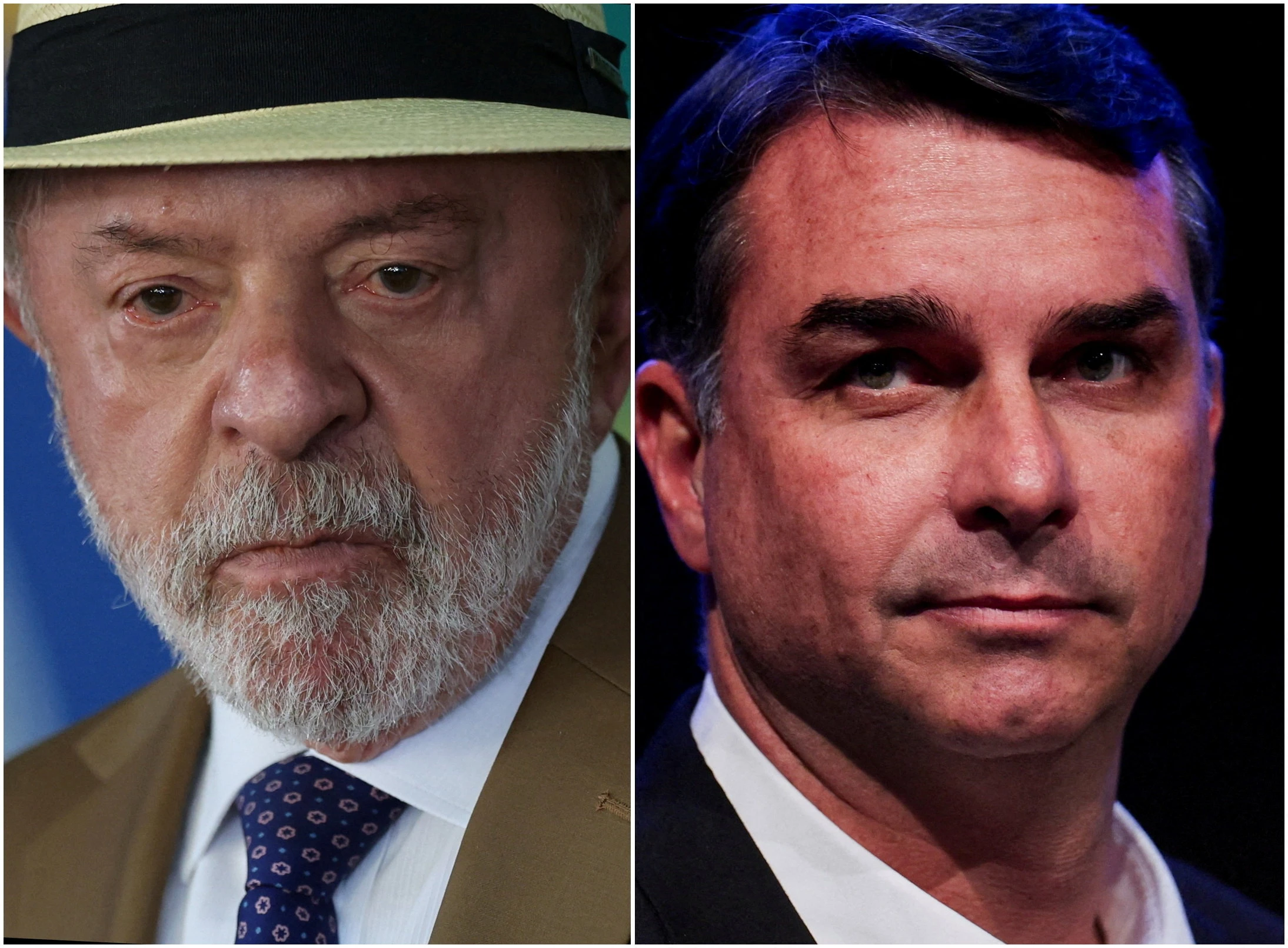
A new Quaest poll has produced the first numerical tie of Brazil’s presidential race. Lula and Flavio Bolsonaro are level at 41 percent in a hypothetical runoff.
The same survey puts disapproval of Lula’s government at 50 percent against 43 percent approval. Seven percent did not know or did not answer.
Fieldwork ran from 3 to 6 September with 2,004 voters aged sixteen and over. The margin of error is two points at 95 percent confidence.
It was commissioned by Globo and published on Monday 7 September. It is the first Quaest reading taken after the Supreme Court crisis broke.
What the Quaest Poll Actually Shows
In the first round Lula has 36 percent and Flavio Bolsonaro 29. Augusto Cury is on 8, with Renan Santos and Ronaldo Caiado on 3 each.
Romeu Zema takes 2 percent and Pablo Marcal 1. Blank and null votes run at 8 percent, with undecideds near 10.
In other runoff pairings Lula leads. He is on 41 against Caiado’s 38, and 44 against Zema’s 33.
Only the Flavio Bolsonaro matchup is tied. That is the number that moved the political conversation on Monday.
The Week-on-Week Movement
The previous Quaest release, on 2 September, had approval at 45 and disapproval at 48. The gap has gone from three points to seven.
Both individual movements sit at the edge of the margin of error. The direction is consistent, the size is not statistically dramatic.
That earlier poll also had a different runoff reading, with Lula at 42 against Flavio’s 41. The two surveys are close enough that the tie should be read as a trend rather than a verdict.
Quaest co-founder Felipe Nunes said that at this level Lula’s re-election chance falls below fifty percent.
The Northeast Number
Disapproval in the Northeast rose from 29 percent in July to 35 percent now. That is a six-point move in the government’s strongest region.
The Northeast has delivered Lula’s margin in every presidential election he has won. Erosion there is worth more than a national point.
The corresponding approval figure for the region was not published. We flag the gap rather than filling it.
One Discrepancy Worth Knowing
Most outlets report the runoff as 41 to 41. At least one carried it as 42 to 41, unchanged from the previous week.
CNN Brasil, JOTA and Exame all give the tie, against a single outlet reporting otherwise. The registration number filed with the electoral court also differs between outlets.
Neither discrepancy changes the picture. Both are worth noting because poll numbers travel further than their footnotes.
What to Watch
The first marker is the next Quaest wave. One tie inside the margin of error is not a lead change.
The second is whether the Supreme Court crisis keeps feeding the numbers. This was the first reading taken after it broke.
The third is the Northeast. If that erosion continues into October, the arithmetic of the race changes rather than the mood.
More: Brazil news in English, every day from The Rio Times.
Frequently Asked Questions
What does the poll say about the runoff?
Lula and Flavio Bolsonaro are tied at 41 percent each, the first numerical tie of the cycle. Lula leads other tested opponents: 41 to 38 against Ronaldo Caiado and 44 to 33 against Romeu Zema.
How was the poll conducted?
Fieldwork ran from 3 to 6 September 2026 with 2,004 voters aged sixteen and over. The margin of error is two percentage points at 95 percent confidence. It was commissioned by Globo.
What changed in the Northeast?
Disapproval of the government in the Northeast rose from 29 percent in July to 35 percent, a six-point move in the region that has delivered Lula’s winning margin in past elections.
Sources: Genial/Quaest, G1, Metropoles, InfoMoney, Exame, CNN Brasil, JOTA, Rio Times.
This article was drafted with automated assistance and reviewed before publication. How we use AI · Report an error · Editorial responsibility: Matthias Camenzind, Editor-in-Chief