Brazil’s Pix Payment System Eyes Global Expansion at $660B

Brazil · Markets
Key Facts
—Massive user base. Pix has 200 million monthly active users, including 25 million businesses, as of early 2026.
—Staggering volume. The system processes roughly 8.6 billion transactions per month, totaling R$3.4 trillion (approximately US$660 billion).
—Financial inclusion engine. Over 70 million Brazilians entered the formal financial system for the first time thanks to Pix since its 2020 launch.
—Global ambitions. Brazil’s central bank has explicit plans to take Pix cross-border, with fintechs already enabling its use for international payments.
—US trade scrutiny. In July 2025, the US Trade Representative opened an investigation into Pix, labeling it a potential discriminatory ‘national payment standard’.
Brazil’s ubiquitous instant payment system, Pix, is no longer just a domestic powerhouse processing a staggering US$660 billion each month. With its Pix global expansion plans now firmly underway, the central bank-backed network is stepping onto the international stage, challenging traditional card networks and drawing a mix of admiration and trade friction from abroad, including a formal investigation by the United States.
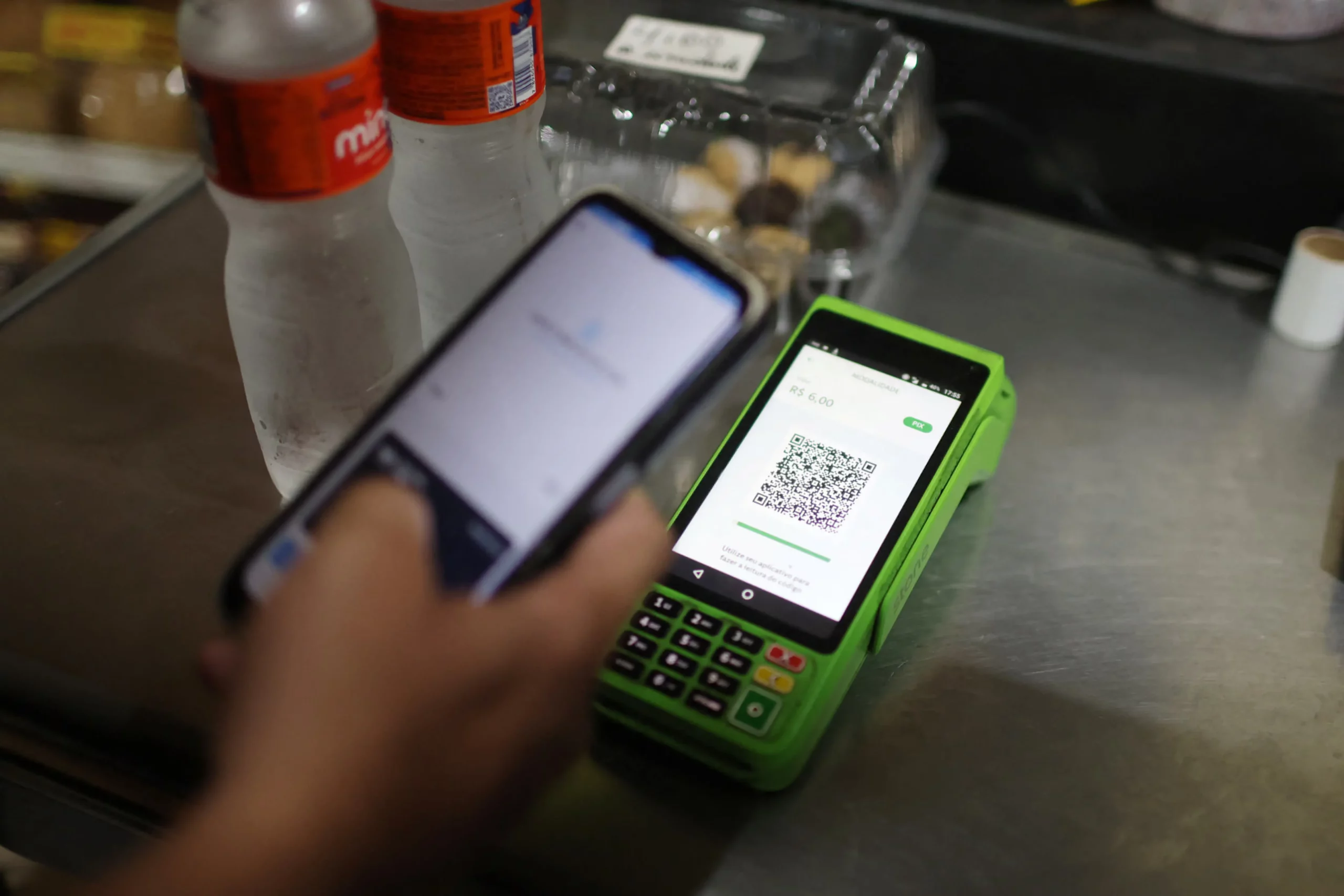
A Domestic Giant with Global Dreams
To understand why Pix’s international move matters, you first have to grasp its jaw-dropping scale at home. Launched by Brazil’s central bank in late 2020, the system has achieved near-total saturation in record time.
By the first quarter of 2026, Pix counted 200 million monthly active users – a figure that includes 175 million individuals and 25 million businesses. That represents well over 80% of the country’s entire population, with 93% of Brazilian adults actively using the platform.
The transaction volumes are equally staggering. Brazilians make about 8.6 billion Pix transfers every month, moving R$3.4 trillion (roughly US$660 billion). To put that in context, Pix now moves 8.6 times more value than all credit and debit card transactions in Brazil combined. In 2024 alone, the system processed 68.7 billion transactions worth around US$5 trillion, accounting for a full 14% of all instant payments made globally that year.
How Pix is Going Cross-Border
Brazil’s central bank has not hidden its ambition to take this homegrown success story global. As early as late 2024, officials outlined a concrete strategy to enable cross-border payments via Pix, allowing the system to be used for international transfers, travel spending, and e-commerce with foreign merchants.
Fintech companies like PagBrasil have already begun rolling out Pix-based solutions for international travelers and cross-border shoppers.
The appeal for foreigners is straightforward: Pix transactions clear instantly, 24/7, often at zero cost for individuals. For a tourist visiting Rio de Janeiro, paying a street vendor by scanning a QR code with a Pix-enabled app is faster and cheaper than using a credit card. For an expat sending money home, Pix promises to slash the high fees and multi-day waits typical of traditional international wire transfers. The system’s domestic dominance also suggests a ready-made user base of millions who would eagerly use Pix abroad if given the chance.
Financial Inclusion and E-Commerce Dominance
Pix’s global push is built on a foundation of radical financial inclusion. Since its debut, the system has brought more than 70 million Brazilians into the formal financial system – people who had never before made an electronic transfer.
By eliminating fees for individuals and requiring only a smartphone, Pix turned bank accounts from a luxury into a utility.
This inclusion engine is now reshaping commerce. Analysts project that Pix will capture 50% of Brazil’s entire e-commerce market by 2028, surpassing credit cards as the preferred online payment method.
For foreign investors and companies looking at Latin America’s largest economy, ignoring Pix is no longer an option. Any business selling to Brazilian consumers – whether a global e-commerce platform or a local restaurant – must integrate Pix or risk losing access to the vast majority of the country’s purchasing power.
US Scrutiny and Trade Tensions
Pix’s rise has not gone unnoticed in Washington. In July 2025, the Office of the United States Trade Representative opened a formal investigation into Brazil’s digital trade and electronic payment services.
The probe specifically flagged Pix as a potential ‘national payment standard’ that could discriminate against US-based payment companies like Visa and Mastercard.
The investigation highlights a growing tension: Pix’s state-backed, fee-free model is difficult for private-sector competitors to match. While the US has not yet imposed any measures, the probe signals that Pix’s global expansion could face regulatory headwinds.
For now, Brazil’s central bank continues to promote Pix as an open, inclusive system that benefits consumers and merchants alike. For international readers, the key takeaway is that Pix is a financial force that is here to stay – and it is increasingly a factor in trade relations between the Americas.
Background: Foreign Investors No Longer Fear a Lula Win — They’re Watching the Fed Instead.
Background: Brazil’s Own VP Calls Its Tax System a ‘Madhouse’ That Repels Investors.
Background: our doing business in brazil a complete guide for foreign entrepreneurs guide.
More: Brazil news in English, every day from The Rio Times.
Frequently Asked Questions
What exactly is Pix?
Pix is an instant payment system created by Brazil’s central bank. It allows individuals and businesses to send and receive money in seconds, 24/7, using just a phone number, QR code, or key.
For individuals, transactions are typically free.
Can foreigners use Pix?
Yes, but currently you generally need a Brazilian bank account or a digital account with a participating fintech. As Pix expands globally, cross-border options for tourists and international transfers are being developed by companies like PagBrasil.
Why is the US investigating Pix?
The US Trade Representative opened an investigation in July 2025 to determine whether Pix acts as a discriminatory ‘national payment standard’ that unfairly disadvantages US-based payment companies operating in Brazil.
Connected Coverage
This article was drafted with automated assistance and reviewed before publication. How we use AI · Report an error · Editorial responsibility: Matthias Camenzind, Editor-in-Chief