Foreign Investors No Longer Fear a Lula Win — They’re Watching the Fed Instead

Markets
Key Facts
—The call. David Beker, Bank of America’s head of Brazil economics and Latin America strategy, told reporters on July 3 that foreign investors do not fear a Lula reelection.
—Why it matters. The bank argues the October vote will move Brazilian assets less than the path of American interest rates and the global rush into artificial-intelligence stocks.
—The regional contrast. Beker said Brazil’s election volatility should stay lower than Peru’s or Colombia’s this year, because foreigners had no history with those winners but know Lula well.
—The flows. Foreign investors pulled about R$7.78bn ($1.55bn) from the São Paulo exchange in June, though they remained net buyers of roughly R$33.8bn ($6.72bn) for the year.
—The growth cut. Expecting fiscal tightening whoever wins, the bank trimmed its 2027 growth forecast for Brazil to one and three-tenths percent, from two percent, and sees roughly one percent in 2028.
—The market. The benchmark Ibovespa closed the first half near 172,000 points, well below the record of about 195,000 set in April.
A senior Wall Street strategist has a blunt message for anyone watching the Brazil election foreign investors story from abroad: the people who move the most money into Brazil are not afraid of another Lula term. The reason is simply that they have seen him govern before.
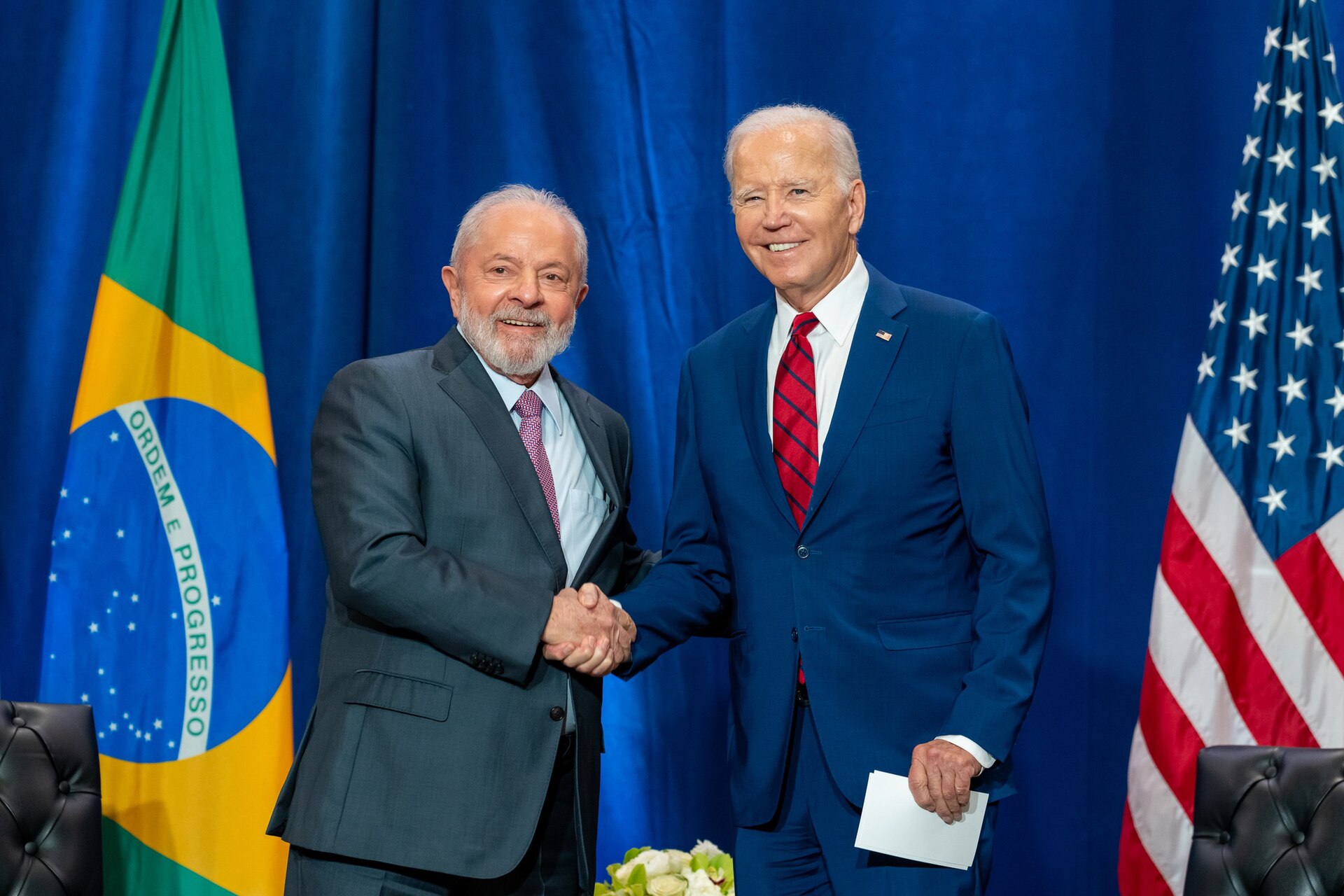
David Beker, who runs Brazil economics and Latin America strategy for Bank of America, made the point over a breakfast with journalists in São Paulo on Friday, July 3. Asked whether foreigners feared Lula, he answered plainly that they did not, because they already know him.
The remark cuts against a common assumption abroad, which is that a left-leaning incumbent seeking a fourth term would unsettle global money managers. Beker’s argument is the opposite: familiarity removes the fear premium, because President Luiz Inácio Lula da Silva is a known quantity who has already run the country for most of this century’s boom and bust cycles.
Why the Brazil election foreign investors story is quieter than it looks
Beker’s central claim is that the vote itself is not the main lever for Brazilian assets this year. In his reading, the bigger forces are the direction of American interest rates and where global money chooses to sit.
Much of the world’s spare capital has crowded into American technology and artificial-intelligence names, leaving less appetite for emerging markets like Brazil. Bank of America takes an out-of-consensus view here, expecting three more rate rises in the United States this year while most of the market prices in just one.
That external picture matters because a stronger dollar and higher American yields tend to pull money away from riskier markets. Beker framed the October ballot as a source of short-term swings rather than a decisive turning point, describing election trading as the kind of quick, in-and-out activity that adds noise without setting the trend.
A regional contrast with Peru and Colombia
The most useful part of the analysis for a foreign reader is comparative. Beker argued that Brazil’s election-year volatility should stay lower than what markets saw in Peru and Colombia, two neighbours that also held votes this year.
The difference, he said, is that international investors had little or no track record with the candidates who won those races, so every twist felt like new information. Brazil is not that case: whatever one thinks of Lula, the market has priced him before and can lean on years of experience about how he actually governs.
That is a striking read for a region where elections have repeatedly rattled currencies and bonds. It suggests the familiar name at the top of Brazil’s ballot is, paradoxically, a stabiliser rather than a shock.
Live Market IntelligenceBrazil — Live Market Board
Rio Times · Live Market Intelligence
Brazil — Live Market Board
+2.63%
192,114.55
+2.63%
64,531.68
+1.10%
10,916.59
+0.08%
2,767,663
+0.32%
2,515.02
-0.59%
59,751.67
+0.18%
| Instrument | Last | Change | YoY | Prev. | High | Low | Volume |
|---|---|---|---|---|---|---|---|
| IBOV | 192,114.55 | +2.63% | +21.85% | 187,197.46 | 168,310 | 167,142 | — |
| USD/BRL | 5.16 | +0.01% | -5.13% | 5.16 | 5.18 | 5.14 | — |
| SELIC | 14.00% | — | — | — | — | — | |
| PETR4 | 41.64 | -0.05% | +35.19% | 41.66 | 41.97 | 41.15 | 41,499,400 |
| VALE3 | 72.97 | +0.83% | +30.75% | 72.37 | 73.54 | 72.66 | 17,658,000 |
| ITUB4 | 38.60 | -1.03% | +4.57% | 39.00 | 39.34 | 38.39 | 29,487,800 |
| BBDC4 | 16.85 | +0.36% | +3.50% | 16.79 | 16.90 | 16.67 | 19,416,900 |
| BBAS3 | 19.37 | +0.47% | +0.73% | 19.28 | 19.44 | 19.16 | 11,069,200 |
| B3SA3 | 14.26 | -0.21% | +12.73% | 14.29 | 14.47 | 14.11 | 33,037,800 |
| ABEV3 | 14.89 | -0.80% | +21.91% | 15.01 | 15.07 | 14.81 | 16,453,100 |
| WEGE3 | 47.59 | +0.49% | +29.99% | 47.36 | 48.08 | 47.36 | 3,364,600 |
| PRIO3 | 59.14 | -0.19% | +50.67% | 59.25 | 59.81 | 58.74 | 3,325,600 |
| SUZB3 | 41.33 | +2.35% | -23.55% | 40.38 | 41.48 | 40.35 | 3,914,900 |
| RENT3 | 34.68 | -0.09% | +0.84% | 34.71 | 34.96 | 34.35 | 7,979,100 |
| AZZA3 | 15.89 | -2.63% | -53.76% | 16.32 | 16.42 | 15.82 | 1,330,300 |
| CSNA3 | 4.30 | +0.47% | -42.65% | 4.28 | 4.41 | 4.26 | 10,076,100 |
| GGBR4 | 24.69 | +2.19% | +51.38% | 24.16 | 24.85 | 24.18 | 7,047,600 |
| ENEV3 | 24.21 | -1.38% | +70.49% | 24.55 | 24.64 | 23.99 | 9,297,000 |
The fiscal question that still hangs over everything
None of this means the bank is relaxed about Brazil’s public accounts. Beker was clear that the country carries a long-running budget problem that grows heavier over time, and that some fiscal tightening is coming no matter who wins in October.
Expecting that squeeze to slow the economy, Bank of America cut its 2027 growth forecast for Brazil to one and three-tenths percent, down from two percent, and sees expansion of only about one percent in 2028. The open question, in Beker’s words, is the size of the adjustment, not whether it happens.
His comfort comes from context rather than complacency. Because rich economies are also wrestling with heavy deficits, he said, foreign investors have stopped treating Brazil’s fiscal gap as a special weakness and now see it as one version of a problem almost everyone shares.
What the money is actually doing
The flow numbers show the caution in action: foreign investors pulled roughly seven and eight-tenths billion reais, about one and a half billion dollars, out of the São Paulo exchange in June, even as they stayed net buyers of close to thirty-four billion reais, near six and seven-tenths billion dollars, across the year so far.
The benchmark Ibovespa index tells a similar story, closing the first half near 172,000 points after touching a record of about 195,000 in April. Beker noted that foreign money has been the main engine of the local market, so its retreat weighs heavily, and he sees the one clear trigger for a rebound as interest-rate cuts larger than the market currently expects.
What did Bank of America say about Brazil election foreign investors?
The bank’s Brazil economist, David Beker, said on July 3 that foreign investors do not fear a Lula reelection because they already know how he governs. He argued the October vote will drive Brazilian assets less than the path of American interest rates and the global pull of technology stocks.
Why would Brazil’s vote be calmer for markets than Peru’s or Colombia’s?
Beker said international investors had little history with the candidates who won in Peru and Colombia, so each development felt like fresh risk. Brazil is different because the market has priced Lula before and can rely on a long record of how he actually runs the economy.
More: Brazil news in English, every day from The Rio Times.
Does this mean Brazil’s fiscal risks have gone away?
No, they have not: the bank expects some fiscal tightening whoever wins and trimmed its 2027 growth forecast for Brazil to one and three-tenths percent, from two percent. Beker’s point is that rich economies now share similar deficit problems, which has softened the way foreigners judge Brazil’s accounts rather than erased the concern.
Connected Coverage
Brazil’s Budget Swings From Surplus to Deficit in an Election Year
This article was produced by The Rio Times’ automated newsroom system. How we use AI · Report an error · Editorial responsibility: Matthias Camenzind, Editor-in-Chief
LatAm Markets: Live Signals → — real-time movers, turnover leaders and FX across Latin America.
Rotate for Best Experience
This report is optimized for landscape viewing. Rotate your phone for the full experience.
You've reached your free article limit
Subscribe to The Rio Times for unlimited access to our market and company coverage across Latin America and Africa.