Brazilian Navy to decommission 40% of its assets by 2028
By Roberto Caiafa
The commander of the Brazilian Navy, Admiral Marcos Sampaio Olsen, alerted the Foreign Relations and National Defense Committee senators about the very low capacity of the naval power he commands in national defense situations, due to budget reductions and contingency of resources.
The military assured that it will have to deactivate 40% of the equipment, such as ships, various weapons and ammunition, until 2028, due to “imposition due to obsolescence and severe budgetary restrictions that prevent adequate maintenance or re-equipment”.
According to the commander, the Navy has lost R$1 billion gradually since 2017, when the spending ceiling system was implemented as a fiscal policy.
The figure represents 72% of the Force’s expenditures.

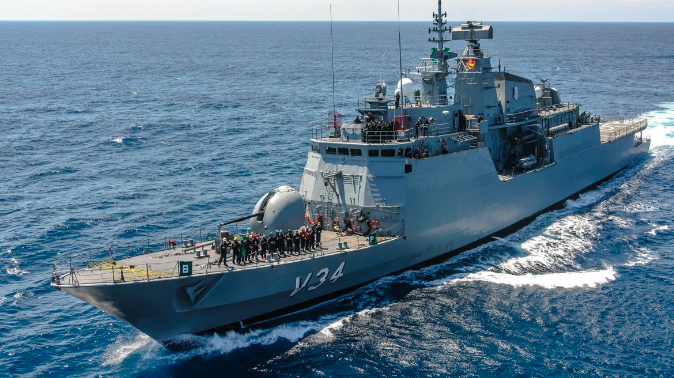
Among the cuts are frigates built in Brazil in the 1970s, munitions such as surface-to-air missiles and torpedoes that are totally obsolete.
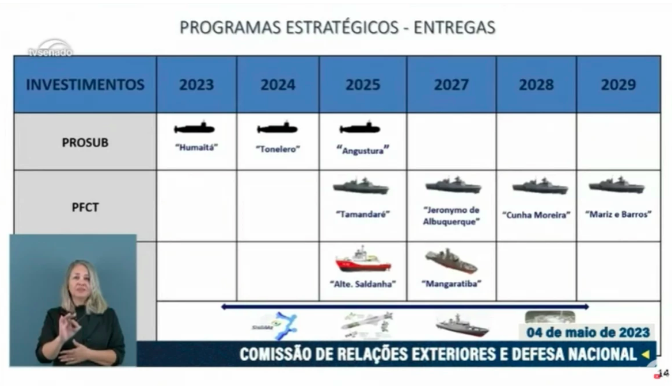
According to the Navy commander, the disparity between the quantitative number of deliveries of new naval assets, scheduled until 2029, considered by him as “quite small” regarding what will be demobilized in the short term, is a dangerous sign of weakness that needs urgent attention.
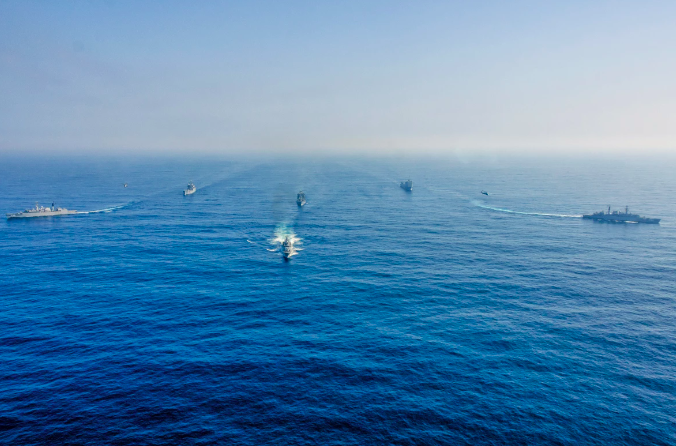
According to the commander, the Navy’s presence in national actions depends on supplies such as fuel, ammunition and logistical support, as well as maintenance services. This set of capabilities has been greatly affected.
Olsen noted that there is a compromise in national defense, a reduction in maritime security activities, difficulty in attending to naval diplomacy and providing support to actions in the states of the federation.
Olsen stated that “it is irresponsible to understand Brazil as a country free of threats. These threats are present.
The unilateral pacifism that permeates our society and some decision makers seem to ignore these issues.”
Precisely because of this budgetary framework, we have lost the capacity to act in the entire South Atlantic and in other areas of interest to the Brazilian State”.
To exemplify the dimension of the work, Olsen affirmed that Brazil “is unviable without the use of the sea”.
He emphasized that 97% of oil exploration and 80% of gas exploration come from the waters and that the blue economy, referring to the resources provided by the sea, corresponds to 20% of the Brazilian economy.
The Admiral also said that he considers the issue of data transmission to be a sensitive one.
He stated that “99% of our transmissions occur by sea, not by satellite. And they are susceptible to interference, interruptions and surveillance. We must have surveillance and protection capabilities for that.”
Olsen called for reinforcement in the budget and suggested that, in the short term, the amount be released from funds accumulating R$7.2 billion, “which can be, provided they are exceptionalized, appropriated by the Force and employed in the naval constitution.”
The new fiscal framework would be a long-term solution.
Olsen added that “we cannot neglect the defense of the Blue Amazon.”
The world scenario has shown how detrimental it is for a country not to possess a credible military deterrence capability.
In an imminent threat to the interests of the State and the Brazilian people, if we do not have hard power behind us, if we do not have forces with deterrent capability behind us, we will be overtaken.”
THE END OF THE LINE
The Brazilian Navy’s fleet of ships is very aged, regardless of the comparative metric used.
The remaining Niteroi-class frigates may reach 40 years of employment, and some of the armaments they use no longer represent assured lethality against modern naval assets and sophisticated aerial threats, such as stand-off armaments, drones and anti-surface missiles.
The corvette Barroso is in need of a mid-life upgrade, which means one less valuable escort available while it is being modernized.
In fact, the fleet of eight escorts has an average age of about 39 years. The remaining Tupi Tikuna-class submarines represent an average of 22 years.
The aging fleet of river patrol boats dates back to the 1970s and 1980s, are scarce and need to be replaced by new models capable of operating more modern weapons systems and sensors, autonomous drones and/or helicopters.
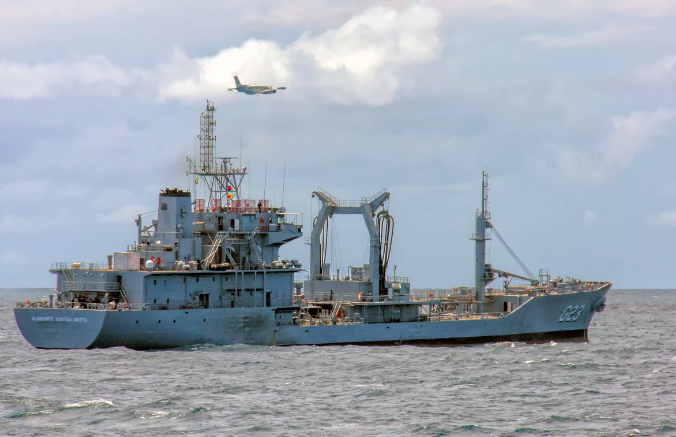
In addition to the 500-ton ocean patrol vessels, whose program is expected to be announced in detail later in 2023, a tender for the procurement of two new tanker/logistic vessels is certain to be announced in the 2023/24 biennium.
The only available vessel of this type, the NT G-23 Gastão Motta, is very old (32 years of service) and has severe operational and environmental restrictions due to its design, which uses the so-called monohull, when current international legislation requires double-hull tankers.
This situation has prevented the Brazilian Navy from sailing with a task force of ships where there is no support from friendly ports, i.e., short operational range for the Brazilian Fleet outside the South Atlantic, except when operating integrated in a Task Force with nations capable of providing this support.
With information from Infodefensa
News Brazil, English news Brazil, Brazilian Navy
Editorial responsibility: Matthias Camenzind, Editor-in-Chief · Editorial standards · Report an error
Read More from The Rio Times