Brazil Rates Fall as Banker Gets Finance Job
The markets’ favourite banker is heading for the ministry that sets Brazil’s budget, and the price of long-term borrowing has eased almost at once.

Economy: Brazil
Brazil’s borrowing costs fell sharply on Friday 27 November 2026 after a veteran banker agreed to run the Finance Ministry. Luiz Carlos Trabuco, chairman of Bradesco, one of Brazil’s biggest private banks, accepted President Luiz Inácio Lula da Silva’s invitation on Thursday 26 November, the Palácio do Planalto, the presidential offices in Brasília, said.
Economists in São Paulo read the choice as a sign that Lula’s fourth term, which starts on 5 January 2027, will lean less on unorthodox economic ideas. For US readers it matters because cheaper credit and a steadier real affect holders of Brazilian bonds and ADRs, US-traded certificates of Brazilian shares.
Key Facts
- Who. Luiz Carlos Trabuco, chairman of Bradesco, a large private bank, accepted the Finance Ministry job.
- What. Rate futures, bets on borrowing costs, fell for a fifth session on Friday 27 November.
- Prediction markets. Polymarket gives 92.5% odds of a Brazil rate hold on 9 December (28 November, 1:05 p.m. ET).
- Power Index. Brazil ranks 1st of 14 in The Rio Times Latin America Power Index, with 74.2 points (November 2026 edition).
- As of. 28 November 2026, 18:00 GMT.
The markets’ favourite banker is heading for the ministry that sets Brazil’s budget, and the price of long-term borrowing has eased almost at once.
Brazilian debt had carried a price since the vote. After Lula won the runoff on 25 October 2026, investors demanded extra interest to hold it, and on Friday 27 November part of that added premium began to melt.
On the evening of Thursday 26 November the presidency said Trabuco had accepted the Finance Ministry post for Lula’s fourth term. Market economists welcomed the choice, and he has had a close relationship with Lula for years.
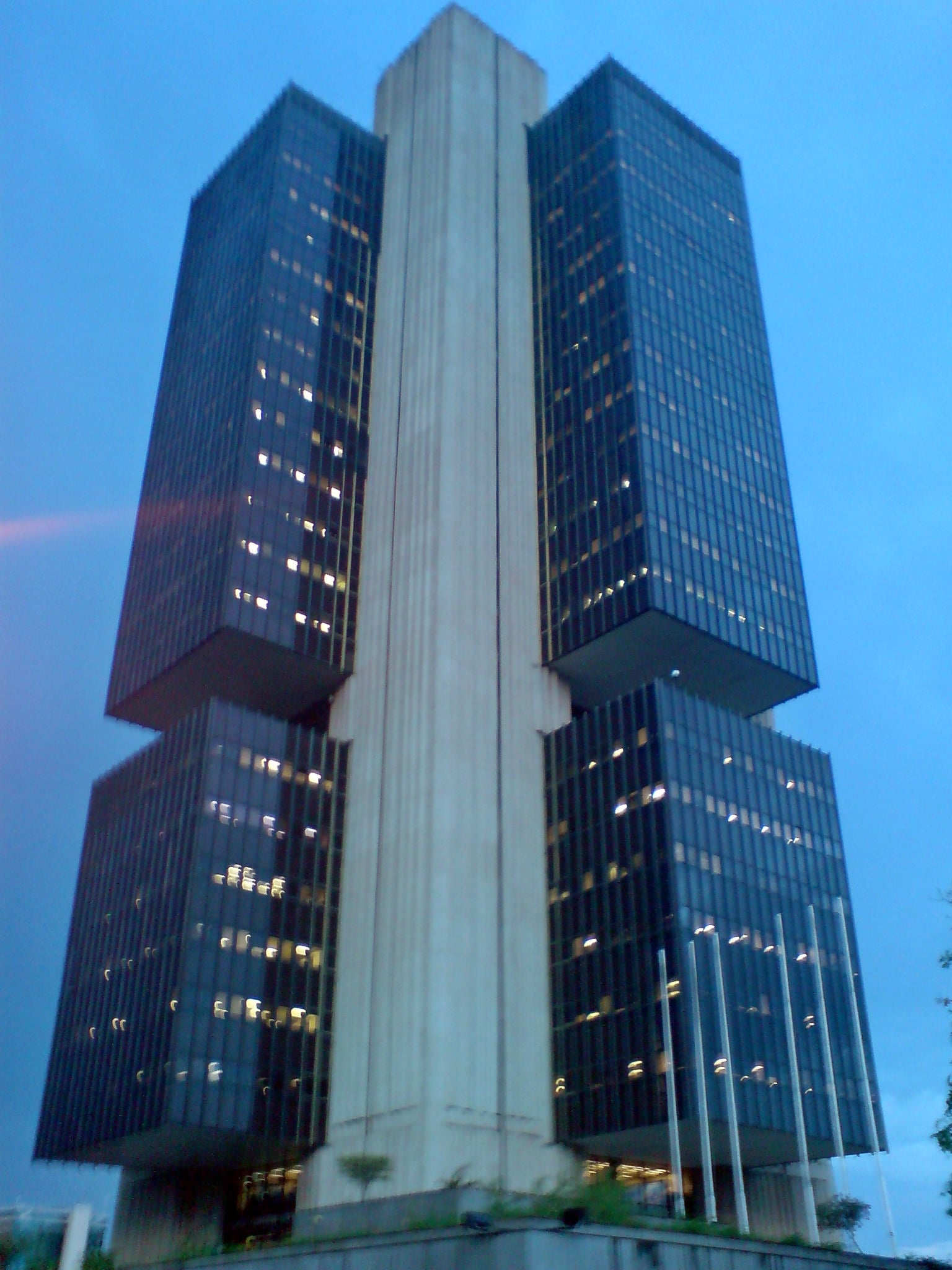
Rates reacted at the opening bell on Friday 27 November, when several DI futures, contracts that bet on future interbank interest rates traded on B3, the São Paulo stock and futures exchange, opened nearly 90 basis points lower. A basis point is one hundredth of a percentage point, so that is almost a full percentage point in one morning.
The January 2028 contract settled at about 13.7% on Friday, down about 50 basis points from 14.18% at the previous settlement. It was the fifth straight session of falls, and the January 2030 contract ended near 13.785%, down 79 basis points.
The moves handed back part of the premium added since Lula’s re-election in late October. The January 2029 contract ended the day at about 13.705%.
The curve also stopped pricing rate rises. In recent weeks futures had priced a Selic, Brazil’s benchmark interest rate, of up to 15% at the end of 2027, and on Friday they priced 13.75%.
That is no change from today, because Brazil’s central bank has set the Selic target at 13.75% a year. Its next decision comes at the Copom meeting in December, and the futures curve prices a hold.
Stephan Kautz, chief economist at the investment firm EQI Investimentos, said on 27 November that about 90% of the move came from the “Trabuco effect” (efeito Trabuco). The proposals of the economist André Lara Resende, a change in the inflation target and heterodox, or unorthodox, names for the central bank have all become less of a risk, he said.
José Faria Júnior, director at the consultancy Wagner Investimentos, wrote to clients on 27 November: “In the short term this changes absolutely everything, since Trabuco has something Lula does not: credibility in the financial market.” Caio Megale, chief economist at the investment platform XP, expects Trabuco to bring strong technical staff to key posts and to influence the choice of vacant seats on the central bank’s board.
Not everyone is ready to cheer. Helena Veronese, chief economist at B.Side Investimentos, said on 27 November that doubts remain over “whether he will have the freedom expected, what the fiscal plan will be, what the team will be”, but that “the backdrop is very optimistic”.
Kautz also warned that the political side is a point of attention, because Trabuco must pass his proposals through Brazil’s Congress. The incoming government has not yet shown its fiscal plan.
The mechanism runs through the price of money. Lower expected rates cut what the government pays on its debt and what companies pay to borrow, and the dollar bought R$5.54 on 27 November against R$5.97 on Monday 23 November, the central bank’s PTAX rate, its official daily dollar reference, shows, a fall of about 7% in the week.
Brazil’s rates fell while American yields rose. The US 10-year Treasury yield ended Friday 27 November at 4.94%, up from 4.85% on Wednesday 25 November, US Treasury data show, with US markets shut on Thursday for Thanksgiving.
Brazil’s benchmark rate still sits well above American rates, so the question for a US holder of Brazilian bonds or ADRs is whether lower local rates and a stronger real hold. That depends on a fiscal plan the incoming government has not yet shown.
The next test is the Copom decision on Wednesday 9 December. After that, Trabuco’s first moves as minister, from the team to the fiscal plan, will show whether the market’s early welcome lasts.
What Prediction Markets Say
- No change. Polymarket gives “No change” 92.5% for the Copom decision.
- Cuts and hikes. A 25 basis point cut is at 3.9% and a 25 basis point hike at about 2.2%.
- Larger moves. A cut or a hike of 50 basis points or more is at 0.7% each.
- Volume. US$186,476 traded on the market “Bank of Brazil decision in December”, read 28 November 2026, 1:05 p.m. ET. These prices are bets, not polls.
Why we show this: prediction markets turn real-money bets into a live probability that moves within minutes of the news, which is why investors, campaigns and newsrooms in the United States now follow them closely. We show them next to polls and official results, never instead of them.
Frequently Asked Questions
Why did Brazil’s interest rates fall after the Trabuco news?
Economists quoted on 27 November say Trabuco’s credibility with the financial sector lowers the risk of unorthodox economic policy. That lowered the extra interest they demand to hold Brazilian debt.
Who is Luiz Carlos Trabuco?
He is the chairman of Bradesco, one of Brazil’s biggest private banks, and has been close to Lula for years. The presidency says he accepted the Finance Ministry post.
What does this mean for US investors?
Falling local rates and a steadier real are the two things to watch for anyone holding Brazilian bonds or ADRs. The details of the fiscal plan will decide whether the improvement lasts.
Sources
Published Saturday 28 November 2026 · Source: B3 DI futures settlement data of 27 November; Planalto presidency announcement of 26 November; Banco Central do Brasil Selic target, exchange-rate data and Copom calendar; US Treasury daily yield curve; Polymarket market page; B3 · Banco Central do Brasil · US Treasury
This article was produced by The Rio Times’ automated AI newsroom. Editorial responsibility: Matthias Camenzind, Publisher and Editor-in-Chief. The Rio Times also runs Ask Rio Times, which answers from 100,000+ of our own articles, the daily Latin America Power Map, and prediction-market odds on elections and markets.. How we use AI · Report an error
Connected Coverage
Brazil news · Brazil’s Finance Pick Wants Restraint · Brazil Bank Shares Soar on New Finance Chief
Brazil runoff, Sunday, October 25: Brazil runoff: date, poll closing times and when results start. Latest: Brazil runoff polls, Flávio 51%, Lula 49%.