Bolsa Familia Rise Meets Fiscal Doubts and Electoral Court Cases
Key Facts
Brazil raised its main cash transfer 17 days before a presidential vote. The market, the fiscal watchdog and the electoral court all answered within hours.
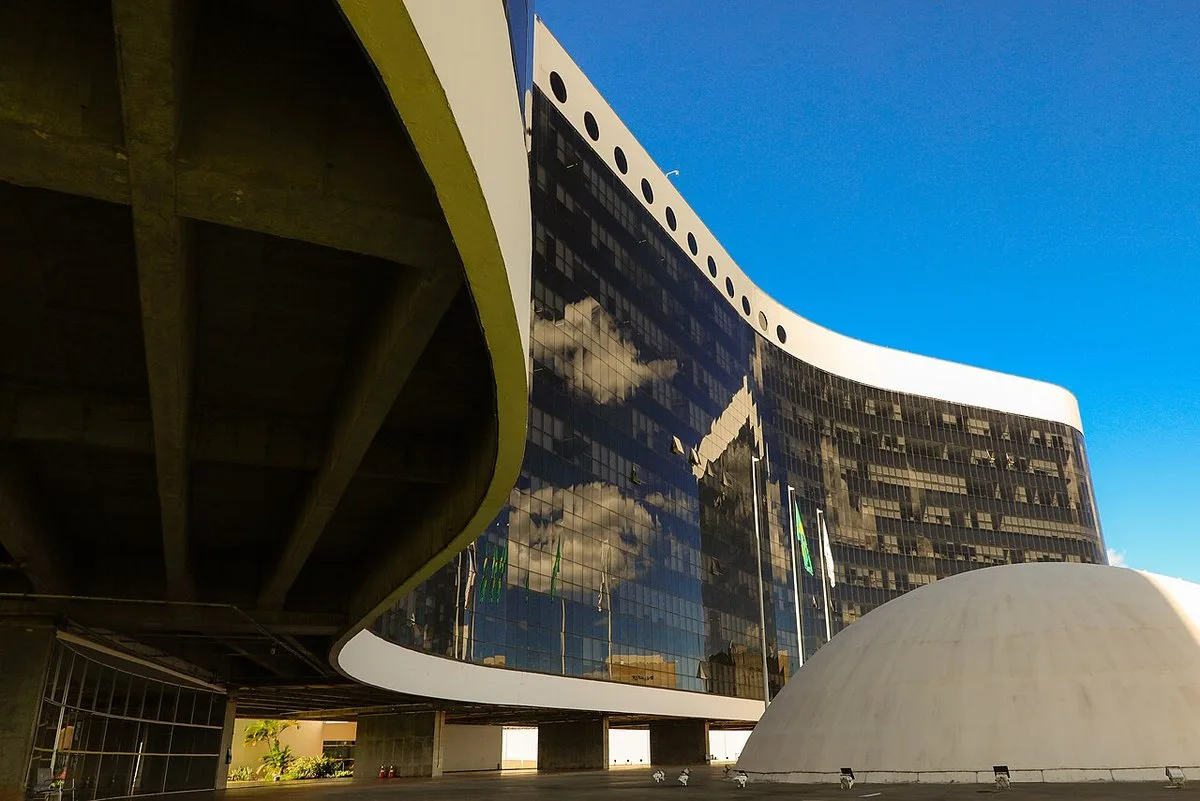
Brazil’s government raised the Bolsa Familia floor by 15.04% on 17 September 2026, to R$691 (about US$134) from R$600 (about US$116). Within the same session the Ibovespa swung 3,643 points and two lawsuits reached the electoral court.
What the Market Actually Did
The benchmark index did not move in one direction on 17 September. It traded between 183,242.37 and 186,885.23 points, a range of 3,642.86 points.
The close was 185,992.03 points, up 0.24% on the day, according to Exame and InfoMoney. The commercial dollar closed at R$5.139, down 0.24%, after trading as high as R$5.177.
InfoMoney reported that the index turned lower after the benefit announcement, then recovered. Exame attributed the recovery to what Brazilian desks call the electoral trade, not to any fiscal reassurance.
Gustavo Assis, chief executive of Asset, said the announcement shifted the axis of the session. Bruno Perri of Forum Investimentos said the rise reached voters already favourable to the government.
Live Market IntelligenceBrazil — Live Market Board
Rio Times · Live Market Intelligence
Brazil — Live Market Board
+0.24%
185,992.03
+0.24%
63,873.32
+0.58%
11,381.18
+1.30%
3,061,512
+1.08%
2,521.85
+0.40%
58,965.05
+1.80%
| Instrument | Last | Change | YoY | Prev. | High | Low | Volume |
|---|---|---|---|---|---|---|---|
| IBOV | 185,992.03 | +0.24% | +21.85% | 185,547.66 | 168,310 | 167,142 | — |
| USD/BRL | 5.16 | +0.01% | -5.13% | 5.16 | 5.18 | 5.14 | — |
| SELIC | 14.00% | — | — | — | — | — | |
| PETR4 | 41.64 | -0.05% | +35.19% | 41.66 | 41.97 | 41.15 | 41,499,400 |
| VALE3 | 72.97 | +0.83% | +30.75% | 72.37 | 73.54 | 72.66 | 17,658,000 |
| ITUB4 | 38.60 | -1.03% | +4.57% | 39.00 | 39.34 | 38.39 | 29,487,800 |
| BBDC4 | 16.85 | +0.36% | +3.50% | 16.79 | 16.90 | 16.67 | 19,416,900 |
| BBAS3 | 19.37 | +0.47% | +0.73% | 19.28 | 19.44 | 19.16 | 11,069,200 |
| B3SA3 | 14.26 | -0.21% | +12.73% | 14.29 | 14.47 | 14.11 | 33,037,800 |
| ABEV3 | 14.89 | -0.80% | +21.91% | 15.01 | 15.07 | 14.81 | 16,453,100 |
| WEGE3 | 47.59 | +0.49% | +29.99% | 47.36 | 48.08 | 47.36 | 3,364,600 |
| PRIO3 | 59.14 | -0.19% | +50.67% | 59.25 | 59.81 | 58.74 | 3,325,600 |
| SUZB3 | 41.33 | +2.35% | -23.55% | 40.38 | 41.48 | 40.35 | 3,914,900 |
| RENT3 | 34.68 | -0.09% | +0.84% | 34.71 | 34.96 | 34.35 | 7,979,100 |
| AZZA3 | 15.89 | -2.63% | -53.76% | 16.32 | 16.42 | 15.82 | 1,330,300 |
| CSNA3 | 4.30 | +0.47% | -42.65% | 4.28 | 4.41 | 4.26 | 10,076,100 |
| GGBR4 | 24.69 | +2.19% | +51.38% | 24.16 | 24.85 | 24.18 | 7,047,600 |
| ENEV3 | 24.21 | -1.38% | +70.49% | 24.55 | 24.64 | 23.99 | 9,297,000 |
The Currency Reference Used Here
Two dollar rates circulated on the same day, and they are not interchangeable. The commercial market rate quoted by the press closed at R$5.139 on 17 September.
The Banco Central’s PTAX selling rate for 17 September 2026 was R$5.1521 to the dollar. All conversions in this article use that PTAX rate, taken from the central bank’s own data service.
What the Increase Contains
The floor payment rises from R$600 to R$691, a gain of 15.04%. The government says that figure matches accumulated INPC inflation from March 2023 to August 2026.
The average household payment moves from R$675 (about US$131) to R$777 (about US$151). Brazilian outlets reported that 19.29 million families were registered in the programme in September 2026.
The new amounts are paid from the October 2026 payroll, with the first deposits on 19 October. The floor had stood at R$600 since August 2022, when it was set under the previous government.
Gazeta do Povo calculated that the benefit has risen 73% since 2022 in nominal terms. That figure measures cumulative growth since 2022, when the floor stood at R$400, not this week’s adjustment.
Who Counted the Cost, and How
The government put the cost at R$5.8bn (about US$1.13bn) for the last quarter of 2026. It put the cost at R$22.7bn (about US$4.4bn) for each of 2027 and 2028.
Some outlets reported the 2027 figure as roughly R$22bn instead, so the estimates are not settled. Estimates therefore vary by source, and the ministry’s own numbers assume a stable caseload.
Gazeta do Povo extrapolated the annual figure across a four-year term to reach about R$90bn (about US$17.5bn). That extrapolation is the newspaper’s own arithmetic, not an official projection.
Planning Minister Bruno Moretti said the money fits inside spending already programmed for this year. He said the bimonthly revenue and spending report due on 24 September would show the space.
What the Fiscal Watchdog Published the Same Day
The Instituicao Fiscal Independente is the Senate’s independent fiscal body, and it released its 116th report on 17 September. It projects a primary deficit of R$86.1bn (about US$16.7bn) for the central government in 2027.
The 2027 budget bill sent to Congress on 31 August projects a primary surplus of R$18.6bn (about US$3.6bn). The gap between the two numbers is R$104.8bn (about US$20.3bn).
The IFI attributes most of the difference to assumptions rather than to any single spending line. The budget assumes 2.5% growth in 2027, while the IFI assumes 1.8% and the Focus survey 1.5%.
The report says meeting the 2027 target would require R$35.7bn (about US$6.9bn) of spending freezes. It also notes gross general government debt reached 82.5% of GDP in July 2026.
Why That Forecast Is Not a Verdict on the Benefit
The R$86.1bn figure is older than this week’s announcement. The report states that the same number appeared in the IFI’s June bulletin, number 113.
The September report carries it forward rather than recalculating it for the benefit rise. The document does not model the 15.04% increase, which was announced on its publication day.
Reading the deficit forecast as a costing of Bolsa Familia would therefore be wrong. It is better read as the backdrop against which the new spending lands.
How Brazil’s Election-Year Benefit Rule Works
Brazilian electoral law restricts what the state may hand out in a voting year. Article 73, paragraph 10 of Law 9,504 of 1997 sets the rule.
It bans free distribution of goods, money or benefits by the public administration in an election year. The text carries three exceptions, and the government relies on the third.
The first two are public calamity and a declared state of emergency. The third covers social programmes authorised by law and already in budgetary execution the previous year.
Bolsa Familia was re-established by statute in 2023 and has been funded every year since. The federal solicitor general’s office argued that the decree creates no new benefit and changes no eligibility rule.
It also argued there is no real gain, because the rise only restores INPC inflation. Critics counter that the timing, 17 days before the first round, is the point.
The penalty side matters as much as the ban itself. A finding of prohibited conduct can bring fines and, in serious cases, loss of a candidacy registration.
The Cases Filed at the Electoral Court
Two separate actions reached the Tribunal Superior Eleitoral on 17 September. Both were drawn by lot to Justice Andre Mendonca as rapporteur.
The first came from Ze Trovao, a federal deputy for the PL in Santa Catarina and an ally of Flavio Bolsonaro. He asked for an injunction holding the old amounts until judgment or the end of the electoral process.
On the merits he sought a finding of prohibited conduct and a fine against President Lula. Mendonca rejected that action on 17 September without ruling on the substance.
Gazeta do Povo reported that he found the deputy lacked standing, citing the civil procedure code. A candidate for a state-level seat cannot challenge conduct affecting the presidential race nationwide, the decision held.
The second action came from Renan Santos, president of the Missao party and its presidential candidate. He called the increase illegal, unconstitutional and electioneering, according to CNN Brasil.
His filing argues the government knew of beneficiary hardship well before September and chose the timing. No ruling on that action had been reported by the morning of 18 September.
Reports describing a third, separate case by a Bolsonaro-allied deputy appear to refer to the Trovao filing. No independent third TSE action against the increase could be verified for this article.
A Separate Fight Over Justice Moraes
The Novo party also went to court on 17 September, but not over Bolsa Familia. It asked the Supreme Federal Court to bar Justice Alexandre de Moraes from a procedural question concerning him.
The question, raised by Justice Gilmar Mendes, concerns whether Moraes should be investigated over messages with banker Daniel Vorcaro. Novo argued that he cannot be both interested party and judge, and the request was pending with court president Edson Fachin.
What It Means If You Hold Brazilian Assets
The session did not price a fiscal shock, and the close was modestly positive. The intraday range is the better signal, because it shows how thin the consensus is.
The immediate fiscal number is small against the budget, at R$5.8bn (about US$1.13bn) this year. The recurring number is what matters, because R$22.7bn (about US$4.4bn) repeats annually from 2027.
The next scheduled data point is the bimonthly revenue and spending report on 24 September. That document should show whether the money genuinely fits inside the current year’s limits.
For residents on the benefit, the practical change arrives with the October payroll. For investors, the legal risk is bounded, since an injunction would pause the rise rather than cancel the programme.
What Is Not Yet Known
Mendonca has not ruled on the Renan Santos action, and no hearing date has been published. It is not known whether other parties will file further actions before the first round.
The government has not published a line-by-line source for the 2027 and 2028 figures. Whether the caseload stays at 19.29 million families is an assumption, not a certainty.
The IFI has not said how it will treat the increase in its next bulletin. The 24 September report will be the first official test of the government’s fiscal-space claim.
Frequently Asked Questions
How much is the new Bolsa Familia floor?
The floor rises to R$691, about US$134 at the PTAX rate of 17 September 2026. That is 15.04% above the R$600 floor in place since August 2022.
Does the increase break Brazil’s electoral law?
No court has ruled on the substance so far. The government cites the exception for social programmes already funded in the previous year.
What did the Ibovespa do on 17 September?
It traded between 183,242.37 and 186,885.23 points before closing at 185,992.03. That was a gain of 0.24% on the day.
Is the fiscal watchdog’s deficit figure caused by this measure?
No, the R$86.1bn projection for 2027 dates from the IFI’s June bulletin. The September report carries it forward without modelling the benefit rise.
Sources: Exame, Ibovespa and dollar close for 17 September 2026, InfoMoney, intraday range and analyst comment, Banco Central do Brasil, PTAX dollar quotations, Instituicao Fiscal Independente, Fiscal Monitoring Report 116, Jornal do Comercio, finance ministry cost estimates, TSE, prohibited conduct and free distribution of benefits, Gazeta do Povo, Mendonca rejects the Ze Trovao action, CNN Brasil, Mendonca to report the Renan Santos action
This article was produced by The Rio Times’ automated newsroom system. How we use AI · Report an error
Read More from The Rio Times