Half of Brazil’s Municipalities No Longer Have a Bank Branch
Brazil · Banking
Key Facts
—The gap. 2,649 Brazilian municipalities — 48 percent of the country — have no in-person bank service at all, affecting 19.7 million people.
—The closures. The branch network has shrunk 42 percent since 2015, from 22,928 branches to 14,381. That is roughly thirty closures a week.
—Last one out. 638 municipalities have lost their final branch since 2015, leaving about 6.9 million people with none.
—The jobs. Santander cut 6,100 posts in a year, Itaú 4,600 and Bradesco 3,000 — nearly 14,000 between them, with Banco do Brasil shedding a further 1,400.
—What replaced them. Contracts with banking correspondents rose 49 percent between 2015 and 2025.
—The profits. The five largest banks made 124 billion reais (about US$24.5 billion) in 2025.
Brazil’s branch network has shrunk 42 percent since 2015, and 2,649 municipalities — nearly half the country — now have no in-person bank at all.
Brazil bank branches are disappearing at about thirty a week, and the arithmetic has reached a point worth stating plainly: 2,649 municipalities, 48 percent of the country, no longer have any in-person banking service. That is 19.7 million people. Six hundred and thirty-eight of those towns lost their last branch after 2015.
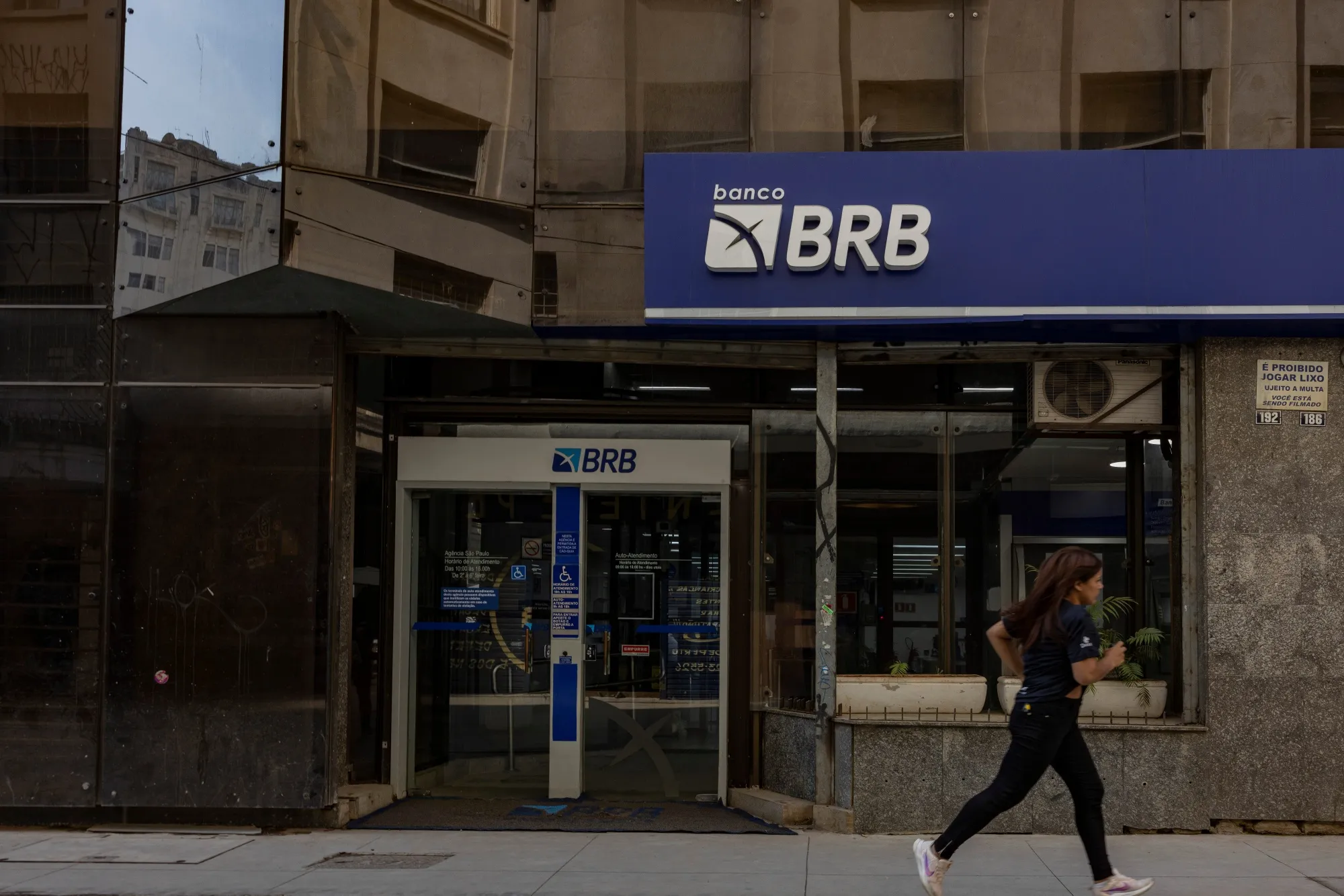
Where Brazil bank branches have gone
The numbers come from Dieese, the union-linked research institute, working from central bank data, and they were put to the banking federation at a national bargaining session in July. Fenaban declined to suspend the closures.
Between 2015 and May 2026 the network shrank by 9,500 branches, or 42 percent. In the most recent comparable year the five largest banks closed 1,345 between them: Santander 579, Itaú 319, Bradesco 296, Caixa 138 and Banco do Brasil 13.
The employment side moved with it. Across the sector 93,300 net posts have gone since 2015. In the year to May 2026 the three big private banks shed nearly 14,000 between them. Of the posts eliminated since 2020, 25,500 — about 79 percent — were held by women, and women fell from 49 percent of the workforce to under 47 percent in a single year.
Half the country now banks without a bank
This is the number that should stop you: 2,649 municipalities, 48 percent of all of them, have no in-person banking service. That is 19.7 million people, roughly nine percent of Brazil’s population. Six hundred and thirty-eight towns have lost their last branch since 2015.
What has taken their place is not nothing, but it is not a branch either. Contracts with correspondentes bancários — lottery agents, shop counters, small retailers authorised to handle basic transactions — rose 49 percent over the decade. Credit cooperatives have expanded into the same gaps.
Juvandia Moreira, who heads the bank workers’ confederation, puts it this way: the work is not being eliminated, it is being transferred to correspondents, and that opens space for cooperatives in the areas the banks have abandoned. What a correspondent cannot do is resolve anything complicated.
The banks are not hiding why
Febraban’s own technology survey, published in June, records that 83 percent of all banking transactions in Brazil now happen through digital channels and 78 percent through mobile. Brazilians made 240.8 billion banking transactions in 2025, of which 187.5 billion were on a phone — up 11 percent in a year and 169 percent over five. Seventy-six percent of customers do more than four-fifths of their banking digitally.
The economics follow. The five largest banks made 124 billion reais (about US$24.5 billion) in 2025; the three big private ones made 87 billion reais (about US$17.2 billion) between them, up 16.4 percent. Bradesco’s efficiency ratio improved 2.8 points to 48.4 percent on exactly this kind of cost reduction.
The union’s counter-argument is not that digitisation is wrong but that fee income alone now covers around 150 percent of the banks’ payroll, and that the dismissals were carried out without the prior negotiation the courts have required. That argument is live and in litigation.
What it means if you live in Brazil
If you are in a state capital, very little. If you are not — the Bahian coast, the interior of Minas, most of the Northeast — the practical consequence is that anything requiring a physical branch means travelling. Opening an account, clearing a compliance block on a CPF, dealing with an inheritance or a court-ordered transfer: these are the things a lottery agent cannot fix.
The realistic answer for most foreign residents is a digital bank. Nubank, Inter, C6 and Mercado Pago all work without a branch, and 83 percent of the country already banks that way. The trade-off is worth knowing: some of them, Mercado Pago included, hold a payment-institution licence rather than a full banking licence, which changes the deposit protection you get.
If you are choosing where to live in Brazil and you are not in a capital, it is worth checking whether the town still has a branch before you sign a lease. Increasingly, the answer is no. This is general information, not financial advice.
Background: Brazil Tax Reform Timeline: Tech Sector Faces 2026 Invoice Shock.
Background: Lula 39%, Flávio Bolsonaro 33% — Brazil’s Race in the July Polls.
Background: Fintechs and Digital Banks in Brazil 2026: Market Guide.
Background: Brazil Inflation Rate 2026: IPCA, Selic and What’s Next.
More: Brazil news, every day from The Rio Times.
Frequently Asked Questions
How many Brazil bank branches have closed?
The network shrank from 22,928 branches in 2015 to 14,381 in 2025, a fall of 42 percent, or about thirty closures a week.
How many towns have no bank?
2,649 municipalities, 48 percent of Brazil’s total, have no in-person bank service, affecting 19.7 million people. Some 638 lost their last branch after 2015.
How many bank jobs were cut?
In the year to May 2026 Santander cut 6,100 posts, Itaú 4,600 and Bradesco 3,000, with Banco do Brasil shedding 1,400. Across the sector 93,300 net posts have gone since 2015.
What replaced the branches?
Banking correspondents — lottery agents and shop counters authorised for basic transactions — whose contracts rose 49 percent between 2015 and 2025, plus credit cooperatives.
Are the banks losing money?
No. The five largest made 124 billion reais (about US$24.5 billion) in 2025, and the three big private banks made 87 billion reais (about US$17.2 billion), up 16.4 percent.
Connected Coverage
This article was produced by The Rio Times’ automated newsroom system. How we use AI · Report an error
LatAm Markets: Live Signals → — real-time movers, turnover leaders and FX across Latin America.
Read More from The Rio Times