Brazil · Business
Key Facts
—Total gross distribution. R$3.5 billion (approx. US$690 million)
—Record date. 3 July 2026
—Ex-rights date. 6 July 2026
—Payment deadline. 29 January 2027
—Withholding tax rate. 17.5% at source
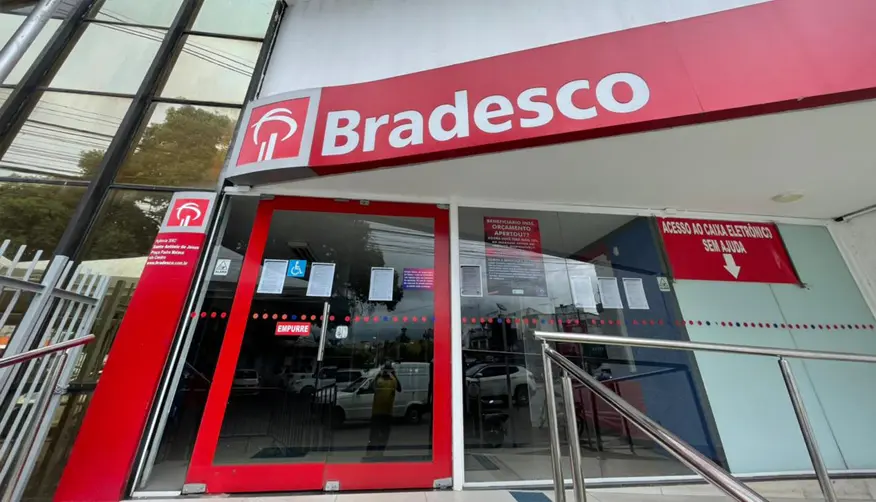
Bradesco, one of Brazil’s largest private-sector banks, approved a R$3.5 billion (approximately US$690 million) distribution to shareholders through a mechanism called interest-on-capital, rewarding income investors with a tax-efficient cash return.
What Interest-on-Capital Means for Your Pocket
Interest-on-capital, known locally as juros sobre capital próprio or JCP, is a Brazilian corporate payout that works differently from an ordinary dividend. The company treats the distribution as a deductible expense, which lowers its own tax bill, while the shareholder receives the cash with income tax already withheld at source.
For most individual investors, that withholding rate is 17.5 percent. The headline gross amount always looks larger than what actually lands in your account, so the net figure is the one that matters for planning.
Bradesco’s Per-Share Breakdown
The bank set the gross JCP at R$0.315359035 per common share (BBDC3) and R$0.346894939 per preferred share (BBDC4). After the 17.5 percent tax, the net amounts drop to R$0.260171204 (roughly US$0.051) for common and R$0.286188324 (roughly US$0.056) for preferred shares.
Preferred shares carry a slightly higher payout per unit, a common feature in Brazilian banking stocks designed to compensate for different voting rights. The total net distribution across all shares comes to about US$569 million at current exchange rates.
The Dates an Income Investor Needs
The record date is 3 July 2026. You must own Bradesco shares by the close of trading that day to qualify for the payment.
The ex-rights date follows on 6 July 2026, meaning shares purchased on or after that date trade without entitlement to this distribution. The payment deadline stretches to 29 January 2027, giving the bank a long window to transfer the cash.
How This Fits Bradesco’s Broader Payout Policy
Bradesco stated that the JCP distribution counts toward its mandatory annual shareholder remuneration. Market reports described the amount as equivalent to roughly 18.3 times the bank’s usual monthly net interest distribution, signaling a payout backed by recurring cash generation.
For an income investor, the long gap between the ex-date and the payment deadline is worth noting. The cash will not arrive until early 2027, but the entitlement locks in this July.
Understanding JCP in the Brazilian Tax System
Brazil’s interest-on-capital mechanism is a distinctive feature of the local equity market, designed to encourage companies to distribute profits while reducing their corporate tax burden. Because the payout is treated as a financial expense, the company deducts it from taxable income, which can lower its effective tax rate.
For foreign investors, the tax treatment depends on their country of residence and any applicable double-taxation treaties. Many expats and international shareholders can offset the 17.5 percent Brazilian withholding against their home-country tax obligations, though this requires careful documentation and varies by jurisdiction.
What This Means for Expats and Foreign Investors
For a foreigner holding Bradesco shares through a local brokerage or an international ADR structure, the net JCP amount is what ultimately matters. The Brazilian real amounts will be converted by your custodian at the prevailing exchange rate on the payment date, which introduces currency risk between now and early 2027.
Investors who rely on Brazilian equity income to fund living expenses in dollars or euros should note the extended timeline. The entitlement is secured in July 2026, but the cash may not be available for spending until the end of January 2027, a gap of nearly seven months.
Frequently Asked Questions
What is the difference between JCP and ordinary dividends in Brazil?
JCP is a deductible expense for the company and arrives with 17.5 percent tax already withheld for most individuals. Ordinary dividends are paid from after-tax profits and generally reach shareholders without additional withholding, making the two forms of payout quite different for tax planning purposes.
Which Bradesco share class pays more JCP per unit?
Preferred shares (BBDC4) pay a gross R$0.346894939 (about US$0.068), while common shares (BBDC3) pay R$0.315359035 (about US$0.062). The preferred class carries a modest premium per share, reflecting the trade-off of holding stock with limited voting power.
When will the cash actually reach my account?
The payment deadline is 29 January 2027, and Bradesco has until then to transfer the net amount. Many brokers credit the funds earlier, depending on your custodian’s processing schedule.
LatAm Markets: Live Signals → — real-time movers, turnover leaders and FX across Latin America.
Read More from The Rio Times