Bangui Fuel Price March Draws Hundreds
A fuel-price protest that the government first called illegal ended without disorder. The opposition has now set the government a deadline of a few weeks.

Central African Republic · Politics
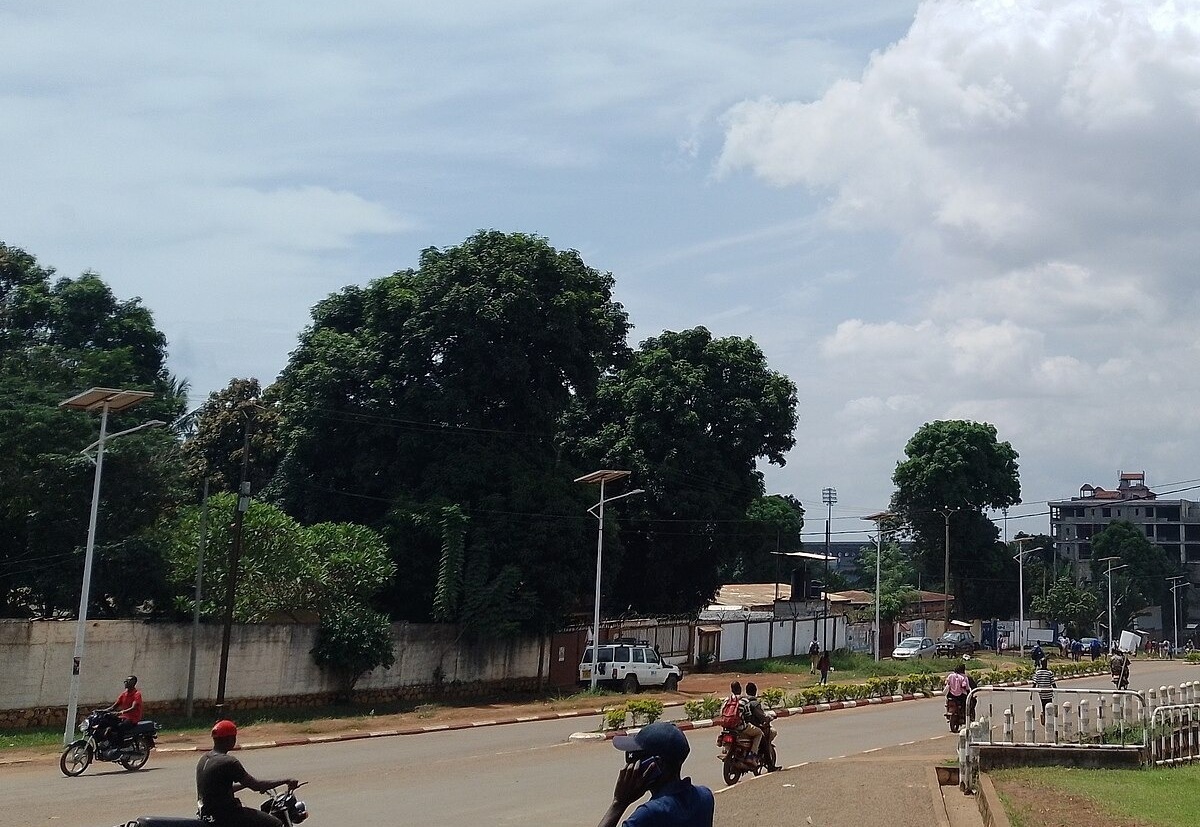
Several hundred people marched through Bangui in the rain on Friday 13 November 2026 to demand cheaper fuel and the release of five detained civil society leaders. It followed a city-wide “dead city” shutdown on 12 October and the arrest of five civil society leaders three days later.
The march was called by the BRDC, an opposition coalition named for the defence of the country’s 2016 constitution. It passed without major disorder, with security forces and United Nations peacekeepers watching, after the government first called it illegal and then authorised it.
Key Facts
- Who. The BRDC opposition coalition and its spokesperson, former prime minister Martin Ziguélé.
- What. Several hundred marched in Bangui on Friday 13 November 2026 against fuel prices.
- Demand. Petrol at 850 CFA francs (the regional currency) a litre, about US$1.43, and five detainees freed.
- Next. Ziguélé gave the government two to three weeks to act.
- As of. 19 November 2026, 11:00 GMT.
A fuel-price protest that the government first called illegal ended without disorder. The opposition has now set the government a deadline of a few weeks.
What Happened on Friday
The march set off at 6 a.m. and ran along avenue des Martyrs under steady rain. The Interior Ministry had authorised it on condition that organisers keep it peaceful and keep traffic moving, and it said it would hold them responsible for any disorder.
Minusca, the United Nations peacekeeping mission in the country, escorted the march alongside Central African security forces. Crépin Mboli-Goumba called for petrol at 850 CFA francs a litre, which is about US$1.43 at the fixed euro peg of 655.957 CFA francs and a euro rate of US$1.10 on 19 November.
As BRDC coordinator, Mboli-Goumba said fuel costs more in the Central African Republic than anywhere else in the CFA franc zone, the countries that use the CFA franc. Martin Ziguélé, a former prime minister who speaks for the BRDC, said the government had two or three weeks to act.
How the Government Shifted
Government spokesperson Évariste Ngamana first called the march illegal. After several days of controversy the government nonetheless authorised it with conditions.
The BRDC takes its name from the 2016 constitution, which a referendum in July 2023 replaced with a new one. Its full name is the Bloc républicain pour la défense de la Constitution.
Groups close to the government opposed the march and called for a boycott. They announced a future counter-mobilisation aimed at dissolving the BRDC, which they consider illegitimate.
Why a Fuel Price Became a Political Fight
The BRDC links the price at the pump to the cost of everything else for Bangui households. Mboli-Goumba’s demand is specific: a petrol price of 850 CFA francs a litre, against what he calls the highest price in the CFA franc zone.
The claim of a regional high is Mboli-Goumba’s, and we could not test it against a published price series. The shutdown of 12 October, known locally as a “ville morte”, and the arrest of five civil society leaders on 15 October are the other grievances behind the march.
For earlier coverage, see our reports on the government’s defence of a diesel price rise and on the truck blockade in Bangui. Both show how fuel and transport costs have already been in dispute this autumn.
In Plain English
- BRDC: the Bloc républicain pour la défense de la Constitution, an opposition coalition
- Minusca: the United Nations peacekeeping mission in the Central African Republic
- CFA franc: the name of two regional currencies shared by 14 African countries, both fixed to the euro at 655.957 CFA francs
- Ville morte: a “dead city” day, when shops and offices stay shut in protest
What Is Not Known
We found no official turnout figure, so “several hundred” is the only count available. Pro-government groups have announced a counter-mobilisation, but we found no dated event or turnout figure for it.
Accounts of the BRDC’s deadline differ, with two or three weeks in one account and about two weeks in another. We also found no government reply to the BRDC’s price demand, and it is not known whether the five detainees will be released.
What It Means for You
For travellers and companies in Bangui, Friday showed an authorised protest passing without major disorder, but the BRDC’s own deadline falls between 27 November and 4 December on our count of two to three weeks from 13 November. The government’s opposing case, put by spokesperson Ngamana, is that the march was illegal before it was authorised.
Fuel prices are the thread to watch, because they decide whether the opposition’s complaint reaches beyond its own supporters. The next dated test is the end of the BRDC’s deadline.
Frequently Asked Questions
What happened in Bangui on 13 November 2026?
Several hundred people marched against fuel prices and the cost of living. The march was authorised and passed without major disorder.
What is the BRDC?
It is an opposition coalition named for the defence of the 2016 constitution. It organised the march and is led in public by Martin Ziguélé and Crépin Mboli-Goumba.
What do the marchers want?
BRDC coordinator Crépin Mboli-Goumba wants petrol cut to 850 CFA francs a litre, about US$1.43. Marchers also demanded the release of five civil society leaders arrested on 15 October.
What happens next?
Ziguélé said the government had two or three weeks to act. On our count that runs from 27 November to 4 December.
Sources
Statements by the BRDC, the Central African government spokesperson and the Interior Ministry, and by Minusca, 12 to 13 November 2026; Central African Republic constitution referendum of July 2023; euro-dollar market rate of 19 November 2026.
Connected Coverage
Central African Republic news · Central African Republic Defends 12% Diesel Price Rise · Bangui Truck Blockade Strands 100 Lorries · Central African Republic Signs US$60M Road Deal
This article was produced by The Rio Times’ automated AI newsroom. Editorial responsibility: Matthias Camenzind, Publisher and Editor-in-Chief. The Rio Times also runs Ask Rio Times, which answers from 100,000+ of our own articles, the daily Latin America Power Map, and prediction-market odds on elections and markets.. How we use AI · Report an error