Asia Intelligence Brief — Thursday, September 17, 2026
Executive Summary
Asia Intelligence Brief for 17 September 2026: the Bank of Japan rules on rates on 18 September, and 55 percent of Koreans oppose a Hormuz deployment.
Asia Intelligence Brief — Thursday, September 17, 2026
Key Facts
Asia spent Thursday between two prices it does not set. Washington made money dearer overnight, and the strait most of the region’s fuel comes through is still shut.
The Federal Reserve raised its target range to between 3.75 per cent and 4.00 per cent on 16 September. The Bank of Japan publishes its own decision on Friday, and Seoul answered the week by signing an energy pact rather than sailing a fleet.
Read in English and Korean this morning, with material from other capitals taken in English editions or agency translation. The desk also read its own Asia file of 16 September.
South Korea: An Agency Signed, A Navy Argued Over
President Lee Jae Myung met Fatih Birol, executive director of the International Energy Agency, at Cheong Wa Dae in Seoul on Thursday. About 70 per cent of Korea’s Middle East crude passes through the Strait of Hormuz, the Korea Herald reported the same day.
Korea’s Ministry of Climate, Energy and Environment and the agency signed the memorandum at the Four Seasons Hotel Seoul that day, under Minister Kim Sung-hwan. It is to monitor oil, gas and grid supply together, and to build shared early warning and stockpiling.
Lee said the Middle East crisis “appears to be posing a major obstacle” to Korea’s shift towards renewable power. Birol said the world is “entering the age of electricity”, and that “Korea is a very good example of that”.
Birol plans to propose at the climate conference in Turkey that electricity reach 35 per cent of energy use by 2035. That share is about 23 per cent now, the Korea Herald reported on 17 September.
The agency’s members released 400 million barrels from emergency reserves in March, the largest coordinated release in its history, and Korea joined it. Korea also reinstated fuel price caps dropped in the 1990s and limited public employees’ car use, the Associated Press reported in March.
Foreign Minister Cho Hyun said at Incheon International Airport on Thursday that “nothing has been decided yet” on a Hormuz deployment. He said Korea “will participate in international cooperation”, with priorities of “the safety of our people and freedom of navigation”.
Woo Won-shik of the Democratic Party of Korea told a foreign ministry question session that this is “rather a war the United States started”. Lee Ki-heon said the party is “absolutely opposed to taking direct part in a war”, the Seoul Economic Daily reported on 17 September.
The desk found no vote, resolution or party position on the record, only two lawmakers speaking at a question session. The presidential office had already taken the question off the National Security Council agenda, the Seoul Economic Daily reported.
Gallup Korea polled 1,000 people from 8 to 10 September and found 55 per cent against a deployment and 32 per cent for it. The Korea Herald carried that release on 11 September.
A National Barometer Survey of 1,002 adults, taken from 7 to 9 September, asked about sending a maritime patrol aircraft or a logistics support ship. It found 45 per cent against and 36 per cent for, and the Korea Herald carried it on 10 September.
Lee holds a news conference at Yeongbingwan at 10 a.m. Seoul time on Friday 18 September, his seventh, running about 90 minutes. The National Assembly confirmed Kim Sung-soo as a Supreme Court justice on Thursday by 227 votes to 28, with 13 abstentions.
Japan: The Eve Of A Decision
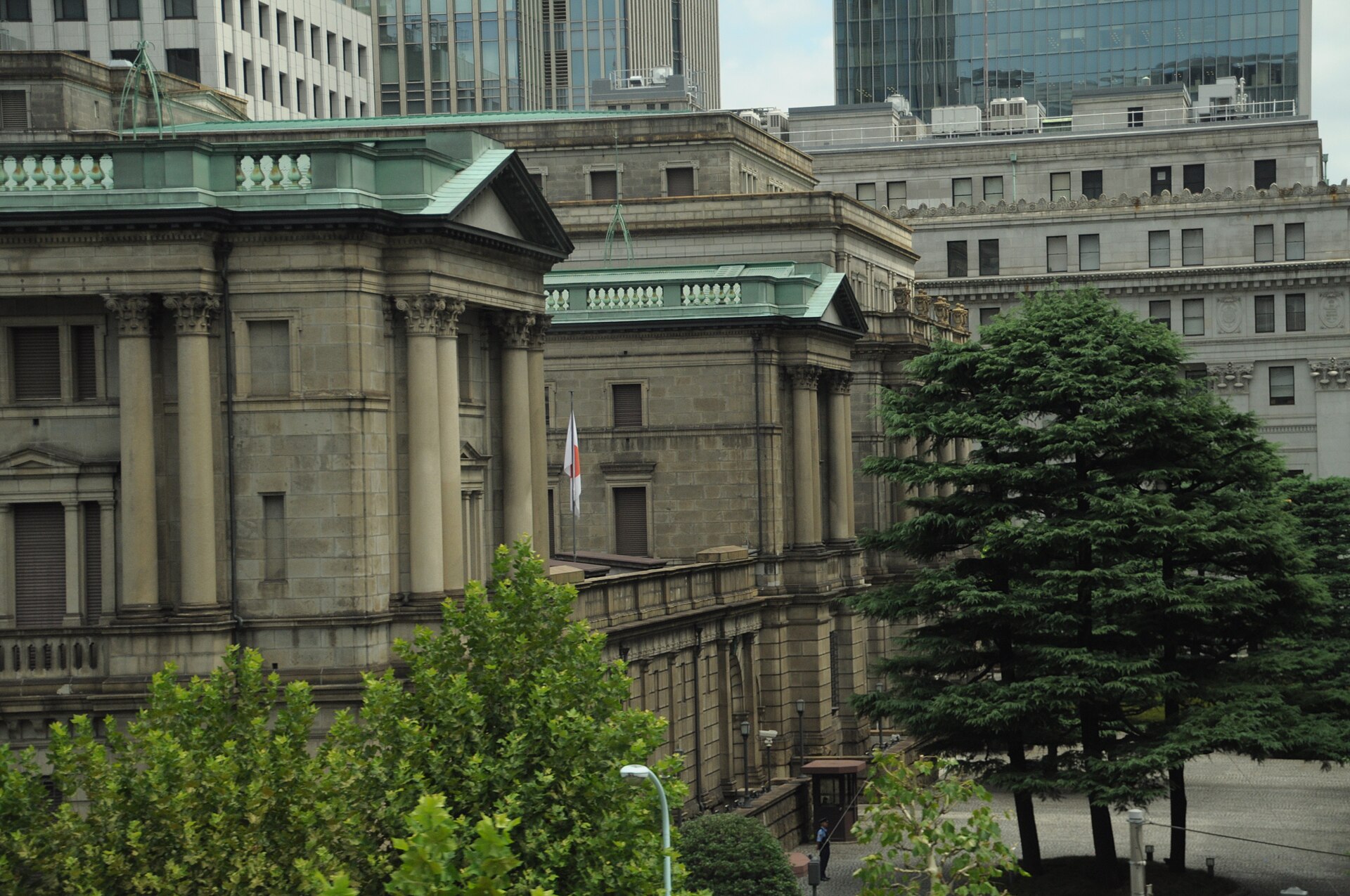
The Bank of Japan’s policy board began a two-day meeting in Tokyo on Thursday and publishes its decision on Friday 18 September. The statement is due around 11:30 a.m. Tokyo time and the governor speaks at 3:30 p.m. Tokyo time.
The bank set the uncollateralised overnight call rate at around 1.0 per cent on 16 June and held it there on 31 July. The vote in July was eight to one, with Takata Hajime proposing around 1.25 per cent.
A Reuters poll of 68 economists taken from 1 to 8 September found 66 expecting a rise to around 1.25 per cent. That is a forecast by economists, and we do not yet know what the board will choose.
Japan’s Ministry of Finance reported on 16 September that August imports rose 28.0 per cent on a year earlier. That came to 11,153.9 billion yen, about US$71 billion, and the value of crude oil imports rose 58.7 per cent.
Exports rose 19.3 per cent to 10,048.4 billion yen, about US$64 billion, a twelfth consecutive month of growth. The trade deficit came to 1,105.6 billion yen, about US$7.1 billion, and was the fourth in a row.
The yen’s previous close was 156.26 per dollar, on Trading Economics data read on 17 September. Thursday’s quotations differed across outlets, so the desk carries only that close.
Japan’s Statistics Bureau publishes August consumer prices on 18 September, on its own release schedule. The July rate was 1.9 per cent, on Trading Economics data read on 17 September.
The Price Of Money: A Gap That Widened Overnight
The Federal Reserve raised its target range by a quarter point to between 3.75 per cent and 4.00 per cent on 16 September. It was the first increase since 2023, the vote was twelve to nothing, and officials signalled one more increase this year.
Chair Kevin Warsh told his news conference that day that “inflation is too high and has been for too long”. Officials’ own projections put the rate at 4.1 per cent by the end of 2026, against 3.8 per cent in June.
The Kospi closed at 6,715.41 on Thursday, 2.56 points below Wednesday’s 6,717.97, while the Kosdaq rose. Its range ran from 6,697.85 to 6,795.53 and Seoul largely shrugged the increase off, the Seoul Economic Daily reported.
Foreign investors sold a net 2.28 trillion won, about US$1.6 billion, in a seventh consecutive session of selling. The won closed at 1,382.2 per dollar, 13.6 won weaker, and past 1,380 for the first time in three weeks.
The Bank of Korea’s policy rate is 3.0 per cent after increases in July and August, a gap of up to one percentage point with the American rate. Kim Myung-sil of iM Securities said the August minutes show the bank weighing “the timing and the pace” of further rises.
Bank Indonesia decides on 23 September with its policy rate at 5.75 per cent, unchanged since 19 August. The rupiah’s previous close was 17,677.00 per dollar and the rupee’s was 96.13, on Trading Economics data read on 17 September.
India’s government has been giving households priority over businesses for cooking gas and absorbing most of the price rise. Shortages have forced some eateries to shorten hours or drop dishes, the Associated Press reported in March.
Asia’s central banks now follow a rate set in Washington, in a month when their fuel bill is set in the Gulf. A region that exported its way to surpluses is importing its monetary policy.
China: A Summit Being Assembled In Public
National Public Radio reported on 17 September that Xi Jinping’s state visit is seven days away, which puts it on 24 September. Its account says briefing materials and the Chinese business delegation are still unsettled.
Two American deadlines sit just behind the meeting. A moratorium on rare-earth export controls and a delay to semiconductor export controls both expire on 10 November.
Treasury Secretary Scott Bessent said in that report that rare earths “are not flowing as freely as they could”. A Chinese commitment to buy at least 200 more Boeing aircraft is held up by American reluctance to sell replacement spare parts.
At the foreign ministry’s briefing in Beijing on 16 September, spokesperson Guo Jiakun took questions on Japan, European cyber-security rules and Taiwan. The desk read that transcript in full and found no question on the Washington visit, which is an absence rather than a denial.
More than 80 per cent of the oil and gas that leaves the Strait of Hormuz is bound for Asia, the Associated Press reported. Beijing is preparing a summit about chips and rare earths while its oil comes past a war.
Thailand And The Philippines: A Telephone Call And A Subpoena
Prime Minister Anutin Charnvirakul said at the Interior Ministry at 10:30 a.m. Bangkok time on Thursday that he may speak to President Donald Trump soon about tariffs. He will discuss the detail with Commerce Minister Suphajee Suthumpun on 18 September, Khaosod English reported.
Thailand faces a 12.5 per cent American tariff under Section 301 of the United States Trade Act, tied to forced-labour import rules. Chotima Iemsawasdikul of the Department of Trade Negotiations said the 10 per cent gap with Malaysia and Indonesia would cost exporters, Thansettakij reported.
The National Bureau of Investigation has flagged 47 of 100 flood-control projects in the Davao City district of Representative Paolo Duterte. Its director Melvin Matibag said so on Thursday, of a programme worth 1.9 billion pesos, about US$30 million on the desk’s conversion.
Matibag said one project carried “one coordinate and five budgets, each with a different title”, and that about six had clear problems. The bureau plans to summon 51 people from three contractors, the public works department and the audit commission.
Rodrigo Duterte appeared in person at the International Criminal Court in The Hague on 16 September. It was his first physical appearance since his arrest in March 2025, on three counts of crimes against humanity covering 76 deaths.
Palace press officer Claire Castro said on Thursday that Duterte “seems to be in good condition” and appeared to accept that the trial would proceed. His own lawyers have argued that he is unfit to take part.
The Quiet Files: Jakarta, Kuala Lumpur And Singapore
President Prabowo Subianto replaced Finance Minister Purbaya Yudhi Sadewa with Suahasil Nazara on 14 September, his third finance minister in under two years. The Jakarta Post reported on Thursday that the state’s planned stake in the Jakarta-Bandung railway is unsettled again.
Worsening haze has delayed a Japanese firefighting mission to West Kalimantan, the same paper reported on Thursday. Indonesia’s fire season and its fuel bill are arriving in the same quarter.
DBS Bank, Bain and Company and Vriens and Partners published a forecast on 16 September for the six largest South-East Asian economies. They would grow 4.8 per cent a year to 2035, with Vietnam at 6.2 per cent and Thailand at 2.2 per cent.
Malaysia plans talks with Myanmar on returning Rohingya refugees, Asia News Network reported on Thursday. The desk could not find a date for those talks in that report.
Singapore’s forecast is 2.7 per cent a year, and its income per head is the highest in the Association of Southeast Asian Nations. Those two numbers together are the ordinary shape of a mature economy.
What This Means From Latin America
Asia’s fuel bill is now set by a strait on the other side of the world, and Latin American producers sell into the same market. Brent‘s previous close was US$105.83 a barrel, and that is the number regional producers budget against.
The Federal Reserve’s move to between 3.75 per cent and 4.00 per cent makes dollars dearer for everyone who borrows in them. Brazilian, Mexican and Colombian borrowers have met that arithmetic in every previous American tightening.
If the Bank of Japan raises its rate on Friday, as 66 of 68 economists in a Reuters poll expect, money borrowed cheaply in yen becomes costlier to hold. Unwinding those positions has moved the Brazilian real and the Mexican peso in past cycles.
Korea’s new programme is about monitoring and stockpiles as much as about climate, and electrification consumes copper and lithium. Chile, Peru and Brazil sell both, and a buyer who plans for shocks buys differently from one who reacts to them.
What We Are Watching
- The Bank of Japan’s decision on Friday — Whether the board moves from around 1.0 per cent, set on 16 June, to around 1.25 per cent. A Reuters poll of 68 economists taken from 1 to 8 September found 66 expecting that rise.
- President Lee’s news conference in Seoul — Ninety minutes at 10 a.m. Seoul time on Friday 18 September at Yeongbingwan, his seventh. Whether he answers on a Hormuz deployment is the question the day turns on.
- Japan’s consumer prices for August — Japan’s Statistics Bureau publishes them on 18 September, in the same hours as the rate decision. The July rate was 1.9 per cent.
- Whether Korea sends ships to the Gulf — Foreign Minister Cho Hyun said on 17 September that nothing has been decided yet, before leaving for the United States. Two governing-party lawmakers said the same day that they are opposed, and the presidential office took the question off the National Security Council agenda.
- Xi Jinping’s state visit to Washington — National Public Radio reported on 17 September that the visit is seven days away and the Chinese delegation is not yet fixed. The rare-earth and semiconductor deadlines of 10 November sit behind it.
- Bank Indonesia’s decision on 23 September — Whether a policy rate of 5.75 per cent holds after an American increase. The rupiah’s previous close was 17,677.00 per dollar, and this is the new finance minister’s first test from outside the cabinet.
- The Saudi East-West pipeline’s return — Saudi Arabia could restore about half the damaged capacity within days and the rest within six weeks, Bloomberg reported on 16 September. The desk read Brent at US$102.01 during Thursday’s session, against a previous close of US$105.83.
The Bigger Picture
Asia built its prosperity on cheap freight and cheap money, and both were rented rather than owned. Thursday was the day the rent came due in two currencies at once.
The region has been here before, in 1973 and again in 1979, when an oil shock and dearer dollars arrived together. What followed each time was a decade of building stockpiles, pipelines and terminals.
That is the cycle Korea’s new programme belongs to, and its own timetable reaches only to 2028. Institutions built during a squeeze usually outlast the squeeze that built them.
None of this is a reason for a reader to move money this week. It is a reason to expect the next quarter’s figures to look different from the last one’s.
Frequently Asked Questions
What did the Federal Reserve decide, and why does Asia care?
The Federal Reserve raised its target range by a quarter point on 16 September 2026, to between 3.75 per cent and 4.00 per cent. It was the first increase since 2023 and the vote was twelve to nothing. Chair Kevin Warsh told his news conference that day that “inflation is too high and has been for too long”. Officials’ own projections now put the rate at 4.1 per cent by the end of 2026, against 3.8 per cent in June. Asia cares because much of the region’s trade finance is priced in dollars, and because a wider gap between American and local rates pulls money out of local markets. Foreign investors sold a net 2.28 trillion won of Korean shares on 17 September, about US$1.6 billion. That was a seventh consecutive session of selling, and the won closed 13.6 won weaker at 1,382.2 per dollar.
Why is the Strait of Hormuz an Asian problem?
Because most of what passes through it is going to Asia. The Associated Press reported in the Korea Herald on 29 March 2026 that more than 80 per cent of the oil and liquefied natural gas transiting the strait is bound for Asia. The Korea JoongAng Daily put that share at roughly 90 per cent on a different basis, and we carry the lower figure. The Korea Herald reported on 17 September 2026 that about 70 per cent of Korea’s Middle East crude comes through the same water. Japan’s August import bill shows the effect. Its Ministry of Finance reported on 16 September that imports rose 28.0 per cent on a year earlier, to 11,153.9 billion yen or about US$71 billion. The value of crude oil imports rose 58.7 per cent, and the trade deficit came to 1,105.6 billion yen, about US$7.1 billion.
What is the new Korean energy programme, and what does it do?
Korea’s Ministry of Climate, Energy and Environment and the International Energy Agency launched it in Seoul on 17 September 2026. It is called the Resilient and Integrated Strategy for Energy Security in Asia. It provides for joint monitoring of oil, liquefied natural gas and clean-energy supply chains, together with power-grid reliability. It also provides for shared early warning and coordinated stockpiling, for electrification plans in smaller economies, and for a standing policy forum. Its own timetable finishes the cooperative structure in 2027 and the crisis protocols in 2028, with building work after that. It moves no oil this week, and it is a monitoring compact rather than a supply guarantee. President Lee Jae Myung and the agency’s executive director Fatih Birol discussed it at Cheong Wa Dae the same day.
What does any of this change for someone living in Latin America?
Three things, in plain terms. First, dollar borrowing became dearer on 16 September, and Brazilian, Mexican and Colombian borrowers have met that arithmetic in every previous American tightening. Second, a Reuters poll of 68 economists taken from 1 to 8 September found 66 of them expecting the Bank of Japan to raise its rate to around 1.25 per cent on 18 September. If it does, money borrowed cheaply in yen and held elsewhere costs more to hold. Unwinding those positions has moved the Brazilian real and the Mexican peso in past cycles. Third, Asia’s answer to its energy squeeze is electrification, stockpiles and grids, which consume the copper and lithium that Chile, Peru and Brazil sell. None of these is a reason to act today, and all three are reasons to read the next quarter closely.
Sources: The Korea Herald, Korea JoongAng Daily, Seoul Economic Daily, The Korea Times and SBS News. Also National Public Radio, Nation Thailand carrying Thansettakij, Khaosod English and Thailand Business News. And Philippine Daily Inquirer, Philippine Star, Daily Tribune, The Jakarta Post and Asia News Network carrying The Straits Times. Also Al Jazeera, FXStreet carrying the Reuters poll, Trading Economics and investingLive. Those outlets carried reports from Reuters, Bloomberg, Kyodo News and the Associated Press. Primary documents: the Federal Open Market Committee statement of 16 September 2026. Also the Bank of Japan’s statement on monetary policy of 31 July 2026 and its published 2026 meeting schedule. Also the International Energy Agency’s collective action decision of March 2026 to release 400 million barrels, as carried by the Korea Herald. Also Japan’s Ministry of Finance trade statistics for August 2026 and Japan’s Statistics Bureau release schedule. And the Chinese foreign ministry’s regular press conference transcript of 16 September 2026, read in full. Reporting from 11 to 17 September 2026. Currency conversions are desk calculations against rates read on 17 September 2026 and are approximate.
This article was produced by The Rio Times’ automated newsroom system. How we use AI · Report an error · Editorial responsibility: Matthias Camenzind, Editor-in-Chief