Argentine President Vetoes University Funding Bill Amid Protests
President Javier Milei of Argentina vetoed a university funding bill on October 3, 2024. The decision followed widespread protests across the country.
Students and teachers had rallied to support public education and oppose government budget cuts. The vetoed bill aimed to increase university budgets in line with inflation.
It also sought to raise salaries for university staff. Congress had approved the bill on September 13, 2024. The law would have cost about 0.14% of Argentina’s GDP.
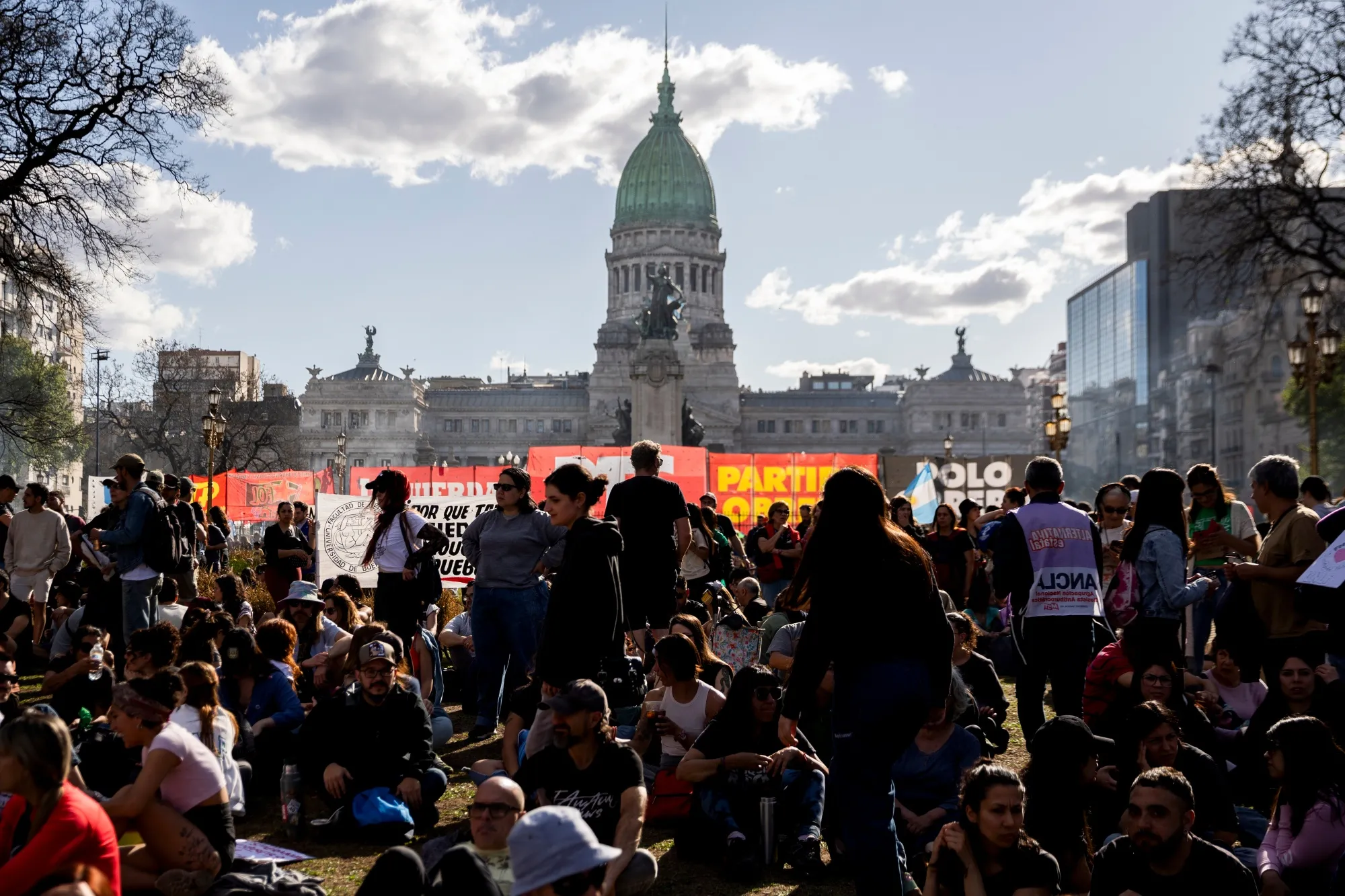
Milei’s veto came after massive demonstrations in major Argentine cities. Hundreds of thousands marched in Buenos Aires and elsewhere. Protesters gathered in front of the National Congress building.
They carried signs defending public education and criticizing budget cuts. Argentina has a long history of free public university education. This tradition dates back to 1949.
The University of Buenos Aires, a public institution, ranks among the world’s top 100 universities. Milei’s government has criticized public universities as inefficient and ideologically biased.
Crisis in Argentina’s Education Sector
The budget cuts have severely impacted university staff. Their salaries have lost about 40% of purchasing power since December 2023.
Many professors now earn less than the poverty line. Universities struggle to pay for basic utilities like electricity. Milei‘s administration defends the veto as necessary for fiscal balance.
They claim to have increased university funding by 150% year-over-year. However, when adjusted for inflation, this actually represents a 30% decrease in real terms.
The government argues that the university system is expensive and inefficient. They seek to reform public education as part of broader economic changes.
However, this stance has created tension between Argentina’s education sector and many citizens. The veto sets the stage for further conflict between the government and educators.
Congress would need a two-thirds majority to override the veto. This seems unlikely given the current political landscape in Argentina. This dispute highlights the clash between Milei’s fiscal policies and Argentina’s educational traditions.
In short, it presents a significant challenge for the government as it pursues its economic agenda. The outcome of this conflict may shape the future of public education in Argentina.
More: Argentina news in English, every day from The Rio Times.
This article was produced by The Rio Times’ automated newsroom system. How we use AI · Report an error
Read More from The Rio Times