
ARGENTINA · ENERGY
Key Facts
- The country Neuquén is the Patagonian province at the heart of Argentina’s Vaca Muerta shale oil and gas boom.
- Why it matters The floods hit the roads serving Argentina’s main oil basin, where foreign energy investors are active.
- Why now Governor Rolando Figueroa decreed the emergency on Tuesday, 27 October, after storms and floods since mid-October.
- What happened Six-month weather emergency for the whole province, with a committee of six ministers and faster contracting.
- What it means for you Road cuts reach shale-field corridors and northern towns; no production loss figure has been published.
- Power Index Argentina ranks 4th of 14 in The Rio Times Latin America Power Index, with 61.2 points (October 2026 edition).
In Plain English
Neuquén is a province in northern Argentine Patagonia, and Vaca Muerta is the shale rock formation beneath it that drives the country’s oil and gas growth. A meteorological emergency is a legal status that lets a provincial government buy equipment and services faster to respond to storms and floods.
The Argentine province of Neuquén, home of the Vaca Muerta shale oil and gas fields, declared a six-month weather emergency on Tuesday, 27 October 2026, after floods damaged roads and isolated towns. Governor Rolando Figueroa issued decree 1714/2026, which covers the whole province and creates a committee of six ministers.
For US readers the emergency matters to energy investors and travellers, because the floods cut roads serving the oil fields and the towns around them. Neuquén’s energy ministry had announced a record 714,089 barrels of oil per day for September, and no operator has published a storm loss figure.
Figueroa said ravines are filling with water in amounts they have not received in 70 years, but no rainfall totals have been published to test that. Models cited in the decree also give a more than 90% chance that El Niño, a periodic warming of the Pacific Ocean, reaches very strong intensity by December.
What Happened
Rain had already cut Route 5 at the Carranza stream in mid-October, and on Thursday, 22 October, the national weather service (SMN) issued orange storm warnings for Añelo, the shale-field hub, Chos Malal, Zapala and the provincial capital, with 20 to 50 millimetres forecast. The province closed all its roads to traffic from 20:00 that night until 06:00 on Friday, and emergency secretary Luciana Ortiz Luna warned that some streams had become river-sized.
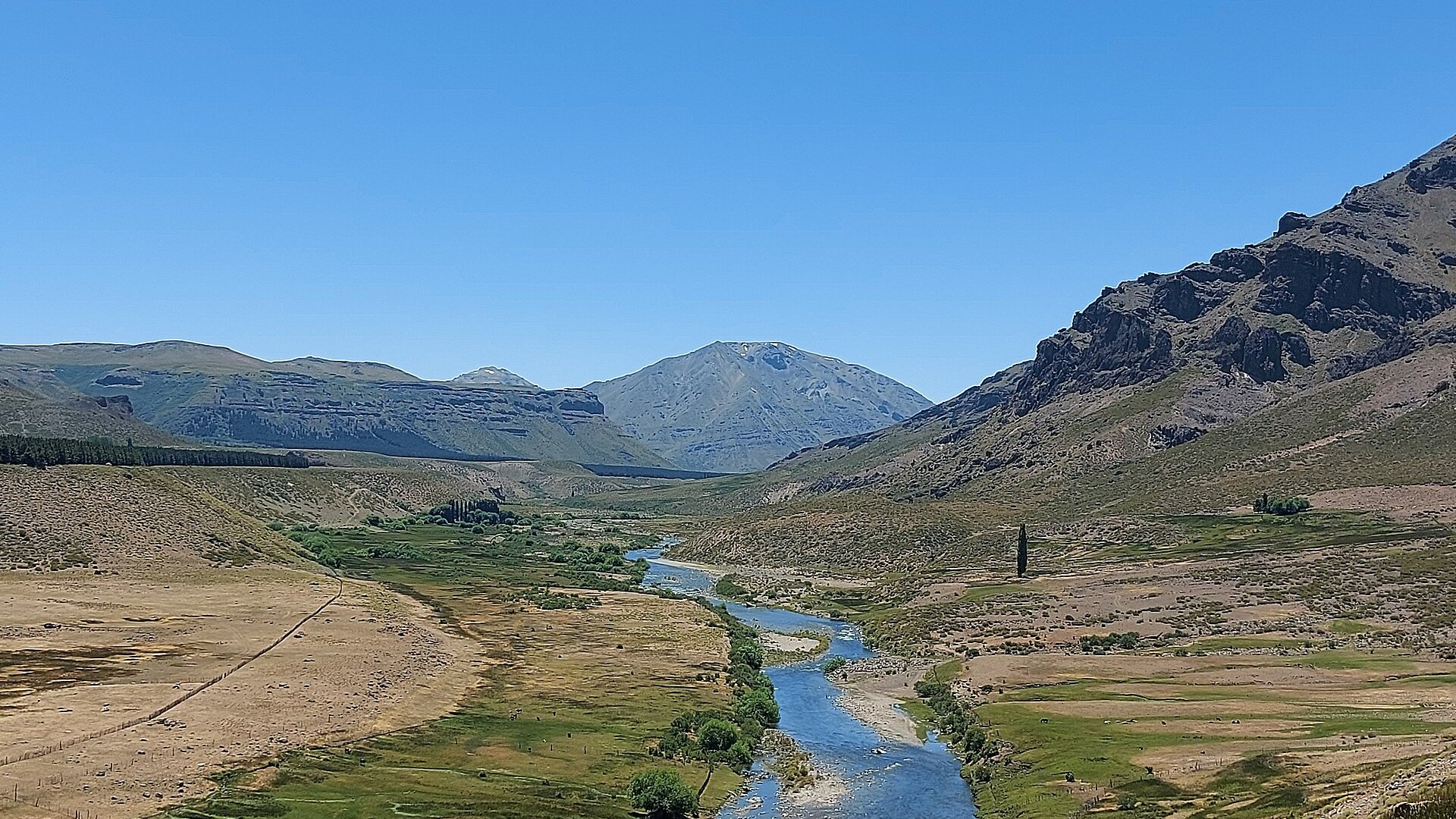
By Friday, 23 October, the northern town of Rincón de los Sauces was cut off by land because provincial routes 5 and 8 were both impassable. Floodwater at the Carranza stream destroyed detours and structures of a new bridge on Route 5, and the town hospital ran short of supplies.
The government flew medicines, laboratory reagents and urgent patients in and out by plane and helicopter, and by 24 October about 20 families near Puente Picún Leufú were isolated. In Añelo, civil defence director Modesto Muñoz reported four evacuated families and 32 assisted ones by that date.
The Decree and the 70-Year Claim
Decree 1714/2026, made public on Tuesday, 27 October, declares the emergency for six months after the governor announced it over the weekend. It creates a committee of six provincial ministers, including cabinet chief Juan Luis Ousset and Security Minister Matías Nicolini, and lets provincial bodies contract goods and services quickly.
Figueroa said the province’s infrastructure is overwhelmed and that its role is to assist people and prevent harm, and he said the province needs a large dam on the Neuquén River, a costly project that takes time. Crews have worked on ravine channels and defences in towns such as Chos Malal, Plottier and Aluminé, with the first jobs starting on 19 October.
The 70-year comparison covers dry ravines called cañadones and is the governor’s assessment, since the statement gives no rainfall totals to set against national weather station records. The decree cites the El Niño outlook, which models put at a 100% chance of continuing and intensifying from October to December.
Vaca Muerta and the Oil Fields
Vaca Muerta pushed Neuquén’s oil output to a record 714,089 barrels per day in September, up 4.2% from August and 25.95% above September 2025, according to the provincial energy ministry. That is the baseline for any storm loss, and no loss figure has been published.
Floods hit the corridors that move crews and fuel to the fields, including Provincial Route 7 near Añelo, and on 26 October the provincial roads agency said Route 8 to Rincón de los Sauces was open only to light vehicles with chains, not to trucks. Marcelo Rucci, head of the private oil and gas workers’ union, said on Monday, 26 October, that the union will not count the dead for the companies’ drive to keep producing, that crews will work their 12 hours and no more without a deal on rotations, and that operators must repair the field roads.
Chevron, a US oil major, operates the El Trapial blocks in Neuquén, and other international producers work in the basin that now supplies most of Argentina’s oil. An August report on Neuquén’s 750-kilometre road plan toward Chile covers the province’s push to move Vaca Muerta output west.
What It Means for You
Travellers to Neuquén, including the lake district around San Martín de los Andes and Villa La Angostura, should expect road restrictions and follow provincial and weather-service alerts. Provincial authorities restrict traffic on some roads and advise against night driving, and Rincón de los Sauces has been the hardest town to reach.
For investors, the emergency is a warning about logistics and road capacity in the shale basin, not yet a confirmed production event. Any production effect would first appear in October output data, and updates appear on the Argentina news page.
What Is Not Known
By Wednesday, 28 October, no official count of affected residents, damaged homes or economic losses had been published, and rainfall totals for the worst-hit areas were missing. It is also unknown how long the northern routes will stay closed or how much basin logistics were disrupted.
The decree states no budget, and the provincial announcements mention no dedicated national aid package. Where and when the next storm will hit is open too, since the emergency secretary said such storms cannot be predicted.
Frequently Asked Questions
Why did Neuquén declare a state of emergency?
Neuquén declared a six-month weather emergency on 27 October after floods cut roads and isolated towns such as Rincón de los Sauces. The decree also responds to forecasts of a very strong El Niño through December.
Has Vaca Muerta oil production stopped?
No operator has published a production loss figure for the storms. Neuquén’s energy ministry announced a record 714,089 barrels of oil per day for September, before the floods.
Who is Rolando Figueroa?
Rolando Figueroa is the governor of Neuquén province and issued decree 1714/2026. His cabinet includes Juan Luis Ousset as chief of cabinet and Matías Nicolini as security minister.
Is it safe to travel to Neuquén now?
Provincial authorities restrict traffic on some roads and advise against night driving, and the north of the province is hardest to reach. Travellers should check provincial road reports and national weather-service alerts before driving.
Sources: Neuquén provincial government statement on decree 1714/2026, 27 October 2026; Neuquén provincial government statement on storm works and water supply, 27 October 2026; Neuquén provincial government statement on storm alerts, 22 October 2026; Neuquén provincial government statement on the road suspension, 22 October 2026; Neuquén provincial roads agency, Carranza bridge report, 15 October 2026; Neuquén provincial roads agency, Routes 5 and 8 report, 26 October 2026; Neuquén provincial government, list of authorities, accessed 28 October 2026; Chevron, Argentina operations page, accessed 28 October 2026.
This article was produced by The Rio Times’ automated newsroom system. How we use AI · Report an error · Editorial responsibility: Matthias Camenzind, Editor-in-Chief