Africa Intelligence Brief — Thursday, September 17, 2026
Executive Summary
Africa Intelligence Brief for 17 September 2026: Washington announces a visa restriction policy aimed at South African law and Pretoria answers in
Africa Intelligence Brief — Thursday, September 17, 2026

Key Facts
The Democratic Republic of the Congo is running three emergencies through one government. Geneva holds the war talks, Ituri holds the epidemic, and Kinshasa holds the argument about the constitution.
Elsewhere the day was about counts and prices. Sudan cannot agree how many of its miners died, and Washington has raised the cost of borrowing in dollars.
Read in English, French, Arabic, Portuguese and Swahili, across the continent’s largest outlets and our own Africa desk. Every figure below carries the source that published it and the date.
DR Congo: A War In Geneva, An Epidemic In Ituri
The seventh meeting of the Joint Security Coordination Mechanism opened in Geneva on Wednesday, 16 September, and closed on 17 September. Delegations from the Democratic Republic of the Congo and Rwanda attended, with the United States, Qatar, Togo and the African Union Commission.
The mechanism monitors the Washington Accords, signed on 4 December 2025, which reaffirmed a peace agreement of 27 June 2025. Kinshasa undertook to neutralise the Democratic Forces for the Liberation of Rwanda, a Rwandan Hutu armed group in eastern Congo.
Olivier Nduhungirehe, Rwanda’s Minister of Foreign Affairs and International Cooperation, said on 15 September that Kigali would continue to defend itself. He said the Congolese government still arms that group, and that Rwanda has lifted some of its own measures.
Patrick Muyaya, the Congolese Minister of Information and government spokesperson, said Kinshasa is meeting its commitments and accused Rwanda of expansionist ambitions. Al Jazeera carried his account on 16 September, with President Paul Kagame calling the arrangement on that armed group insufficient.
Al Jazeera reported on 15 September that neither central security commitment has been declared complete, and that fighting continues in North and South Kivu. Whether Geneva issued a joint statement, as the sixth meeting did in August, was not known when this edition closed.
Those same eastern provinces carry an epidemic. The World Health Organization counted 6,757 confirmed cases and 3,267 deaths in the country to 7 September, publishing on 10 September.
The organisation gave a case fatality ratio of 48.3 per cent for the country, the share of confirmed patients who died. Its wider count, which adds 20 cases in Uganda and one in France, was 6,778 cases and 3,269 deaths.
The European Centre for Disease Prevention and Control counted 7,258 confirmed cases and 3,510 deaths to 13 September. Ituri holds 5,659 of those cases and North Kivu 1,281, on the European centre’s figures.
The two counts are the same national reporting series read six days apart. Tedros Adhanom Ghebreyesus of the World Health Organization gave higher figures again on 16 September, of more than 7,200 cases.
He put the deaths at more than 3,500 across seven provinces. He spoke at an online news conference and led with progress, saying the organisation is starting to see encouraging signs.
Transmission is going down in the most affected parts of Ituri, and South Kivu has reported no new cases since May. He said more than 1,700 people have recovered and that vaccine trials should begin in the coming weeks.
He said the area is so vast that it is hard to speak of a single epidemic. Weekly cases in North Kivu have doubled over two weeks, from 100 to more than 200.
He then said: “But make no mistake. The epidemic continues to grow, and continues to kill.”
He said the epidemic has been contained mostly in north-eastern Congo after four months, apart from a small Ugandan outbreak that was stopped quickly. The European centre said that outbreak was declared over on 25 August, after a 42-day countdown.
The European centre also counted 1,726 recoveries and 905 people in hospital isolation, with 78.6 per cent of contacts under follow-up. Meg Doherty, who directs science and research at the organisation, said it has vaccinated more than 3,000 health and front-line workers.
They were given Merck’s Ervebo, which is licensed against Zaire ebolavirus. Its effect on the Bundibugyo strain driving this outbreak is not known.
Julien Harneis, the United Nations Special Ebola Coordinator, called it a deadly and massive epidemic, with progress in some areas and growth in others. TimesLIVE carried his remarks on 16 September, with those of Olivier le Polain of the World Health Organization.
Le Polain said it is too early to say a peak has passed, and that full control would take many months. Jean-Jacques Muyembe, who directs the National Institute for Biomedical Research, said the indicators in Ituri are turning green.
Kinshasa also policed its own streets this week. Al Jazeera reported that police fired tear gas as hundreds protested in the capital on Tuesday, 15 September, against proposed constitutional changes.
The same report gave at least ten arrests, with demonstrations also in Lubumbashi and Uvira. Critics say the changes could allow President Félix Tshisekedi to seek a third term, which the two-term limit now bars.
The marches were a nationwide day of action called by the C64 coalition, forged by opposition parties to defeat that attempt. Parliament made a change possible in June by allowing constitutional amendment through a referendum, and the Catholic Church has condemned the proposal.
Mohamed Eyenga of the Envol party, a senior figure in C64, said many activists were arbitrarily arrested. General Blaise Kilimbalimba, the provincial police commander, said peaceful demonstrators had not been arrested.
Tshisekedi announced a national dialogue three weeks before the marches, bringing in opposition parties, civil society groups and religious leaders. That dialogue excludes M23 and other armed groups, and Kinshasa is running a separate dialogue with the political alliance behind M23.
One government is negotiating, counting and policing at the same time. Three files, three cities, and only one of them has a closing date.
South Africa: A Year Of Police Evidence, And A Ninth Body
The Madlanga Commission marked one year of hearings on Thursday, 17 September. Independent Online counted 110 witnesses across 174 hearing days, and 1,894 calls to the commission’s hotline.
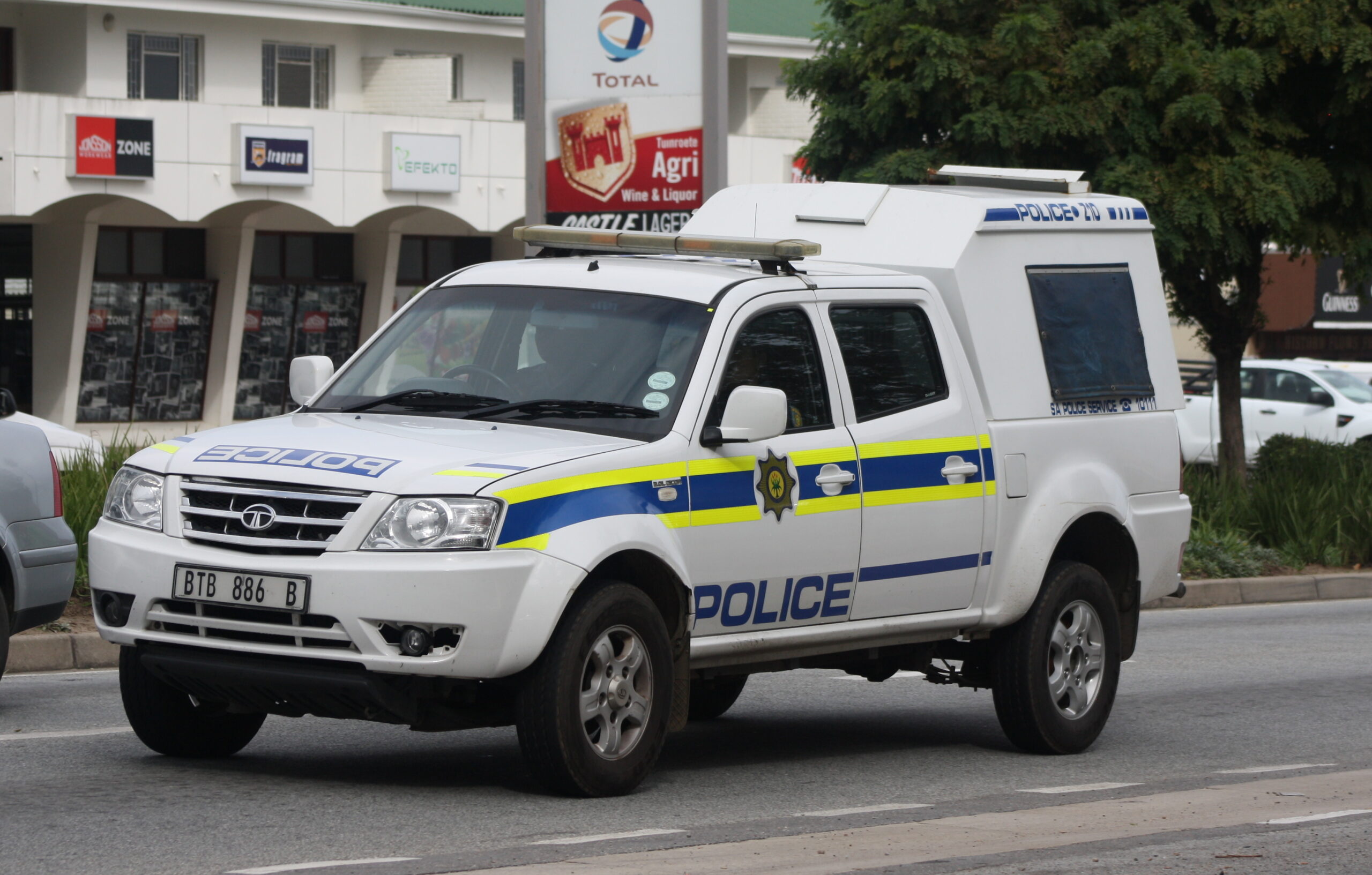
The commission also holds 750 bundles of documentary evidence, on the same count. It examines criminality, political interference and corruption in the criminal justice system, and reports to President Cyril Ramaphosa.
Jeremy Michael, the commission’s spokesperson, said the one-year mark is significant because real consequences have followed while the inquiry is still under way. The South African Government News Agency carried his remarks on 17 September.
The commission exists because Lieutenant General Nhlanhla Mkhwanazi, the KwaZulu-Natal police commissioner, made allegations at a media briefing on 6 July 2025. Ramaphosa announced the inquiry that month.
On 15 September the National Prosecuting Authority withdrew four charges under the Public Finance Management Act against General Fannie Masemola, the suspended national police commissioner. Andy Mothibi, the National Director of Public Prosecutions, ordered the withdrawal.
The Daily Maverick reported on 15 September that the police health-services tender was budgeted at 360 million rand, with 228 million rand awarded. That is about US$22 million and US$13.9 million at 16.37 rand to the dollar, the close Trading Economics reported for 16 September.
The prosecuting authority said it was satisfied there were no reasonable prospects of a successful prosecution. It also withdrew charges against Lieutenant General Dumisani Khumalo and six crime intelligence officials.
Lesiba Thobakgale of the South African Police Union told Independent Online on 17 September that the prosecutions were meant to demean and damage the leadership. Ian Cameron, who chairs the parliamentary police committee, warned against calling every failed prosecution a weaponised one.
Police found a ninth woman’s body at Dawn Park in Ekurhuleni on the morning of Thursday, 17 September. Major General Fred Kekana, the acting Gauteng provincial commissioner, said the remains had been dumped there.
Independent Online reported the same day that nine women have been found dead in and around the East Rand over nine weeks. Three have been publicly named: Itumeleng Kekana, Elizabeth Moselakgomo and Dineo Evelyn Motapane.
Zizipho Ntoyanto, a resident, told Independent Online that people are scared and living in fear, and asked for soldiers. Lieutenant General Tebello Mosikili, the deputy national commissioner, said investigators are very much able and capable.
The South African Human Rights Commission put the number of women killed between April and June 2026 at 569, with 1,052 survivors of attempted murder. It said South Africa is not a safe place for women, in figures Independent Online carried on 17 September.
The commission has joined the Commission for Gender Equality and the CRL Rights Commission in a national inquiry into gender-based violence and femicide. The CRL body covers cultural, religious and linguistic communities, and the inquiry runs from 28 September to 2 October.
It will examine how cases are reported and investigated, what support victims receive, and how the justice system handles cases before trial. The commission also said 8,814 rape cases were reported in the first quarter of the year.
Police said one suspect has been arrested and a second identified, without clarifying which of the nine cases either is linked to. They have formed a multidisciplinary team to investigate the deaths and to establish whether the cases are connected.
The rewards on offer reached a combined 900,000 rand, about US$55,000 at the same rate. The Democratic Alliance’s Ekurhuleni mayoral candidate, Khathutshelo Rasilingwane, offered 500,000 rand for information leading to a successful prosecution, and the police 400,000 rand.
Pixie du Toit, a criminologist and criminal profiler, said the killings fit the pattern of a serial killer. She said the guidelines require three murders “within a very short period in the same area”, and much the same method.
Crezane Bosch, the Democratic Alliance’s spokesperson on community safety, said serious and violent crimes remain a concern at several Gauteng police stations. She said that is so despite declines in major crime categories across the province.
Janey du Plessis, a Kempton Park resident, said the deaths had changed how people go about their days. She said it is so close to home that she walks to her local shop with her daughter, and that “everyone is vigilant”.
The Presidency said on 16 September that Ramaphosa had been advised by his medical team to rest, after returning from the BRICS summit in India. He has asked ministers to represent him at scheduled public engagements.
A year of testimony has produced 110 witnesses and a withdrawn indictment against the man who ran the police. The state is learning what it is faster than it can act on it.
Live Market IntelligenceCommodities — Live Market Board
Rio Times · Live Market Intelligence
Commodities — Live Market Board
-0.03%
| Instrument | Last | Change | YoY | Prev. | High | Low | Volume |
|---|---|---|---|---|---|---|---|
| GOLD | 4,461 | +1.78% | +33.20% | 4,383 | 4,503 | 4,421 | 139,824 |
| SILVER | 65.59 | +1.26% | +73.05% | 64.77 | 66.98 | 64.81 | 46,406 |
| BRENT | 88.88 | -0.03% | +34.42% | 88.91 | 90.07 | 88.12 | 29,713 |
| WTI | 83.11 | -0.11% | +31.57% | 83.20 | 84.35 | 82.40 | 166,848 |
| COPPER | 6.61 | +0.03% | +46.70% | 6.61 | 6.71 | 6.61 | 39,543 |
| LITHIUM | 75.20 | +1.47% | +62.95% | 74.11 | 75.80 | 75.08 | 89,275 |
| IRON ORE | 161.91 | — | +58.10% | 161.91 | 161.91 | 1 | |
| SOY | 1,184 | +3.20% | +17.05% | 1,148 | 1,199 | 1,168 | 163,179 |
| CORN | 480.50 | +10.02% | +29.34% | 436.75 | 480.75 | 459.50 | 341,248 |
| WHEAT | 655.00 | +3.93% | +29.70% | 630.25 | 657.75 | 631.50 | 128,793 |
| COFFEE | 317.25 | -5.51% | +0.67% | 335.75 | 321.20 | 313.55 | 21,747 |
| SUGAR | 16.43 | -1.79% | -3.01% | 16.73 | 17.11 | 16.22 | 171,992 |
| COCOA | 5,719 | +3.18% | -34.96% | 5,543 | 5,779 | 5,574 | 26,773 |
| ORANGE JUICE | 138.55 | -0.47% | -45.38% | 139.20 | 141.05 | 137.50 | 703 |
| COTTON | 85.03 | +2.33% | +26.78% | 83.09 | 82.90 | 81.96 | 16,546 |
| BEEF | 223.60 | -3.93% | -5.18% | 232.75 | 226.40 | 223.00 | 16,126 |
| CATTLE | 339.10 | -3.16% | -1.82% | 350.17 | 345.50 | 338.60 | 10,164 |
| USD/BRL | 5.16 | +0.01% | -5.13% | 5.16 | 5.18 | 5.14 | — |
Sudan: Three Counts Of The Same Dead At Al-Zara
An unregulated gold working at al-Zara, near al-Nuhud in West Kordofan, gave way on Tuesday. The Kordofan Observatory reported it on Wednesday, 16 September, and counted at least 70 dead.
A source in the Rapid Support Forces, which controls the area, told Agence France-Presse that at least 82 people were killed and 50 wounded. The source requested anonymity, and both Al Jazeera and France 24 carried that agency copy.
Al-Amin Suliman, a miner, said 60 bodies had been recovered by Wednesday morning and that people were still stuck inside. The Sudan Doctors Network said search efforts were continuing and that the casualty figure could rise.
Khair al-Sayyed Jabara, a survivor, told Agence France-Presse that he and fellow miners dug through the night with their own tools. He said heavy equipment was needed, and that they did not know how many more were still inside.
The Kordofan Observatory said no specialised rescue teams had joined the effort, and that residents with rudimentary tools were struggling in loose, sandy soil. The Rapid Support Forces have controlled West Kordofan since April 2023, and smuggled gold is a key source of revenue.
The Sudan Doctors Network said the site was missing basic safeguards and condemned the negligence it said put miners at serious risk. It said mining under that control makes mining a direct threat to civilians.
A war economy runs on gold, and this gold is dug by hand. The one figure nobody has settled is how many men were under it.
Nigeria: A Refinery Sells Shares Into A Dearer Dollar
Dangote Petroleum Refinery opened a public share offer on the Nigerian Exchange on Monday, 14 September. Vanguard put the offer at 2.15 trillion naira, about US$1.6 billion if fully subscribed, at 525 naira a share.
That gloss uses 1,329.86 naira to the dollar, the official rate Naija News reported from the Central Bank of Nigeria for Wednesday, 16 September. Forbes Africa reported on 9 September that the offer closes on 13 October, with a listing planned for November.
The refinery runs at 700,000 barrels a day, with an expansion to 1.4 million planned by 2028. Aliko Dangote called it an offer “for the people”, meant to widen ownership among Nigerians and other eligible investors.
The Federal Open Market Committee raised its target range by a quarter point, to between 3.75 and 4 per cent, on Wednesday, 16 September. The vote was twelve to nothing, and it was the first increase since July 2023.
The committee said inflation remains elevated and that the action supports a timelier return to its 2 per cent goal. Kevin Warsh has chaired the Federal Reserve since 22 May 2026.
Nairametrics reported on 17 September that Nigeria’s own rate decision falls on 21 and 22 September. The Central Bank of Nigeria retained its policy rate at 26.5 per cent at its meeting of 21 July.
Muda Yusuf of the Centre for the Promotion of Private Enterprise told Nairametrics that portfolio money may move towards the United States. He also said Nigeria’s high domestic yields could limit that movement.
Brent crude for November settled at US$105.83 a barrel on Wednesday, 16 September, US$2.92 below Tuesday’s US$108.75. The session ranged from US$104.00 to US$105.83, on the settlement data DTN Progressive Farmer published.
Bloomberg reported on 16 September, citing an unnamed person, that Saudi Arabia is working to restore half the pipeline’s capacity within days. It put the East–West line at seven million barrels a day, against four to five million in Al Jazeera on 12 September.
Nigeria’s 2026 budget assumes US$64.85 a barrel, on the figure allAfrica reported on 9 September. A barrel above one hundred dollars is revenue for Abuja and a bill for Nairobi.
The African Peer Review Mechanism opens the Africa Credit Rating Agency in Port Louis, Mauritius, on 7 October. Nairametrics reported on 2 September that it is to rate sovereign and corporate debt in local currency.
The African Union says skewed risk perception has made African states pay an unfair premium on global capital. A new rating agency and a higher American rate reach the same borrower from opposite directions.
Morocco: Thirteen Days Of Campaign Before The Vote On 23 September
Morocco’s official campaign opened at midnight on 10 September and closes at midnight on 22 September. Morocco World News reported that twenty-seven parties are contesting 395 seats in the House of Representatives.
The same report put the register at 15,801,162 voters, 54 per cent male and 55 per cent urban. Al Jazeera reported on 17 September that 4 per cent are aged 18 to 24, and 29 per cent are 60 or over.
Al Jazeera gave youth unemployment at 37.3 per cent and overall unemployment at 13 per cent for 2025. It gave real growth of 4.9 per cent in 2025 and a projection of 4.4 per cent for 2026, without naming the forecaster.
The governing coalition is the National Rally of Independents, the Authenticity and Modernity Party and Istiqlal. They took 102, 87 and 81 seats in 2021, when the Justice and Development Party fell from 125 seats to 13.
Parties are campaigning on employment, purchasing power and public services, on Al Jazeera’s account of 17 September. The register’s over-sixties outnumber its under-twenty-fives seven to one.
Guinea And Equatorial Guinea: A Channel Banned And Two Applications Blocked
Guinea’s Haute Autorité de la Communication, the state broadcasting regulator, banned France 24 from Guinean territory with immediate effect on Thursday, 17 September. It withdrew at the same time the accreditations of all the channel’s correspondents, special envoys and collaborators in Guinea.
The regulator cited what it called the channel management’s manifest, deliberate and characterised refusal to apply the formal notice it issued on 16 September. Guinéematin named its president as Boubacar Yacine Diallo, and the Guinean reports the desk read did not print the disputed word.
That notice had objected to a description of President Mamadi Doumbouya in a news broadcast the day before. Doumbouya took the oath as Guinea’s civilian president on 18 January 2026, after an election in December 2025.
The regulator also withdrew the accreditation of Jeune Afrique’s permanent correspondent in Guinea, Mamadou Diawo Barry, in a communiqué of 16 September. It accused him of grave violations of the ethical obligations that govern journalism on national territory.
In Equatorial Guinea, Facebook and TikTok have been unreachable for more than two weeks, and internet speeds have been restricted since 2 September. Agence France-Presse reported on 16 September that the blocks followed a video accusing Vice-President Teodoro Nguema Obiang of corruption.
The woman who posted the video was arrested, and the agency said the information ministry did not answer its questions. WhatsApp and Instagram remain reachable with limits, and a virtual private network still gets past the blocks.
Two governments spent the week narrowing what may be said about them. A ban and a blocked application are the same instrument at different ranges.
What This Means From Latin America
The Federal Open Market Committee’s quarter-point rise reaches Bogotá and Lagos through the same channel. A dearer dollar raises the cost of servicing dollar debt for commodity exporters on both sides of the Atlantic.
Brent at US$105.83 is revenue for Brazilian and Colombian producers and a fuel bill for Kenya and Morocco. Nigeria’s 2026 budget assumes US$64.85, so the same barrel reads as surplus in Abuja and as subsidy arithmetic in Nairobi.
The Africa Credit Rating Agency opens in Port Louis on 7 October to contest the ratings that price African debt. Latin American issuers are rated by the same three houses.
What We Are Watching
- Whether Geneva publishes a joint statement — the seventh Joint Security Coordination Mechanism closed on 17 September, and the sixth meeting issued a joint statement in August.
- Whether North Kivu’s weekly case count turns — weekly cases there doubled from 100 to more than 200 in two weeks, while Ituri’s transmission is going down, Tedros Adhanom Ghebreyesus said.
- Whether police connect the nine Ekurhuleni deaths — one suspect has been arrested and a second identified. A multidisciplinary team is examining whether the cases are connected, and the rewards on offer total 900,000 rand.
- How many bodies Sudan finally counts at al-Zara — three published counts run from 60 bodies recovered to at least 82 killed, and the Sudan Doctors Network said search efforts were continuing.
- What the Nigerian rate committee does on 21 and 22 September — the policy rate has stood at 26.5 per cent since 21 July, and Washington has since raised its own.
- Whether Morocco’s young voters turn out on 23 September — 4 per cent of the register is aged 18 to 24, against 29 per cent aged 60 or over, Al Jazeera reported.
- When the Africa Credit Rating Agency opens in Port Louis — the launch is set for 7 October, and it is to rate sovereign and corporate debt in local currency.
The Bigger Picture
Three of the day’s African files were about counting rather than deciding. Congo counted its dead, Sudan published three counts that disagree, and Morocco counted the people entitled to vote.
The Congolese state is being asked to do three difficult things at once with one set of officials. Geneva wants a security commitment, Ituri wants epidemiologists, and Kinshasa wants police on its own streets.
What the desk could not establish is named where it belongs. Geneva’s outcome was unpublished at press time, and no Guinean report the desk read printed the word France 24 used.
For a reader with money or family in these places, the practical movements were a rate, a barrel and a share offer. All three changed the price of borrowing in a week when the cost of governing rose in three places.
Frequently Asked Questions
How bad is the Ebola outbreak in the Democratic Republic of the Congo?
The World Health Organization counted 6,757 confirmed cases and 3,267 deaths in the country to 7 September, a case fatality ratio of 48.3 per cent. The European Centre for Disease Prevention and Control counted 7,258 confirmed cases and 3,510 deaths to 13 September, the same series six days later.
What are the delegations in Geneva meeting about?
The seventh Joint Security Coordination Mechanism ran in Geneva from 16 to 17 September, with the two governments and four outside parties. It monitors the Washington Accords of 4 December 2025, under which Kinshasa neutralises one armed group and Kigali disengages its forces.
How many people died at the Sudanese mine?
The Kordofan Observatory counted at least 70 dead, and an anonymous Rapid Support Forces source gave Agence France-Presse at least 82 killed and 50 wounded. A miner said 60 bodies had been recovered by Wednesday morning, and the Sudan Doctors Network said search efforts were continuing.
What does the American rate rise mean for African borrowers?
The Federal Open Market Committee raised its target range to between 3.75 and 4 per cent on 16 September, its first rise since July 2023. Muda Yusuf of the Centre for the Promotion of Private Enterprise told Nairametrics that portfolio money may move towards the United States.
Sources: World Health Organization, European Centre for Disease Prevention and Control, Federal Reserve Board, Central Bank of Nigeria, South African Government News Agency, United States Department of State. Also Al Jazeera, TimesLIVE, Independent Online, Daily Maverick, News24, Courthouse News Service, France 24. And allAfrica, Nairametrics, Vanguard, Forbes Africa, Naija News, DTN Progressive Farmer, Trading Economics, Morocco World News, Guinéematin, Guinee360, Africanews, Security Council Report · 10-17 September 2026.
This article was produced by The Rio Times’ automated newsroom system. How we use AI · Report an error
Read More from The Rio Times
- Petrobras Signs Eight Offshore Contracts in Ivory Coast, Crossing the Atlantic for the Same Geology
- Morocco vs Gabon in Rabat on September 25: AFCON Qualifier at the Prince Moulay Abdellah Stadium
- Botho Heritage International Festival in KwaZulu-Natal September 23–27: Pan-African Culture at Inanda Dam