
MEXICO · ANALYSIS
Key Facts
- What is happening Three US labour releases land on 3, 5 and 6 November 2026, led by the October jobs report on Friday 6 November at 8:30 a.m. Eastern Time.
- Why it matters US employment data change Federal Reserve rate expectations, Treasury yields and the dollar, which in turn shift capital flows into and out of peso- and real-denominated assets.
- The numbers The Federal Reserve (the US central bank) held its key rate at 3.75%–4.00% on 28 October 2026, by 10 votes to 2 among its rate-setters.
- Prediction markets Polymarket, a crypto-based prediction market, prices a further Fed rate hike by early December at 70.5% (31 October, 6:16 p.m. ET).
- What to watch Wages and payroll revisions will count as much as the headline job gain on Friday 6 November.
- What it means for you A US investor holding Mexican or Brazilian assets should expect currency swings this week, because each jobs release can reprice the dollar and emerging-market risk within minutes.
The dollar has gained about 11% against Mexico’s peso since early September, closing at 18.77 pesos on 30 October, and the next US jobs report could push it further. For US readers with exposure to Mexico or Brazil, the week of 2 November is a live repricing event for the peso, the real and local bonds.
This analysis explains how a week of US labour data moves the Mexican peso, the Brazilian real and Latin American bonds, and what investors should watch as the numbers land.
What Prediction Markets Say
On Polymarket, “Another Fed rate hike in 2026?” traded at 70.5% on 31 October 2026 at 6:16 p.m. ET, with US$1.26 million wagered; it covers any hike up to the 8–9 December meeting. In a separate market on how many cuts 2026 will bring, “zero” stood at 96.9%, within a market that has seen US$55.2 million traded.
Why we show this: prediction markets turn real-money bets into a live probability that moves within minutes of the news, which is why investors, campaigns and newsrooms in the United States now follow them closely. We show them next to polls and official results, never instead of them.
What Each Release Measures
On November 3, the Bureau of Labor Statistics (the US government’s jobs and prices statistics agency) publishes the Job Openings and Labor Turnover Survey, known as JOLTS, for September 2026 at 10:00 a.m. Eastern Time. This release measures job openings, hires, quits, layoffs and total separations, making it useful for judging whether labour demand is cooling through fewer vacancies or whether workers still feel confident enough to quit.
The main event is the Employment Situation on November 6 at 8:30 a.m. Eastern Time, covering October 2026. It combines two surveys: the establishment survey, which estimates nonfarm payroll employment, hours and earnings, and the household survey, which estimates unemployment, labour-force participation and related demographic measures.
Revisions to prior payroll months can be as market-moving as the headline gain, because the first estimate is regularly adjusted.
Live Market IntelligenceCrypto — Live Market Board
Rio Times · Live Market Intelligence
Crypto — Live Market Board
+0.67%
| Instrument | Last | Change | YoY | Prev. | High | Low | Volume |
|---|---|---|---|---|---|---|---|
| BTC | 80,543 | +0.67% | -29.41% | 80,007 | 80,550 | 79,380 | 21,816,416,256 |
| ETH | 2,348 | +1.18% | -43.00% | 2,320 | 2,349 | 2,295 | 8,316,267,520 |
| SOL | 100.98 | +0.22% | -49.19% | 100.75 | 101.04 | 99.17 | 2,110,777,984 |
| XRP | 1.32 | +1.04% | -49.89% | 1.31 | 1.32 | 1.29 | 1,574,615,552 |
| BNB | 750.98 | +1.29% | -34.10% | 741.42 | 751.10 | 733.56 | 1,470,316,160 |
| ADA | 0.21 | -0.30% | -69.21% | 0.21 | 0.21 | 0.20 | 190,120,672 |
| DOGE | 0.08 | +0.78% | -60.98% | 0.08 | 0.08 | 0.08 | 441,746,112 |
| AVAX | 8.84 | -1.36% | -56.54% | 8.96 | 8.96 | 8.67 | 289,961,824 |
| LINK | 11.47 | +0.80% | -37.04% | 11.38 | 11.47 | 11.23 | 248,509,440 |
| DOT | 0.99 | -2.05% | -68.52% | 1.01 | 1.01 | 0.98 | 109,918,912 |
| LTC | 56.59 | -0.13% | -43.06% | 56.66 | 56.87 | 55.70 | 169,852,160 |
| BCH | 290.36 | +3.57% | -47.81% | 280.36 | 292.52 | 277.47 | 195,939,216 |
| TRX | 0.33 | -0.51% | +9.69% | 0.33 | 0.33 | 0.33 | 371,519,040 |
| XLM | 0.17 | +0.21% | -47.60% | 0.17 | 0.17 | 0.17 | 107,134,680 |
| HBAR | 0.08 | -1.56% | -58.82% | 0.08 | 0.08 | 0.08 | 55,674,584 |
| NEAR | 4.62 | +2.60% | +97.50% | 4.50 | 4.64 | 4.39 | 630,712,192 |
| ATOM | 1.61 | -1.48% | -49.28% | 1.64 | 1.64 | 1.60 | 30,012,314 |
| AAVE | 132.37 | -2.36% | -43.78% | 135.57 | 135.87 | 129.56 | 246,790,448 |
How US Rates Move Latin American Currencies
The transmission mechanism runs through five channels. First, employment data change Fed expectations: strong hiring, falling claims and persistent wage growth can imply that demand remains robust and inflation may stay elevated, leading markets to price fewer or later rate cuts.
Second, US Treasury yields respond, particularly short-term yields, making US assets more attractive relative to emerging-market debt. Third, the dollar strengthens as higher US yields increase the opportunity cost of holding pesos, reais and local-currency bonds.
Fourth, capital flows and risk appetite change: a stronger dollar can tighten global financial conditions, raise the local-currency cost of dollar debt and encourage investors to demand greater compensation for emerging-market risk. Fifth, commodity and trade channels add to the move, because Brazil’s real is influenced by iron ore, agricultural commodities and China, while Mexico’s peso is influenced by US manufacturing, nearshoring (companies moving factories closer to the US) and oil.
The effect is not mechanically “strong report equals weaker Latin American currency.” If strong US employment improves the outlook for global growth and commodity demand, it can support Brazil and other exporters; the key distinction is whether the Fed repricing dominates the growth-positive signal.
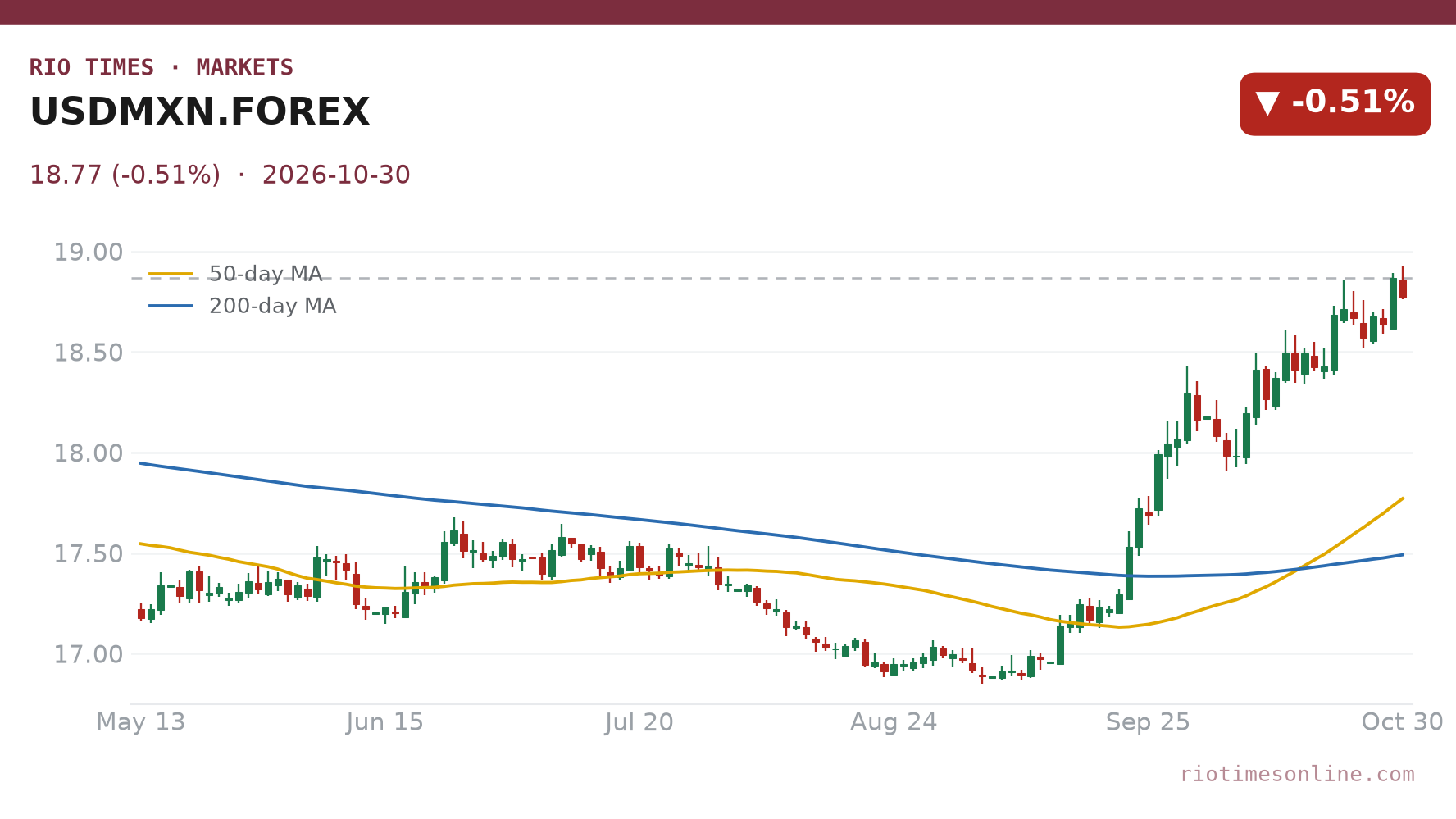
Mexico: The Peso and Remittances
Mexico is particularly exposed because the United States is its dominant trading partner. The peso can react immediately to changes in US yields because it is widely used in global carry trades, where investors borrow or hold lower-yielding currencies and buy higher-yielding Mexican assets.
When US yields rise sharply, the carry advantage narrows and positions can be reduced, putting downward pressure on the peso. US employment data also affect Mexico through remittances.
A resilient US labour market supports employment and income for Mexican workers in the United States, which can sustain dollar transfers to families in Mexico; those dollars increase household purchasing power and are converted partly into pesos for consumption, housing and debt payments.A weaker US labour market could eventually slow remittance growth, although transfers usually respond with a lag and depend on the sectors employing migrants, exchange rates and immigration conditions.For investors, a hot US report may mean higher US yields, a stronger dollar and a weaker peso, but also continued US demand for Mexican exports and firm remittances in the near term.A soft but orderly report could lower yields and soften the dollar, supporting the peso and local bonds, while a very weak report could trigger an initial peso rally that reverses if markets move from “Fed easing” to “US recession” and seek dollars.
Brazil: The Real and Local Bonds
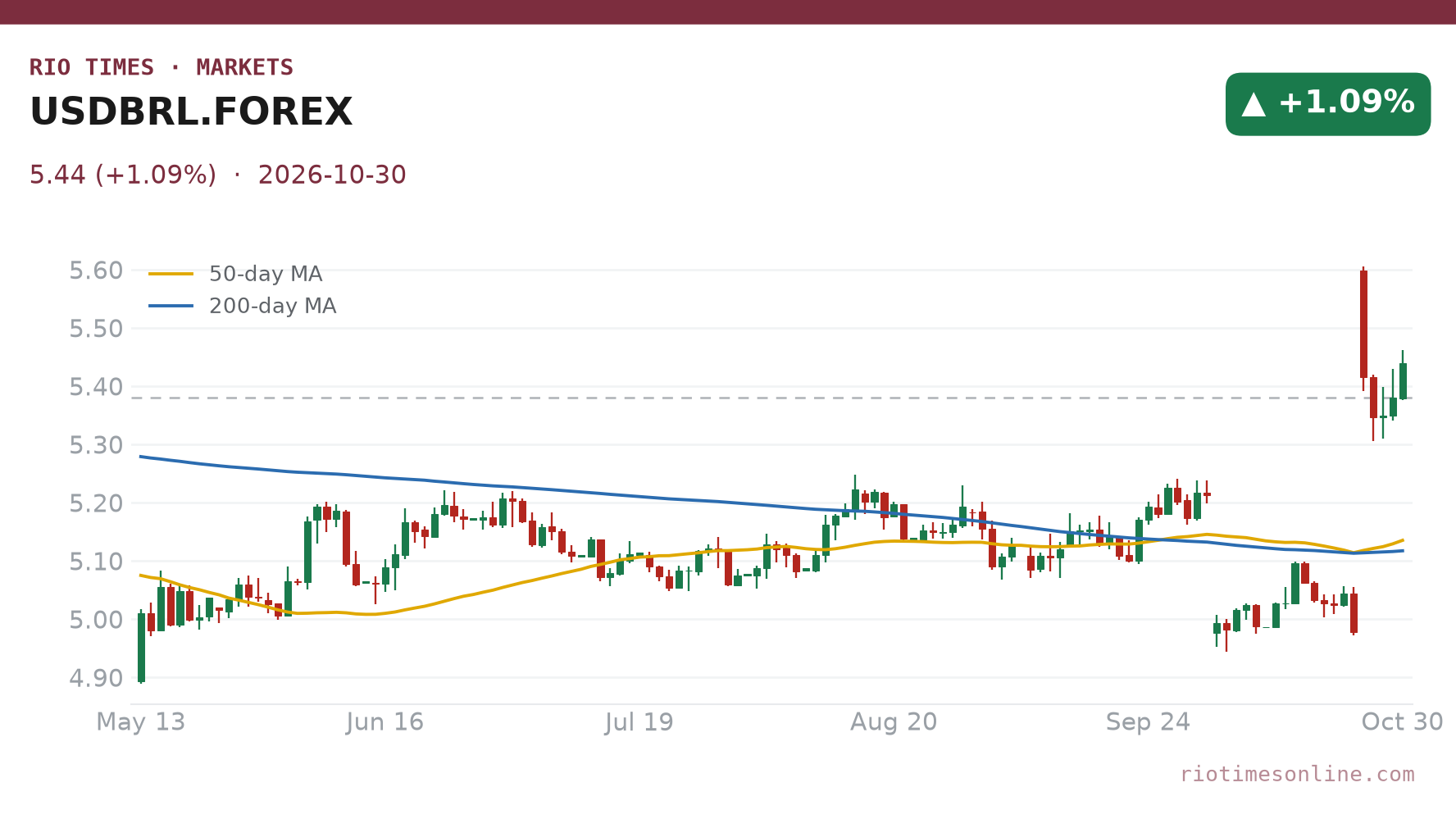
Brazil’s real typically reacts through global dollar liquidity, Treasury yields, commodity prices and domestic risk premiums. A hawkish US repricing can pressure the real even when Brazil’s own interest-rate differential remains large, and local government bonds may sell off because foreign investors require a higher yield to compensate for a stronger dollar and currency volatility.
Brazil can nevertheless diverge from Mexico. A strong US employment report may improve expectations for global activity and commodity demand, supporting Brazilian exporters and the real, an effect most likely when the report is strong without producing a large inflation-driven increase in US yields.
If payrolls are strong and wages accelerate, the rate channel is more likely to dominate, weakening the real and pressuring local bonds. The same data can therefore produce different moves in Mexico City and São Paulo, depending on whether growth optimism or Fed repricing wins the day.
What a Strong or Weak Report Would Change
A strong report would matter most if it beats expectations across several components: payroll growth, average hourly earnings, unemployment and labour-force participation, job openings and hires, initial and continuing claims, and revisions to earlier payroll figures. A payroll beat accompanied by rising wages and falling unemployment would challenge the idea that the Fed can ease quickly.
The October statement said inflation “remains elevated” and that more information would guide the next step; stronger labour data would add to that case for caution. The market response would likely be higher short-term Treasury yields, a firmer dollar and pressure on Latin American currencies and bonds.
A weak report could strengthen expectations of Fed easing, lower Treasury yields and support the peso, real and local-currency debt. The most constructive combination for emerging markets would be slower payroll growth, stable or falling unemployment rather than a sudden jump, moderating wages, lower job openings and subdued claims without evidence of a sharp recession.
The worst combination for risk assets would be sharply weaker payrolls, rising unemployment, falling hours and downward revisions. In that case, markets could seek dollar liquidity even as Fed-cut expectations increase, producing a sell-off in Latin American assets despite lower US rates.
The Actors and What Each Wants
The Federal Reserve, through its rate-setting Federal Open Market Committee, held its key rate at 3.75%–4.00% on 28 October 2026. Two committee members, Lisa Cook and Beth Hammack, voted for a quarter-point increase, and the next meeting is on 8–9 December 2026.
The Fed wants evidence that inflation is returning to target without a sharp rise in unemployment, which makes the jobs data a key input into its next decision.Banco de México, Mexico’s independent central bank, sets Mexican interest rates.It must balance peso stability, inflation control and financial conditions, all of which are affected by US rate expectations and dollar strength.Global investors, from US asset managers to Mexican pension funds, want to know whether the carry trade remains attractive and whether local-currency bonds will hold their value.
Their positioning can amplify or cushion the moves triggered by each US release.
What It Means for You
For a US investor, the jobs week is a reminder that Latin American exposure is partly a bet on US monetary policy. If you hold Mexican or Brazilian assets, expect currency swings this week, because each release can reprice the dollar and emerging-market risk within minutes.
For US businesses with Mexican supply chains, a strong US labour market supports demand for Mexican exports and sustains remittance flows, but it can also raise the dollar and make peso-denominated costs cheaper in dollar terms. A weak report may ease dollar pressure but eventually slow US demand for Mexican goods.
For Latin American households receiving remittances, the direction of US employment matters more than the weekly noise. A resilient US labour market supports dollar transfers, while a sustained slowdown would eventually reduce household purchasing power in Mexico and Central America.
What Is Not Known
The exact payroll gain, wage growth and unemployment rate for October 2026 will not be known until November 6, and the market’s interpretation may differ from the headline. A softer report that causes the dollar to rise can reflect recession fear rather than an easing impulse.
The size of payroll revisions is also unknown, and revisions can change the picture of labour-market momentum. We also do not know how markets will weigh two Fed officials who wanted a rate rise at the October meeting against a softer jobs print.
What to Watch
Watch the surprise relative to consensus, not only the headline number, and pay attention to average hourly earnings, unemployment and participation, which distinguish weaker demand from changes in labour supply. Payroll revisions, private payrolls versus government payrolls, JOLTS quits and layoffs, and continuing claims all help judge the breadth of hiring.
The two-year Treasury yield and the dollar are the cleanest immediate gauges of Fed repricing, while the peso-dollar and real-dollar exchange rates should be watched alongside local bond curves rather than currencies alone. Remittance data, particularly for Mexico and Central America, will show how US employment conditions affect household dollar income.
Dated events from the verified calendar include: November 3, JOLTS for September 2026 at 10:00 a.m. Eastern Time; November 5, the first estimate of Productivity and Costs (output per hour worked) for Q3 2026 at 8:30 a.m. Eastern Time; November 6, Employment Situation for October 2026 at 8:30 a.m. Eastern Time; November 10, Consumer Price Index for October 2026 at 8:30 a.m. Eastern Time; and December 4, Employment Situation for November 2026 at 8:30 a.m. Eastern Time.
Frequently Asked Questions
Why do US jobs numbers move the Mexican peso?
US jobs data change Federal Reserve rate expectations, which move Treasury yields and the dollar. Because the peso is widely used in carry trades, higher US yields reduce the carry advantage and can weaken the peso.
What is the US jobs report week in November 2026?
The week runs from November 2 to November 6, 2026, with JOLTS (a survey of job openings) on November 3, Productivity and Costs on November 5 and the Employment Situation on November 6 at 8:30 a.m. Eastern Time.
How do US jobs data affect remittances to Mexico?
A resilient US labour market supports employment and income for Mexican workers in the United States, sustaining dollar transfers to families in Mexico. A weaker US labour market could eventually slow remittance growth, usually with a lag.
What happens to the Brazilian real if US payrolls are strong?
A strong US payroll report can weaken the real if higher US yields and a stronger dollar dominate, but it can also support the real if the growth signal improves commodity demand. The outcome depends on whether Fed repricing or growth optimism wins.
What is the Federal Reserve’s current policy rate in October 2026?
The Federal Reserve held its key rate at 3.75%–4.00% on 28 October 2026, by 10 votes to 2. The next meeting is on 8–9 December 2026.
What should investors watch during US jobs week?
Investors should watch the surprise relative to consensus, average hourly earnings, payroll revisions, JOLTS quits and layoffs, continuing claims, the two-year Treasury yield and the dollar. the peso-dollar and real-dollar exchange rates should be watched alongside local bond curves.
Sources: US Bureau of Labor Statistics release schedule, November 2026; Federal Reserve statement, 28 October 2026; FOMC calendar; Polymarket (prediction markets); RT (financial data provider). Retrieved 31 October 2026.
This article was produced by The Rio Times’ automated newsroom system. How we use AI · Report an error · Editorial responsibility: Matthias Camenzind, Editor-in-Chief
LatAm Markets: Live Signals → — real-time movers, turnover leaders and FX across Latin America.