A Nazi submarine? Mystery for surprise discovery in Argentina
By Sandar Estrella Oporto
A research group claims to have discovered a submarine of German origin, a ship that has been sunk in Argentine waters since the end of World War II, and is located kilometers from the coast of the seaside resort of Quequén.
It is a work carried out by the trans-Andean group called Eslabón Perdido (Missing Link), which is led by the researcher specializing in the alleged arrival of Adolf Hitler in Argentina, Abel Basti, who shared the material found on his YouTube channel, the result of months of work.
In his words, he formed the group to search for Hitler’s submarines that would have arrived in Argentina in 1945, when World War II was ending.
Read also: Check out our coverage on Argentina
For his approach, Basti based himself on documents from the National Navy that reported the presence of German ships in Argentina during that year, where the country would have been the destination of the Germans to find refuge, where later the sinking of the ships would be prepared to hide the evidence.
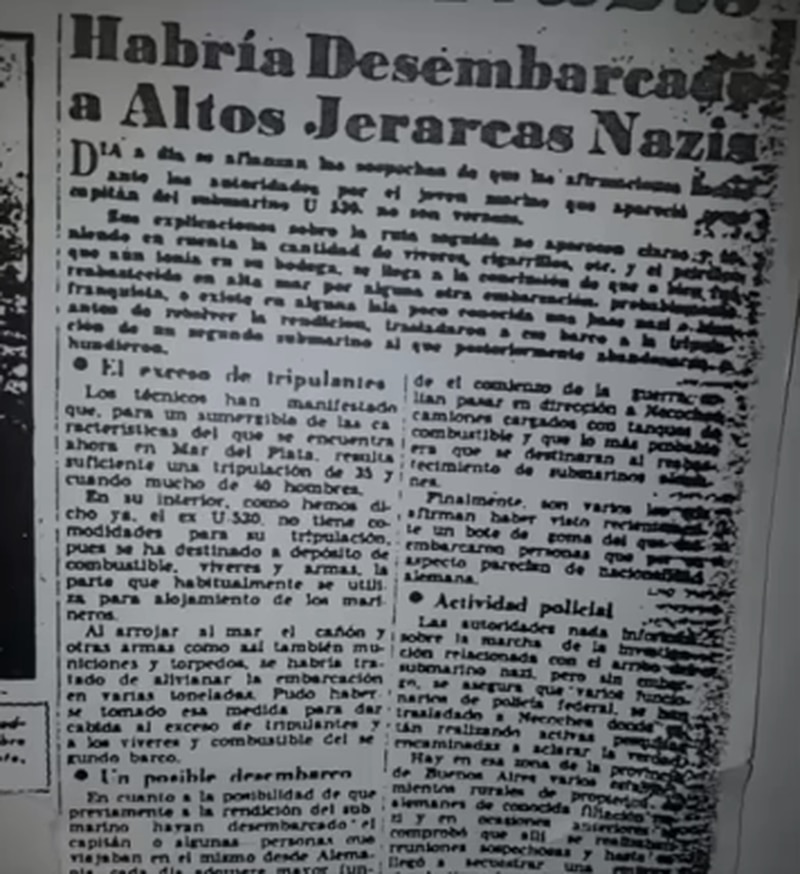
From Eslabón Perdido they also considered the existence of testimonies of fishermen and residents of the place collected by newspapers of the time related to the subject.
Abel Basti also highlighted the existence of declassified FBI documents that assure that Adolf Hitler escaped to Argentina in a transoceanic submarine.

THE SEARCH FOR THE MISSING LINK ON THE DISCOVERY IN THE ARGENTINE SEA
With such background, the group’s search focused on the area located 11 kilometers from the city of Necochea, in front of the beaches of Costa Bonita and Green Areas, where, according to the press of the time, a German landing took place carrying Nazi hierarchs.
After a year of searching, a shipwreck was identified, the one that was not registered, at a depth of 28 meters and about 4 kilometers from the coast.
After collecting the series of data, Abel Basti reported the finding to the Argentine Naval Prefecture on March 9 of this year.
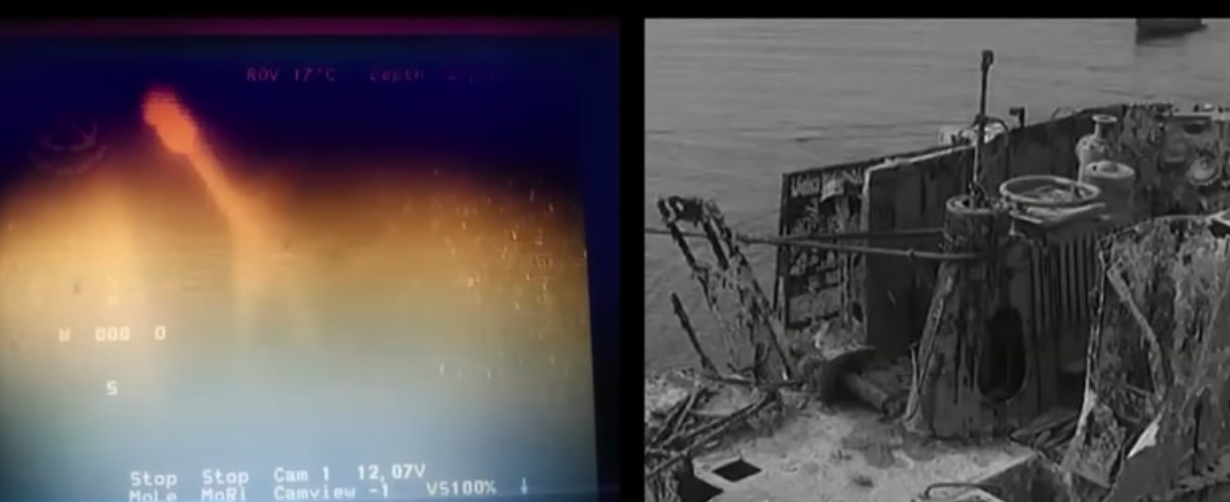
From the entity, an expedition was carried out to record the remains of the vessel using a remote underwater vehicle (ROV) and with the work of 12 deep divers.
The captured images show a destroyed ship and, after being analyzed by the agency, it was concluded that due to the damage it presented, it could not be determined if it was a ship or a submarine.
Not satisfied with the answer, the investigator turned to naval engineers Juan Martín Canevaro and Andrés Cuidet, who reviewed the footage and concluded that the identifiable parts of the ship confirmed that it was a submarine.
However, Eslabón Perdido also had the collaboration of the Italian Naval League, international experts specialized in identifying shipwrecks corresponding to the Second World War, who with their own expertise confirmed that it was a submarine.
In the Eslabón Perdido video, the investigator also points out that “the Italian expertise also adds a disturbing fact: the case shows signs of having been deliberately exploited, possibly with the aim of erasing evidence.”
The Argentine media Infobae contacted the Argentine Naval Prefecture, who assured that they corroborated the discovery of the structure and also carried out their own investigation in this regard.
Said medium also reported that the data collected was made available to the National Institute of Latin American Anthropology and Thought, dependent on the National Secretariat of Culture (INAPL) and the Archaeological and Paleontological Heritage Registration Center of the Province of Buenos Aires (CREPAP).
With information from La Tercera
More: Argentina news in English, every day from The Rio Times.
Read More from The Rio Times