VIETNAM · ANALYSIS
Key Facts
- What is happening Vietnam has approved a US$5 billion deep-water transshipment port at Can Gio, near Ho Chi Minh City, with a consortium led by VIMC, Saigon Port and MSC-linked TiL.
- Why it matters The port could give US importers more direct routing options from southern Vietnam and reduce dependence on Singapore for transshipment.
- The numbers The project covers approximately 571 hectares and has a total main berth length of about 7.5 km, targeting 4.8 million TEUs by 2030 and 16.9 million TEUs by 2047, at an approved cost of VND128,872 billion (about US$4.9 billion).
- Who is who The project involves Vietnam Maritime Corporation, Saigon Port Joint Stock Company and Terminal Investment Limited Holding S.A., the MSC-linked terminal arm.
- What to watch Whether construction starts by late 2026 or early 2027, and whether shipping lines commit to mainline calls before the 2030 first-phase target.
- What it means for you US importers sourcing from southern Vietnam could eventually see more direct sailings and lower feeder costs, but tariffs and origin rules will still determine final landed cost.
Can Gio Port is a planned US$5 billion deep-water transshipment hub near Ho Chi Minh City that could capture some Vietnam-bound container traffic now routed through Singapore. For US importers, it matters because it could reshape how Vietnamese exports reach American ports and alter the cost structure of Asian supply chains.
Vietnam has become one of Asia’s most important manufacturing alternatives for US companies seeking to diversify beyond China. This analysis explains what the Can Gio project is, who is behind it, and whether it can genuinely compete with Singapore and Vietnam’s existing Cai Mep complex, as reported in the Asia Intelligence Brief.
What Is Can Gio Port?
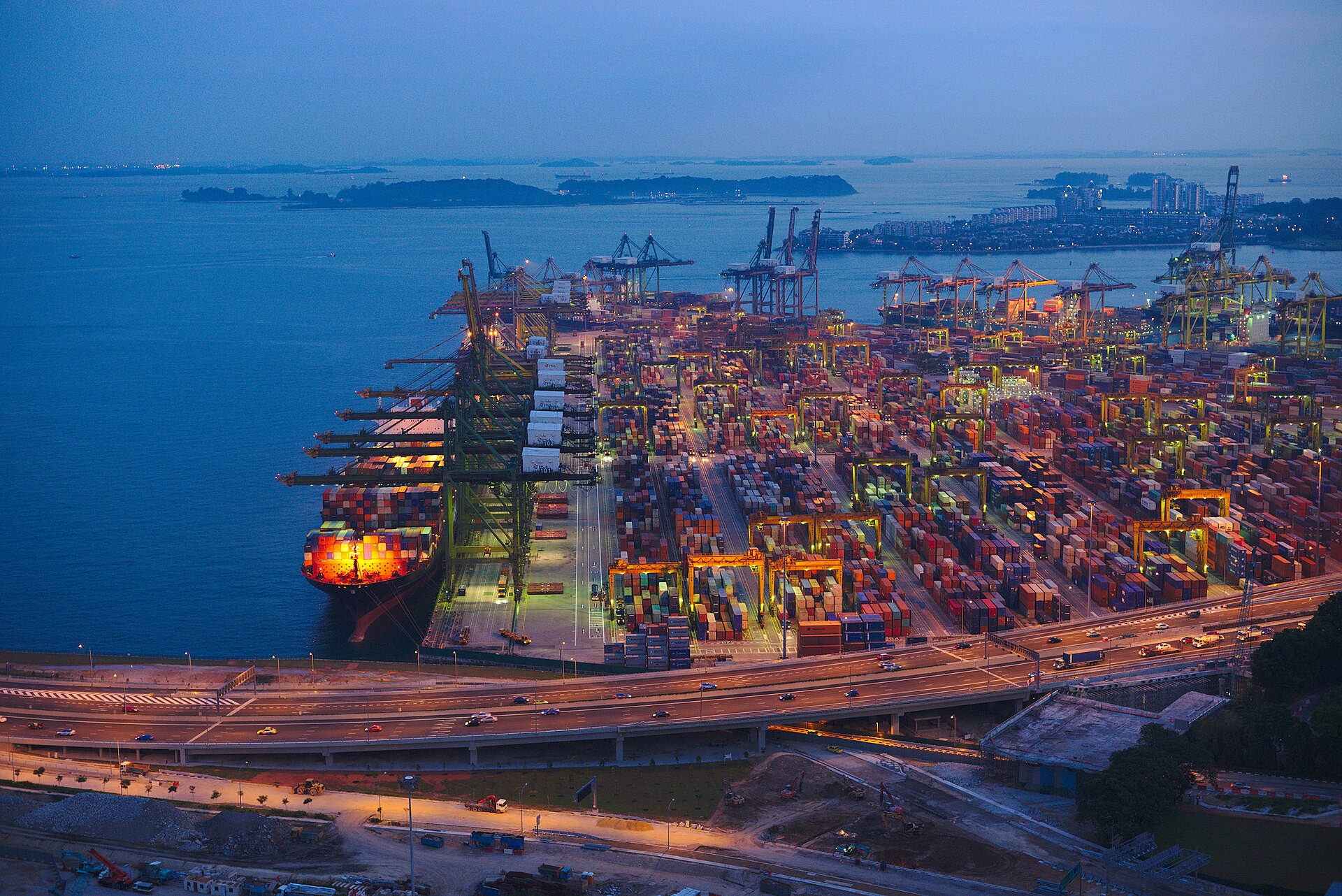
Can Gio International Transshipment Port is designed as a container relay hub, not simply another domestic gateway. Large intercontinental vessels would transfer containers to smaller feeder ships and barges for distribution around Southeast Asia.
The site sits in the Con Chó islet area of Thạnh An commune, Can Gio district, at the mouth of the Soài Rạp–Saigon maritime system. That location gives large ships access without sending them upriver through Ho Chi Minh City’s denser urban port area.
The approved concept covers approximately 571 hectares and has a total main berth length of about 7.5 km. It is designed to handle feeder ships of 10,000 to 65,000 tonnes and barges of up to 8,000 tonnes.
The planned capacity is unusually large. The first phase targets approximately 4.8 million TEUs by 2030, rising to about 16.9 million TEUs by 2047.
Those figures describe design ambitions, not guaranteed throughput.
Cost, Financing and Timeline
The latest approved investment figure is approximately 128.872 trillion dong, or nearly US$5 billion.
The project’s operating term is reported as 50 years.
The timeline has shifted as the project evolved. Prime Ministerial Decision No. 148/QĐ-TTg on January 16, 2025 gave in-principle approval, and Ho Chi Minh City approved the investor on April 29, 2026.
The project is expected to reach its full designed capacity of 16.9 million TEUs by 2047.
The Actors and What Each Wants
Vietnam Maritime Corporation, or VIMC, is the lead investor. It is Vietnam’s state-owned maritime corporation and wants to anchor a national transshipment hub that reduces dependence on foreign ports.
Saigon Port Joint Stock Company is a participant in the investor consortium. Its general director is Nguyễn Lê Chơn Tâm, and it brings local terminal and port-operating experience in the Ho Chi Minh City area.
Terminal Investment Limited Holding S.A., known as TiL, is a participant in the investor consortium. TiL is the terminal arm associated with MSC, the Mediterranean Shipping Company, and its presence gives the project a potential anchor operator with access to a major global network.
Ho Chi Minh City’s People’s Committee is the approving local authority.
MSC’s involvement is commercially important, but an investor relationship is not the same as a guaranteed volume commitment. The port will need long-term service schedules and sufficient vessel calls to achieve the planned throughput.
Can Gio Versus Singapore and Cai Mep
Singapore dominates regional transshipment because it combines a central Malacca Strait position, dense mainline and feeder connectivity, large-scale automation, and mature maritime services. Can Gio’s geographic advantage is different: it sits close to Vietnam’s largest manufacturing and consumption region.
That creates two possible commercial models. The first is Vietnam-centred transshipment, consolidating southern Vietnamese export and import cargo at Can Gio. The second is a regional relay hub, transferring cargo between China, Vietnam, Cambodia, Thailand, Malaysia, Indonesia and long-haul markets.
The first model is more defensible. The second would require shipping lines to alter established networks and shift cargo away from Singapore, Port Klang and Tanjung Pelepas.
Can Gio is therefore more likely to take selected Vietnam-related transshipment volumes from Singapore than to displace Singapore across the region. Singapore’s network effects are difficult to reproduce.
The most immediate competitive issue is not Singapore but Cai Mep–Thi Vai, Vietnam’s existing deep-water port complex in Ba Ria–Vung Tau. Cai Mep already handles direct calls by large container vessels and serves southern Vietnam’s industrial base.
Can Gio could offer closer proximity to Ho Chi Minh City’s metropolitan market and a purpose-built transshipment layout. But the two ports could also compete for the same cargo and shipping-line services, and Vietnamese authorities previously required additional analysis of the project’s economic impact and possible conflict with existing ports.
The commercial question is whether Can Gio will generate genuinely new transshipment traffic or mainly redistribute containers that Cai Mep and existing terminals could already handle. If the latter, the project’s returns may be lower than the headline capacity suggests.
The US Angle: Supply Chains and Tariffs
Can Gio’s importance to US importers arises from Vietnam’s role as a manufacturing and sourcing alternative within Asian supply chains. US companies increasingly use Vietnam for garments, footwear, furniture, electronics, machinery and other manufactured goods.
A large southern logistics hub could improve schedule options and reduce dependence on intermediate transshipment through Singapore or other foreign ports. Potential benefits include more direct or more frequent services from southern Vietnam to the US West and East coasts, lower feeder dependence for factories around Ho Chi Minh City and the Mekong region, and more competition among terminals and shipping lines.
However, a port cannot offset tariffs or weak demand. For US importers, the delivered cost still includes US tariff treatment, ocean freight and surcharges, port and terminal fees, inland transport in Vietnam and the United States, customs compliance and origin documentation, and inventory and transit-time risk.
A transshipment hub may improve routing economics, but it does not determine whether goods qualify as Vietnamese-origin products. US importers will continue to scrutinise rules of origin, production records, supplier documentation and possible anti-circumvention exposure, especially where Vietnam is used for final assembly after substantial Chinese inputs.
The port could also make Vietnam more attractive as a supply-chain location if it supports predictable direct services. Yet US trade policy can produce the opposite effect: if tariff uncertainty or origin enforcement raises the cost of Vietnamese production, additional port capacity may not translate into equivalent export growth.
Main Risks
The first risk is overcapacity. A 16.9-million-TEU target requires sustained growth in regional trade and a large share of transshipment cargo, not merely Vietnam’s domestic export growth.
The second is competition from established hubs. Singapore, Port Klang and Tanjung Pelepas already offer dense networks and mature maritime ecosystems, and Can Gio must persuade carriers to change schedules, not simply offer new berths.
The third is cannibalisation of Cai Mep. If Can Gio diverts existing Vietnamese cargo rather than creating new traffic, Vietnam may gain infrastructure but not proportional national logistics value.
The fourth is financing and execution. Higher interest rates, currency risk, construction inflation and delays in land or water-area handover could raise the effective cost well beyond the headline figure.
The fifth is dredging and marine engineering. A port designed for vessels of up to 250,000 tonnes needs dependable channel depth, turning basins, breakwaters, navigational systems and maintenance dredging, and these costs recur throughout the operating life.
The sixth is environmental and legal constraints. Can Gio is associated with a sensitive coastal and mangrove environment, and construction, dredging, sediment disposal, vessel traffic and industrial development will face environmental scrutiny.
The seventh is landside congestion. A maritime hub does not work without roads, waterways, rail connections where available, customs systems, depots, warehouses and truck-management capacity.
The eighth is cargo concentration. The project’s dependence on a small number of shipping lines or cargo types could make it vulnerable to schedule changes or shifts in trade policy.
What It Means for You
For a US importer sourcing from southern Vietnam, Can Gio Port could eventually mean more direct sailings, shorter feeder legs and potentially lower logistics costs. It could also mean more competition among terminals and shipping lines serving the Vietnam–US trade lane.
But the port will not change tariff treatment or origin rules. US importers should continue to treat Vietnam as a sourcing location whose total landed cost depends on trade policy, carrier schedules and inland logistics, not just port capacity.
For US investors and executives watching Asian infrastructure, Can Gio is a test case of whether Vietnam can build a genuinely competitive transshipment hub without cannibalising its existing ports or overbuilding capacity.
What Is Not Known
The published sources do not identify a port tariff, pilotage schedule, cargo-handling fee schedule or immigration fee schedule specifically for Can Gio Port.
The available official reports do not provide a confirmed construction-start date, environmental approval date, land-and-water handover date, marine-works contract date or port-opening date.
It is also not known whether shipping lines will commit to mainline calls at Can Gio before the 2030 first-phase target. The presence of TiL and MSC is a signal, but it is not a binding volume commitment.
What to Watch
Watch whether construction actually starts by late 2026 or early 2027.
Watch for the first binding carrier commitments. The commercial viability of Can Gio depends on shipping lines agreeing to route mainline vessels there, not just on the investor consortium’s plans.
Watch for environmental approvals and land-and-water handover dates. Delays in these steps could push the 2030 first-phase target further out.
Watch for any signs of volume diversion from Cai Mep. If Can Gio begins to take cargo that Cai Mep already handles, the national logistics value of the project will be lower than the headline capacity suggests.
Watch US trade policy toward Vietnam. Tariff decisions and origin enforcement will affect whether additional port capacity translates into export growth for US-bound cargo.
Frequently Asked Questions
What is the Can Gio Port project?
Can Gio International Transshipment Port is a planned deep-water container hub near Ho Chi Minh City, Vietnam. It is designed to transfer containers between large intercontinental vessels and smaller feeder ships for distribution around Southeast Asia.
How much will Can Gio Port cost?
The latest approved investment figure is approximately 128.872 trillion Vietnamese dong, or nearly US$5 billion.
Will Can Gio Port replace Singapore?
Can Gio is more likely to take selected Vietnam-related transshipment volumes from Singapore than to displace Singapore across the region. Singapore’s network effects, maritime services and established connectivity are difficult to reproduce.
Who is investing in Can Gio Port?
The investor consortium comprises Vietnam Maritime Corporation, Saigon Port Joint Stock Company and Terminal Investment Limited Holding S.A., the MSC-linked terminal arm.
When will Can Gio Port open?
The project is expected to reach its full designed capacity of 16.9 million TEUs by 2047.
How does Can Gio Port affect US importers?
US importers sourcing from southern Vietnam could eventually see more direct sailings and lower feeder dependence. However, tariffs, origin rules and inland logistics will still determine the final landed cost of Vietnamese goods.
Sources: riotimesonline.com, logistics.gov.vn, moc.gov.vn, baochinhphu.vn, baodautu.vn, logistics.gov.vn. Retrieved 29 October 2026.
This article was produced by The Rio Times’ automated newsroom system. How we use AI · Report an error · Editorial responsibility: Matthias Camenzind, Editor-in-Chief
LatAm Markets: Live Signals → — real-time movers, turnover leaders and FX across Latin America.