U.S. Dollar Closes Nearly Unchanged Amid Global Interest Rate Speculations
On a subtly balanced Tuesday, the U.S. dollar closed almost unchanged at R$5.61 against the Brazilian real, despite daily fluctuations. This calm closing masked a day charged with anticipation.
Investors adjusted their strategies based on expected monetary policy shifts from the Bank of Japan, the U.S. Federal Reserve, and Brazil’s Central Bank.
From dawn, the financial world buzzed with speculation about the looming announcements, each capable of shifting market dynamics.
Influenced by this anticipation, investors curbed their risk appetites. A decline in U.S. Treasury yields also helped temper the dollar’s advance against the real.
By late afternoon, the key ten-year Treasury yield had dropped three basis points to 4.145%, reflecting a cautious market mood.
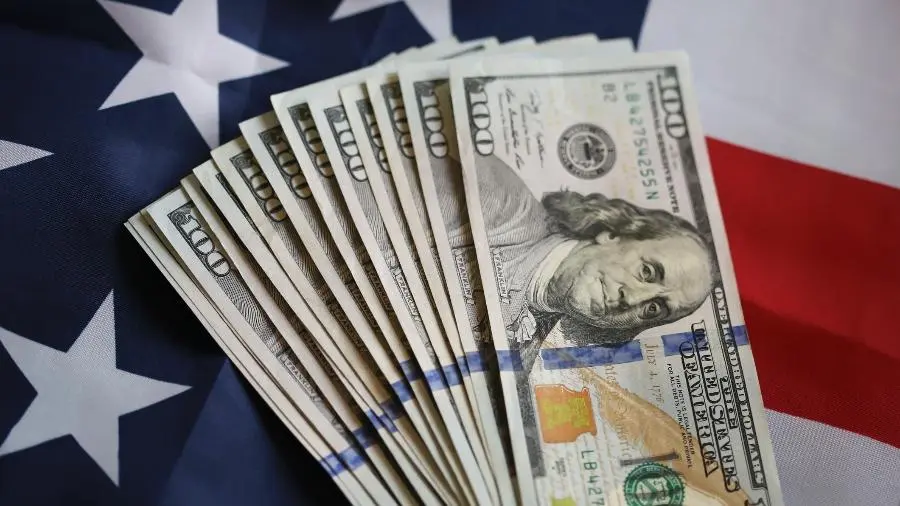
The spot dollar slightly decreased by 0.15%, ending at R$5.617 for both buying and selling. In contrast, on the B3 exchange, near-term dollar futures rose 0.06%, reaching 5,621 points.
This trading reflects the annual adjustment with the Ptax rate, a benchmark exchange rate set by Brazil’s Central Bank based on spot market rates.
This rate is vital for future contract settlements. Traders, anticipating a rate hike, pushed the dollar up early in the day.
Impact on Markets and Currencies
Globally, all eyes are on the Federal Reserve, which is expected to hold interest rates steady. Yet, markets predict a possible rate cut at September’s meeting.
Lower Fed rates usually lessen the dollar’s appeal by reducing Treasury yields, affecting its global attractiveness.
Investors eagerly await insights from Jerome Powell, Fed Chairman, about when rate cuts may occur.
Meanwhile, the Bank of Japan contemplates raising interest rates, which last week boosted the yen’s value.
This change pressures currencies from emerging markets like Brazil and influences the carry trade strategy.
This strategy involves borrowing at low interest rates to invest in higher-yielding areas, which may reverse if the yen strengthens.
In Brazil, the Central Bank’s Monetary Policy Committee (Copom) will announce its decision, with expectations for the Selic rate to remain at 10.50% per annum.
However, this decision will crucially impact local investments and economic stability.
As global central banks navigate complex monetary terrains, their decisions reverberate across international markets. these decisions shape investment strategies and economic projections.
This convergence of events highlights the intricate web of global finance, where a single policy shift can ripple across continents, influencing economic outcomes worldwide.
This article was produced by The Rio Times’ automated newsroom system. How we use AI · Report an error
LatAm Markets: Live Signals → — real-time movers, turnover leaders and FX across Latin America.
Read More from The Rio Times