Supreme Court’s Own Authority on Trial as Justice Fux Challenges Bolsonaro Verdict
Supreme Court Justice Luiz Fux declared Wednesday that Brazil’s highest court lacks jurisdiction to judge former President Jair Bolsonaro in the coup conspiracy case.
The justice argued that new rules allowing former officials to be tried at the Supreme Court were introduced only after the alleged offenses occurred. Bolsonaro, 70, faces five charges that could result in more than four decades in prison.
Prosecutors accuse him of leading a “central nucleus” that attempted to subvert the 2022 election, plotted against President Luiz Inácio Lula da Silva, and attacked Brazil’s electronic voting system before the January 8, 2023 riots.
So far, two justices — Alexandre de Moraes and Flávio Dino — have voted for conviction on all counts against Bolsonaro and seven co-defendants, including former ministers and military commanders.
Fux, however, rejected key charges, describing the case as a temporary conspiracy rather than a structured criminal organization. He drew parallels with the Mensalão scandal, where similar accusations were dismissed.
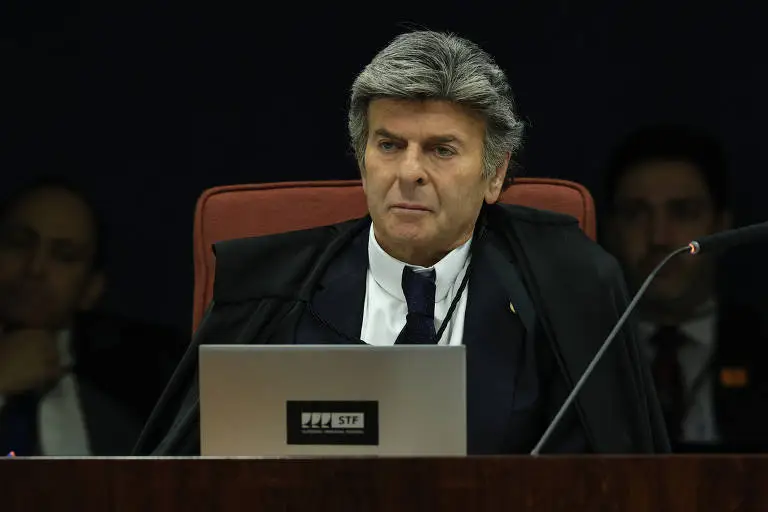
The justice also questioned the fairness of the trial’s pace, pointing to the 161-day gap between charges and hearings despite the vast evidence base.
Bolsonaro Coup Trial Tests Court’s Limits and Democratic Legitimacy
Federal Police seized 70 terabytes of data from 1,200 devices, containing 255 million messages. Fux warned this “tsunami of data” hindered defense preparation.
He further argued that property damage charges should be absorbed into more serious crimes, a distinction that could lower potential sentences even if convictions are upheld.
Brazil’s Prosecutor General has asked for maximum penalties exceeding 40 years. The proceedings mark the first time a former Brazilian president faces coup-related charges in a democratic setting.
Constitutional scholars note that Fux’s intervention highlights separation-of-powers concerns, raising doubts over whether the court exceeded constitutional limits through retroactive rule changes.
Two remaining justices, Cármen Lúcia and panel president Cristiano Zanin, are expected to cast decisive votes by Friday.
The trial has become not only a judgment of Bolsonaro but also a test of the Supreme Court’s legitimacy amid ongoing debates about democracy and judicial authority in Brazil.
More: Brazil news in English, every day from The Rio Times.
This article was produced by The Rio Times’ automated newsroom system. How we use AI · Report an error
Read More from The Rio Times