Strategic Defense Pact: Philippines and Japan Unite Against China
The Philippines and Japan have signed a pivotal troop access agreement to counter China’s expanding influence in the Pacific.
This reciprocal access agreement (RAA) facilitates troop deployments between the two nations, marking a significant advancement in their defense cooperation.
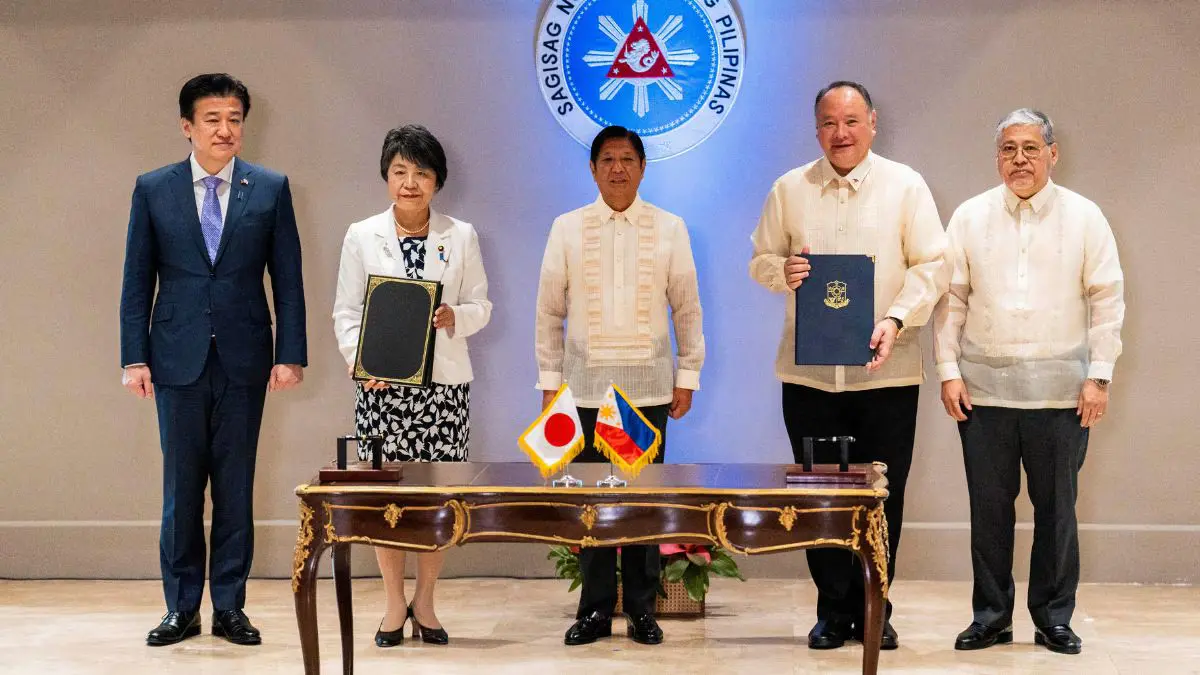
Philippine Defense Secretary Gilbert Teodoro and Japanese Defense Minister Minoru Kihara formalized the agreement in Manila.
Once ratified by the Philippine Senate and Japan’s National Diet, it will allow joint military exercises between Japan’s Self-Defense Forces and the Armed Forces of the Philippines.
This aligns with both nations’ aims to maintain a rules-based international order in the South China Sea and enhance regional stability.
This pact emerges amidst escalating maritime tensions, with China asserting broad territorial claims in the South China Sea.
The Philippines, led by President Ferdinand Marcos Jr., has been fortifying its defense alliances. The country holds similar agreements with the United States and Australia.
Japan, with existing pacts with the UK and Australia, acts as a counterbalance to China’s regional ambitions.
Strategic Alliances in the Indo-Pacific
Japanese Foreign Minister Yoko Kamikawa emphasized the necessity of peace and stability in the Indo-Pacific, opposing any forceful changes to the status quo.
In addition, the RAA grants exclusive jurisdiction over visiting forces, addressing concerns raised by past incidents involving foreign troops in the Philippines.
Chinese officials have expressed apprehensions about the agreement, urging that it should not jeopardize regional peace or target any third party.
However, both the Philippines and Japan remain steadfast against China’s assertive actions.
Understanding the broader context, this agreement signifies a shifting geopolitical landscape in East Asia. Alliances are fortifying to counter China’s influence.
The pact strengthens bilateral military cooperation and signals a united front among regional allies committed to international law and security.
This development matters as it impacts global security and stability. As China grows more assertive, such alliances are crucial for maintaining balance and preventing conflicts.
In short, this agreement reflects a strategic shift, highlighting the importance of international cooperation against aggressive territorial claims.
This article was produced by The Rio Times’ automated newsroom system. How we use AI · Report an error
Read More from The Rio Times