
Key Facts
- Steel ETF: The SLX steel-producers fund fell 0.83% to US$93.76, a six-month low.
- Brazil: Brazilian steelmaker Gerdau rose 0.71% to US$4.27; rival CSN gained 1.29%.
- Mexico: Ternium, a Mexican steelmaker, fell 1.18% to US$47.87 despite record third-quarter Mexican shipments.
- Cause: The S&P 500 fell 1.03% and the VIX jumped 11.13% to 25.46, so investors sold cyclical shares.
- US data: Industrial production fell 0.4% in October against a 0.1% rise expected (RT economic calendar).
- Prediction markets: Polymarket, a real-money prediction market, prices a 0.25-point US Federal Reserve rate rise in December at 93.5% (US$37.3 million traded, 7:40 p.m. ET, 17 November).
Today’s Focus
Steel shares fell for a fourth day on Tuesday, November 17, 2026. The steel-producers ETF closed at its lowest in at least six months, 9.33% down over 20 sessions.
The cause is an uneasy mix. Wall Street wobbled, US bond yields rose, and Brazil’s mills are still fighting cheap imports.
Mexico tells the opposite story. Ternium is gaining market share at home, and its shares still fell with the global tide.
What matters today. Latin American steel is splitting in two: Mexico is winning against imports, Brazil is not yet, and a nervous global market punishes both.
01 The session in one read
Think of the steel ETF as a thermometer for global construction and manufacturing. On Tuesday, November 17, 2026 it read -0.83%, a fourth fall in a row.
The surprise was at the Latin American level. Gerdau (+0.71%) and CSN (+1.29%) edged up, while Ternium (-1.18%) slipped despite excellent results.
Our best-supported reading is that the market is selling steel as a cyclical bet on global growth, while company fundamentals diverge. Mexico’s import curbs are working and Brazil’s are still leaky, so the question is whether Brazil’s quota tariff can stem imports before debt-laden producers like CSN run out of room.
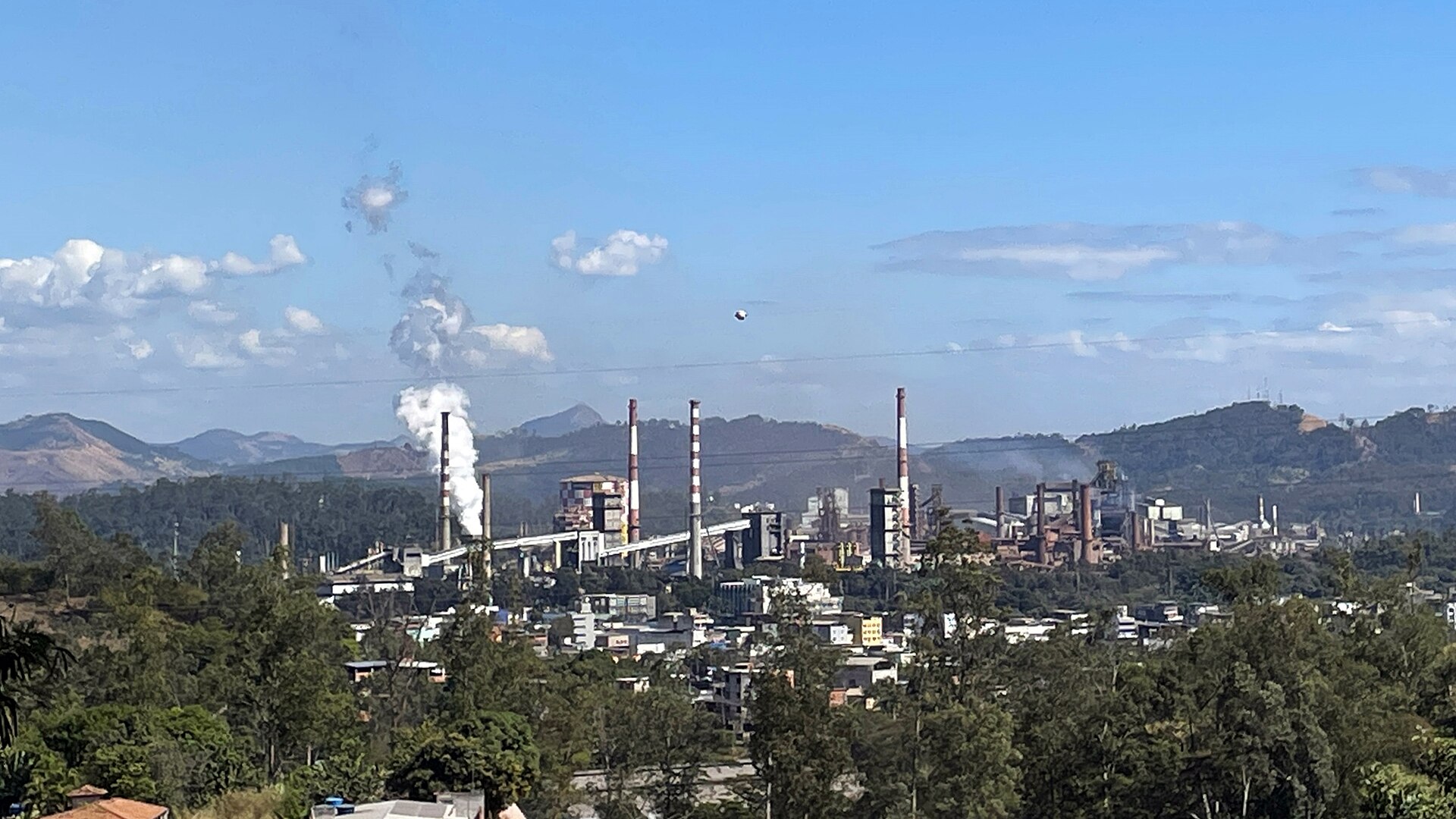
02 The board
Brazil’s two names rose, but only as a pause in a long fall. CSN’s ADR, an overseas-traded receipt for its Brazilian shares, closed at US$0.628, a whisker above its 12-month low of 0.62 set the day before.
Ternium, the Mexican-Argentine producer, closed at US$47.87. Gerdau, Brazil’s biggest maker of construction steel, closed at US$4.27.
| Asset | Level | Change |
|---|---|---|
| Steel (SLX ETF) | US$93.76 | -0.83% |
| Gerdau | US$4.27 | +0.71% |
| CSN (ADR) | US$0.628 | +1.29% |
| Ternium | US$47.87 | -1.18% |
Source: RT close, 2026-11-17. Where a commodity has no spot feed, an exchange-traded tracker or leading producer is shown as a labelled proxy.
Live Market IntelligenceThe live market board
Rio Times · Live Market Intelligence
Latin America — Cross-Market Board
| Instrument | Last | Change | YoY | Prev. | High | Low | Volume |
|---|---|---|---|---|---|---|---|
| IBOV | 169,816.64 | +0.31% | +8.17% | 169,295.41 | 171,750 | 169,300 | — |
| IPSA | 10,477.22 | -0.46% | — | 10,525.26 | 10,576 | 10,414 | — |
| IPC MEX | 71,365.93 | +0.23% | +13.56% | 71,204.98 | 71,447 | 70,307 | 172,011,187 |
| MERVAL | 2,848,945 | — | — | 2,848,945 | — | — | — |
| COLCAP | 2,452.46 | -0.02% | — | — | — | — | — |
| USD/BRL | 5.78 | -0.10% | +8.41% | 5.78 | 5.78 | 5.77 | — |
| EUR/BRL | 6.35 | +1.76% | +2.84% | 6.24 | 6.35 | 6.35 | — |
| USD/MXN | 18.42 | -0.50% | -0.04% | 18.52 | 18.43 | 18.40 | — |
| USD/CLP | 992.33 | -0.72% | +7.47% | 999.55 | 999.28 | 990.53 | — |
| USD/COP | 3,304 | -0.42% | -11.99% | 3,318 | 3,304 | 3,304 | — |
| USD/PEN | 3.41 | +0.05% | +1.52% | 3.41 | 3.45 | 3.41 | — |
| USD/ARS | 1,552 | +0.14% | +11.90% | 1,550 | 1,552 | 1,552 | — |
| USD/UYU | 40.61 | +3.40% | +3.45% | 39.27 | 40.61 | 40.26 | — |
| USD/PYG | 6,212 | +3.22% | -10.33% | 6,018 | 6,212 | 6,031 | — |
| USD/BOB | 11.64 | +2.89% | +72.14% | 11.31 | 12.00 | 11.64 | — |
| USD/DOP | 60.27 | +1.93% | -5.09% | 59.13 | 60.42 | 60.14 | — |
| USD/CRC | 441.73 | +1.57% | -9.63% | 434.89 | 450.45 | 441.73 | — |
| USD/GTQ | 7.64 | +3.17% | +1.99% | 7.41 | 7.64 | 7.64 | — |
03 Why it moved
First and heaviest, a risk-off market. The S&P 500 fell 1.03% and the VIX, Wall Street’s fear gauge, rose 11.13% to 25.46. Since early November the 10-year US Treasury yield has climbed from about 4.8% to about 5.1%, and the dollar index rose 1.34%, which makes growth-sensitive shares like steel costlier to hold. Confidence: medium-high.
Second, imports. Brazil charges a 25% tariff on above-quota imports (imports beyond a set quantity) of 19 steel products, renewed in late May 2026 to June 2027, and has five-year anti-dumping duties (extra taxes on goods sold below fair price) on Chinese flat steel and wire rod. Still, imports remain a problem for Brazilian mills. Confidence: medium.
Third, Mexico’s US problem. The US charges tariffs on steel imports under Section 232, a US trade law on national security, and Ternium says Mexican prices stay well below US levels until it is lifted, with no date set for a deal. That explains why record results did not stop Ternium falling with the market. Confidence: medium.
US data were mixed on Tuesday: October industrial production fell 0.4% against a 0.1% rise expected, capacity utilisation (the share of factory capacity in use) slipped to 76.4% from 76.8%, and the home-builder sentiment index of the National Association of Home Builders (NAHB) fell to 25 from 29 (RT economic calendar).
The usual drivers disagree a little. Oil was up 0.15%, and gold fell 0.13%, so there was no flight to metals. The fall looks like portfolio de-risking, not a steel-specific shock.
04 The trend behind it
This is a continuation. SLX has fallen 5.74% in five sessions, 9.33% in 20 and 12.9% in 60, and is 17.4% below its high of 113.57 on 2026-06-02. It is still 23.7% above its low of 75.82 on 2025-11-20.
Gerdau lost 18.51% in 20 sessions after peaking on 2026-10-20, a drop that tracks Brazilian doubts that construction demand can lift long-steel prices. CSN lost 45.86% over the same 20 sessions.
History offers a mild comfort, not a forecast. In our own records since 2007 there were 70 earlier cases of steel falling this far in 20 sessions; 38 of them, or 54%, were higher 20 sessions later, with a median of +0.5% and a worst case of -37.5%.
05 What it means for Latin America
Brazil is the loser in this phase. Its mills produce for a home market where imports are a constant threat, and a stronger dollar and higher US yields add to debt costs for indebted groups. Builders and carmakers gain from cheaper steel, but local producers and their investors do not.
Mexico is the winner at home. Ternium shipped a record 2.18m tons there, 18% more than a year earlier, and says most of the growth came from taking share from imports.
For a foreign investor, the lesson is that steel here is a policy trade as much as a growth trade. Protection works where authorities enforce it.
06 The names to watch
Ternium made a profit of US$368m in the third quarter, against a loss of US$270m a year earlier, and expects fourth-quarter adjusted EBITDA (a measure of operating profit) in line with the third. It also foresees strong domestic sales and pricing through the first half of 2027.
Gerdau and CSN carry the Brazilian risk. Gerdau is the cleaner balance sheet, with its fall tied to construction doubts, while CSN is a leveraged bet on a rescue from duties and cheaper credit.
07 What would end it
The first level to watch is the 12-month low of 75.82 for SLX, with 113.57 as the ceiling. A recovery would need calmer bond yields and a steadier Wall Street, since talk of a possible Fed rate hike in December keeps pressure on risk assets.
For Brazil, the test is whether imports fall under the quota tariff that runs to June 2027. For Ternium, it is a US-Mexico deal that lifts the US steel tariff; no date is set. Does the fall stop? Not before yields and fear ease.
08 What to watch
- US yields: The 10-year Treasury yield at about 5.1% is the main brake on steel shares. A drop would help.
- VIX: The fear gauge at 25.46 shows how nervous investors are. A fall back would lift cyclical stocks.
- Brazil imports: Watch whether the 25% over-quota tariff slows imports into Brazil.
- US-Mexico steel talks: Any date for lifting the US steel tariff would be a clear positive for Ternium.
What Prediction Markets Say
Polymarket, where users bet real money, lists a market on the US Federal Reserve’s December decision, with US$37.3 million traded as of 7:40 p.m. ET, 17 November 2026. It prices a 0.25-point rise at 93.5%, a 0.5-point or larger rise at 3.9%, no change at 3.2%, a 0.25-point cut at 0.4% and a 0.5-point or larger cut at 0.2%.
These prices are bets, not polls. They show traders expect the Fed, the US central bank, to raise rates again in December, which would lift the dollar and US yields and weigh on steel producers.
Why we show this: prediction markets turn real-money bets into a live probability that moves within minutes of the news, which is why investors, campaigns and newsrooms in the United States now follow them closely. We show them next to polls and official results, never instead of them.
Frequently Asked Questions
Why did Latin American steel stocks move on Tuesday, November 17, 2026?
Global risk aversion hit the steel ETF, while Brazilian names bounced from deep lows and Ternium slipped despite strong results.
Why is Brazil’s steel industry struggling?
Cheap imports weigh on its home market, and CSN carries heavy debt.
Why is Ternium doing better?
Its Mexican shipments hit a record 2.18m tons as import curbs shifted sales to local mills.
Is the fall over?
Not yet. Our records show recoveries after similar drops in 54% of cases, but with a worst case of -37.5%.
Market data: The Rio Times
This article was produced by The Rio Times’ automated AI newsroom. Editorial responsibility: Matthias Camenzind, Publisher and Editor-in-Chief. The Rio Times also runs Ask Rio Times, which answers from 100,000+ of our own articles, the daily Latin America Power Map, and prediction-market odds on elections and markets.. How we use AI · Report an error
LatAm Markets: Live Signals → — real-time movers, turnover leaders and FX across Latin America.