Eskom Has 4,274MW of Spare Power
South Africa’s power utility says its fleet now has room to spare and aims to end targeted cuts by March 2027, while lawmakers scheduled a briefing on pollution at Kusile.

Business: South Africa
Eskom, South Africa’s state power utility, said on Friday 20 November 2026 that it has about 4,274 megawatts (MW) of surplus capacity above current demand. That is enough, the utility says, to get through El Niño, a Pacific climate pattern that can bring extreme heat, without a supply risk.
The utility also reported 553 consecutive days without load shedding, the rotating blackouts, since 16 May 2025. A parliamentary committee scheduled a visit to its Mpumalanga power stations on Saturday, with a different question: water pollution at Kusile, Eskom’s newest coal station.
Key Facts
- Who. Eskom, South Africa’s state power utility, and Parliament’s energy committee.
- What. Eskom reports 4,274MW of surplus power and 553 days without load shedding.
- Where. South Africa, with committee visits to Mpumalanga power stations including Kusile.
- When. Eskom statement of Friday 20 November 2026; next update Friday 27 November.
- As of. 23 November 2026, 09:00 GMT.
South Africa’s power utility says its fleet now has room to spare and aims to end targeted cuts by March 2027, while lawmakers scheduled a briefing on pollution at Kusile.
Eskom tracks its health with the energy availability factor (EAF), the share of its generating capacity that is ready to run. Its statement of 20 November 2026 put the EAF at 68.13% for 1 April to 19 November, up 12.57 percentage points over three years.
Eskom said in the same statement that the same period a year earlier stood at 63.58%. For the week of 13 to 19 November, however, Eskom reported an EAF of 66.13%, below the 68.35% of a year before.
Eskom said on 20 November 2026 that about 6,542MW has returned to the grid in three years. It added that average unplanned outages fell by 7,090MW in that time, from 16,177MW to 9,087MW.
Eskom’s statement says the system has “approximately 4 274MW of surplus capacity above current demand” and about 5,000MW at peak periods. It says it can absorb about 2,000MW of heat-related losses, and that El Niño “is not expected to pose a risk to South Africa’s electricity supply or grid stability”.
Eskom said in its 20 November 2026 statement that its diesel spending for 1 April to 19 November was R1.284bn (about US$73 million at R17.59 per US$, the RT close of 20 November). That is 78.89% below the R6.080bn (about US$346 million) of a year earlier, and R4.796bn (about US$273 million) lower in rand terms.
Eskom added on 20 November 2026 that its diesel spend fell by R23.0bn (about US$1.3 billion) between the financial years to March 2023 and March 2026. Eskom names no customer or export deal for the spare capacity in its statement of 20 November 2026.
For US readers, the practical question is whether steadier supply reaches heavy power users such as mines and smelters, which the statement does not address.
Fewer Targeted Cuts, a Fixed Deadline
Load reduction is Eskom’s targeted cutting of supply in areas with high electricity theft, and it is separate from rotating load shedding. Eskom said on 20 November 2026 that seven of nine provinces are now free of it.
About 1,591,837 customers are no longer affected, roughly 94% of Eskom’s 1.69 million target, Eskom said on 20 November 2026. A further 102,551 customers, or 1.42% of its customer base, are still affected.
Eskom has removed 627 of 971 feeders, the local supply lines, from load reduction, according to its 20 November 2026 statement. Its stated goal is “eliminating load reduction by March 2027”.
Eskom reported on 20 November 2026 that it has installed 528,344 smart meters, about 92% of its 577,347 target. It said resistance in some communities delayed more than 122,000 planned installations.
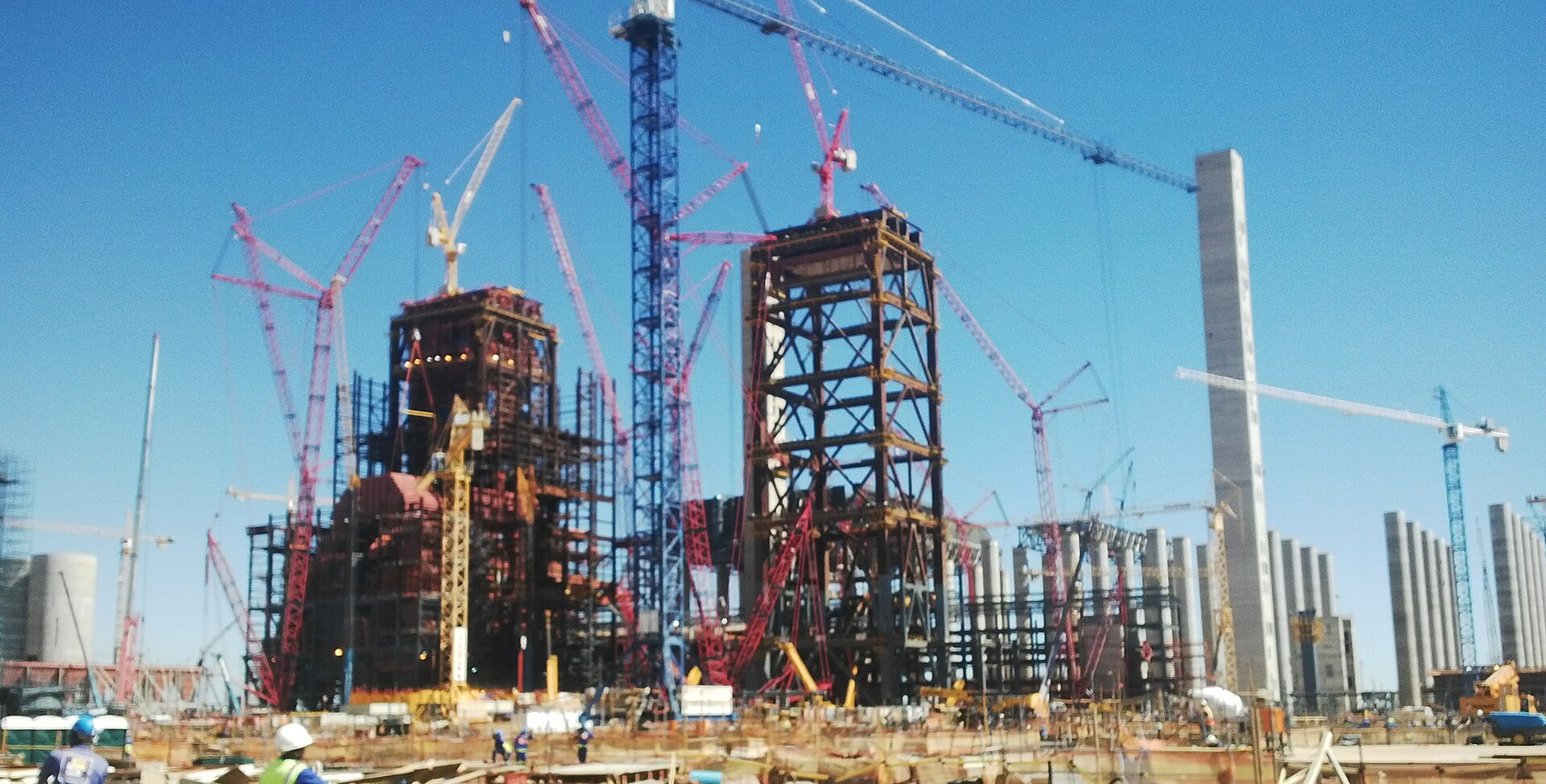
Lawmakers Ask About Kusile’s Water
Parliament’s Portfolio Committee on Electricity and Energy, which oversees the sector, scheduled Saturday 21 November 2026 at Kusile, a power station in Mpumalanga province. Eskom was due to brief members on its water management action plans, according to a Parliament media alert.
The plans follow a 14 August 2026 judgment of the Supreme Court of Appeal, South Africa’s second-highest court, that Eskom had not fully complied with environmental authorisation and water-use licence conditions. We could not confirm what was said at the visit.
Eskom said in an undated written parliamentary reply that it has spent about R99 million (about US$5.6 million) on environmental remedial measures and water monitoring at Kusile. The conversion uses R17.59 per US$.
That sets Eskom’s operating gains against the court’s finding on pollution, the a counterweight in the record. Eskom’s earlier tariff hearing and its annual profit are covered in our earlier reports.
Eskom has not said what it will do with the surplus and its statement of 20 November 2026 names no export deal. Its next update is promised for Friday 27 November 2026, and more South African coverage is on our South Africa hub.
Frequently Asked Questions
What is the difference between load reduction and load shedding?
Load reduction is Eskom’s targeted cutting of supply in areas with high electricity theft. Load shedding is the rotating, scheduled blackouts.
Does Eskom expect El Niño to threaten power supply?
No. Eskom says El Niño is not expected to pose a risk to supply or grid stability.
What is Parliament asking about Kusile?
The committee scheduled a briefing on Eskom’s water management plans on 21 November, after a court found it had not fully met environmental and water-use licence conditions.
Sources: Eskom statement of Friday 20 November 2026; Parliament of South Africa media alert and statement; Parliament written question NW5425 and reply. Eskom statement · Parliament media alert · Parliament statement on the Kusile briefing · Question NW5425 and reply
This article was produced by The Rio Times’ automated AI newsroom. Editorial responsibility: Matthias Camenzind, Publisher and Editor-in-Chief. The Rio Times also runs Ask Rio Times, which answers from 100,000+ of our own articles, the daily Latin America Power Map, and prediction-market odds on elections and markets.. How we use AI · Report an error