Ex-Official Warns of South African Division
A former deputy finance minister says South Africa’s municipal elections offered little hope of change and warns of deeper polarisation as parties form city governments.

Politics: South Africa
Mcebisi Jonas, a former South African deputy finance minister, warned in Cape Town on 19 November 2026 that South Africa’s politics risk deeper polarisation after this month’s municipal elections. He spoke at a University of Cape Town memorial event for Pravin Gordhan, a veteran African National Congress (ANC) minister who died on 13 September 2024.
Jonas served as deputy finance minister from 2014 to 2017 and now chairs MTN Group, a Johannesburg-based mobile operator. His warning comes while the parties that must now run the big cities are still bargaining over coalitions.
Key Facts
- Who. Mcebisi Jonas, former deputy finance minister and chair of mobile operator MTN Group.
- What. He warned of deeper polarisation at a University of Cape Town memorial on 19 November.
- Next. Councils must meet within 14 days of being declared elected; Johannesburg’s date is not confirmed.
- Prediction markets. Polymarket, a crypto market: ActionSA party leader Herman Mashaba about 70% for Johannesburg mayor (21 Nov, 14:25 ET).
- As of. 21 November 2026, 19:30 GMT.
A former deputy finance minister says South Africa’s municipal elections offered little hope of change and warns of deeper polarisation as parties form city governments.
South Africans voted in municipal elections on Wednesday 4 November 2026, and the Electoral Commission of South Africa (IEC), the body that runs elections, declared the final results on Sunday 8 November. The ANC took about 31% of the vote, the Democratic Alliance (DA), the main opposition party and an ANC partner in national government, about 25%, and the uMkhonto weSizwe (MK) Party, founded by former president Jacob Zuma, nearly 10%.
National turnout was 52%, up 6.1 percentage points from 45.9% in 2021, the IEC said on 8 November. Many councils ended hung, meaning no party holds more than half the seats, so coalition bargaining rather than the ballot box now decides who runs them.
Jonas said he had yet to hear any party answer the question “build what?” as they bargain over coalitions, and had heard no “common vision for a better South Africa, for all its people”, and none “that transcends narrow political self-interest”. His own aim is “a more progressive partnership between the state, capital, labour and civil society”.
Jonas contrasted South Africa with other recent votes, saying those in Serbia, Brazil and the United States “bent power back toward the less powerful”. In his account, Brazil’s President Lula da Silva beat Flávio Bolsonaro, the former president’s son, in a runoff, Serbian students won a majority on 25 October, and the US Democrats won in the November midterms.
South Africa’s municipal elections, he said, signify less such a shift and more the risk of continued polarisation. He said the ANC’s campaign “appeared to be cribbed from a delinquent school child” saying “I’m sorry, I won’t do it again”.
He said the DA “seemed to be feeding off old tropes of racial competence”, while other parties “continued to fan the flames of xenophobia and populism”. He added: “It is no wonder then that there was no great excitement or propelling towards change in the South African elections.”
Jonas described the Government of National Unity (GNU), the ANC and DA-led national coalition in place since 2024, as “a shotgun marriage”, and said it “has become the political axis of white corporate interests in a cosy co-governance relationship with the political elites”. He called the arrangement “unmandated by the people of South Africa” but stressed: “This is not an argument against the private sector.”
Using IEC figures, he said only 29.2 million of about 39 million voting-age South Africans had registered, so the 52% turnout meant only about 37% of eligible people voted. That is Jonas’s own estimate; the IEC counted about 14.9 million ballots, which is closer to 38% of the same adults.
He said enthusiasm was strongest in the most privileged neighbourhoods, which “tipped the balance of power further against the historically disenfranchised”. He warned that consolidation of the most powerful elements along racial lines “risks provoking a counterreaction: a consolidation of the parties of the black majority”.
Live Market IntelligenceCrypto — Live Market Board
Rio Times · Live Market Intelligence
Crypto — Live Market Board
+2.43%
| Instrument | Last | Change | YoY | Prev. | High | Low | Volume |
|---|---|---|---|---|---|---|---|
| BTC | 60,226 | +2.43% | -29.22% | 58,799 | 60,619 | 55,632 | 62,826,487,808 |
| ETH | 1,683 | +3.94% | -39.14% | 1,619 | 1,706 | 1,542 | 22,318,843,904 |
| SOL | 70.67 | +2.80% | -45.00% | 68.75 | 70.77 | 65.27 | 4,293,450,752 |
| XRP | 0.94 | +2.95% | -51.98% | 0.91 | 0.94 | 0.87 | 3,019,933,184 |
| BNB | 548.92 | +1.84% | -33.88% | 539.00 | 549.14 | 507.03 | 1,532,494,208 |
| ADA | 0.15 | +1.57% | -64.52% | 0.14 | 0.15 | 0.13 | 467,673,824 |
| DOGE | 0.06 | +1.63% | -60.63% | 0.05 | 0.06 | 0.05 | 863,063,104 |
| AVAX | 6.63 | +1.90% | -50.13% | 6.51 | 6.67 | 6.08 | 246,730,576 |
| LINK | 8.63 | +1.16% | -28.80% | 8.53 | 8.67 | 8.05 | 359,483,456 |
| DOT | 0.65 | -1.38% | -72.19% | 0.66 | 0.67 | 0.62 | 90,945,712 |
| LTC | 40.00 | -1.39% | -51.58% | 40.56 | 40.65 | 37.76 | 290,134,944 |
| BCH | 198.16 | +1.94% | -62.83% | 194.38 | 199.82 | 181.46 | 172,684,976 |
| TRX | 0.30 | +0.95% | +10.13% | 0.30 | 0.31 | 0.30 | 603,744,256 |
| XLM | 0.13 | +1.37% | -44.19% | 0.13 | 0.13 | 0.12 | 181,902,336 |
| HBAR | 0.05 | +0.43% | -60.38% | 0.05 | 0.05 | 0.05 | 72,687,360 |
| NEAR | 2.86 | +0.40% | +53.53% | 2.84 | 2.92 | 2.57 | 928,145,152 |
| ATOM | 1.18 | -3.63% | -53.09% | 1.22 | 1.22 | 1.13 | 24,836,712 |
| AAVE | 97.68 | -0.25% | -38.00% | 97.92 | 101.34 | 91.87 | 236,635,984 |
Add a weak state, xenophobia and “sectarian nationalisms”, he said, and “we are at risk of rolling back the democratic project”. He said the ANC “has no option but to go back to basics and consolidate its base”, and he pointed to high unemployment, low economic growth and stark inequality.
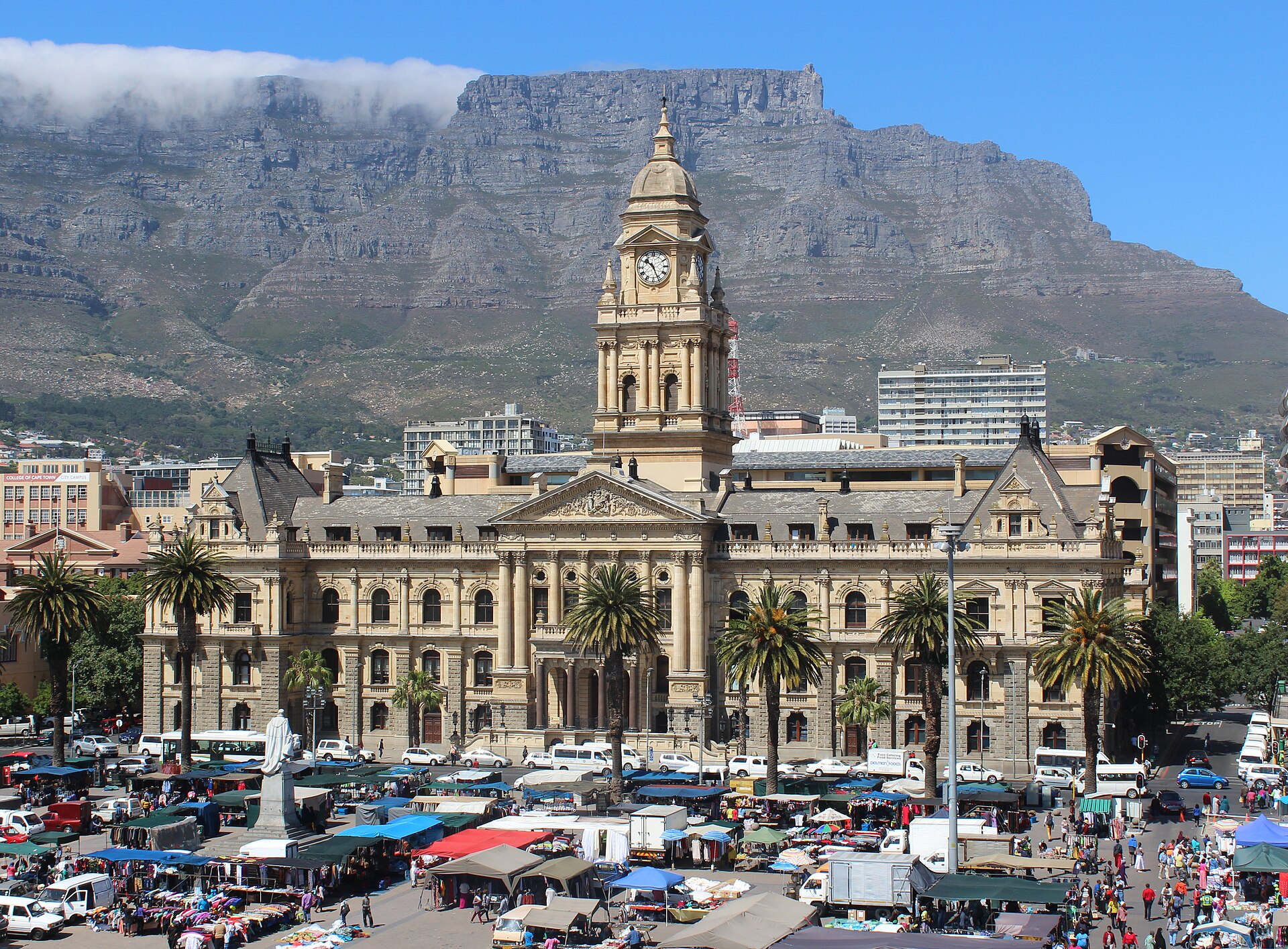
The effect for business is practical: companies and investors that deal with city budgets, services and contracts in Johannesburg, Tshwane (the Pretoria area) and Ekurhuleni (east of Johannesburg) must plan around coalitions that are still being negotiated. Johannesburg is South Africa’s biggest city and its business centre, so any firm with local contracts there is among those exposed.
No public reply from the DA or the ANC to the speech had been found as of 21 November 2026. The DA is a partner in the national government that Jonas criticised.
Under section 29 of the Municipal Structures Act 1998, the law governing councils, each new council must hold its first meeting, which elects the mayor, within 14 days of being declared elected, a deadline that falls on 22 November if counted from the IEC’s declaration. Cape Town’s council already met on Thursday 19 November and returned Geordin Hill-Lewis of the DA as mayor, because the DA holds 133 of its 235 seats, while the date for Johannesburg’s first meeting is not confirmed.
Mid-November talks included an ANC offer of the Johannesburg and Tshwane mayoral seats to ActionSA, the party led by Herman Mashaba, and a separate report describes the Johannesburg coalition talks. Jonas himself looks ahead to the national and provincial elections due in 2029, for which no exact date is confirmed.
What Prediction Markets Say
Polymarket, a crypto-based prediction market, gives Herman Mashaba, the ActionSA leader, about 70% to be Johannesburg’s next mayor (21 Nov, 2:25 p.m. ET). About US$183,000 had been traded on that market.
These prices are real-money bets, not polls. They show what traders expect, not what voters or councillors have decided.
Why we show this: prediction markets turn real-money bets into a live probability that moves within minutes of the news, which is why investors, campaigns and newsrooms in the United States now follow them closely. We show them next to polls and official results, never instead of them.
Frequently Asked Questions
Why does Jonas’s view carry weight?
He served in government and now chairs a large company, so he speaks from both worlds. The speech is his own view, not the position of any party.
What is a hung council?
It is a council where no party holds more than half the seats. Parties must then agree a coalition before a mayor can be elected.
What does Jonas say should happen next?
He wants parties to say what they intend to build and to offer a shared vision beyond narrow self-interest. He also says the ANC must return to basics.
Sources: Jonas’s newsletter (Africa Unscrambled), speech text, https://africaunscrambled.substack.com/p/south-african-politics-is-brokenits (published 20 November 2026); Electoral Commission of South Africa final results declaration of 8 November 2026 (https://results.elections.org.za); Municipal Structures Act 1998, section 29.
This article was produced by The Rio Times’ automated AI newsroom. Editorial responsibility: Matthias Camenzind, Publisher and Editor-in-Chief. The Rio Times also runs Ask Rio Times, which answers from 100,000+ of our own articles, the daily Latin America Power Map, and prediction-market odds on elections and markets.. How we use AI · Report an error