Colombia’s $205M Santa Marta Desalination Under Review
Colombia · Politics
Key Facts
—Contract Value COP 786,032.78 million, approximately US$205 million at the exchange rate cited in local reporting.
—Requesting Party The incoming government of Abelardo de la Espriella, through transition coordinator Germán Calderón España.
—Review Body Colombia’s Procuraduría General de la Nación, the national inspector general’s office.
—Project Scope Two plants: a 51,840 m³/day facility at Pozos Colorados and a 2,000 m³/day plant at Taganga.
—Policy Origin Approved under CONPES 4159 of 2025 during the prior administration of Gustavo Petro.
The incoming government of President-elect Abelardo de la Espriella has asked Colombia’s national inspector general to scrutinize a Santa Marta desalination contract valued at COP 786 billion, or roughly US$205 million, citing potential inconsistencies in its planning and financial structure.
Santa Marta desalination: A Formal Request for Preventive Oversight
Transition coordinator Germán Calderón España formally petitioned the Procuraduría General de la Nación to carry out a preventive oversight function on the massive infrastructure deal. The request targets the contract awarded to bring potable water to the Caribbean city of Santa Marta and the nearby coastal village of Taganga.
The concerns outlined by the incoming administration include possible insufficient budgetary backing and risks to free competition and transparency. The transition team also asked the watchdog to verify a reported shift from the original concept of two desalination plants and to trace documents published in the final days of the outgoing government of Gustavo Petro.
In plain terms, a preventive oversight function is a proactive legal tool. Rather than waiting for a completed contract to be challenged in court, the inspector general can examine the paperwork and issue early warnings while there is still time to adjust course without triggering costly litigation or project cancellations.
A City’s Chronic Water Crisis
The project is designed as a long-term solution to a chronic drinking-water shortage that has plagued Santa Marta for years. Traditional freshwater sources in the region have been described by national planners as insufficient and increasingly vulnerable to climate change and rapid urban growth.
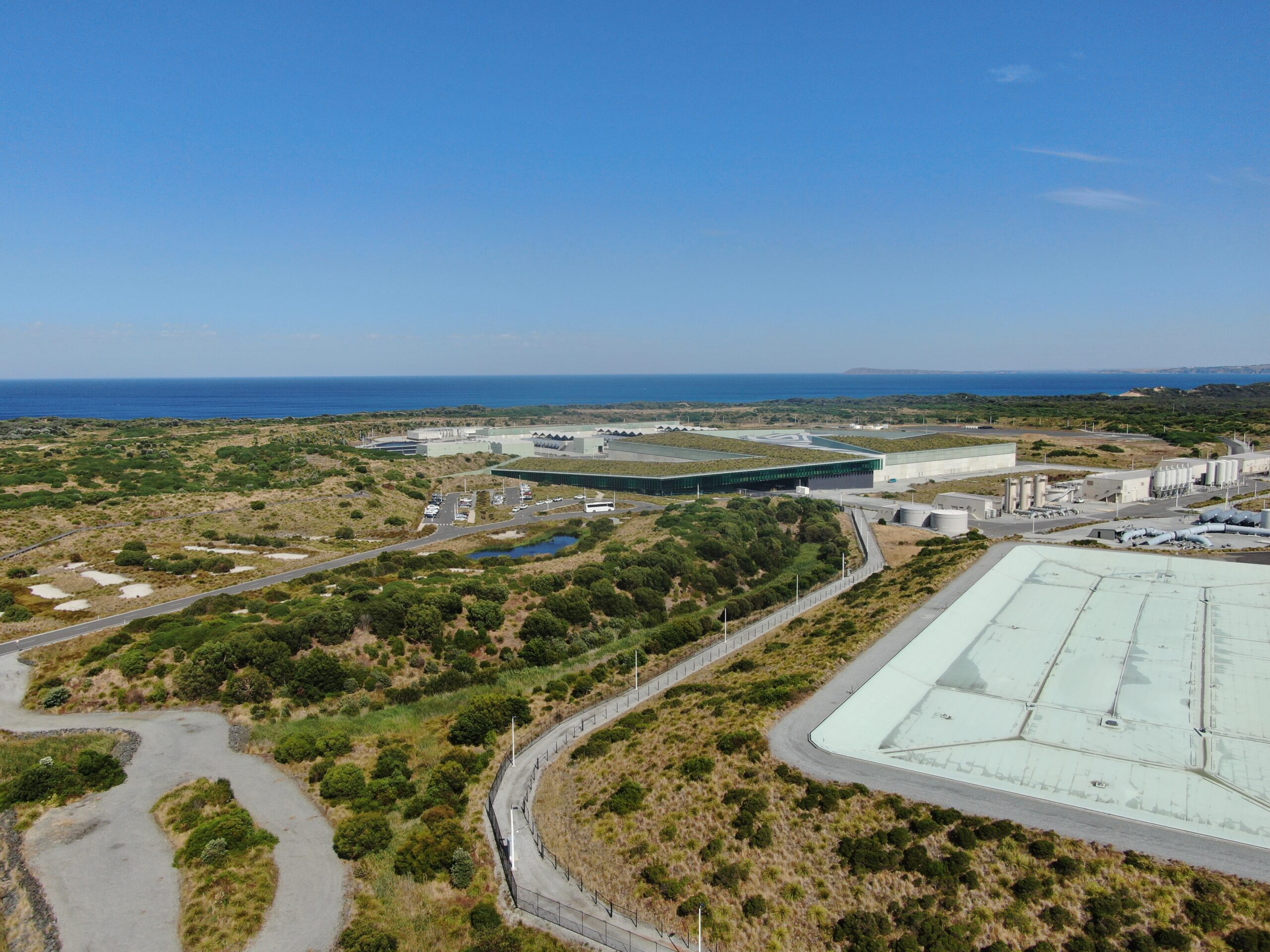
The strategy, approved under CONPES 4159 of 2025, contemplates two separate facilities. The larger plant, located at Pozos Colorados, would have a capacity of 51,840 cubic meters per day, equivalent to 600 liters per second.
A smaller plant in Taganga would produce 2,000 cubic meters per day, or 23 liters per second.
For a foreign reader unfamiliar with Colombian policy documents, CONPES stands for the National Council for Economic and Social Policy. A CONPES document is a high-level government blueprint that signals a project has been vetted across multiple ministries and carries the weight of a formal state commitment.
Financial and Technical Questions
The total financing package is cited as COP 786,032.78 million in official documents, a figure that rounds to COP 786 billion. At the exchange rate used in local reporting, the contract is worth approximately US$205 million.
The De la Espriella team’s complaint specifically flags issues with the technical and financial structuring of the deal. By requesting a preventive review, the incoming government is signaling that it wants an independent legal assessment before the project advances further under the new administration.
Desalination projects of this scale are capital-intensive and typically involve long-term operational contracts. The financial structure usually determines who bears the risk if construction costs rise or if the guaranteed water output falls short, making the technical and budgetary details especially sensitive during a handover of power.
Institutional Actors Under the Microscope
Multiple state entities are involved in the implementation of the desalination initiative. These include the Ministry of Housing, the National Planning Department (DNP), the Ministry of Finance, the public utility company ESSMAR E.S.P., and the District of Santa Marta.
The Procuraduría, which acts as Colombia’s inspector general overseeing public officials and contracts, will now examine whether the contracting process adhered to legal standards. The review comes during a politically sensitive transition period between the Petro and De la Espriella governments.
Having so many agencies at the table is common for nationally significant infrastructure, but it also creates complexity. Each entity holds a piece of the puzzle, and the Procuraduría’s job is to check that no single piece was handled in a way that undermines the integrity of the whole.
What Comes Next for the Project
The preventive oversight function allows the Procuraduría to issue warnings and recommendations before a contract is fully executed, potentially saving public funds if irregularities are found. It does not automatically halt the project but places its documentation under formal legal review.
For foreign investors and expats following Colombian infrastructure, the scrutiny highlights the regulatory risks that can accompany large-scale public works in Latin America. The outcome of the review will determine whether the Santa Marta desalination project proceeds as structured or requires significant modifications under the new government.
What to watch next is whether the Procuraduría issues a public advisory within the transition window. Another open question is how the incoming administration would handle any recommended changes, and whether the two-plant design remains intact or is formally revised before ground is broken.
More: Colombia news in English, every day from The Rio Times.
Frequently Asked Questions
Why is the Santa Marta desalination contract under review?
The incoming De la Espriella government asked the Procuraduría to review the COP 786 billion (~US$205 million) contract due to concerns over possible inconsistencies in planning, insufficient budgetary backing, and risks to transparency and free competition.
What is the Procuraduría General de la Nación?
It is Colombia’s national inspector general’s office, an independent body responsible for overseeing the conduct of public officials and ensuring that government contracts comply with legal and ethical standards.
How much water will the new plants produce?
The project includes two plants: a main facility at Pozos Colorados with a capacity of 51,840 m³/day (600 l/s) and a smaller plant at Taganga producing 2,000 m³/day (23 l/s).
Connected Coverage
Sources: Germán Calderón España; Procuraduría General de la Nación; CONPES 4159 of 2025.
This article was produced by The Rio Times’ automated newsroom system. How we use AI · Report an error · Editorial responsibility: Matthias Camenzind, Editor-in-Chief