Sacsayhuamán Graffiti Cleaned Off Rock as Peru Vows Complaint
Peru · Heritage
Key Facts
- —What happened Two names were painted in red and pink on a carved rock inside the Saqsaywaman Archaeological Park above Cusco.
- —Where exactly At Lanlacuyoq, a site inside the Saqsaywaman park above Cusco, and not on the famous zig-zag megalithic ramparts.
- —Who found it The park’s own surveillance staff; Peru’s Ministry of Culture made the case public on 18 September 2026.
- —The catch No one has been identified or detained, and the ministry has said only that it will file a complaint.
- —What the law allows Attacks on pre-Hispanic archaeological monuments carry three to six years in prison plus a day-fine, Andina reports.
- —Cleaning the rock The Cusco culture directorate says the pigment was removed; Andina reported on 18 September 2026 that cleaning had begun.
Two names in red and pink paint on a carved rock above Cusco have prompted Peru’s Ministry of Culture to announce a criminal complaint. Its Cusco office says the pigment has been removed.
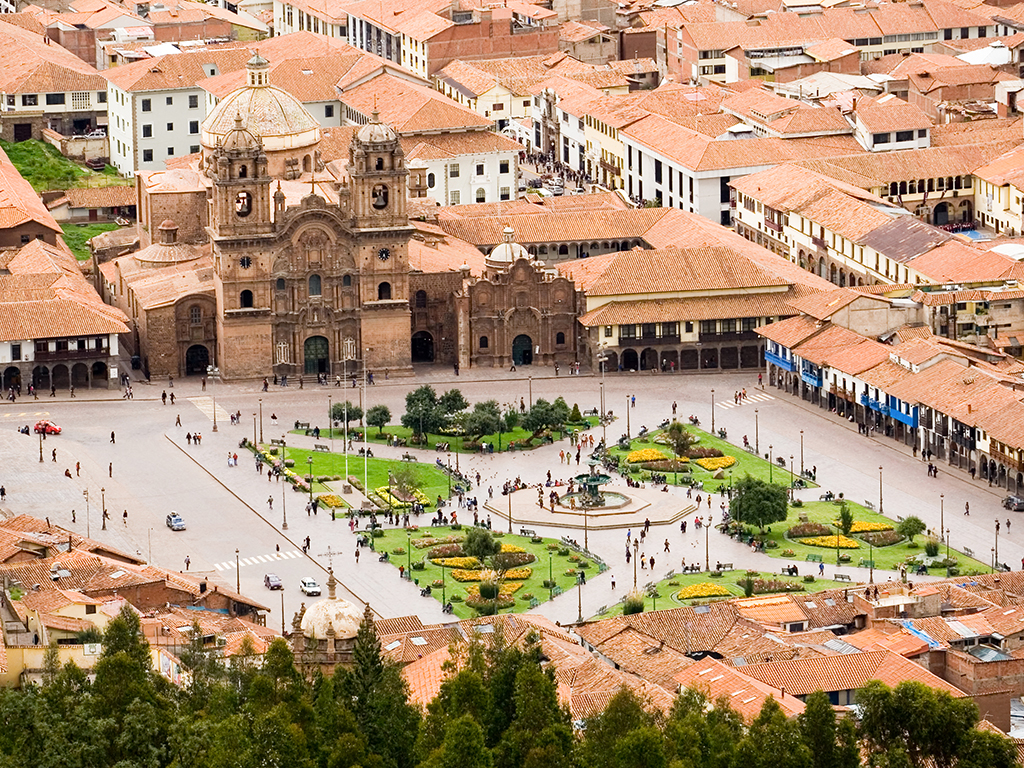
Sacsayhuamán graffiti has struck one of the best-known Inca sites in Peru. Two names were painted in red and pink on a carved rock above the city of Cusco.
Peru’s Ministry of Culture made the case public on 18 September 2026. Its office in Cusco said specialists had removed the pigment.
No one has been identified or detained. The ministry said it would lodge a formal complaint to find whoever was responsible.
What Sacsayhuamán is
Saqsaywaman, written Sacsayhuamán in most English guidebooks, stands on the heights above Cusco in the southern Peruvian Andes. It was an Inca ceremonial and military complex.
Construction began under Pachakuteq, the ninth Inca ruler. Work continued under Topa Inka Yupanqui, Huayna Qhapaq and Huascar Inka, according to the Cusco culture directorate.
All of that is pre-Hispanic, meaning it was built before the Spanish reached the Andes. The site is registered as national cultural heritage of Peru.
Its most famous feature is a line of zig-zag megalithic ramparts. These are defensive walls assembled from stone blocks of enormous size, and they are what the site is known for.
The park is much bigger than those walls. It covers close to 3,000 hectares and contains 96 archaeological sites, the directorate says.
Those sites include Q’enqo, Tambomachay, Kallachaca and Patallaqta. The monumental zone holds the Baluartes, Muyuqmarca, El Rodadero and Chinkana.
The rock that was painted
The Sacsayhuamán graffiti was not sprayed on the famous ramparts. It was found at Lanlacuyoq, a separate site within the same park.
The target was a carved limestone rock, not a built structure. Two names were painted on its surface in red and pink pigment.
Further inscriptions on the middle and lower parts of the rock were illegible. That account comes from the ministry’s own notice and from the broadcaster RPP.
The damage was spotted by the park’s own surveillance personnel. Neither the ministry nor the outlets covering it have said when the paint was applied.
How the pigment came off
The Sacsayhuamán graffiti was taken off the stone by specialists from the directorate’s physical-chemical laboratory. They used specialised materials and tools so the rock’s original surface was not altered.
That account comes from the Cusco directorate, whose notice describes the work as completed. The state news agency Andina described the cleaning as under way on 18 September 2026.
No figure has been published for the cost of the cleaning. Nor has the ministry said whether any permanent mark remains on the rock.
Who looks after the park
The complex is managed by the Ministry of Culture through its Decentralised Directorate of Culture in Cusco. That office, known by its Spanish initials DDC, handled the Sacsayhuamán graffiti case.
Francisco Solís, an archaeologist, directs the Saqsaywaman National Archaeological Park. He appealed to residents of Cusco and to visitors to help protect the heritage and avoid such attacks.
The directorate said it would reinforce surveillance at archaeological sites across the region. It added that protection, conservation and monitoring of national heritage would continue.
Heritage status came through a national directoral resolution in 2006, with the park boundaries fixed in 2011. The park perimeter runs to just over 62 kilometres.
The site sits on the edge of Cusco, a city placed on the UNESCO World Heritage list in 1983. That inscription names Qoricancha, Aqllahuasi, Sunturcancha and Kusicancha, not Sacsayhuamán.
What Peruvian law provides
Peru’s Penal Code gathers crimes against cultural heritage in Title VIII of its second book. The legal publisher LP Derecho places them in articles 226 to 231.
Attacking a pre-Hispanic archaeological monument carries three to six years in prison. It also carries a day-fine of 120 to 365 days, the state news agency Andina reported.
A day-fine is counted in days of the offender’s income rather than as a fixed sum. The amount therefore varies with the person convicted.
Inducing or organising such an act carries three to eight years plus a day-fine, according to Andina. The code sets separate offences for damaging, altering or exporting cultural property.
Which of those provisions would apply to paint on a rock has not been stated. Neither the ministry nor the Cusco directorate has named an article.
No charge has been brought over the Sacsayhuamán graffiti. The ministry has said only that it will lodge a complaint so the case can be investigated.
Earlier cases in Cusco
The Sacsayhuamán graffiti is not the first such case in the region. Infobae published a round-up on 11 July 2026 of earlier vandalism in Cusco.
That piece set out earlier cases in which people were detained and prosecuted over damage to Inca walls. Infobae also reported a separate case earlier this year.
Vandal paint on the ceremonial zone of the Cheqtaqaqa huaca was reported in March 2026. A huaca is an Andean sacred place or shrine.
That record is the backdrop to the directorate’s promise of tighter surveillance.
What it means for visitors
The Sacsayhuamán graffiti has brought a promise of tighter surveillance at archaeological sites across the region. The rock has been cleaned, the directorate says, and the park stays under Ministry of Culture management.
For foreign travellers the other point is the legal exposure. Peru’s Penal Code punishes attacks on pre-Hispanic monuments with prison terms.
More: Peru coverage, every day from The Rio Times.
Frequently Asked Questions
What exactly was damaged at Sacsayhuamán?
A carved limestone rock at Lanlacuyoq, a site inside the Saqsaywaman Archaeological Park above Cusco. Two names were painted on its surface in red and pink pigment, with further illegible inscriptions on the middle and lower sections. The Ministry of Culture’s own notice and the broadcaster RPP both describe the object as a carved rock.
Were the famous zig-zag walls hit?
No. The Sacsayhuamán graffiti was found at Lanlacuyoq, a separate site within the park, not on the megalithic ramparts that most photographs show. The park covers close to 3,000 hectares and takes in dozens of separate sites, among them Q’enqo, Tambomachay, Kallachaca and Patallaqta.
Has anyone been arrested?
No one has been identified or detained. The Decentralised Directorate of Culture in Cusco said it would lodge a formal complaint so those responsible could be identified and investigated, and that it would reinforce surveillance at archaeological sites across the region. No charge has been announced.
Is Sacsayhuamán a UNESCO World Heritage site?
It is registered as national cultural heritage of Peru, and it sits on the edge of Cusco, a city inscribed on the UNESCO World Heritage list in 1983. The text of that inscription names Qoricancha, Aqllahuasi, Sunturcancha and Kusicancha, and does not mention Sacsayhuamán.
Sources: The Cusco culture directorate on the cleaning of the painted rock, RPP on the planned criminal complaint, El Popular on the red and pink paint, The Cusco culture directorate on the park and its 96 sites, LP Derecho on the Penal Code heritage offences, Andina on the prison terms and day-fines, UNESCO on the inscribed City of Cuzco, Infobae on earlier Cusco vandalism cases, Infobae on the Cheqtaqaqa huaca
This article was produced by The Rio Times’ automated newsroom system. How we use AI · Report an error
Read More from The Rio Times