Rio’s VillageMall Hosts ‘The Robot Zoo; Robotic Animals’ Exhibition
RIO DE JANEIRO, BRAZIL – The VillageMall, in Barra da Tijuca, Rio de Janeiro, hosts an exhibition for those who love animals and knowledge, The Robot Zoo, for the first time in Brazil after touring several countries in Europe and the Americas, having been viewed by over one million people. In the exhibition children and adults will be able to explore the biomechanics of animal robots to discover how real animals work.
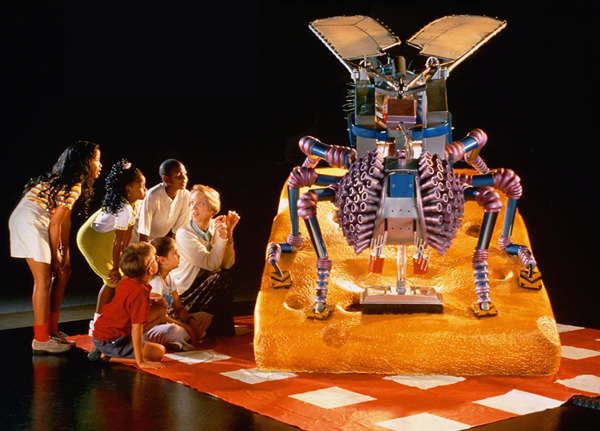
The Robot Zoo unveils the magic of nature in a playful way: the stars of the exhibition are robot animals, in larger sizes than the animals portrayed, which together with practical activities illustrate fascinating features of real life. Through them, visitors can discover and see up close how a chameleon changes color, how a giant squid propels itself, how a fly walks on the ceiling, among many other things.
The gears of the robot animals simulate the body parts of their real-life “colleagues”. In robotic animals, muscles become pistons, intestines become filter tubes, and brains become computers. Animation in robots mimics real-life behavior.
The cavities expose the inside of animals as a series of easily recognizable machine parts and devices such as shock absorbers and pumps, which playfully demonstrate what makes real animals work.
By comparing the anatomy, environments, and size of real creatures with their mechanical counterparts, The Robot Zoo provides fantastic insights and lots of fun to discover how the animals work.
The animated robots include representatives from various animal classes and visitors experience a true immersion in their environments.

The giraffe, whose head and neck alone measure almost three meters in height, welcomes visitors to the exhibition as if it were the zoo’s main host. The rhinoceros, in whose body visitors may enter and can lift and lower its head to its initial position; a chameleon, which shoots its tongue towards an insect. A device will also allow visitors to check how the animal effectively sees.
A platypus looks for food underwater next to a riverbank, with visible environments above and below the water surface. The robot turns its head sideways, its paws and tail move mimicking the movement of the real animal.
A dragonfly robot appears buzzing above the submerged platypus. A domestic fly with 3-meter wings feeds on a slice of cheese on a table. Its head rotates and waves in several directions as its wings move.
Another attraction in the exhibition is a giant grasshopper, with antennas that move independently like the real animal. A bat, installed on the beam of a castle, prepares to go out in search of food, flapping its wings and triggering its ears/sounds. In the distance, one can hear the nocturnal sounds of the crickets, other insects and birds.
Another animal in the exhibition is a giant squid, with 18 tentacles up to six meters in length, in a scenario that simulates a shipwreck at the ocean floor, where underwater sounds of the environment can be heard. The animal’s eyes move and its mouth opens to display a spinning food grinder. Its tentacles move and hold a fish struggling to escape.
Sensory and interactive activities
The audience visiting The Robot Zoo will not only be spectators as they will be able to participate in sensory activities, which help to exemplify how these animals work. These activities include “Hit the Fly,” a test of the visitor’s reaction time compared to the house fly; “Sticky Paws,” where visitors wear knee pads and special hands to try to stick like flies to a sloping surface; the “Mother-in-law’s Tongue”, where the public triggers mechanisms that demonstrate how a real chameleon fires its long, sticky tongue to roll up a “meal”; or the “Mr. Platypus”, where you can add parts to a body and create your own animal.
The activities in the exhibition are simple enough for children to operate, but engaging enough to keep adults attentive and also learning.
“This exhibition unites fun and learning in a unique way, attracting the whole family and teaching through technology, which is increasingly present in the lives of us all. That’s why it’s easy to understand the success it has garnered in past exhibitions,” says Clarice Philigret, Production Director at Dueto.
Exhibited in countries such as the United States, Canada, Mexico, France, Holland, Hungary, Poland, England, Turkey, and Sweden, among others, The Robot Zoo was a huge success for the public and received enthusiastic criticism.
To make the visit to The Robot Zoo exhibition even more interesting, Dueto and Happy Code (the largest network of programming, maker and robotic schools for children and teenagers in Brazil and Portugal, besides being the third-largest in the world), will be holding on site some workshops for the visiting children, divided by age groups.
Children from four to eight years of age will work on animal models that light the eyes – they will build a prototype of one of the animals in the exhibition using conductive modeling paste, and then, with battery, wires, and LEDs, they will learn how to light the eyes of the manufactured animal.
Children from eight to 12 years of age will be able to make a robotic locomotive spider using thin iron wires and an engine and battery; another challenge for children at that age will be to make a chameleon out of paper and cardboard, which after ready, using three colored LEDs, batteries and wires, and an on/off button, will make the chameleon change colors.
Event
The Robot Zoo
Venue: Events Area Floor SS1 – VillageMall – Barra da Tijuca, Rio de Janeiro
Dates: December 18th – February 16th
Opening hours: Tuesday to Sunday from 2 PM to 8 PM
Prices: R$20 (US$5) and R$10
Children up to two years of age do not pay
Link for sales: https://robotzoo.byinti.com/
Robotics Workshop for 4-8-year-old children: from Thursday to Sunday, at 3:30 PM
Robotics Workshop for 8-12-year-old children: from Thursday to Sunday at 5:30 PM
This article was produced by The Rio Times’ automated newsroom system. How we use AI · Report an error
Read More from The Rio Times